





Recommended Reading

Thread Starter
On The Tree
Joined: May 2004
Posts: 107
Likes: 0
From: FWB, FL
 Recommended Reading
 I just received the book "Maximum Boost" by Corky Bell from Amazon today. I also just completed chapter 3 Selecting the Turbocharger. In the last hour I have learned more reading that book that from anywhere. If you are even considering going with a turbo I would recommend that you read this book. A few interesting things I picked up from it.
1. Twin Turbos will not solve boost threshold (lag) issues. I always thought they would spool faster. Turns out that you have just split the exhaust and the same potential exists either way. The advantage the author mentions is in the design of the headers for twins. They can retain heat better than a crossover configuration.
2. How to calculate compressor efficiency and apply it to reading a compressor map. It also gives a lot of easy math to do all this and teaches how to calculate temps based on efficiency.
3. It also shows the differences between good design manifolds (full length) and bad designs (log style). It shows a comparison and why one is better than the other. I always thought logs were bad because of back pressure. Guess not.
It is a pretty damn good book. Definitely a good purchase and way to understand the inner workings of turbos. It will help me decide what kind of turbo kit I will spend my hard earned $$$ on. Definitely a lot more than posted #'s...
1. Twin Turbos will not solve boost threshold (lag) issues. I always thought they would spool faster. Turns out that you have just split the exhaust and the same potential exists either way. The advantage the author mentions is in the design of the headers for twins. They can retain heat better than a crossover configuration.
2. How to calculate compressor efficiency and apply it to reading a compressor map. It also gives a lot of easy math to do all this and teaches how to calculate temps based on efficiency.
3. It also shows the differences between good design manifolds (full length) and bad designs (log style). It shows a comparison and why one is better than the other. I always thought logs were bad because of back pressure. Guess not.
It is a pretty damn good book. Definitely a good purchase and way to understand the inner workings of turbos. It will help me decide what kind of turbo kit I will spend my hard earned $$$ on. Definitely a lot more than posted #'s...

TECH Fanatic
Joined: Feb 2005
Posts: 1,123
Likes: 0
From: Maypearl, TX
[quote]
3. It also shows the differences between good design manifolds (full length) and bad designs (log style). It shows a comparison and why one is better than the other. I always thought logs were bad because of back pressure. Guess not.
What is the reasoning for the poor design in the "log style?" Help me out here, but isn't that what the banks tt setup is using??? I'm really considering getting one of these kits
3. It also shows the differences between good design manifolds (full length) and bad designs (log style). It shows a comparison and why one is better than the other. I always thought logs were bad because of back pressure. Guess not.
What is the reasoning for the poor design in the "log style?" Help me out here, but isn't that what the banks tt setup is using??? I'm really considering getting one of these kits

TECH Apprentice
Joined: Nov 2001
Posts: 306
Likes: 0
From: malmstrom Air Force Base, Montana
the best thing about the log style is it takes up less space and is very easy/cheap to fabricate. I think the crossover pipes screw things up worse than the log design manifolds.
that book rocks, people have been recomending it for years. When you get done reading it you feel like a turbo genius.
that book rocks, people have been recomending it for years. When you get done reading it you feel like a turbo genius.
Originally Posted by lilone
I just received the book "Maximum Boost" by Corky Bell from Amazon today. I also just completed chapter 3 Selecting the Turbocharger. In the last hour I have learned more reading that book that from anywhere. If you are even considering going with a turbo I would recommend that you read this book. A few interesting things I picked up from it.
1. Twin Turbos will not solve boost threshold (lag) issues. I always thought they would spool faster. Turns out that you have just split the exhaust and the same potential exists either way. The advantage the author mentions is in the design of the headers for twins. They can retain heat better than a crossover configuration.
2. How to calculate compressor efficiency and apply it to reading a compressor map. It also gives a lot of easy math to do all this and teaches how to calculate temps based on efficiency.
3. It also shows the differences between good design manifolds (full length) and bad designs (log style). It shows a comparison and why one is better than the other. I always thought logs were bad because of back pressure. Guess not.
It is a pretty damn good book. Definitely a good purchase and way to understand the inner workings of turbos. It will help me decide what kind of turbo kit I will spend my hard earned $$$ on. Definitely a lot more than posted #'s...
1. Twin Turbos will not solve boost threshold (lag) issues. I always thought they would spool faster. Turns out that you have just split the exhaust and the same potential exists either way. The advantage the author mentions is in the design of the headers for twins. They can retain heat better than a crossover configuration.
2. How to calculate compressor efficiency and apply it to reading a compressor map. It also gives a lot of easy math to do all this and teaches how to calculate temps based on efficiency.
3. It also shows the differences between good design manifolds (full length) and bad designs (log style). It shows a comparison and why one is better than the other. I always thought logs were bad because of back pressure. Guess not.
It is a pretty damn good book. Definitely a good purchase and way to understand the inner workings of turbos. It will help me decide what kind of turbo kit I will spend my hard earned $$$ on. Definitely a lot more than posted #'s...
When its ragging on log manifolds, does it mention how much less efficiant they are? I mean not everyone needs or wants to pay for a optimal setup with tublar headers.

I ruin the end of films...
iTrader: (2)
Joined: Nov 2002
Posts: 1,545
Likes: 0
From: Taking back some video tapes
It's good reading to get started on. Doesn't make you a turbo guru by any means, but you learn the basics. It's been a while since I picked it up (bought it several years ago), but do they show how to figure A/R in it? I know I've read about it somewhere, can't remember if it was from Corky Bell or Ray Hall.
Log manifolds will support plenty of power if they're built right. Mustang guys have went plenty fast on them, but what do they know?
Log manifolds will support plenty of power if they're built right. Mustang guys have went plenty fast on them, but what do they know?
Trending Topics
Thread Starter
On The Tree
Joined: May 2004
Posts: 107
Likes: 0
From: FWB, FL
He doesn't say that log manifolds are "bad" per say. The idea is that the heat produced and lost from the log design is bad. He includes a diagram that shows a good design 4 into 1 vs a log with primary pipes feeding in at 90 degree angles. The difference between the bad design logs and good design manifolds are pretty well displayed in the books diagrams. Hell the good designs look a lot like the 6.0L manifolds people are using.
1. My statement above was that I had always believed that backpressure was a problem in log style setups. According to the book that isn't true.
2. I personally don't care about cost or what is good for some people. The reason I recommended the book was so people would have some place to go (other than the internet) to get some good turbo theory. Nothing more, nothing less. Myself, I want to know as much as possible before I shell out $7k plus for a fabricated turbo kit. Just trying to give others the opportunity to check out some non-internet information...
If anyone else has any other books/journals etc. that they would recommend reading please speak up.
If you really want to get in depth and have an understanding of Calculus you can pick up Fluid Dynamics and Heat Transfer in Turbomachinery. It applies to turbo theory as well...
1. My statement above was that I had always believed that backpressure was a problem in log style setups. According to the book that isn't true.
2. I personally don't care about cost or what is good for some people. The reason I recommended the book was so people would have some place to go (other than the internet) to get some good turbo theory. Nothing more, nothing less. Myself, I want to know as much as possible before I shell out $7k plus for a fabricated turbo kit. Just trying to give others the opportunity to check out some non-internet information...
If anyone else has any other books/journals etc. that they would recommend reading please speak up.
If you really want to get in depth and have an understanding of Calculus you can pick up Fluid Dynamics and Heat Transfer in Turbomachinery. It applies to turbo theory as well...
LS1 Tech Stories
The Best V8 Stories One Small Block at Time

Topdon ONE vs. Artidiag 800 BT2: Which is the Diagnostic Tablet For You?
Pouria Savadkouei
Gas Monkey Built a 6-Wheel Ferrari Testarossa With a Corvette LT4 Engine
Verdad Gallardo
7 Most Reliable High-Performance Engines GM Has Ever Built
Verdad Gallardo
Amazing '71 Camaro Restomod Is Modern Muscle Car Under the Skin
Verdad Gallardo
6 Common C5 Corvette Failures and What's Involved In Repairing Them
Pouria Savadkouei
Retro Modern Bandit Pontiac Trans AM Comes With Burt Reynolds' Autograph
Verdad Gallardo
Top 10 Greatest Cadillac V Series Performance Models Ever, Ranked
Pouria Savadkouei
Top 10 Most Powerful Chevy Trucks Ever Made!

Hennessey's New Supercharged Silverado ZR2 Has 700 HP
Verdad Gallardo Thread Starter
On The Tree
Joined: May 2004
Posts: 107
Likes: 0
From: FWB, FL
Originally Posted by mongse
It's good reading to get started on. Doesn't make you a turbo guru by any means, but you learn the basics. It's been a while since I picked it up (bought it several years ago), but do they show how to figure A/R in it? I know I've read about it somewhere, can't remember if it was from Corky Bell or Ray Hall.
Log manifolds will support plenty of power if they're built right. Mustang guys have went plenty fast on them, but what do they know?
Log manifolds will support plenty of power if they're built right. Mustang guys have went plenty fast on them, but what do they know?
Yes they do show you how to calculate A/R in it. I will post the math up when I get home from work.
Originally Posted by DocT
What is the reasoning for the poor design in the "log style?" Help me out here, but isn't that what the banks tt setup is using??? I'm really considering getting one of these kits
problems related to the log on our ls1 kits is at high HP application they are undersized with the system, not cause its a log though.
a desent book teaching the fundementals of a good system.
I have it but Billumss borrowed it and i havent seen it since.

Thread Starter
On The Tree
Joined: May 2004
Posts: 107
Likes: 0
From: FWB, FL
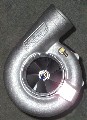
A/R is Area/Radius=Constant At any specific circle in the turbine scroll, the area of that circle divided by the radius from the center of the scroll circle to the center of the turbine is the constant.

This may help some of you out....
http://www.forcedinductions.com/help.htm
....lol, that you won't find in the book. 
Jose
http://www.forcedinductions.com/help.htm
Where is the STS chapter?
Jose
Thread Starter
On The Tree
Joined: May 2004
Posts: 107
Likes: 0
From: FWB, FL
Thanks Jose. I had already checked out a lot of what was on your site prior to buying this book. It was very helpful.
That picture makes explaining A/R ratio a lot easier. I couldn't scan in the one from the book (copyright enfringement)...
That picture makes explaining A/R ratio a lot easier. I couldn't scan in the one from the book (copyright enfringement)...
I ruin the end of films...
iTrader: (2)
Joined: Nov 2002
Posts: 1,545
Likes: 0
From: Taking back some video tapes
Originally Posted by JZ 97 SS 1500
This may help some of you out....
http://www.forcedinductions.com/help.htm
....lol, that you won't find in the book.
Jose
http://www.forcedinductions.com/help.htm
....lol, that you won't find in the book.
Jose


On a more serious note - books by David Vizard are good too. My favorite is "How to Modify Chevy Small Block Cylinder Heads"
It is an excellent book if you want to learn about porting techniques (Gen I obviously, but can apply to Gen II and other heads if you keep in mind where the air flows), where to remove material... where not to. Test after test comparing different port modifications, seat angles, a big shrouded valve compared to a smaller less shrouded valve, etc.. etc..
I used that book to do a home port on a set of LT1 castings I have (for a project that should be done by now lol). It was a lot of fun... messy though. Aluminum shavings everywhere.
The guy who freshened up the heads was rather impressed, he said normally guys bring in heads with the intake ports hogged out like the grand canyon, and they make it too smooth... lol

It is an excellent book if you want to learn about porting techniques (Gen I obviously, but can apply to Gen II and other heads if you keep in mind where the air flows), where to remove material... where not to. Test after test comparing different port modifications, seat angles, a big shrouded valve compared to a smaller less shrouded valve, etc.. etc..
I used that book to do a home port on a set of LT1 castings I have (for a project that should be done by now lol). It was a lot of fun... messy though. Aluminum shavings everywhere.
The guy who freshened up the heads was rather impressed, he said normally guys bring in heads with the intake ports hogged out like the grand canyon, and they make it too smooth... lol