





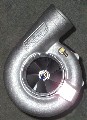

STS Spool time

Before you get the barrage of sunshine, allow me to suggest that as you sift through feedback, you take notice in the comments from those who are installers and have installed, tuned, and dyno'd a variety of turbo set-ups, not just STS... also, the feedback from members who have driven in more than one turbo set-up, not just an STS.
To be fair, I'd, PESRONALLY, rather deal with some spool problem of an STS, IF there is to be agreed that there is some, than the peak boost at redline of our F-Body blowers. It's low price is also another advantage that favors it... My $0.02.
To be fair, I'd, PESRONALLY, rather deal with some spool problem of an STS, IF there is to be agreed that there is some, than the peak boost at redline of our F-Body blowers. It's low price is also another advantage that favors it... My $0.02.
Mine is not true STS but it is a rear mount with a MP t-61 tith a .84 turbine. Boost starts around 2600-2800 and is full 7 psi by 3500. I plan on putting a t-70 compressor housing on when I go to a custom turbo cam. Now the motor is stock plus intercooler, 42# injectors, and tune. In 6th gear at 1800 rpm I make about 2 lbs boost, when the pedal is floored. Stock 3.42 gears. I would also like to know what rpm people are getting spooled with the .68 a/r and the .96 a.r??
2500 R.P.M On my ls6 full boost by 3,500 R.P.M my car was a freak could not understand it i guess it was in the tune and i had a 10 pound fly wheel and stock 3.42 running 8.5 psi just cant 1/4 it for **** i heard cam selections is a major player also
Trending Topics
LS1 Tech Stories
The Best V8 Stories One Small Block at Time

Topdon ONE vs. Artidiag 800 BT2: Which is the Diagnostic Tablet For You?
Pouria Savadkouei
Gas Monkey Built a 6-Wheel Ferrari Testarossa With a Corvette LT4 Engine
Verdad Gallardo
7 Most Reliable High-Performance Engines GM Has Ever Built
Verdad Gallardo
Amazing '71 Camaro Restomod Is Modern Muscle Car Under the Skin
Verdad Gallardo
6 Common C5 Corvette Failures and What's Involved In Repairing Them
Pouria Savadkouei
Retro Modern Bandit Pontiac Trans AM Comes With Burt Reynolds' Autograph
Verdad Gallardo
Top 10 Greatest Cadillac V Series Performance Models Ever, Ranked
Pouria Savadkouei
Top 10 Most Powerful Chevy Trucks Ever Made!

Hennessey's New Supercharged Silverado ZR2 Has 700 HP
Verdad Gallardo

Originally Posted by Devil's Due
Gearing wise I don't make full boost until the very end of 1st so 2nd would be the first gear that really utilizes 5psi.

TECH Addict


Joined: Jun 2005
Posts: 2,660
Likes: 14
From: England
Originally Posted by Bankz27
I was wondering how long does it take for you sts guys to spool up and what type of turbo you would be running

You asked how long it takes to spool. This evidently would be time based, so it therefore would not be referring to the point in the rpms where boost is made, as this isn't time based.
Spool time would be LAG, which all turbocharged cars suffer from, unless running an Anti-lag System (ALS). LAG occurs after a stall period. This is when the throttle plate on the TB is closed, the exhaust gas velocity reduces stalling the turbine, combine this with the trapped high pressure air beteen the turbocharger and the TB it causes the turbine to stall. When you re-open the throttle plate, the exhaust gas flow will increase, but there will be a momentary LAG before boost is produced, this is becuase a turbocharger has to spin at a very high rpm to produce boost. A BOV or dump valve releases the trapped air pressure air, helping to minimise the stall, but exhaust gas flow is the primary culprit.
Remember ALL turbocharged engines suffer from this. Good location and well matched turbo's mean you should be able to reduce LAG to a minimum, but it will still be present.
I don't have any times for LAG, but when I spoke to an STS agent about LAG they would always sidestep the question, that combined with other comments I have read and just plain physics means I would not entertain a rear mount setup unless the car is soley for dyno numbers and straight line drag racing, if you like driving road courses it is far from ideal.
LAG can and will occur at any point within the operation boost range of the turbo. So even though it may be able to produce boost at 2500rpm and max boost by 3000rpm. If you lift off the throttle at 5200rpm for a second (cornering) and then reapply the throttle you will have LAG even though the rpm's may not have dropped below 4500rpm.
If you want the best throttle response you'll want twin turbo's mounted where they should be in the engine bay. Twins allow you to run smaller turbo's so in theory they should require less exhaust gas flow to produce boost, this means the LAG period would be reduced. Although I believe (not sure for certain) that some of the fastest and most powerful turbo cars usually use a large single turbo as it is more efficent.
-Positive Displacement supercharger offers the best throttle response and no lag.
-Centrifugal supercharger offers minimal lag. But it does contain some, again due to the high rpm's that the blower runs at to produce boost. However low end torque is comparatively poor.
-Front mount turbo. Most efficent and will produce the most power. A well sorted setup should offer good driveability but LAG will be present.
-Rear mount turbo will still be more efficent than a supercharger and thus produce more power but LAG and throttle response will be worse than any of the other options.
Originally Posted by Bankz27
So it would be safe to say that on a gt35 mm turbo at 88 .a/r that if I put a 3500 stall I would be fine?
Just my 2 pennies worth.

Staging Lane
Joined: Aug 2005
Posts: 99
Likes: 0
From: St. Louis
Originally Posted by reocamaro
Which setup are you using on your car? Because I only get about 1 maybe 2# at first and then I make utilize boost in second. Are you a4 or m6?

TECH Resident
Joined: Nov 2002
Posts: 996
Likes: 0
I have a 2003 Z06 in which I installed one of the first prototype STS twin kits.
I can tell you this, the car pulls like crazy, and when I shift fast, there is a slight delay (lag), but it is not bad at all in my opinion because it helps keep the car under control (not spinning the tires as easily).
I have nothing to compare it to since I never had a turbo car before, but it is certainly not a problem. I think this setup might be great on a road course (As well as drag racing)
Tommy
I can tell you this, the car pulls like crazy, and when I shift fast, there is a slight delay (lag), but it is not bad at all in my opinion because it helps keep the car under control (not spinning the tires as easily).
I have nothing to compare it to since I never had a turbo car before, but it is certainly not a problem. I think this setup might be great on a road course (As well as drag racing)
Tommy

1. you should be asking how soon you get any boost, not full boost, as once you get into positive pressure, you'll get to full boost _very_ quickly.
2. getting to positive pressure is important. it signifies how well your exhaust is matched to the size of the turbine, how well it's tuned down low to generate all the extra exhaust flow to get the turbo going, etc.
remember torque comes from compression, and compression comes from how much air you cram in there. at low rpm you don't have the hp to generate airflow, so you gotta do it through timing and intake/cam design
2. getting to positive pressure is important. it signifies how well your exhaust is matched to the size of the turbine, how well it's tuned down low to generate all the extra exhaust flow to get the turbo going, etc.
remember torque comes from compression, and compression comes from how much air you cram in there. at low rpm you don't have the hp to generate airflow, so you gotta do it through timing and intake/cam design
Guys on here w/ the STS setup, does the amount of vacuum line have anything to do w/ spooling (or how quickly it spools?) Let me explain. Like I said I don't produce much boost through first (ever) and I'm wondering if (because of the way I positioned the boost controller and the solenoid) the excessive vacuum line isn't causing some sort of reduced pressure or should I look at something more common line a vacuum leak or an exhaust leak? If this is confusing you please tell me I'll try to repost my question more clearly.