




PVC Catch can system.... Final conclusive answer

gotcha, so if I build a 3 port catch can I would be set. And the setup functions as normal when not under boost (cruising/idle)?
Heres what I started on in the garage last night (-10an lines, i just need to figure out how to convert the PCV ports to -10
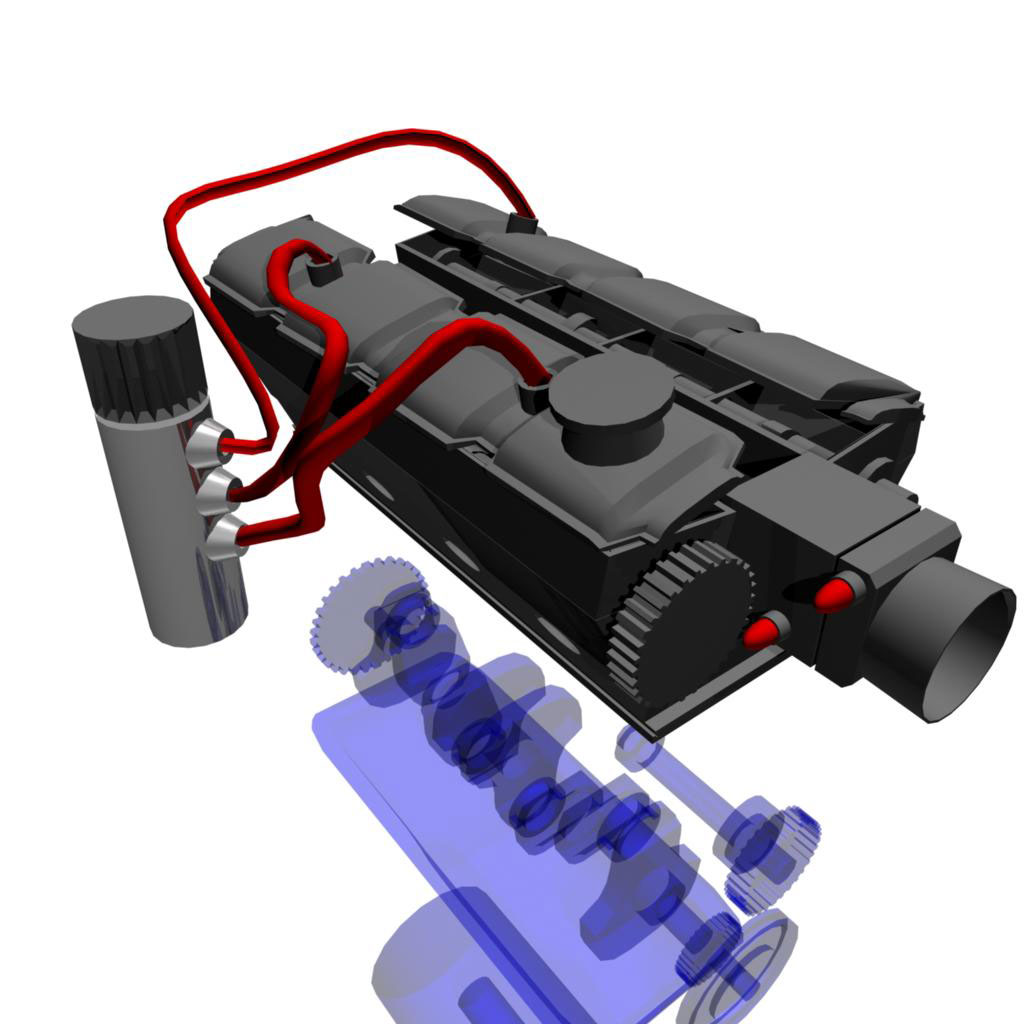
Heres what I started on in the garage last night (-10an lines, i just need to figure out how to convert the PCV ports to -10
Originally Posted by JAvenger007
gotcha, so if I build a 3 port catch can I would be set. And the setup functions as normal when not under boost (cruising/idle)?
Heres what I started on in the garage last night (-10an lines, i just need to figure out how to convert the PCV ports to -10
Heres what I started on in the garage last night (-10an lines, i just need to figure out how to convert the PCV ports to -10
I'm still totally confused on how this is going to work.

-B

Teching In
Joined: Jun 2007
Posts: 16
Likes: 0
Originally Posted by Blown383
You can easily purchase aluminum -10AN bungs and weld them onto the valve covers.
I'm still totally confused on how this is going to work.
-B
I'm still totally confused on how this is going to work.
-B
Here's link to the Josh@KYTP's catch can GB. It's a great can with plenty of volume.
https://ls1tech.com/forums/showthrea...7311863&conly=
Thanks again,
Eric
Originally Posted by c0wboy
The crankcase sees excess pressure especially FI, nitrous fed, and stroked motors. The crankcase pressure escapes though the -10 ports into the catch can. The excess gasses escape through K&N filter, and the excess oil vapor is collected on the walls of the can. The vapor subsequently pools and collects at the bottom of the can.
Here's link to the Josh@KYTP's catch can GB. It's a great can with plenty of volume.
https://ls1tech.com/forums/showthrea...7311863&conly=
Thanks again,
Eric
Here's link to the Josh@KYTP's catch can GB. It's a great can with plenty of volume.
https://ls1tech.com/forums/showthrea...7311863&conly=
Thanks again,
Eric
well my pcv is all installed and complete, just like the diagram at the top. hopefully, if all goes well with my tranny install, i'll take pics of it tomorrow. i wont lag on you guys!!
LS1 Tech Stories
The Best V8 Stories One Small Block at Time

6 Common C5 Corvette Failures and What's Involved In Repairing Them
Pouria Savadkouei
Retro Modern Bandit Pontiac Trans AM Comes With Burt Reynolds' Autograph
Verdad Gallardo
Top 10 Greatest Cadillac V Series Performance Models Ever, Ranked
Pouria Savadkouei
Top 10 Most Powerful Chevy Trucks Ever Made!

Hennessey's New Supercharged Silverado ZR2 Has 700 HP
Verdad Gallardo
Coachbuilt N2A Anteros Is an LS2-Powered C6 Corvette In Italian Clothes
Verdad Gallardo
Awesome K5 Blazer Restomod Comes With C7 Corvette Power
Verdad Gallardo
10 Camaros You Should Never Buy

10 LS Engine Myths That Refuse to Die
Verdad Gallardo
Originally Posted by c0wboy
I'm using this catch can from Josh @ KYTB. 3" diameter, w/ 3" K&N filter dual -10an inlets. IMHO, the best on the market as far as style and function. No need for filtering in the can when your motor reaches a certain point. When the motor is pushed hard, we need all the air evacuation we can get.
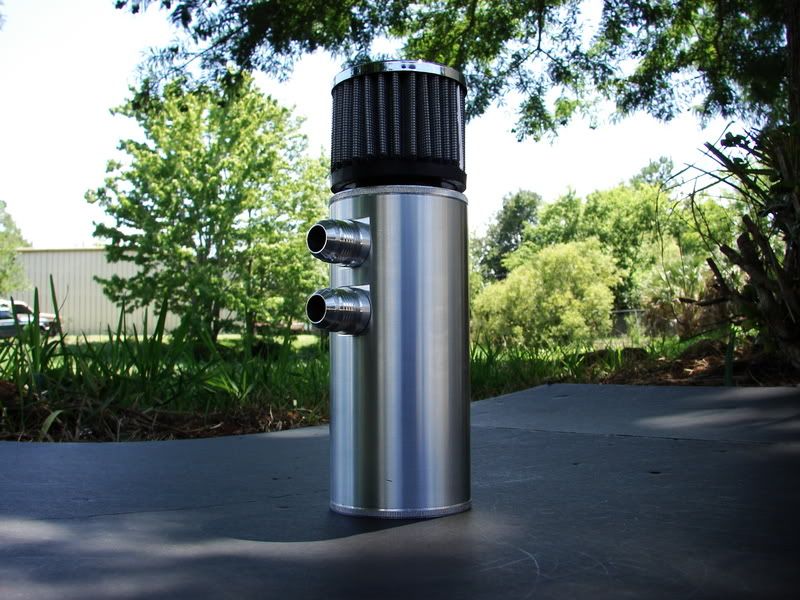
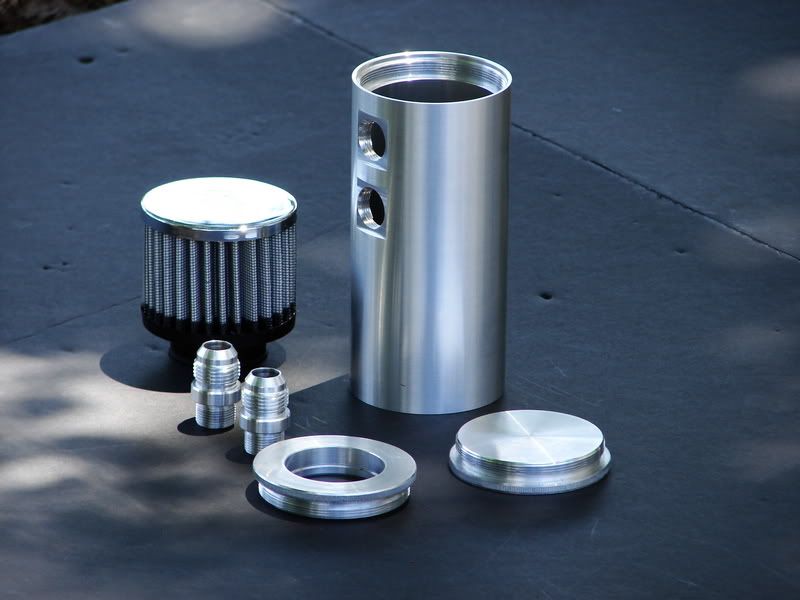
That looks like mine from home depo parts but way less bling
 But my question is do you get that oil smell in your cabin? I ran an extra line to the stcok pcv from the intake to the very top of mine to keep the smell down. Works great no film in the intake.
 All the LT1 boys are telling me I need my PCV system on the side of the LT1/LT4 intakes??? Is any other street cars doing away with there PCV systems.
I even thought about running a -10 from the passengerside valve cover and a -10 from the PCV port on the Drivers side INTAKE??
Would that be sufficent.
Where is the PCV port on the LS1 cars?
I even thought about running a -10 from the passengerside valve cover and a -10 from the PCV port on the Drivers side INTAKE??
Would that be sufficent.
Where is the PCV port on the LS1 cars?

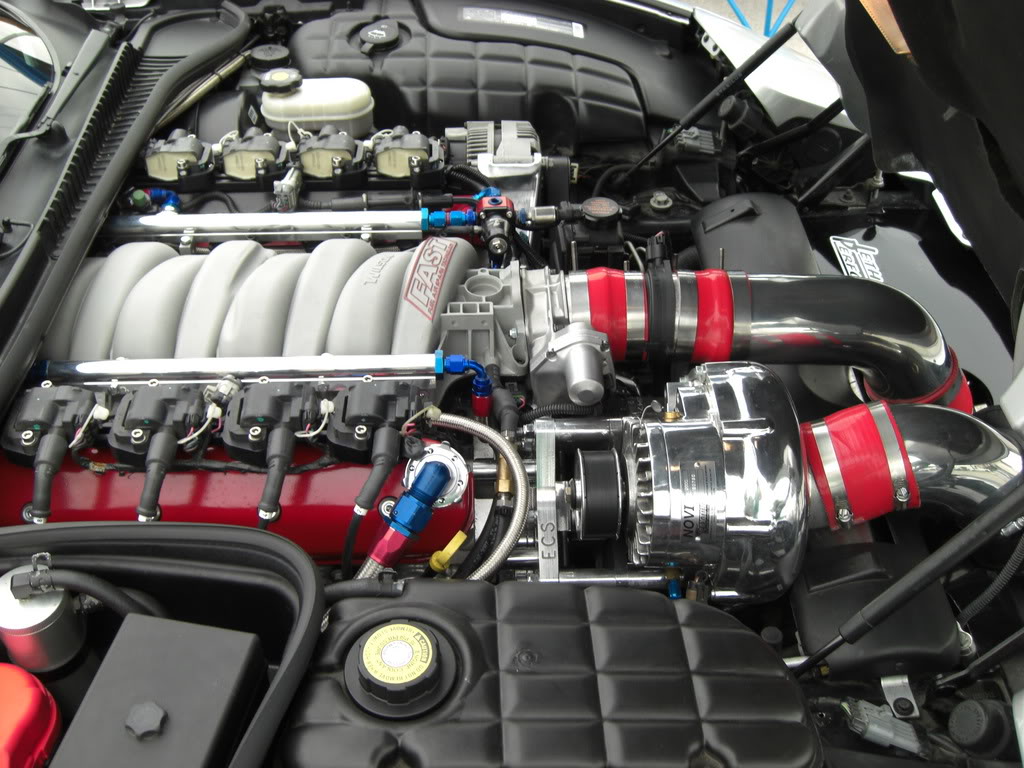
Here is the way we set up my partners Z06. 900 rwhp
1. AMW catch can
2. mcmaster check valve
3. stock pcv inline
4. moroso catch cans in the fenders
5. metal oil cap
6. Mustang PCV screen in the cap
7. -12 AN line off the passanger side
8. -8 AN off the drivers side
And a pic!
1. AMW catch can
2. mcmaster check valve
3. stock pcv inline
4. moroso catch cans in the fenders
5. metal oil cap
6. Mustang PCV screen in the cap
7. -12 AN line off the passanger side
8. -8 AN off the drivers side
And a pic!
Last edited by JMBLOWNWS6; Jun 27, 2007 at 11:21 PM.
JMBLOWNWS6
Just to clarify (Trying to set it up like your buddies)
-10 Braided from each valvecover to a vented catchcan.
From the PCV on the side of the intake (LT4 car) I plan on running a -10 bung to a 1way checkvalve to a oil air serperator back into the front of the intake.
Looks like he is running braided lines as well, how did he set it up with the catchcan (Also how big is his, I need a small one) and what Mcmaster checkvalve is he using????
Thanks for any help and did I miss anything
Just to clarify (Trying to set it up like your buddies)
-10 Braided from each valvecover to a vented catchcan.
From the PCV on the side of the intake (LT4 car) I plan on running a -10 bung to a 1way checkvalve to a oil air serperator back into the front of the intake.
Looks like he is running braided lines as well, how did he set it up with the catchcan (Also how big is his, I need a small one) and what Mcmaster checkvalve is he using????
Thanks for any help and did I miss anything
Originally Posted by JMBLOWNWS6
Here is the way we set up my partners Z06. 900 rwhp
1. AMW catch can
2. mcmaster check valve
3. stock pcv inline
4. moroso catch cans in the fenders
5. metal oil cap
6. Mustang PCV screen in the cap
7. -12 AN line off the passanger side
8. -8 AN off the drivers side
And a pic!

1. AMW catch can
2. mcmaster check valve
3. stock pcv inline
4. moroso catch cans in the fenders
5. metal oil cap
6. Mustang PCV screen in the cap
7. -12 AN line off the passanger side
8. -8 AN off the drivers side
And a pic!
Yeah that car sucks!
Lots of air
dam sweet ride and more pics of the catch set up that is by far the best I have seen. 
Originally Posted by c0wboy
I can say with confidence that if you run that set-up, that'll be the last time you have to mess with it. I've seen 1100HP street cars run a set-up exactly like that.
Thanks again!
Eric
Thanks again!
Eric
With your catch can system you will relieve crankcase pressure very effectively however you will have no vacuum system to clean out all that blowby and moisture from your crankcase. This will cause premature wear on your engine and cause the oil to become contaminated much faster.

Teching In
Joined: Jun 2007
Posts: 16
Likes: 0
Originally Posted by 97ws6pilot
Eric,
With your catch can system you will relieve crankcase pressure very effectively however you will have no vacuum system to clean out all that blowby and moisture from your crankcase. This will cause premature wear on your engine and cause the oil to become contaminated much faster.
With your catch can system you will relieve crankcase pressure very effectively however you will have no vacuum system to clean out all that blowby and moisture from your crankcase. This will cause premature wear on your engine and cause the oil to become contaminated much faster.
Most guys that can use a catch can like this are the FI crowd, and guys running medium to large nitrous shots. Those guys change their oil ever 2500 miles (supposed to anyways
) When premature wear is mentioned, they don't think of a worn out motor driven 200K miles, they think of a disentigrating piston, spun bearing, etc. Those guys need all of the crankcase ventilation they can possibly get.Thanks again!
Eric
Originally Posted by c0wboy
This is not necessarily the case. Most guys connect the vacuum line directly to the intake. You can see vacuum on the gauge at idle and usually under light throttle. When the throttle is to the floor, the vacuum goes away altogether. Now the PCV system is replied upon to push hot gasses and oil through a set of filters. It's planinly not optimal.
Most guys that can use a catch can like this are the FI crowd, and guys running medium to large nitrous shots. Those guys change their oil ever 2500 miles (supposed to anyways ) When premature wear is mentioned, they don't think of a worn out motor driven 200K miles, they think of a disentigrating piston, spun bearing, etc. Those guys need all of the crankcase ventilation they can possibly get.
Thanks again!
Eric
Most guys that can use a catch can like this are the FI crowd, and guys running medium to large nitrous shots. Those guys change their oil ever 2500 miles (supposed to anyways
) When premature wear is mentioned, they don't think of a worn out motor driven 200K miles, they think of a disentigrating piston, spun bearing, etc. Those guys need all of the crankcase ventilation they can possibly get.Thanks again!
Eric
Your right that most FI and nitrous motors won't go the distance. But I would like to give my motor the best odds. For some reason people think that a PCV system is only for daily drivers. The minute you shut down your engine to a week later when you crank it up again to go racing these blowby gases and contaminated oil are working on your crankcase, lower piston walls, and bearings. The main things I see when tearing apart small airplane engines(no pcv) are pitted cylinder walls and pitted main and rod bearings. The ones that get flown alot last usually 2000 hours or more. The ones that sit for a week at a time are lucky to get 500 hours out of their engines before they need a rebuild. Forced induction probably has twice the blowby as normally aspirated car or small airplane engines. When we drive our cars around town 90 percent of the time we are in vacuum. It is like a vacuum cleaner sucking the blowby gases safely out of your crankcase where they can be harmlessly burned.
I really like your filtered catch can and I use something similar to it for my breather hose. I however run the stock PCV as a vacuum source too.
what if you put a checkvalve behind the stock PCV (in-line with the stock hose running to the front of the pass. valve cover). And then ran the back 2 valve cover ports to a catch can (with a filter?).
OKay, here we go again..... could you modify the diagram showing us how to improve it, thus maitaining a vac to "prolong" the life of my "way....way to expensive setup"....
I've got the parts comin' my way... I wanna do it right the 1st... and last time!!
Thanks
I've got the parts comin' my way... I wanna do it right the 1st... and last time!!
Thanks
Originally Posted by JAvenger007
what if you put a checkvalve behind the stock PCV (in-line with the stock hose running to the front of the pass. valve cover). And then ran the back 2 valve cover ports to a catch can (with a filter?).