






Ran out of gas, please help

Thread Starter
Registered User
Joined: Oct 2007
Posts: 4
Likes: 0
 Ran out of gas, please help
 I ran out of gas the other night in Miami. I pushed pettle down until every drop was out. I paid some people to go and get gas. I put 3 gallons in and tried to start it for about 30 mins. It would not start. It just sounds like its cranking, not wanting to start at all. I had AAA tow it from Miami back home to Vero Beach (3hrs north) and it still won't start. Some people said it was my fuel pump that is stuck. Some said it was the stuff at the bottom of my tank clogging my fuel pump. Some people said it was air in the fuel pump. Anyone know why this happened? Please, any info would be much appreciated.

On The Tree
Joined: Mar 2006
Posts: 111
Likes: 0
From: Havelock, nc/dallas, tx
my car did the exact same thing, and it burnt the fuel pump up, huge PITA to replace it. not to discourage you. but after i replaced it, my car ran just like it did before.
Last edited by Wez28; Oct 16, 2007 at 11:53 PM. Reason: typo's
+1 on the pump. I burnt one out on my old car when my in-tank fule line was leaking.
TIP: If your not real worried about it cut a hole above the tank so you dont have to take the tank down. its pretty easy and it doesnt take much to get some scrap sheet metal and rivet it in its place.
TIP: If your not real worried about it cut a hole above the tank so you dont have to take the tank down. its pretty easy and it doesnt take much to get some scrap sheet metal and rivet it in its place.
Cranking the motor when the car is out of gas is a sure way to burn up these pumps since the pump is cooled by the gas...... If you think you are running out of gas would be best to just shut it off and start walking to the nearest gas station - otherwise you will be walking to the nearest auto parts store(as you now are going to do  well maybe not walk)
well maybe not walk) 
TECH Resident
Joined: Oct 2005
Posts: 781
Likes: 0
From: Taxme, Ohio
You may not have actually run out of gas when your car quit. It could have been the pump or power to it. As everyone is telling, running low on fuel can ruin the fuel pump.
When you turn the key on - but not cranking to start, do you hear the fuel pump whine for 2 or 3 seconds? This sound and checking for fuel at the rail will tell you if your fuel pump is working and if there is fuel pressure to the injectors. If you check for fuel at the schrader valve in the engine compartment, have a rag ready as the gasoline should spray out with gusto out when you depress the valve core.
Before replacing a pump, first determine if there is power to it; which gets a little more involved.
When you turn the key on - but not cranking to start, do you hear the fuel pump whine for 2 or 3 seconds? This sound and checking for fuel at the rail will tell you if your fuel pump is working and if there is fuel pressure to the injectors. If you check for fuel at the schrader valve in the engine compartment, have a rag ready as the gasoline should spray out with gusto out when you depress the valve core.
Before replacing a pump, first determine if there is power to it; which gets a little more involved.
Trending Topics
LS1 Tech Stories
The Best V8 Stories One Small Block at Time

6 Common C5 Corvette Failures and What's Involved In Repairing Them
Pouria Savadkouei
Retro Modern Bandit Pontiac Trans AM Comes With Burt Reynolds' Autograph
Verdad Gallardo
Top 10 Greatest Cadillac V Series Performance Models Ever, Ranked
Pouria Savadkouei
Top 10 Most Powerful Chevy Trucks Ever Made!

Hennessey's New Supercharged Silverado ZR2 Has 700 HP
Verdad Gallardo
Coachbuilt N2A Anteros Is an LS2-Powered C6 Corvette In Italian Clothes
Verdad Gallardo
Awesome K5 Blazer Restomod Comes With C7 Corvette Power
Verdad Gallardo
10 Camaros You Should Never Buy

10 LS Engine Myths That Refuse to Die
Verdad Gallardo
+1 on the pump. same exact thing happened to me, cruising down the interstate and all of a sudden the car sputters and dies, I knew I was low on gas but thought I had more (fuel gauge wasn't working at the time) but after a tank of gas it still wouldn't start. New pump and it runs strong again. when you turn the key on listen for the pump to kick in. if it doesn't it's shot.

[QUOTE=chromeplated500;7960154]+1 on the pump. I burnt one out on my old car when my in-tank fule line was leaking.
TIP: If your not real worried about it cut a hole above the tank so you dont have to take the tank down. its pretty easy and it doesnt take much to get some scrap sheet metal and rivet it in its place.[/QUOTE]
After my regulator went out.. I did the same thing. After it is back in and the carpet down, cant even tell.
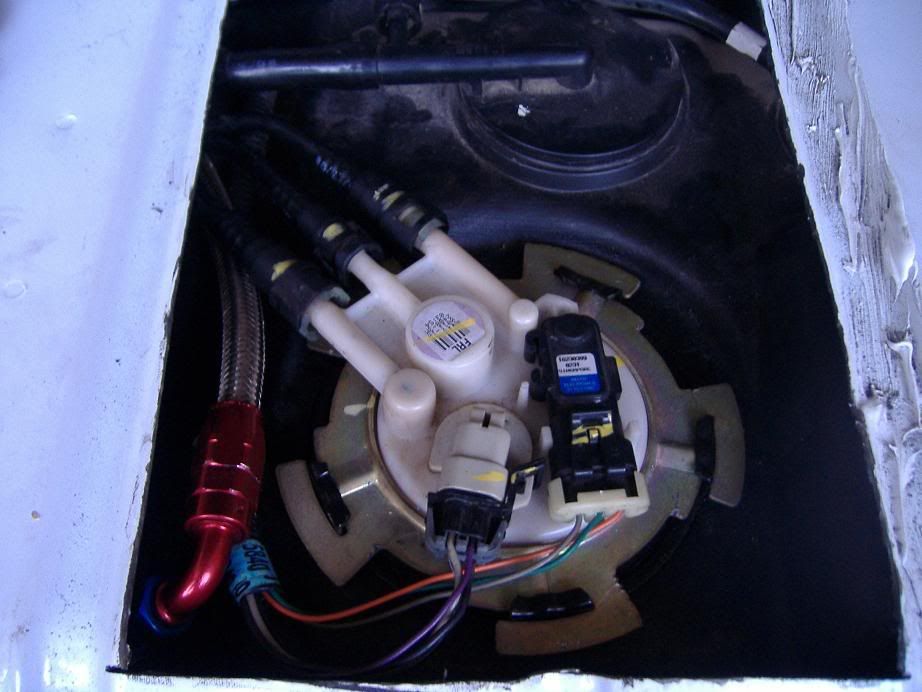
TIP: If your not real worried about it cut a hole above the tank so you dont have to take the tank down. its pretty easy and it doesnt take much to get some scrap sheet metal and rivet it in its place.[/QUOTE]
After my regulator went out.. I did the same thing. After it is back in and the carpet down, cant even tell.

TECH Resident
Joined: Jan 2002
Posts: 828
Likes: 0
From: dallas,tx.
I had to replace a fuel pump a few years back, and after finding out that the gasoline is what cooled it I never hit the house with less than half a tank of gas. Especially here in Texas. Running on a quater tank or less all the time will burn 'em up.

TECH Resident
Joined: Oct 2005
Posts: 781
Likes: 0
From: Taxme, Ohio
That seems to be the consensus. However, I recently pulled a failing pump from a grand prix and hooked it to a battery charger to see if these pumps get hot when out of gasoline. I ran the pump for several minutes dry and could barely feel any external heat. 


Tech Resident
Joined: Jan 2006
Posts: 5,117
Likes: 3
From: Philly
You should NEVER, EVER run below 1/4 tank of gas. It makes your fuel pump run very hot and you suck a lot of the water/sediment that deposits over the years in the bottom of the gas tank into the fuel lines.
If you're lucky enough that your fuel pump is stuck and not burned out, try this:
This requires TWO PEOPLE! Get a friend to stand by the gas door near the fuel pump. As you're starting the car, have him smack the side of the gas tank. You have to do this while the car is cranking. Give it a shot and see if it works.
If you're lucky enough that your fuel pump is stuck and not burned out, try this:
This requires TWO PEOPLE! Get a friend to stand by the gas door near the fuel pump. As you're starting the car, have him smack the side of the gas tank. You have to do this while the car is cranking. Give it a shot and see if it works.
TECH Resident
Joined: Oct 2005
Posts: 781
Likes: 0
From: Taxme, Ohio
I took (sawed) a fuel pump apart to see what makes them hum and it is incredible how they work. The gasoline flows through an electrical path, over the armature, stator and brushes. The internal works of these DC motors with sparking brushes on a commutator LIVE in an explosive mix yet do not create an explosion. The electrical hobbyist with me was likewise amazed that these motors do not detonate the fuel mist within an emptying tank. Our conclusion was that the motors are for the most part are sealed and the event of oxygen, even in an empty tank would be in such small quantities within the pump that the air being pulled in would be minuscule; hence an explosion could not happen. I also believe that once there is no fuel for the pump to draw, neither will it draw in air. In other words, I don't think you will ever see a submersible fuel pump put air, especially pressurized air into the fuel line. The cam-med two stage pump seems to work only with a fluid of specific density. Air is too thin to be pumped and does not replace the remaining fuel within the pump and motor assembly.
If the tiny check valve does not hold gasoline within the motor when the fuel level is below the top of the motor, there will be a stagnant space left inside the pump. This would remove the arc dampening effect of the gasoline flow over the brush / commutator assembly. Here, I believe is where the motor damage begins to occur as the arcing quickly erodes the electrified contact surfaces. This is where the localized heating might occur. I don't believe these pumps get hot throughout. I could not get my pump to heat up when it was running for several minutes outside of gasoline.
I am writing this because after dismantling the pump and motor, the cause of the failure was one brush in very good shape with its counterpart all but completely eroded away - the little tensioning spring extended, barely making contact. Consequently the commutator was deeply grooved and worn away as well from the arcing effect. This was on a 65k mile pump with a missing check valve. I believe that little rubber flap of a check valve being absent at assembly or having later been consumed caused the premature failure of the pump and not running low on gas. I don't know for certain but in this case that is what it looks like.
If the tiny check valve does not hold gasoline within the motor when the fuel level is below the top of the motor, there will be a stagnant space left inside the pump. This would remove the arc dampening effect of the gasoline flow over the brush / commutator assembly. Here, I believe is where the motor damage begins to occur as the arcing quickly erodes the electrified contact surfaces. This is where the localized heating might occur. I don't believe these pumps get hot throughout. I could not get my pump to heat up when it was running for several minutes outside of gasoline.
I am writing this because after dismantling the pump and motor, the cause of the failure was one brush in very good shape with its counterpart all but completely eroded away - the little tensioning spring extended, barely making contact. Consequently the commutator was deeply grooved and worn away as well from the arcing effect. This was on a 65k mile pump with a missing check valve. I believe that little rubber flap of a check valve being absent at assembly or having later been consumed caused the premature failure of the pump and not running low on gas. I don't know for certain but in this case that is what it looks like.
Last edited by 01Z28M6; Oct 23, 2007 at 07:46 AM.
Tech Resident
Joined: Jan 2006
Posts: 5,117
Likes: 3
From: Philly
I don't understand why people have to run the tank down. You're gonna have to fill up eventually, anyway. Fill up at half a tank like I do. Your fuel filter must be SO CLOGGED, I hope you change it every 10,000 miles with all the sediment you're sucking out of the bottom of the tank.



The fourth gen f-body draws fuel from a bucket in the tank that holds about a quart of fuel. From there it's pumped to the engine. Fuel returning from the engine is also dumped back into the bucket so it remains full at all times regardless of how much fuel is in the tank. Because the fuel pump is located in the bucket it stays submerged in fuel at all times. Running it out of gas and then trying to start it can/will kill the pump though, I did it several years ago. Ran out of gas on an incline, gauge showed 1/8 tank so I tried to fire it. Spun the pump & killed it.
As far as sediment in the tank, any junk in your tank will always settle to the bottom, and regardless of how much fuel is in the tank the fuel pickup ALWAYS draws fuel from the bottom of the tank. You will not suck up any more crap from the last 1/16th tank than you will when it's full. Just FYI.

Last edited by jmm98LS1; Oct 23, 2007 at 11:19 AM.
