








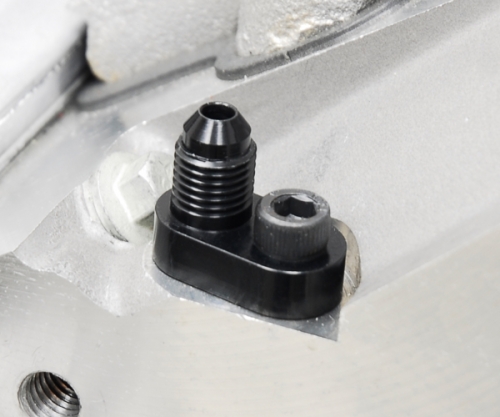


Ls1 coolant tubes

If it is wrong to block off the coolant passages, then why does GM supply most of the production engines with the rears blocked off? Once you bleed the air out, it stays out. We have plenty of engines out there to prove that blocking off all 4 is fine. And these engines are in off road application where the chance of getting an air pocket would be way greater then a car.

Staging Lane
Joined: Aug 2013
Posts: 51
Likes: 0
From: California
Lets go back in GM history. The early LS1s had the coolant tube that went to all 4 corners of the heads. A few years later, all production LS engines had the rears blocked off. Now we go to the most recent DI LS engine. It does not even have ports to bleed the air out in the heads. Seems like GM is doing that for a reason...
I am pretty sure the LS7 is right there except it revs higher....besides the N2O of course. Would a 1500hp twin turbo 454 LS based motor be a better example? There is one outside my door with 4 block off on it...
Lets go back in GM history. The early LS1s had the coolant tube that went to all 4 corners of the heads. A few years later, all production LS engines had the rears blocked off. Now we go to the most recent DI LS engine. It does not even have ports to bleed the air out in the heads. Seems like GM is doing that for a reason...
Lets go back in GM history. The early LS1s had the coolant tube that went to all 4 corners of the heads. A few years later, all production LS engines had the rears blocked off. Now we go to the most recent DI LS engine. It does not even have ports to bleed the air out in the heads. Seems like GM is doing that for a reason...
https://ls1tech.com/forums/generatio...take-pics.html
From what I understand it should work for a 92. This was the route I was going to take once I get my 92mm so I can't be 100% certain that it does work yet.
From what I understand it should work for a 92. This was the route I was going to take once I get my 92mm so I can't be 100% certain that it does work yet.
Another one here. 500+hp, 6800 RPM shifts and the back ports are blocked off. This is an urban legend...From the research I have done, the #7 failures are not from a hot cylinder, but a lean condition and more prominent on Nitrous applications. The rear cylinders are the last to get air and suffer from detonation.
Like mentioned, they are blocked off on the LS7 and no issues there....
The attached above where the rears connected is no different than having them blocked
Like mentioned, they are blocked off on the LS7 and no issues there....
The attached above where the rears connected is no different than having them blocked

Teching In
Joined: Oct 2013
Posts: 12
Likes: 0
Sorry, I am new to this engine. I am building one for a 56 Chevy truck. will be carbureted.
KRC makes a kit that has another line coming off it.
http://www.krcpower.com/
On one with a carb, where would that line run to.
KRC makes a kit that has another line coming off it.
http://www.krcpower.com/
On one with a carb, where would that line run to.
LS1 Tech Stories
The Best V8 Stories One Small Block at Time

Topdon ONE vs. Artidiag 800 BT2: Which is the Diagnostic Tablet For You?
Pouria Savadkouei
Gas Monkey Built a 6-Wheel Ferrari Testarossa With a Corvette LT4 Engine
Verdad Gallardo
7 Most Reliable High-Performance Engines GM Has Ever Built
Verdad Gallardo
Amazing '71 Camaro Restomod Is Modern Muscle Car Under the Skin
Verdad Gallardo
6 Common C5 Corvette Failures and What's Involved In Repairing Them
Pouria Savadkouei
Retro Modern Bandit Pontiac Trans AM Comes With Burt Reynolds' Autograph
Verdad Gallardo
Top 10 Greatest Cadillac V Series Performance Models Ever, Ranked
Pouria Savadkouei
Top 10 Most Powerful Chevy Trucks Ever Made!

Hennessey's New Supercharged Silverado ZR2 Has 700 HP
Verdad Gallardo Another one here. 500+hp, 6800 RPM shifts and the back ports are blocked off. This is an urban legend...From the research I have done, the #7 failures are not from a hot cylinder, but a lean condition and more prominent on Nitrous applications. The rear cylinders are the last to get air and suffer from detonation.
Like mentioned, they are blocked off on the LS7 and no issues there....
The attached above where the rears connected is no different than having them blocked
Like mentioned, they are blocked off on the LS7 and no issues there....
The attached above where the rears connected is no different than having them blocked
Teching In
Joined: Oct 2013
Posts: 12
Likes: 0
Doing research, that hose runs to the throttle body, to keep it from freezing up. (they may have had a problem with that)
On most vehicles, manufacturers pass hot coolant through the throttle body to heat it up. This is done so that the throttle body doesn't freeze up when it gets cold from condensation and freezing temperatures.
Fortunately, most of us don't live in the arctic. Most of the time, unless ambient temperatures are consistently extremely sub zero the heat from the engine bay itself is enough to keep the throttle body thawed. Since auto manufacturers have to design a vehicle to work in all conditions, this is something that's done to cover the design.
The problem here is that the throttle body can get extremely hot, especially in the summer. Hot enough to litterally burn you. Air passing through the scorching throttle body gets super heated. Often times, and dyno numbers and monitoring equipment will prove it, the hot throttle body can all but negate a cold air intake, keeping air temperatures entering the upper intake EXACTLY the same as the OEM intake.
On most vehicles, manufacturers pass hot coolant through the throttle body to heat it up. This is done so that the throttle body doesn't freeze up when it gets cold from condensation and freezing temperatures.
Fortunately, most of us don't live in the arctic. Most of the time, unless ambient temperatures are consistently extremely sub zero the heat from the engine bay itself is enough to keep the throttle body thawed. Since auto manufacturers have to design a vehicle to work in all conditions, this is something that's done to cover the design.
The problem here is that the throttle body can get extremely hot, especially in the summer. Hot enough to litterally burn you. Air passing through the scorching throttle body gets super heated. Often times, and dyno numbers and monitoring equipment will prove it, the hot throttle body can all but negate a cold air intake, keeping air temperatures entering the upper intake EXACTLY the same as the OEM intake.
Sorry, I am new to this engine. I am building one for a 56 Chevy truck. will be carbureted.
KRC makes a kit that has another line coming off it.
http://www.krcpower.com/
On one with a carb, where would that line run to.
KRC makes a kit that has another line coming off it.
http://www.krcpower.com/
On one with a carb, where would that line run to.
Last edited by L_Brown; Oct 18, 2013 at 04:23 PM.
...people have rotated the intakes 180 degrees (so the throttle body was facing on the backs of the engines and still had cyl 7 failure...even on the ls4 front wheel drive cars have seen cyl 7 failure and the intake is reversed from gm that way. that disproves it being lean from the intake manifolds.
I have seen no evidence to support the "steam" ports causing the #7 failures. If you search, you will see most failures are Nitrous applications.

On The Tree
Joined: Aug 2009
Posts: 183
Likes: 0
Thats kinda what i thought.. How could you only get heat in 7 & 8. You would think if it needed it for cooling purposes that every cylinder would get hot. My first motor build ran for about 15 thousand miles with all 4 plugged & i had no issues with cylinders burning up... So im with you, i think its from people having their car leaned out to much.



Wow, I did not know there were people out there running blocked off steam ports. But why did GM feel it necessary to cast those ports in V8 heads since '97 if they're not doing anything?
Those of you saying it's not necessary and that the steam doesn't contribute to cylinder 7 ring land failures, ask yourself this: have you ever seen an LSX motor with all four corners vented that cracked the cylinder 7 ring land? And if you have, was it due to cylinder 7 getting too hot even with the steam port venting?
Those of you saying it's not necessary and that the steam doesn't contribute to cylinder 7 ring land failures, ask yourself this: have you ever seen an LSX motor with all four corners vented that cracked the cylinder 7 ring land? And if you have, was it due to cylinder 7 getting too hot even with the steam port venting?


Teching In
Joined: Oct 2013
Posts: 12
Likes: 0
The only reason the heads have ports on both ends is to keep from having a left and right head. The steam port runs to the throttle body to keep it from freezing up. If they ony had the ports at the front then they would have to have a left head and right right head. By having ports at both ends this is eliminated.
But that is for a fatory set up with no turbos or NO2.
But that is for a fatory set up with no turbos or NO2.
The only reason the heads have ports on both ends is to keep from having a left and right head. The steam port runs to the throttle body to keep it from freezing up. If they ony had the ports at the front then they would have to have a left head and right right head. By having ports at both ends this is eliminated.
But that is for a fatory set up with no turbos or NO2.
But that is for a fatory set up with no turbos or NO2.

Wow, I did not know there were people out there running blocked off steam ports. But why did GM feel it necessary to cast those ports in V8 heads since '97 if they're not doing anything?
Those of you saying it's not necessary and that the steam doesn't contribute to cylinder 7 ring land failures, ask yourself this: have you ever seen an LSX motor with all four corners vented that cracked the cylinder 7 ring land? And if you have, was it due to cylinder 7 getting too hot even with the steam port venting?
Those of you saying it's not necessary and that the steam doesn't contribute to cylinder 7 ring land failures, ask yourself this: have you ever seen an LSX motor with all four corners vented that cracked the cylinder 7 ring land? And if you have, was it due to cylinder 7 getting too hot even with the steam port venting?
GM put the rear steam ports in what..5 years and only in the early LS1 Corvette and F-body? Now here we are...11+ year later, LS engines in Corvette (505hp 7.0), GTO, F-body, CTSV, Trucks, SUVs and NONE....Nadda have factory equipped rear steam ports...
GM must have determined, they were not necessary.
We should do a poll....I would bet you would see a very high percentage of the folks here have the rear ports blocked off and no issues...
Lemme toss a question out here:
Forget whether or not GM used four corner, two corner or no corner coolant ports.
Don't you think that it's a good idea to add a little help to the heads by increasing how the coolant can flow out from the ends of the heads?
The cooler the heads can be kept, the better they perform. The LT1 engine had reverse cooling-it went to the heads first. And it worked.
Forget whether or not GM used four corner, two corner or no corner coolant ports.
Don't you think that it's a good idea to add a little help to the heads by increasing how the coolant can flow out from the ends of the heads?
The cooler the heads can be kept, the better they perform. The LT1 engine had reverse cooling-it went to the heads first. And it worked.
Lemme toss a question out here:
Forget whether or not GM used four corner, two corner or no corner coolant ports.
Don't you think that it's a good idea to add a little help to the heads by increasing how the coolant can flow out from the ends of the heads?
The cooler the heads can be kept, the better they perform. The LT1 engine had reverse cooling-it went to the heads first. And it worked.
Forget whether or not GM used four corner, two corner or no corner coolant ports.
Don't you think that it's a good idea to add a little help to the heads by increasing how the coolant can flow out from the ends of the heads?
The cooler the heads can be kept, the better they perform. The LT1 engine had reverse cooling-it went to the heads first. And it worked.
FWIW I have an aftermarket Autometer temp gauge hooked up back there and its always 180ish deg.