When you click on links to various merchants on this site and make a purchase, this can result in this site earning a commission. Affiliate programs and affiliations include, but are not limited to, the eBay Partner Network.
Shopping for a can for my new car, and I found this, Mann-Hummel catch can designed mostly for diesel vehicles in Australia. But appears to be super efficient, has an actual paper/fibrous REPLACEABLE filter. AU's Curtain University did an actual catch can study and this one was rated over 95% efficient. It has 1 inch inlet and outlets! And a pressure relief valve. It sounds perfect. Too bad LS engines have mostly 1/2 inch barbs and PCV lines that don't flow quite enough. This one is targeted mostly at diesels which I guess may have way more blowby and crankcase vent requirements than a gas engine, so surely this would work on any gas ICE.
I'd say, without using one yet, I'm sold and would bet the cost of a can that it's better at actually reducing oil suspended in air than Mighty Mouse cans, Mike Norris, Elite, or McNally even.
The only downside I see to draining back to the oil pan is.... have you ever opened your catch can and it's more WATER than oil? Mine's a chocolate milk mess every time I check it. Seems the catch can is catching all of the condensation that is coming out of the engine and safely holding it away from the engine-as opposed to just burning it off like it does in factory form. not sure I want that sludge going back into my oil pan.
I'll keep checking replies here to see what the general consensus is.
I would THINK that when the engine is fully warmed up,the water cooks out of the oil into the crank fumes, which are then inhaled intothe intake via the PCV hose.
Engines that don't get warmed up WILL accumulate water in the oil. (listening, all you 160 deg.thermostat owners??)
You don't have to drain to pan if you don't want, that's just a choice. This unit is designed to allow you to though.
Water condensates when hot air from crankcase hits a cold can below dew point. If there was no cold can.... then water would not accumulate. Keep the can in hot engine bay, and the plastic body has very little heat capacity compared to metal. Far less trouble with water accumulation that way.
If you want to see serious water accumulation then run a metal catch can in front of radiator in weather below 40F. You'll have to drain the water twice per fuel fill up. People see all that liquid and they think, "Dang! Glad I'm catching all that!" when really it's the can that's causing it. It wasn't necessary to collect all that water and now it has made a new problem that you have to deal with.
I'm guessing the real trick is slowing the air flow enough that heavier particulates drop out of the air stream without condensation of water. The amount of oil residue in the can is usually teeny tiny, often not even worth talking about. Racers can have oil accumulation worth talking about.
Had one on my c5. It was the lingenfelter kit with the reducers to fit the oe barbs. It was 1000x more effective once I ran a -10an from the valve cover to it instead of the 3/8 hose. But that could be said of any catch can
I built a 6.0LS a few years back for my 1969 Pontiac GTO.. At the time the engine was installed and during the tuning process I had the two PCV lines "Y"'ed together and then the single exhaust hose just routed down pointed toward the ground. The plan was to eventually put a catch can on the car.. I had all the connection points on the intake and TB closed off with vacuum nipples. After getting everything sorted, and a few months of sitting I started the car one morning and while it was sitting there idling warming up I noticed water pooling under the car... When I looked under there that PCV exhaust hose was dripping several ounces of what appeared to be pure clean water onto the ground. No catch can present, only rubber hose... I just left it that way. On every cold start, I would see water coming out of the hose. I also plumbed in a 2nd PCV valve on the passenger side valve cover so that BOTH sides have a one way vent.. Any crank case pressure can be vented OUT, but no air or condensation can be drawn back into that exhaust hose when the engine is off. It works. I have left it that way for over 2 years now. Inside of the intake manifold is OIL FREE. I have not opened up the engine to check for anything weird happening inside as I have not had to do any mechanical repairs to the engine. I assume it's working as on every start up the water comes dribbling out. I'd like to put a camera on that hose end and see what is coming out under a full throttle high rpm run.. I'd guess a little bit of smoke and oil.. like you see happening on dyno runs with open to the air filters on the valve covers experience. Is it allowing pressure to build in the crank case due to the small area of hose tubing it's exhausting through? Maybe. Is it detrimental in some way? Not that I have witnessed as this is just a CRUISER or weekend car and is not raced.. I don't know that I need to change anything so I'll leave it as is. Did I mention how clean the inside of the intake manifold is?
Well @Kawabuggy just having the lines open to the atmosphere is ... well it's ventilated for sure, but its not "emissions compliant". For an old car that for sure doesn't have to pass an emissions check, you're good - as in, it works - but it's venting oily air outside the car. It would never pass new car type air quality emissions. But you don't have to. I wish it were that easy, but pollution is bad and hurts people, so most of us have to find a way to route the crankcase fumes back into the intake tract and/or separate out to oil so it's not going out into the air.
Chris I get what you are saying... But to add to this... Where are guys emptying their catch cans? They are still putting it back into the environment-just in a different location such as a trash can (I assume?). I could probably put a catch can on the end of the hose I have there and then dispose of it in an oil recycling bin. That would probably be the most environmentally responsible method. I wonder how/where everyone else disposes of their catch can contents.
It would be a very bad idea to drain back into the Engine Oil Pan for most Catch Cans.
The Blow-By and Water that collects in the Catch Can is just going to contaminate and degrade the Engine Oil.
However...
Some Catch Cans do have a Water-Separator/ are designed to drain Oil back to the Pan but keep the Water and Blow-By in the Can.
This type of Can will need the Water and Blow-By drained periodically (separate from the Oil drain back into the Pan).
mann makes great filters, second best I have ever tested (wet).
drawbacks with this style and relative to using on gas engines are:
they are really big
no direct fitting options
no level inspection method
no integral boost checking, pressure regulation, pcv regulation
must be used with a separate storage container
filters must be replaced regularly, or replaced with washable units which filter much less efficiently
also you cannot connect anything tied to intake manifold vacuum to drain back without a manual valve, not that i would ever suggest it
Gas Monkey Built a 6-Wheel Ferrari Testarossa With a Corvette LT4 Engine
Slideshow: The controversial Ferrari F6 swaps its original flat-12 for a Corvette Z06-derived LT4 V8 and sends power to four rear wheels through a custom-built drivetrain.
7 Most Reliable High-Performance Engines GM Has Ever Built
Slideshow:These GM engines didn't just make huge power, they survived abuse, boost, track days, and six-digit mileage with a reputation for refusing to quit.
6 Common C5 Corvette Failures and What's Involved In Repairing Them
Slideshow: From wobbling harmonic balancers to failed EBCMs, these are the issues that define long-term C5 ownership and what repairs typically involve.
Retro Modern Bandit Pontiac Trans AM Comes With Burt Reynolds' Autograph
Slideshow: A modern Camaro transformed into a retro icon, this limited-run "Bandit" build blends nostalgia with brute force in a way few revivals manage.
Top 10 Greatest Cadillac V Series Performance Models Ever, Ranked
Slideshow: Cadillac didn't just crash the high-performance luxury vehicle party, it showed up loud, supercharged, and occasionally a little unhinged...
Coachbuilt N2A Anteros Is an LS2-Powered C6 Corvette In Italian Clothes
Slideshow: A one-off sports car that looks like a vintage Italian exotic-but hides a C6 Corvette underneath-just sold for the price of a new mid-engine Corvette.




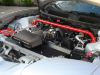



 Best catch can ever? ProVent 200