


FAST 102 Taken Apart

Thread Starter
Joined: Aug 2011
Posts: 4,731
Likes: 815
From: Portland, OR
 FAST 102 Taken Apart
 I just had to take mine apart. Curiosity you know. It is stock unported BTW.
Top Off

Plenum and runners

Single Runner

Runner Mouth

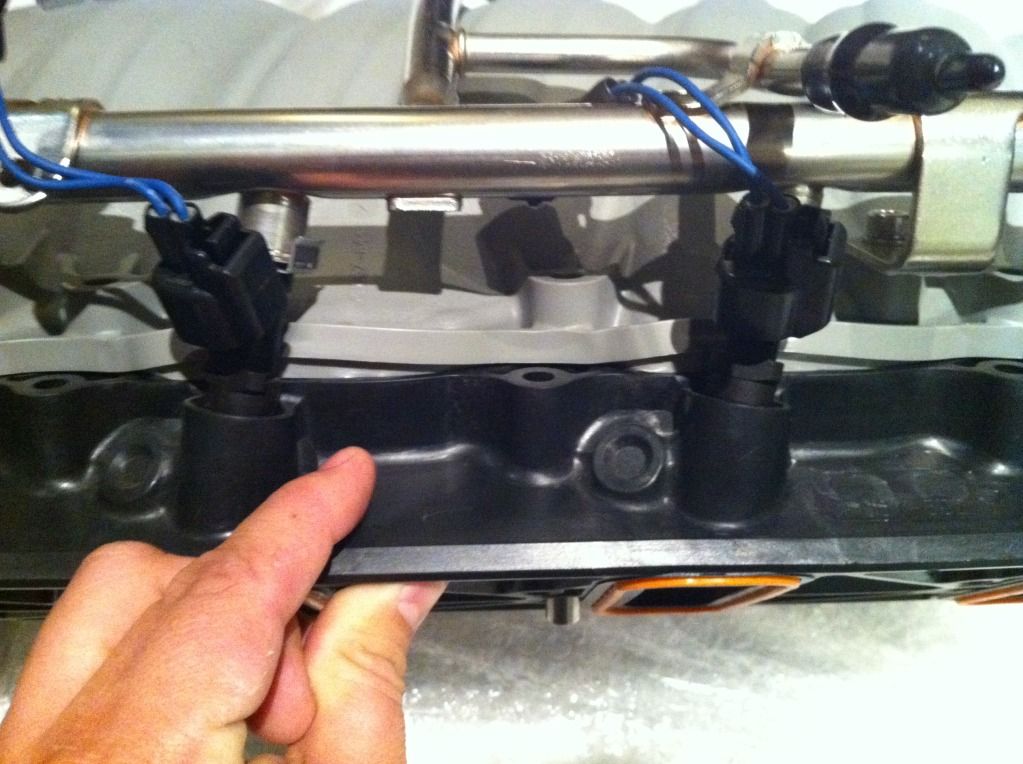
Base on the engine

Up the base plus runner

I scribed the head port (AFR 205) onto the manifold after centering it, and painting with a yellow paint pen. I used a hook tool made out of a dental pick. My camera just can't get the detail. Anyway, the match isn't very good and would require port matching. Nearly into the gasket groove.
Looking up the port, you can see that the runner is actually smaller than the base.
The runners aren't very thick, so any overzealous grinding and you hit, well, air!
The mouths of the runners are a little rough with plastic flash. Again, thin, I wouldn't have a clue what to do there. So nothing other than remove the flashing.
I don't see going more than a couple inches into the port. So what is actually done to these to "port" them eludes me.
I have seen a ported one, and only the first 2 inches ofthe port were worked. It wasn't matched to the AFR 235 heads. I didn't get to take it apart, but I sure would have liked to!
Just thought you all would like to see. If this has been posted before, my apologies.
I bought this slightly used off a C5. The car had a big cam and stock converter so idle was an issue with the larger TB. Owner went back to LS6 manifold. There was quite a lot of oil in this.
I was actually wondering if it might have had a gasket leak between the halves. Doesn't appear so.
Ron
Top Off
Plenum and runners
Single Runner
Runner Mouth
Base on the engine
Up the base plus runner
I scribed the head port (AFR 205) onto the manifold after centering it, and painting with a yellow paint pen. I used a hook tool made out of a dental pick. My camera just can't get the detail. Anyway, the match isn't very good and would require port matching. Nearly into the gasket groove.
Looking up the port, you can see that the runner is actually smaller than the base.
The runners aren't very thick, so any overzealous grinding and you hit, well, air!
The mouths of the runners are a little rough with plastic flash. Again, thin, I wouldn't have a clue what to do there. So nothing other than remove the flashing.
I don't see going more than a couple inches into the port. So what is actually done to these to "port" them eludes me.
I have seen a ported one, and only the first 2 inches ofthe port were worked. It wasn't matched to the AFR 235 heads. I didn't get to take it apart, but I sure would have liked to!
Just thought you all would like to see. If this has been posted before, my apologies.
I bought this slightly used off a C5. The car had a big cam and stock converter so idle was an issue with the larger TB. Owner went back to LS6 manifold. There was quite a lot of oil in this.
I was actually wondering if it might have had a gasket leak between the halves. Doesn't appear so.
Ron
Last edited by RonSSNova; May 18, 2012 at 09:49 PM.

TECH Addict
Joined: Sep 2009
Posts: 2,481
Likes: 5
From: PA/MD
Thank you Ron, I always wanted to see inside one but couldn't justify spending the money to just tear one down to look at. Not bashing, but you would think for the money you pay for these that there would be a little more to work with.....I'm glad I spent the $365 for the big, heavy, heat-soaking aluminum Edelbrock proflo now lol even with my heads milled down to 57cc chambers it still bolts right on perfect and had LOTS of material left in it after porting all the way up in the 6" runners 
I took the top off of mine to drill the hole for the map sensor (and keep shavings out) and stopped at that. I didn't want to take the risk of breaking anything...
Nice writeup!
This is from another FAST 102 thread I'm following. I have a FAST 102 and AFR 230 V.2's.
Not necessarily true....as long as the port widths are close (and most are) the effectiveness of the porting is still realized.
Turns out most of the ported aftermarket and factory castings are 1.060 - 1.100 wide (I have seen a tremendous amount of heads over the years).....bone stock the port is closer to 1" or even less. No you might see some of the larger cathedrals coming in at 1.120 or so and I usually check with my customer to see if that is the case. Typically I port my intakes to 1.080.....right in the middle of the "average" cross section of heads (our 210, 215, 230, and our 245 all fall in around 1.080 and so do alot of the other aftermarket CNC castings). If I'm porting a stock or close to stock head and the customer will never swap to an aftermarket head I may leave the port opening a little conservative but it will still be larger than the stock entrance.
Bottom line....a .020 and even an .030 mismatch per side (that means the outlet is off almost .060 total) wouldn't effect performance at all. There is very little air flowing near the outside wall of the ports....only very slow moving air called the "boundary layer" which for the most part provides a cushion for the higher speed charge located further off the wall and closer to the center of the port. When reworking intake manifolds in general (not just related to FAST LS intakes), the port match in and of itself does very little (it really just needs to be close).....its all the work further into the port that changes the flow characteristics of the runner and there are some other tricks to the outlet that my more recent ported FAST manifolds feature (in last 6 months or so), different even than the pics in the thread you linked above but that thread gives you a good idea of the extent of the work involved and how much material is actually removed (there is a good bit more removed in the newer intakes I am working on).
Guys, I've been doing this a looooong time (reworking these FAST intakes, tweaking and honing the process along the way) and I have shipped hundreds of these with very positive results....bad news travels fast on the Internet and if you want to take the time to dig you will be hard pressed to find anyone not satisfied with what they got for the money spent, not to mention what they got for actual results. To try and debate the effectiveness of the work now, for this and that reason, this late in the game is almost silly....there are far too many positive results to do so.
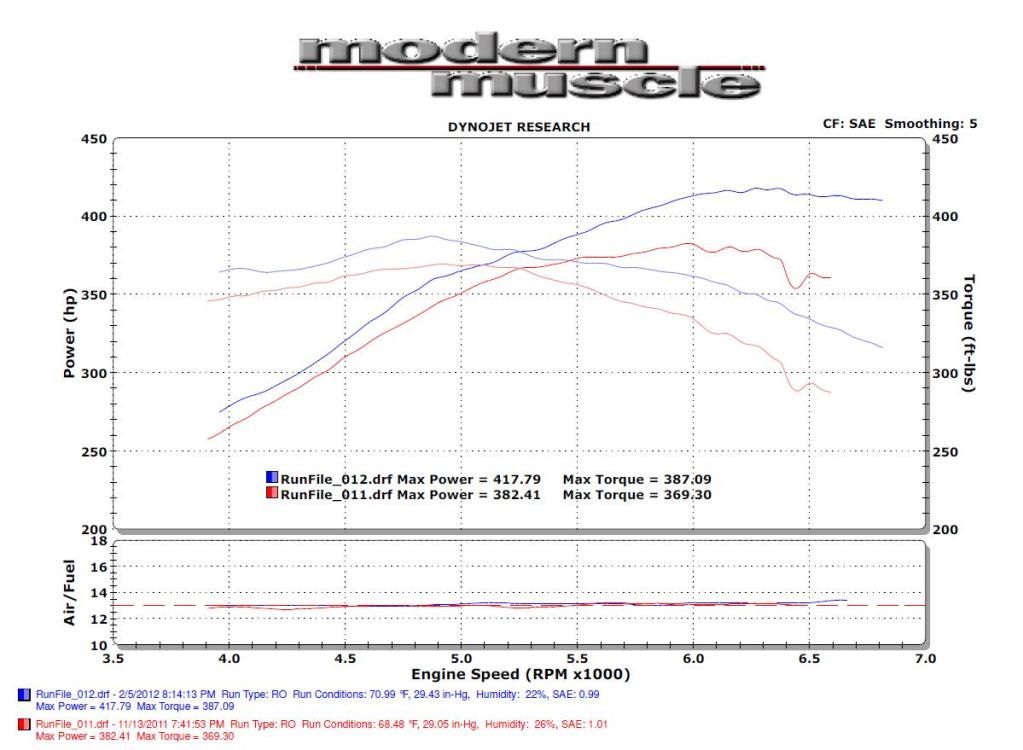
The dyno graph above is proof positive a port match isn't as critical as you might think (not to mention how effective the proper port work can be). It reprsents the back to back results of a cam only 6.0 liter truck. These are the gains seen with STOCK 317 heads (unported....virgin) which always limits the amount of gains from a manifold swap because the large gains are always seen when you have high flow heads and the stock intake cant keep up. I ported this intake to a 1.070 width suspecting this customer was going to install heads at a later date (turns out Im working on a set of Mamofied 230's for him right now). Anyway.....the stock port is about an inch wide....the larger intake leaving a forward step was still extremely effective and if anything exceeded anything we discussed or hoped for prior to the swap. This is a ported LSXRT versus a stock truck intake which actually works pretty well with stock heads....with a notable mismatch at the port opening which I hope I shed some light on here regarding how a "perfect match" isn't really necessary.
Same dyno....no other changes except the intake swap and a larger 102 TB of course.
-Tony
Turns out most of the ported aftermarket and factory castings are 1.060 - 1.100 wide (I have seen a tremendous amount of heads over the years).....bone stock the port is closer to 1" or even less. No you might see some of the larger cathedrals coming in at 1.120 or so and I usually check with my customer to see if that is the case. Typically I port my intakes to 1.080.....right in the middle of the "average" cross section of heads (our 210, 215, 230, and our 245 all fall in around 1.080 and so do alot of the other aftermarket CNC castings). If I'm porting a stock or close to stock head and the customer will never swap to an aftermarket head I may leave the port opening a little conservative but it will still be larger than the stock entrance.
Bottom line....a .020 and even an .030 mismatch per side (that means the outlet is off almost .060 total) wouldn't effect performance at all. There is very little air flowing near the outside wall of the ports....only very slow moving air called the "boundary layer" which for the most part provides a cushion for the higher speed charge located further off the wall and closer to the center of the port. When reworking intake manifolds in general (not just related to FAST LS intakes), the port match in and of itself does very little (it really just needs to be close).....its all the work further into the port that changes the flow characteristics of the runner and there are some other tricks to the outlet that my more recent ported FAST manifolds feature (in last 6 months or so), different even than the pics in the thread you linked above but that thread gives you a good idea of the extent of the work involved and how much material is actually removed (there is a good bit more removed in the newer intakes I am working on).
Guys, I've been doing this a looooong time (reworking these FAST intakes, tweaking and honing the process along the way) and I have shipped hundreds of these with very positive results....bad news travels fast on the Internet and if you want to take the time to dig you will be hard pressed to find anyone not satisfied with what they got for the money spent, not to mention what they got for actual results. To try and debate the effectiveness of the work now, for this and that reason, this late in the game is almost silly....there are far too many positive results to do so.
The dyno graph above is proof positive a port match isn't as critical as you might think (not to mention how effective the proper port work can be). It reprsents the back to back results of a cam only 6.0 liter truck. These are the gains seen with STOCK 317 heads (unported....virgin) which always limits the amount of gains from a manifold swap because the large gains are always seen when you have high flow heads and the stock intake cant keep up. I ported this intake to a 1.070 width suspecting this customer was going to install heads at a later date (turns out Im working on a set of Mamofied 230's for him right now). Anyway.....the stock port is about an inch wide....the larger intake leaving a forward step was still extremely effective and if anything exceeded anything we discussed or hoped for prior to the swap. This is a ported LSXRT versus a stock truck intake which actually works pretty well with stock heads....with a notable mismatch at the port opening which I hope I shed some light on here regarding how a "perfect match" isn't really necessary.
Same dyno....no other changes except the intake swap and a larger 102 TB of course.
-Tony
Trending Topics
I just had to take mine apart. Curiosity you know. It is stock unported BTW.
Base on the engine
I scribed the head port (AFR 205) onto the manifold after centering it, and painting with a yellow paint pen. I used a hook tool made out of a dental pick. My camera just can't get the detail. Anyway, the match isn't very good and would require port matching. Nearly into the gasket groove.
Looking up the port, you can see that the runner is actually smaller than the base.
The runners aren't very thick, so any overzealous grinding and you hit, well, air!
The mouths of the runners are a little rough with plastic flash. Again, thin, I wouldn't have a clue what to do there. So nothing other than remove the flashing.
I don't see going more than a couple inches into the port. So what is actually done to these to "port" them eludes me.
I have seen a ported one, and only the first 2 inches ofthe port were worked. It wasn't matched to the AFR 245 heads. I didn't get to take it apart, but I sure would have liked to!
Just thought you all would like to see. If this has been posted before, my apologies.
I bought this slightly used off a C5. The car had a big cam and stock converter so idle was an issue with the larger TB. Owner went back to LS6 manifold. There was quite a lot of oil in this.
I was actually wondering if it might have had a gasket leak between the halves. Doesn't appear so.
Ron
Base on the engine
I scribed the head port (AFR 205) onto the manifold after centering it, and painting with a yellow paint pen. I used a hook tool made out of a dental pick. My camera just can't get the detail. Anyway, the match isn't very good and would require port matching. Nearly into the gasket groove.
Looking up the port, you can see that the runner is actually smaller than the base.
The runners aren't very thick, so any overzealous grinding and you hit, well, air!
The mouths of the runners are a little rough with plastic flash. Again, thin, I wouldn't have a clue what to do there. So nothing other than remove the flashing.
I don't see going more than a couple inches into the port. So what is actually done to these to "port" them eludes me.
I have seen a ported one, and only the first 2 inches ofthe port were worked. It wasn't matched to the AFR 245 heads. I didn't get to take it apart, but I sure would have liked to!
Just thought you all would like to see. If this has been posted before, my apologies.
I bought this slightly used off a C5. The car had a big cam and stock converter so idle was an issue with the larger TB. Owner went back to LS6 manifold. There was quite a lot of oil in this.
I was actually wondering if it might have had a gasket leak between the halves. Doesn't appear so.
Ron
LS1 Tech Stories
The Best V8 Stories One Small Block at Time

Gas Monkey Built a 6-Wheel Ferrari Testarossa With a Corvette LT4 Engine
Verdad Gallardo
7 Most Reliable High-Performance Engines GM Has Ever Built
Verdad Gallardo
Amazing '71 Camaro Restomod Is Modern Muscle Car Under the Skin
Verdad Gallardo
6 Common C5 Corvette Failures and What's Involved In Repairing Them
Pouria Savadkouei
Retro Modern Bandit Pontiac Trans AM Comes With Burt Reynolds' Autograph
Verdad Gallardo
Top 10 Greatest Cadillac V Series Performance Models Ever, Ranked
Pouria Savadkouei
Top 10 Most Powerful Chevy Trucks Ever Made!

Hennessey's New Supercharged Silverado ZR2 Has 700 HP
Verdad Gallardo
Coachbuilt N2A Anteros Is an LS2-Powered C6 Corvette In Italian Clothes
Verdad Gallardo Thread Starter
Joined: Aug 2011
Posts: 4,731
Likes: 815
From: Portland, OR
Oops!
I did notice that the bolts that hold it to the engine also clamp the halves together along with the bolts on the ends.
I was for sure going to install it as a unit.
As far as port matching, I had already decided not to bother.
Where is that other thread?
Thanks,
Ron
I did notice that the bolts that hold it to the engine also clamp the halves together along with the bolts on the ends.
I was for sure going to install it as a unit.
As far as port matching, I had already decided not to bother.
Where is that other thread?
Thanks,
Ron

I gotta take my mamofied apart to paint the lid. I'll snap some pics, get Tonys approvalof them and toss them in here if you want. FWIW I think you can find Tonys pics in the thread mentioned. I cannot imagine coming at one of these with a dremel. . .I'm scared to paint it.

Thread Starter
Joined: Aug 2011
Posts: 4,731
Likes: 815
From: Portland, OR
I don't think Tony is going to want you to snap photos of his work. But give it a shot. would be best ifyou removed one runner. One screw holds them in.
Let me know how painting it goes. I'd prefer the black stealth look myself.
I am a rattle can kind of guy!
Ron
Let me know how painting it goes. I'd prefer the black stealth look myself.
I am a rattle can kind of guy!
Ron

Pretty cool, Ron!
Tony's got pictures of his ported FAST work all over the place here - I don't think he'd mind, but I would check with him first.
I painted the "R" on mine to match my valve covers and coil brackets - the reds didn't match at all and it bothered me. haha...
Tony's got pictures of his ported FAST work all over the place here - I don't think he'd mind, but I would check with him first.
I painted the "R" on mine to match my valve covers and coil brackets - the reds didn't match at all and it bothered me. haha...
ok here is the thread with Tonys pic, second page if the link doesn't take you right there:
https://ls1tech.com/forums/generatio...-thread-2.html
I plan on removing all runners to mark the heads as well, if I can avoid screwing up all of Tonys hard work.
talked with him a while back about snapping pics for a build thread, but I will definitely have to get approval, I've got too much respect.
I'm going matte black stealth, but I might do the lettering w/ gloss, I dunno.
https://ls1tech.com/forums/generatio...-thread-2.html
I plan on removing all runners to mark the heads as well, if I can avoid screwing up all of Tonys hard work.
talked with him a while back about snapping pics for a build thread, but I will definitely have to get approval, I've got too much respect.
I'm going matte black stealth, but I might do the lettering w/ gloss, I dunno.

Launching!
Joined: Jul 2010
Posts: 238
Likes: 0
Mine had to have the same thing done, when my 241 heads were ported i gave the head place my 102 and they were impressed with it but also had to take a little bit out off some off the ports to match them up, nothing major though just a little bit here and there.

Amazing how much different it is than a 92. Who cares if you post pics of your intake....it's YOUR intake, just because someone else ported it doesn't mean they have to sign off to look at it.
Hey Ron, here is a picture of my stealth paint job, duplicolor low gloss engine paint. Still haven't decided if I'll do anything with the lettering, but that dessicated dog turd color had to go. I assume they make it so ugly so everyone voids their warranty before install by painting it.. . .and what is the deal with using three different fonts for the lettering? Performance?
 Appearance?

 Umm
Umm I am not sure what you are gonna see if pics are posted ? The intake runners are hard to see inside ! Is there anything done to the floor of the intake ! There was talk of alot of material removed ! There isnt enough in the ports to make that pile of shavings I have seen in a recent pic!