



question on spring height install

Thread Starter
Teching In
Joined: May 2013
Posts: 10
Likes: 0
 question on spring height install
 I have the blue gm springs and want to install on my 5.3l they both different install heights stock is 1.72 and the blue ones are 1.80 how do change it or does it even matter any info would be great...
Let's say your install height is 1.80 and want it to be 1.72 you would need .080 of shims.
http://www.lunatipower.com/Tech/Valv...pringTech.aspx
It does matter. Valve springs are designed to work within a specified range. As you decrease the install height you increase spring pressure but also decrease the amount of lift you can run because lowering the install height put's you closer to coil bind starting out.
That's why it's important to pick a valve spring that is going to match your cam's lift and the needed open pressure needed to control the valves.
That's why it's important to pick a valve spring that is going to match your cam's lift and the needed open pressure needed to control the valves.

On The Tree
Joined: Aug 2012
Posts: 190
Likes: 0
The easiest way to measure spring height is to use a spring height micrometer. You install your valves, retainers, and locks then rotate the micrometer and read the measurements. If your looking for 1.8 any measurement larger than that you have to use shims. They usually come in .010 .030 and .060. Make sure you get the right micrometer too the dual springs mic has a step down on top, the beehive(stock ls) is flat on top.
I don't understand the OP's question. If the current springs set up at 1.72 and he replaces the springs the installed height will be 1.72 unless he changes the retainer or the seat.
Is the question based on the advertised spring forces?
Is the question based on the advertised spring forces?
First calculate the minimum installed height for your new springs. Coil bind + 0.060" + valve lift = minimum. The 0.060" allows the spring to grow with with heat and use and not bind. The coil bind height is from the spring manufacturer.
For example, a GM ASA cam and a PAC1215 beehive spring: 1.140 + .060 + .525 = 1.725. This is the absolute minimum installed height. PAC lists this spring as having 105 pounds of pressure at an installed height of 1.800. If you install it at 1.725", it will have more closed pressure. But the open load of 293# will be the same.
If you're running high rpm's or boost, you may want that increased closed pressure. Or you may not.
If your installed height is less than minimum, you'll need to cut the springs seats to make more room. That's not uncommon with high lift cams. You can buy a spring seat cutter from Jegs or Summit.
With miles, and after a valve job, you often find that you have too much space between the keeper and the valve seat. Cutting the valve seats and faces, and miles of use cause the valve to move up in the head, and the tip moves further away from the pocket. As said above, you then need to use shims to get the right installed height. In the above example it would be 1.800". Shims go underneath the spring cup.
Measuring with a micrometer is simple, tedious, and very important. It's part of blue printing the engine. It not only makes more power by keeping this consistent, it prevents disasters.
What year 5.3? As the stock installed height is 1.8. Sounds like it has after market retainers and or locks. Did you check if there are valve spring shims on the heads?
Russ Kemp
Russ Kemp
Trending Topics
Thread Starter
Teching In
Joined: May 2013
Posts: 10
Likes: 0
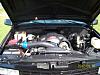
this is what I have and want to do turbo 5.3l stock and would like to just put this blue gm ls springs .540 the stock ones are 150,000 miles on them I thought if I put the stronger ones in it would control the vavle better on boost the blue ones install at 1.80 the stock ones are 1.72 using the stock cam cant I just swap them out and call it good
LS1 Tech Stories
The Best V8 Stories One Small Block at Time

Topdon ONE vs. Artidiag 800 BT2: Which is the Diagnostic Tablet For You?
Pouria Savadkouei
Gas Monkey Built a 6-Wheel Ferrari Testarossa With a Corvette LT4 Engine
Verdad Gallardo
7 Most Reliable High-Performance Engines GM Has Ever Built
Verdad Gallardo
Amazing '71 Camaro Restomod Is Modern Muscle Car Under the Skin
Verdad Gallardo
6 Common C5 Corvette Failures and What's Involved In Repairing Them
Pouria Savadkouei
Retro Modern Bandit Pontiac Trans AM Comes With Burt Reynolds' Autograph
Verdad Gallardo
Top 10 Greatest Cadillac V Series Performance Models Ever, Ranked
Pouria Savadkouei
Top 10 Most Powerful Chevy Trucks Ever Made!

Hennessey's New Supercharged Silverado ZR2 Has 700 HP
Verdad Gallardo this is what I have and want to do turbo 5.3l stock and would like to just put this blue gm ls springs .540 the stock ones are 150,000 miles on them I thought if I put the stronger ones in it would control the vavle better on boost the blue ones install at 1.80 the stock ones are 1.72 using the stock cam cant I just swap them out and call it good