


Camshaft lift


Thread Starter
Registered User
Joined: Jun 2014
Posts: 1
Likes: 0
 Camshaft lift
 My question is not how to check piston/valve clearance, but on a stock bottom end LS1, stock pistons, what's the most lift you can go on the cam while still keeping a safe piston/valve clearance. The intake valve is 2.08

PTV is all about valve events and nothing to do with the lift. You could run a 1" cam lift and clear the piston. Since your valve is bigger and probably has a thicker margin on it you lost clearance before you even started. You can accomplish this by setting clay on the piston and mock a cylinder head up with the cam in the block and rotate it over and let it make an impression on the clay. Basically fully assemble 1 cylinder head with the pushords and all. You can even use checker springs while doing this if you feel more comfortable doing it that way. You just need to make sure you have your install height correct when you take the measurements. You can then measure the clay and figure your clearance. you have to be careful turning the motor over by hand especially if you don't clear.


Please help me understand something ?
Two almost identical cams. 224/230 112LSA. Mild ramp rates. One has .600 lift but the other has .525 lift.
.600 should make more power, .525 should have longer spring life. Is there a change in low RPM drivability ? Are HP and Tq peaks at the same place ? Do headers work as well ? Why do cam designers choose the lifts they choose ? At what lift does the happy compromise occur with Comp 918s to go 30K miles between spring checks ?
Two almost identical cams. 224/230 112LSA. Mild ramp rates. One has .600 lift but the other has .525 lift.
.600 should make more power, .525 should have longer spring life. Is there a change in low RPM drivability ? Are HP and Tq peaks at the same place ? Do headers work as well ? Why do cam designers choose the lifts they choose ? At what lift does the happy compromise occur with Comp 918s to go 30K miles between spring checks ?
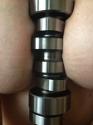


I would expect low rpm drive ability to be close to the same. Might even favor the higher lift if the ramp rates are faster - meaning less overlap.
Hp and tq peak rpms are determined by valve events. If both cams intake close and exhaust open events are identical, peaks should be at same rpms.
Hp and tq peak rpms are determined by valve events. If both cams intake close and exhaust open events are identical, peaks should be at same rpms.

