


What makes morel lifters superior to ls7s?


In my speaking with Lunati support of their branding of the link bar equivalent of 5315 said they do not recommend RPM above 6,200-6,400. They laughed at me having a 6,500 fuel cut off. They said I need to use high RPM. I imagine there's a reason they make high RPM lifters because if "regular" ones rev'd to 7,200 they wouldn't need them. Just my experience talking to the horse's mouth. I know plenty of people have run higher including me with with just stock LS1 lifters with no problem. Then I "upgraded" for peace of mind. Then I had a multi-thousand dollar problem.

. Several GM engines rev higher from GM.
MANY of us have taken stock GM lifters higher. You had a bad experience but you are flat out wrong in your push to tell folks it is somehow typical, your experience is the anomoly, those of us who have taken stock lifters to 7000rpm without failure are more typical.
Manufacturers understate the capabilities of lowerend products in order to help sales of higher end higher profit products.
They also have to leave margin of error for the guys that have bad setups huge heavy valves, heavy rockers, wrong springs etc.
The LS7 turns 7100rpm stock but has light components.
It is all a system and for simplicity sake manufacturers will state a rpm limit when there is more to consider, they know that, but they also know a stupid customer will blame them for his mistake just as I feel you are blaming GM for your failed setup.
In my speaking with Lunati support of their branding of the link bar equivalent of 5315 said they do not recommend RPM above 6,200-6,400. They laughed at me having a 6,500 fuel cut off. They said I need to use high RPM. I imagine there's a reason they make high RPM lifters because if "regular" ones rev'd to 7,200 they wouldn't need them. Just my experience talking to the horse's mouth. I know plenty of people have run higher including me with with just stock LS1 lifters with no problem. Then I "upgraded" for peace of mind. Then I had a multi-thousand dollar problem.
MANY of us have taken stock GM lifters higher. You had a bad experience but you are flat out wrong in your push to tell folks it is somehow typical, your experience is the anomoly, those of us who have taken stock lifters to 7000rpm without failure are more typical.
Manufacturers understate the capabilities of lowerend products in order to help sales of higher end higher profit products.
They also have to leave margin of error for the guys that have bad setups huge heavy valves, heavy rockers, wrong springs etc.
The LS7 turns 7100rpm stock but has light components.
It is all a system and for simplicity sake manufacturers will state a rpm limit when there is more to consider, they know that, but they also know a stupid customer will blame them for his mistake just as I feel you are blaming GM for your failed setup.


Morel leak test every single lifter that leaves the plant.
OD sizing is spot on, from a $200 set of lifters to a $2600 set for a Cup team.
What they learn from the professional race teams they incorporate into all of the lifters that they can. The 5315 has received some more enhancements for 2015.
The surface finish spec of the 5315 was developed a few years ago.
The ultra pro stuff is machined from tool steel. These have had upgraded valving since late 2013.
The .903Hyd roller has 2 features. One it has a tall seat allowing for a very short pushrod. The valvetrain with these lifters is very rigid with the pushrod somewhere in the 7.00" length. The .903" also has pressure fed oiling to the needle bearings.
OD sizing is spot on, from a $200 set of lifters to a $2600 set for a Cup team.
What they learn from the professional race teams they incorporate into all of the lifters that they can. The 5315 has received some more enhancements for 2015.
The surface finish spec of the 5315 was developed a few years ago.
The ultra pro stuff is machined from tool steel. These have had upgraded valving since late 2013.
The .903Hyd roller has 2 features. One it has a tall seat allowing for a very short pushrod. The valvetrain with these lifters is very rigid with the pushrod somewhere in the 7.00" length. The .903" also has pressure fed oiling to the needle bearings.


TECH Veteran


Joined: Sep 2014
Posts: 4,891
Likes: 703
From: Mississippi
I have heard guys having ticking noises out the LS7 lifters.


Morel leak test every single lifter that leaves the plant.
OD sizing is spot on, from a $200 set of lifters to a $2600 set for a Cup team.
What they learn from the professional race teams they incorporate into all of the lifters that they can. The 5315 has received some more enhancements for 2015.
The surface finish spec of the 5315 was developed a few years ago.
The ultra pro stuff is machined from tool steel. These have had upgraded valving since late 2013.
The .903Hyd roller has 2 features. One it has a tall seat allowing for a very short pushrod. The valvetrain with these lifters is very rigid with the pushrod somewhere in the 7.00" length. The .903" also has pressure fed oiling to the needle bearings.
OD sizing is spot on, from a $200 set of lifters to a $2600 set for a Cup team.
What they learn from the professional race teams they incorporate into all of the lifters that they can. The 5315 has received some more enhancements for 2015.
The surface finish spec of the 5315 was developed a few years ago.
The ultra pro stuff is machined from tool steel. These have had upgraded valving since late 2013.
The .903Hyd roller has 2 features. One it has a tall seat allowing for a very short pushrod. The valvetrain with these lifters is very rigid with the pushrod somewhere in the 7.00" length. The .903" also has pressure fed oiling to the needle bearings.
Don't bring facts in here Chris!!

.
Several GM engines rev higher from GM.
MANY of us have taken stock GM lifters higher. You had a bad experience but you are flat out wrong in your push to tell folks it is somehow typical, your experience is the anomoly, those of us who have taken stock lifters to 7000rpm without failure are more typical.
Manufacturers understate the capabilities of lowerend products in order to help sales of higher end higher profit products.
They also have to leave margin of error for the guys that have bad setups huge heavy valves, heavy rockers, wrong springs etc.
The LS7 turns 7100rpm stock but has light components.
It is all a system and for simplicity sake manufacturers will state a rpm limit when there is more to consider, they know that, but they also know a stupid customer will blame them for his mistake just as I feel you are blaming GM for your failed setup.
Several GM engines rev higher from GM.
MANY of us have taken stock GM lifters higher. You had a bad experience but you are flat out wrong in your push to tell folks it is somehow typical, your experience is the anomoly, those of us who have taken stock lifters to 7000rpm without failure are more typical.
Manufacturers understate the capabilities of lowerend products in order to help sales of higher end higher profit products.
They also have to leave margin of error for the guys that have bad setups huge heavy valves, heavy rockers, wrong springs etc.
The LS7 turns 7100rpm stock but has light components.
It is all a system and for simplicity sake manufacturers will state a rpm limit when there is more to consider, they know that, but they also know a stupid customer will blame them for his mistake just as I feel you are blaming GM for your failed setup.
I shipped 605 sets of 5315's last year to dealers last year. I haven't had anyone send anything back. Morel has made this lifer for 9 years now.

Morel leak test every single lifter that leaves the plant.
OD sizing is spot on, from a $200 set of lifters to a $2600 set for a Cup team.
What they learn from the professional race teams they incorporate into all of the lifters that they can. The 5315 has received some more enhancements for 2015.
The surface finish spec of the 5315 was developed a few years ago.
The ultra pro stuff is machined from tool steel. These have had upgraded valving since late 2013.
The .903Hyd roller has 2 features. One it has a tall seat allowing for a very short pushrod. The valvetrain with these lifters is very rigid with the pushrod somewhere in the 7.00" length. The .903" also has pressure fed oiling to the needle bearings.
OD sizing is spot on, from a $200 set of lifters to a $2600 set for a Cup team.
What they learn from the professional race teams they incorporate into all of the lifters that they can. The 5315 has received some more enhancements for 2015.
The surface finish spec of the 5315 was developed a few years ago.
The ultra pro stuff is machined from tool steel. These have had upgraded valving since late 2013.
The .903Hyd roller has 2 features. One it has a tall seat allowing for a very short pushrod. The valvetrain with these lifters is very rigid with the pushrod somewhere in the 7.00" length. The .903" also has pressure fed oiling to the needle bearings.
A $200 set of parts will have limited hand finishing, I get that. So I hope nobody sees my comment as an attack on Morel it was strictly meant to point out how people don't even make an attempt to see what is in front of them.
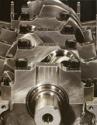
Thank you for posting some real info rather than "glory shots" of jagged drill holes. The pics are excellent marketing to people too stupid to actually LOOK at the picture and only see what they are told to see.
A $200 set of parts will have limited hand finishing, I get that. So I hope nobody sees my comment as an attack on Morel it was strictly meant to point out how people don't even make an attempt to see what is in front of them.
A $200 set of parts will have limited hand finishing, I get that. So I hope nobody sees my comment as an attack on Morel it was strictly meant to point out how people don't even make an attempt to see what is in front of them.
Those pics are also excellent marketing to someone who does know what they're looking at. As they say, a picture is worth 1000 words. If all you noticed was the oil hole, you may not have room to be insulting people.

Joined: May 2004
Posts: 1,593
Likes: 267
From: Halfway back on the Highway to Hell...again!
LOLOLOLOL
Damn, one more sees the light.
Ignore button works great except when you quote him. Then I can still see his stupid comments.

Man, you must really think your **** doesn't stink. You can't ever seem to post anything without calling someone blind, ignorant, or stupid.
Those pics are also excellent marketing to someone who does know what they're looking at. As they say, a picture is worth 1000 words. If all you noticed was the oil hole, you may not have room to be insulting people.
Those pics are also excellent marketing to someone who does know what they're looking at. As they say, a picture is worth 1000 words. If all you noticed was the oil hole, you may not have room to be insulting people.
Your lashing out at me due to your embarrassment at proving what I was saying.
I bet the other 15 looked better.
It wasn't the only thing I saw but when glancing at a pic to compare quality jagged metal deserves notice. We can't see alloys, or valving etc.

On The Tree
Joined: May 2011
Posts: 157
Likes: 2
Morel leak test every single lifter that leaves the plant.
OD sizing is spot on, from a $200 set of lifters to a $2600 set for a Cup team.
What they learn from the professional race teams they incorporate into all of the lifters that they can. The 5315 has received some more enhancements for 2015.
The surface finish spec of the 5315 was developed a few years ago.
The ultra pro stuff is machined from tool steel. These have had upgraded valving since late 2013.
The .903Hyd roller has 2 features. One it has a tall seat allowing for a very short pushrod. The valvetrain with these lifters is very rigid with the pushrod somewhere in the 7.00" length. The .903" also has pressure fed oiling to the needle bearings.
OD sizing is spot on, from a $200 set of lifters to a $2600 set for a Cup team.
What they learn from the professional race teams they incorporate into all of the lifters that they can. The 5315 has received some more enhancements for 2015.
The surface finish spec of the 5315 was developed a few years ago.
The ultra pro stuff is machined from tool steel. These have had upgraded valving since late 2013.
The .903Hyd roller has 2 features. One it has a tall seat allowing for a very short pushrod. The valvetrain with these lifters is very rigid with the pushrod somewhere in the 7.00" length. The .903" also has pressure fed oiling to the needle bearings.
Grind dimensions should be held within .0003" for standard production, even tighter for special purpose applications. Surface finish should also be no greater than 16 micro. In practice, with the right equipment, single digit micro's are easily obtainable. This comes down to selecting the proper grinding and feed wheels for a given material. Can't say I've heard of a "development process" for surface finish requirements when talking about lifter OD's? Especially for a decade old part. Never seen a problem with too smooth a finish...only rough finishes.
Not trying to be an ***. Your post just rubbed me the wrong way...too much marketing and not enough real info. What they enhanced would have been more insightful (hopefully more than a lower Ra finish).
To the OP. Attention to detail, complete process control, and high performance based testing is what makes some aftermarket lifters superior to OEM. Some of that attention to detail was explained in this post. The problem with OEM is controlling the process/suppliers and accountants making too many decisions

Last edited by Havoc40; Jan 30, 2015 at 09:34 PM.
Embarrassment? Haha. Yeah that's it. I noticed the increased load bearing area on the Morel. I also noticed the orientation of the oil hole is now directly in line with the oil passage in the block and that there is a c-clip to retain the roller pin rather than a swaged cap like the LS7. Yeah, I'm embarrassed I didn't mention the "jagged edges" of the oil hole like you did with your keen powers of observation lol.

One thing they did do was make changes to the lifter configuration to ensure it wouldn't starve for oil with aftermarket cams since a lifter sits slightly lower in the oil galley due to the smaller base circle. Since the OE lifters aren't designed for this it has been an issue with a few guys although somewhat rare.

Morels are worth the money over the LS7s. But I'd only do the high end versions. Not really worth it to skimp couple hundred bucks and have the lifter chew your engine up. 5206 would be my choice from Morel.
Also, I want you guys to cool it on the BS name calling kindergarten ****. The pics showed an oiling hole that might have needed a little deburring. That's fine. It also shows the 5315 seems to be using better materials and design vs the LS7.
As was stated, the LS7 revs high because it has a soft lobe, 3/8" pushrods, and titanium valves that weigh nothing. The LS7 lifter works fine there. Put a SS valve, weak pushrod, and crazy lobe in there and hope for the best.
Also, I want you guys to cool it on the BS name calling kindergarten ****. The pics showed an oiling hole that might have needed a little deburring. That's fine. It also shows the 5315 seems to be using better materials and design vs the LS7.
As was stated, the LS7 revs high because it has a soft lobe, 3/8" pushrods, and titanium valves that weigh nothing. The LS7 lifter works fine there. Put a SS valve, weak pushrod, and crazy lobe in there and hope for the best.
Nothing against the 5315, but this post doesn't exactly impress me. Every lifter manufacture (OEM & aftermarket) should be running 100% of their products through a leakdown machine for verification. While I do understand some OEM stuff isn't processed in this fashion, aftermarket lifters without a doubt needs to be. OEM lifters are usually ran with a wide open leakdown range(this includes the LS7), enabling them to get a higher throughput percentage off their equipment. This makes sense because the design wasn't intended to be run in the combinations us performance guru's come up with. The magic of aftermarket lifters comes from what the actual leakdown numbers are, how true the I.D. is finished, and the design of the I.D. of the lifter body and piston assembly itself. Passing a leakdown verification machine is only a fraction of the battle once a lifter is inside an operational engine.
Grind dimensions should be held within .0003" for standard production, even tighter for special purpose applications. Surface finish should also be no greater than 16 micro. In practice, with the right equipment, single digit micro's are easily obtainable. This comes down to selecting the proper grinding and feed wheels for a given material. Can't say I've heard of a "development process" for surface finish requirements when talking about lifter OD's? Especially for a decade old part. Never seen a problem with too smooth a finish...only rough finishes.
Not trying to be an ***. Your post just rubbed me the wrong way...too much marketing and not enough real info. What they enhanced would have been more insightful (hopefully more than a lower Ra finish).
To the OP. Attention to detail, complete process control, and high performance based testing is what makes some aftermarket lifters superior to OEM. Some of that attention to detail was explained in this post. The problem with OEM is controlling the process/suppliers and accountants making too many decisions
Grind dimensions should be held within .0003" for standard production, even tighter for special purpose applications. Surface finish should also be no greater than 16 micro. In practice, with the right equipment, single digit micro's are easily obtainable. This comes down to selecting the proper grinding and feed wheels for a given material. Can't say I've heard of a "development process" for surface finish requirements when talking about lifter OD's? Especially for a decade old part. Never seen a problem with too smooth a finish...only rough finishes.
Not trying to be an ***. Your post just rubbed me the wrong way...too much marketing and not enough real info. What they enhanced would have been more insightful (hopefully more than a lower Ra finish).
To the OP. Attention to detail, complete process control, and high performance based testing is what makes some aftermarket lifters superior to OEM. Some of that attention to detail was explained in this post. The problem with OEM is controlling the process/suppliers and accountants making too many decisions
I would invite you to measure some others lifters. It is not uncommon to get a set of lifters that measure from .840 to .8415 from some manufacturers. Morel and Jesel hold the tightest tolerances their are when it comes to sizing.
On leak down. Morel leaks 100% of their hyd roller lifters. No marketing, just a fact. I've seen others leak down in 12 seconds.
The "enhancements" is purposely vague. These guys are constantly looking at improving their parts. No point in telling world everything they are doing.


We really like this lifter and have actually taken some other brands of popular drop in lifters out along with OEM lifters and replaced them with these and seen 5-15rwhp increases in power across the board from idle to redline.
When the valve is allowed to do what the lobe is actually commanding it to do, good things usually happen!