


Cathedral Port Vs. Rectangular Port




That's all ??? Everybody knows that it's that 54th pull that it all comes together...lol
Just kinda wondering if the E/I ratio of the FRH heads would have needed more of a single pattern cam or perhaps only 4-6 more on the Ex side even though you were spraying. IIRC your set up also didn't respond to the larger header which shocks me since the engine was so big...
That PRC stuff is nice as well. Is that on a factory short block ???
Just kinda wondering if the E/I ratio of the FRH heads would have needed more of a single pattern cam or perhaps only 4-6 more on the Ex side even though you were spraying. IIRC your set up also didn't respond to the larger header which shocks me since the engine was so big...
That PRC stuff is nice as well. Is that on a factory short block ???


Ray @ FRH said they typically do 4-6 degree split at least on the LS3 heads. And they run very tight LSA/ICL for early IVCs.
For example, they made 693 with LS3 heads at 6900 using a 244/250 110+4 hydraulic roller and a FAST on a SuperFlow 902. That's a lot of overlap and a very early IVC. And it still carried like crazy. That's also LS3 vs LS7.
For example, they made 693 with LS3 heads at 6900 using a 244/250 110+4 hydraulic roller and a FAST on a SuperFlow 902. That's a lot of overlap and a very early IVC. And it still carried like crazy. That's also LS3 vs LS7.
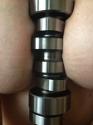

Ray @ FRH said they typically do 4-6 degree split at least on the LS3 heads. And they run very tight LSA/ICL for early IVCs.
For example, they made 693 with LS3 heads at 6900 using a 244/250 110+4 hydraulic roller and a FAST on a SuperFlow 902. That's a lot of overlap and a very early IVC. And it still carried like crazy. That's also LS3 vs LS7.
For example, they made 693 with LS3 heads at 6900 using a 244/250 110+4 hydraulic roller and a FAST on a SuperFlow 902. That's a lot of overlap and a very early IVC. And it still carried like crazy. That's also LS3 vs LS7.

I say that, because we keep reading how squares don't tolerate as much overlap, don't make torque, need less cam, etc, and here you are showing a cam that would look an awful lot like a max effort cathedral cam - if not slightly LARGER.
It's obvious you have done a ton of research on this and are taking us all to school.


Ray @ FRH said they typically do 4-6 degree split at least on the LS3 heads. And they run very tight LSA/ICL for early IVCs.
For example, they made 693 with LS3 heads at 6900 using a 244/250 110+4 hydraulic roller and a FAST on a SuperFlow 902. That's a lot of overlap and a very early IVC. And it still carried like crazy. That's also LS3 vs LS7.
For example, they made 693 with LS3 heads at 6900 using a 244/250 110+4 hydraulic roller and a FAST on a SuperFlow 902. That's a lot of overlap and a very early IVC. And it still carried like crazy. That's also LS3 vs LS7.
 ).
). 
Launching!


Joined: Oct 2003
Posts: 267
Likes: 14
From: Chicago
The ls3 heads remind me of 1970 big block ls6 Chevy sqaure port heads. They always flowed huge numbers back then, but never really performed as well as other motors from GM, or mopar even. The 440 mops never flowed as much as a big block Chevy head, but they constantly where faster on the track and street.
Pontiac heads and or Buick motors where faster also. The Chevy always flowed way more,however it would get it *** kick from a Buick stage 1. Where the head did not nearly flow as well. Stage 1s where 10 sec capable cars, deep 11 with just tunning and slicks. They where called hemi killers actually. I ran an olds 455, with ported heads. The heads only flowed 275 cfm, while the Chevy sqaure ported heads deep in the 300, and I would just destroy all Chevy big blocks cars, with the same cam specs.
I never really like Chevy bigs blocks for most of my life, or 350s for that matter, because they where slower than the rest. But parts where available, and they where pretty much bullet proof, is why people ran them. You can run lots of spray on them, and they would take it.
Very few cars performed from the factory, the ls6 is an example, with solid lifters, running 11.8 or so with slicks.
Not unitll the cathedral ls1 came out. Is when I fell in love with the smbc. When I seen Chevy change back to old school huge square ports, I had a feeling it would have the same issues as the old big block sqaure port head. Not unless you run a 700 inch cam in an old square port headed motor, could you maximize the flow from them. The other GM motors just performed better, in drivability,low end torque ect..
Pontiac heads and or Buick motors where faster also. The Chevy always flowed way more,however it would get it *** kick from a Buick stage 1. Where the head did not nearly flow as well. Stage 1s where 10 sec capable cars, deep 11 with just tunning and slicks. They where called hemi killers actually. I ran an olds 455, with ported heads. The heads only flowed 275 cfm, while the Chevy sqaure ported heads deep in the 300, and I would just destroy all Chevy big blocks cars, with the same cam specs.
I never really like Chevy bigs blocks for most of my life, or 350s for that matter, because they where slower than the rest. But parts where available, and they where pretty much bullet proof, is why people ran them. You can run lots of spray on them, and they would take it.
Very few cars performed from the factory, the ls6 is an example, with solid lifters, running 11.8 or so with slicks.
Not unitll the cathedral ls1 came out. Is when I fell in love with the smbc. When I seen Chevy change back to old school huge square ports, I had a feeling it would have the same issues as the old big block sqaure port head. Not unless you run a 700 inch cam in an old square port headed motor, could you maximize the flow from them. The other GM motors just performed better, in drivability,low end torque ect..
The ls3 heads remind me of 1970 big block ls6 Chevy sqaure port heads. They always flowed huge numbers back then, but never really performed as well as other motors from GM, or mopar even. The 440 mops never flowed as much as a big block Chevy head, but they constantly where faster on the track and street.
Pontiac heads and or Buick motors where faster also. The Chevy always flowed way more,however it would get it *** kick from a Buick stage 1. Where the head did not nearly flow as well. Stage 1s where 10 sec capable cars, deep 11 with just tunning and slicks. They where called hemi killers actually. I ran an olds 455, with ported heads. The heads only flowed 275 cfm, while the Chevy sqaure ported heads deep in the 300, and I would just destroy all Chevy big blocks cars, with the same cam specs.
I never really like Chevy bigs blocks for most of my life, or 350s for that matter, because they where slower than the rest. But parts where available, and they where pretty much bullet proof, is why people ran them. You can run lots of spray on them, and they would take it.
Very few cars performed from the factory, the ls6 is an example, with solid lifters, running 11.8 or so with slicks.
Not unitll the cathedral ls1 came out. Is when I fell in love with the smbc. When I seen Chevy change back to old school huge square ports, I had a feeling it would have the same issues as the old big block sqaure port head. Not unless you run a 700 inch cam in an old square port headed motor, could you maximize the flow from them. The other GM motors just performed better, in drivability,low end torque ect..
Pontiac heads and or Buick motors where faster also. The Chevy always flowed way more,however it would get it *** kick from a Buick stage 1. Where the head did not nearly flow as well. Stage 1s where 10 sec capable cars, deep 11 with just tunning and slicks. They where called hemi killers actually. I ran an olds 455, with ported heads. The heads only flowed 275 cfm, while the Chevy sqaure ported heads deep in the 300, and I would just destroy all Chevy big blocks cars, with the same cam specs.
I never really like Chevy bigs blocks for most of my life, or 350s for that matter, because they where slower than the rest. But parts where available, and they where pretty much bullet proof, is why people ran them. You can run lots of spray on them, and they would take it.
Very few cars performed from the factory, the ls6 is an example, with solid lifters, running 11.8 or so with slicks.
Not unitll the cathedral ls1 came out. Is when I fell in love with the smbc. When I seen Chevy change back to old school huge square ports, I had a feeling it would have the same issues as the old big block sqaure port head. Not unless you run a 700 inch cam in an old square port headed motor, could you maximize the flow from them. The other GM motors just performed better, in drivability,low end torque ect..
Funny how the new LT1 stuff is a canted valve version of the LS3 which the 60s engineers put into the big block **** how long ago ?????
Cleveland Ford and 385 series Ford engines also were canted way back then as well.
Runner volume and port speed needed to keep the fuel atomized properly is now changing with the direct injection stuff.......technology keeps a moving









