










Timming Chain slop!
 Timming Chain slop!
 FYI..
I purchased a new C5R JWIS chain and just for the hell of it I but it on my LS2 sprockets that are in perfect shape...
It was as loose as my old LS2 chain!
However once I put the new Hex-a-just cloyes gears on with the JWIS chain it was nice and tight!
No slop, but not so tight that it would increase friction..
So these Cloyes gears are what get rid of the slack in the chain! not the actual chain itself!
I purchased a new C5R JWIS chain and just for the hell of it I but it on my LS2 sprockets that are in perfect shape...
It was as loose as my old LS2 chain!
However once I put the new Hex-a-just cloyes gears on with the JWIS chain it was nice and tight!
No slop, but not so tight that it would increase friction..
So these Cloyes gears are what get rid of the slack in the chain! not the actual chain itself!
I am running a LS2 chain on stock 17,000 mile gears...there was a little slack so I added the Katech LS6 dampener for added protection. Keep in mind aluminum expands, so when the motor is up to temp, that slack will tighten up.
Seriously, what is acceptable timing chain slack???? I have done a ton of research and i have yet to find a good answer or explanation. I am building my second GEN 3 engine, first was a 5.3 and now an LS1. With the 5.3, I used a LS2 timing set and have almost no slack with the timing chain on. The LS1 I am building came with a rollmaster double roller with low miles but it has about 1/4" of slack. What is the true answer to this, How much slack if any is acceptable?
Stuff I have read that I do not know are true and add to my confusion. Maybe someone can chime in and make or create a sticky. I see this question a lot but then i see as many different answers as I do when we discuss hydraulic lifters
THIS IS DIFFERENT OPINIONS I HAVE READ
The chain will tighten up as aluminum blocks expand more when hot
The chain will tighten up when you install and tighten the rockers
Slack is fine as long as it is not hitting the sides of the engine block
A tight chain is bad and can break when expanded from heat
road racing RPM's in the 3,400-4,500 range is the worst for stressing the chain
Too much slack can throw the timing off by 2 to 4 degrees
slack reduces engine responsiveness
I would like to use this double roller chain I have if the 1/4" of slack is acceptable, if not, then I will put on my LS2 set.
The lifters, pushrods and rockers are not installed yet, not sure if that will make a difference but heard it might
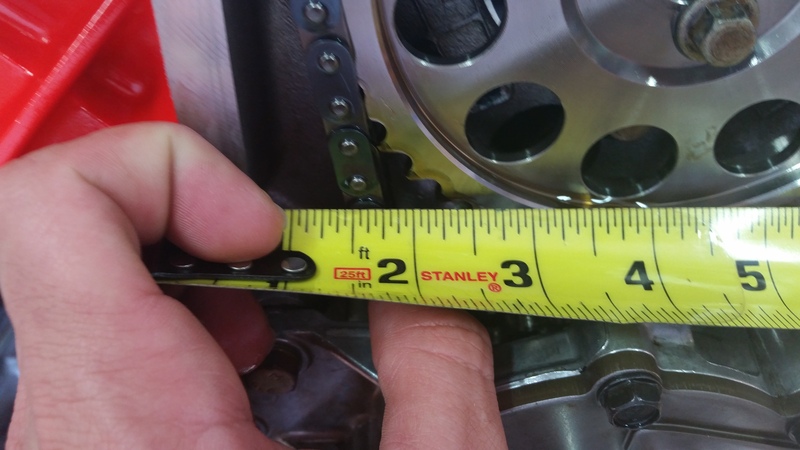
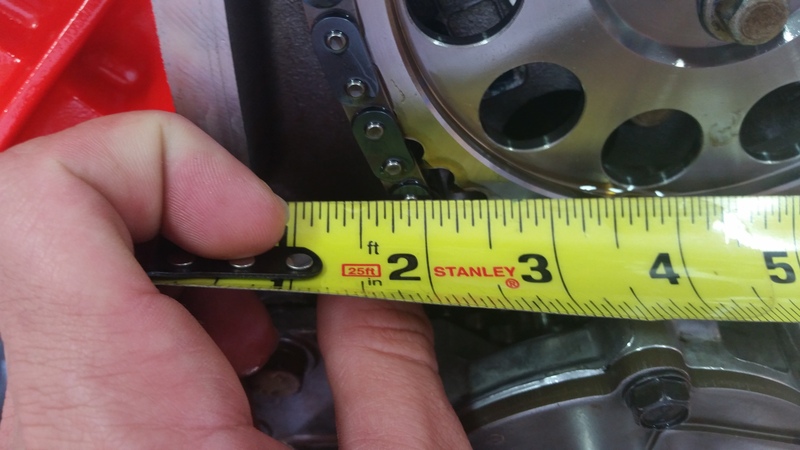
Stuff I have read that I do not know are true and add to my confusion. Maybe someone can chime in and make or create a sticky. I see this question a lot but then i see as many different answers as I do when we discuss hydraulic lifters
THIS IS DIFFERENT OPINIONS I HAVE READ
The chain will tighten up as aluminum blocks expand more when hot
The chain will tighten up when you install and tighten the rockers
Slack is fine as long as it is not hitting the sides of the engine block
A tight chain is bad and can break when expanded from heat
road racing RPM's in the 3,400-4,500 range is the worst for stressing the chain
Too much slack can throw the timing off by 2 to 4 degrees
slack reduces engine responsiveness
I would like to use this double roller chain I have if the 1/4" of slack is acceptable, if not, then I will put on my LS2 set.
The lifters, pushrods and rockers are not installed yet, not sure if that will make a difference but heard it might


Last edited by RabidStreetRacer; May 6, 2015 at 04:45 PM.
I just installed all the lifters, pushrods and rockers. The slack remained the same, that busts the one saying that it will tighten after the valvetrain is installed, which i thought was stupid.
If the block expands enough to tighten up the timing chain, engines would have all kinds of problems from leaks to blown gaskets to pulled threads.
I can't imagine the block expands more than a few microns.
I can't imagine the block expands more than a few microns.
Trending Topics
I was told by a LS engine builder that the LS1 expands so the chain will tighten some. Just repeating what I was told. I do agree with you that it can't be much if any.
LS1 Tech Stories
The Best V8 Stories One Small Block at Time

Topdon ONE vs. Artidiag 800 BT2: Which is the Diagnostic Tablet For You?
Pouria Savadkouei
Gas Monkey Built a 6-Wheel Ferrari Testarossa With a Corvette LT4 Engine
Verdad Gallardo
7 Most Reliable High-Performance Engines GM Has Ever Built
Verdad Gallardo
Amazing '71 Camaro Restomod Is Modern Muscle Car Under the Skin
Verdad Gallardo
6 Common C5 Corvette Failures and What's Involved In Repairing Them
Pouria Savadkouei
Retro Modern Bandit Pontiac Trans AM Comes With Burt Reynolds' Autograph
Verdad Gallardo
Top 10 Greatest Cadillac V Series Performance Models Ever, Ranked
Pouria Savadkouei
Top 10 Most Powerful Chevy Trucks Ever Made!

Hennessey's New Supercharged Silverado ZR2 Has 700 HP
Verdad Gallardo
TECH Addict
Joined: Mar 2013
Posts: 2,628
Likes: 30
Probably going to blow your mind how much they expand, I know they expand someplace in the .040 zone. Enough to stop cold carbon knock as the engine grows. It also has to do with distance, example If you measuring from crankshaft to cam bearing journal you may see .020 growth when hot but from deck to crankshaft journal .040. I hope this makes sense to you all.
Here is info from another site on this to figure it out exactly.
Coefficient of expansion (CoE) for metals is given in inches/inches of length/degree F (or m/m/K*), so change of length depends on the original length of the part and the temp. change.
Using these COEs: Aluminum: 13.8 x 10^-6 (millionths)
Steel: 6.4 x 10^-6
Cast Iron: 6.7 x 10^-6
A 9.00 deck height, 3.75 stroke, 6.00 steel rod engine should have these length changes for a 150F change, or from 70F to 220F operating temp:
Iron block: 9.00 x 6.7 x10^-6 x 150 = .0090 in. growth
Aluminum block: 9.00 x 13.8 x10^-6 x 150 = .0186 in. growth
Steel crank and rod: (1.875 + 6.00) x 6.4 x10^-6 x 150 = .0076 growth.
Aluminum piston with 1.125 CH: 1.125 x 13.8 x10^-6 x 150 = .0023 growth
Growth of crank, rod and piston needs to be subtracted from the block growth to determine how quench clearance is changed.
Iron block: .0090 - .0076 - .0023 = -.0009 or piston sticks up about and additional .001
Alum. block: .0186 - .0076 - .0023 = .0087 or piston is that much down in the hole.
Substitute your engine dimensions and the temp change from room temp (where engine components shoud be measured) to get specifics for your engine.
Here is info from another site on this to figure it out exactly.
Coefficient of expansion (CoE) for metals is given in inches/inches of length/degree F (or m/m/K*), so change of length depends on the original length of the part and the temp. change.
Using these COEs: Aluminum: 13.8 x 10^-6 (millionths)
Steel: 6.4 x 10^-6
Cast Iron: 6.7 x 10^-6
A 9.00 deck height, 3.75 stroke, 6.00 steel rod engine should have these length changes for a 150F change, or from 70F to 220F operating temp:
Iron block: 9.00 x 6.7 x10^-6 x 150 = .0090 in. growth
Aluminum block: 9.00 x 13.8 x10^-6 x 150 = .0186 in. growth
Steel crank and rod: (1.875 + 6.00) x 6.4 x10^-6 x 150 = .0076 growth.
Aluminum piston with 1.125 CH: 1.125 x 13.8 x10^-6 x 150 = .0023 growth
Growth of crank, rod and piston needs to be subtracted from the block growth to determine how quench clearance is changed.
Iron block: .0090 - .0076 - .0023 = -.0009 or piston sticks up about and additional .001
Alum. block: .0186 - .0076 - .0023 = .0087 or piston is that much down in the hole.
Substitute your engine dimensions and the temp change from room temp (where engine components shoud be measured) to get specifics for your engine.

TECH Fanatic

Joined: Aug 2004
Posts: 1,375
Likes: 5
From: Auckland, Nth Is, New Zealand.
The Trick Flow bracket fitted with an LS2 damper is 'NOT' a chain tensioner..... all it does is stop the chain from whipping, ie: especially during road racing


FYI..
I purchased a new C5R JWIS chain and just for the hell of it I but it on my LS2 sprockets that are in perfect shape...
It was as loose as my old LS2 chain!
However once I put the new Hex-a-just cloyes gears on with the JWIS chain it was nice and tight!
No slop, but not so tight that it would increase friction..
So these Cloyes gears are what get rid of the slack in the chain! not the actual chain itself!
I purchased a new C5R JWIS chain and just for the hell of it I but it on my LS2 sprockets that are in perfect shape...
It was as loose as my old LS2 chain!
However once I put the new Hex-a-just cloyes gears on with the JWIS chain it was nice and tight!
No slop, but not so tight that it would increase friction..
So these Cloyes gears are what get rid of the slack in the chain! not the actual chain itself!

The timing chain is a pretty important piece of the puzzle and since GM designed the LS engine for 250,000 miles, I simply refuse to believe that the engineers said "Aww that's fine if it's that loose" If guys running LLSR cams are running no lash cold in order for the hot lash to be in the .008"-.010" range; I would bet the farm that between oil on the chain and thermal expansion, a room temperature slop virtually disappears when up to full temperature.
I do agree that road racing can cause additional stretch and vibrational slapping, which is why a dampener is useful but for ninety percent of driving/cruising situations.....the factory crap is just fine.
I do agree that road racing can cause additional stretch and vibrational slapping, which is why a dampener is useful but for ninety percent of driving/cruising situations.....the factory crap is just fine.
Your iron block 5.3 hardly expands when heated and had a tight chain at room temp.
An aluminum block expands considerably when heated to the point that the main bearing clearances will open up nearly 50 percent and the deck height can grow almost .008".
An aluminum block expands considerably when heated to the point that the main bearing clearances will open up nearly 50 percent and the deck height can grow almost .008".
Good info Rockin. I saw that same website you found that on.
This would mean that nine inches of material in an aluminum block expands .0186 in between cool and hot.
As the distance between the crank saddles and cam bore is just under three inches, the cam bore would migrate just less than .0062 inches away from the crank when hot.
My opinion is I doubt this is enough to tighten up chain slop.
Additionally, if you were "lucky" enough to have a timing chain set without any slop (nice and tight as installed) and the block expanded enough to tighten up a loose chain, this tight chain set would be too tight at operating temps. This would cause excessive wear on at least the number one cam bearing.
This would mean that nine inches of material in an aluminum block expands .0186 in between cool and hot.
As the distance between the crank saddles and cam bore is just under three inches, the cam bore would migrate just less than .0062 inches away from the crank when hot.
My opinion is I doubt this is enough to tighten up chain slop.
Additionally, if you were "lucky" enough to have a timing chain set without any slop (nice and tight as installed) and the block expanded enough to tighten up a loose chain, this tight chain set would be too tight at operating temps. This would cause excessive wear on at least the number one cam bearing.
Last edited by Paul Bell; May 8, 2015 at 11:39 PM.
I've yanked my motor apart again. When I re-assemble it, I'll examine this a little closer.

mine tightened up after I installed the valvetrain and turned the engine over a couple of times,go figure.
the Haynes manual says up to 5/8" slack is acceptable.seems like a lot,but that's what the spec is.
FYI,i'm running a stock timing chain and cam sprocket with 60,000 miles.the crank sprocket has 160,000 miles.i have about 3/8" or so slop.car runs strong,but of course i'm cam only street car.
your fine,don't worry about it.
the Haynes manual says up to 5/8" slack is acceptable.seems like a lot,but that's what the spec is.
FYI,i'm running a stock timing chain and cam sprocket with 60,000 miles.the crank sprocket has 160,000 miles.i have about 3/8" or so slop.car runs strong,but of course i'm cam only street car.
your fine,don't worry about it.
Deck height in an aluminum block grows about .0186. (Source: https://ls1tech.com/forums/generatio...l#post18792394 ) At 1/3 the length, the distance between the crank & cam grows about .0062. Is this enough to significantly reduce chain slop?
I'd like to see somebody actually measure the block when cold and hot.
Chain slack should NOT be reduced after installing the valvetrain.
I'd like to see somebody actually measure the block when cold and hot.
Chain slack should NOT be reduced after installing the valvetrain.