When you click on links to various merchants on this site and make a purchase, this can result in this site earning a commission. Affiliate programs and affiliations include, but are not limited to, the eBay Partner Network.
Hello all, long time listener, first time caller. Been lurking for a long time. Usually when you come here there is no need to make a thread... Its already been asked a million times.
So forgive the low post count, but I come asking for help.
I'm going for the TLDR version of my history.
I completed my LS1 swapped miata around March 2017. Mods at that time we're an unopened motor out of a 120k '99 z28 i bought as a donor. Put a 228r cam in it with PAC springs, and self tuned on the street. Holley 302-2 pan, LS2 chain set, melling 10296 ( regrets ) with HP spring.
Served me well for approximately 5k miles before i spun the 7/8 rod bearings at an autocross due to presumably oil starvation.
So over this past winter. I aquired another LS1 short block from a member on here that had sat for a couple yeasr and had some staining on the cylinder walls but was in otherwise good shape. Dropped it off at a local machine shop to have everything gone over, honed and reringed, ARP rod and main bolts installed. Rods had to resized (.002 over rod bearings) and the crank/mains were checked. Machine shop claimed an align hone was not needed on the mains.
Also aquired some truck 243s , had them milled .020 at a separate time by the same shop.
I assembled the rest myself after i had the rest of the parts in my possession. Powerbond 25% underdrive, melling 10295 this time, ls7 lifters, ls2 trays, GM MLS head gaskets, ARP headstuds, same 228r cam thoroughly cleaned, same pan 302-2 thouroughly cleaned. But also added an improved racing trap door baffle and a Canton 3qt EPC accusump plumbed into the factory oil pressure sensor location to prevent any future issues of oil starvation.
I got everything reassembled and ready to drive about 2 weeks ago.
First startup consisted of , preoiling with accusump (40psi of oil pressure), rotella T4 15w-40 (conventional) and maybe 5 min of idling while trying to bleed the cooling system.
After that, i shut it down to get a few more suspension bits wrapped up so i could break it in on the street.
I did about 40 miles of moderate load and high engine vacuum break in. And things felt great overall. Oil pressure was high and everything seemed good other than some more valvetrain (?) Noise than i had experienced previously. However I attribute that to new pushrods that were required to get due to new heads which were milled (BTR 7.375) and comp upgraded trunion rockers. My previous setup was the 228r on stock 853s with 7.425 which probably had slightly more preload.
First oil change at 40 miles looked pretty bad overall. Oil was very gold and sparkly. However the the amount of ARP hardware in it, i attributed the very gold color of the oil the the relatively large amounts of moly lube. And i know some metal bits are to be expected. Even still, it was a bit more than I expected so this put me on edge.
sparkly oil
Cut open filter
filter element
flakes
Dont mind the blue in the filter trash, accidentally scraped off some paint from the filter. So anyways, from here, I obviously wasnt very happy. But I was hoping that perhaps there was just more than average amount of debris in the block/oil galleys from machining and assembly. So I figured Id flush it and give it another ~40 miles to see how it looked. Logic here being, well if there is damage done...its already done, and if not, then the next change will look good.
Well, 40 miles later I drained the oil again, and the oil itself looked significantly better due ( mainly due to the moly lube being mostly washed out in the last flush ). So i filtered out all 7 qts that I drained. And unfortunately found some more sparkles in the bottom of my drain pan (which i washed and cleaned thoroughly before draining )
So naturally, next step was to cut open this filter as well. Which revealed the following... I am especially concerned about the sliver and the copper flake I found. This told me that something was wrong.
So next step was to pull everything apart and start inspecting bearings. Pan had some junk in it as well, to be expected at this point.
First thing I checked were rods, I didnt pull all 8 (yet), but 1,2,7 and 8 all looked ok.
One showed a weird staining/etching. I'd probably replace this, but clearly not the source of my problems ( if not caused by it )
So still, none of this explains the excessive flakes / copper.
Next I pulled the front of the engine apart, inspected the timing set, cam retainer plates, lifters and cam bearings... those all looked normal , nothing out of place there so i wont bore you with more pictures of that stuff.
Next I pulled the mains that were easily accessible. The motor is actually still in the car up until this point. So i can only get to 1,2,3 & 4 . So the results are as follows. the 1 & 2 main are almost identical. Some scoring with one gouge deep enough to show some copper.
Thrust bearing next. Not sure what to make of this, doesnt look perfect, but doesnt look aweful either. Maybe a copper flake came from one of those thrust surfaces?
That leaves the #2 cap
Seemingly better as we get closer to the oiling source? (or worse the further you travel down the oil galley depending on how you want to spin it )
So I gotta know what #5 looks like now. And as im sure most of you know, I cant pull that cap without pulling the motor due to the rear main cover.
So im calling upon the engine building experts to offer me advice. I know im going to get a lot of "take it back to the shop" .... but they are very difficult to deal with. I was overall unhappy with my experience after being overcharged and all kinds of nonsense. I can almost promise they will deny responsibility unless i can show without reasonable doubt that this is somehow their fault.
So , sorry for the long pic heavy post. But looking for help here. I dont want to just throw new bearings in it without knowing what mightve caused this.
Last edited by rndmheroxx; May 6, 2018 at 12:10 PM.
I don't see anything in those photos that would have shed THAT MUCH debris into the oil. What little damage I see in the photos is after the fact, a casualty so to speak, and not the root cause. SOMETHING in that motor is UTTERLY DESTROYED and should be obvious whenever you come across it.
I don't really see anything wrong with the thrust surface. Definitely isn't the source of THAT MUCH metal debris.
Definitely pull the remaining rod caps and mains: could be that one of those is wiped out.
Might want to take apart the oil pump and look inside it. Also could be a cam lobe & lifter, or something somewhere else in the valve train.
The crank is toast; probably can be turned, but can't really be used as-is.
I don't see anything in those photos that would have shed THAT MUCH debris into the oil. What little damage I see in the photos is after the fact, a casualty so to speak, and not the root cause. SOMETHING in that motor is UTTERLY DESTROYED and should be obvious whenever you come across it.
I don't really see anything wrong with the thrust surface. Definitely isn't the source of THAT MUCH metal debris.
Definitely pull the remaining rod caps and mains: could be that one of those is wiped out.
Might want to take apart the oil pump and look inside it. Also could be a cam lobe & lifter, or something somewhere else in the valve train.
The crank is toast; probably can be turned, but can't really be used as-is.
For the most part I agree with you overall, and those are my take-aways as well. I have yet to come across the real problem I feel as well. I will certainly be pulling all caps as soon as I have the motor all the way out (this afternoon I hope). I did not however, feel that the crank was trash. It seemed overall in good shape from what I could see.
I did check out the oil pump interals and everything looks perfectly fine there. And as I stated earlier, I did pull the cam and nothing alarming there. I dont really want to pull the heads back off if I dont have to so I cant get a real good look at the lifters, but with a light looking down though the cam journal; nothing appears out of place.
I will report back if I find anything interesting today. But as of now, I am still clueless.
Thanks for the insight!
Last edited by rndmheroxx; May 6, 2018 at 01:56 PM.
Who cleaned the oil passages, installed the rear barbell and frt plug?
Machine shop assembled the all plugs/ports EXCEPT the rear barbell.I received is as a torqued to spec rotating assembly. I did barbell, sensors, oil pump, timing set, cam and oil pan.
Well there is your answer, It was never cleaned. You have to completely disassemble, clean and repair everything including ALL the oil passages that means EVERY ONE crank lifter gallery etc. No other way to do this. If nothing failed to cause this damage then something was in the oil passages-oil gallery. I suggest you completely tear down THEN decide what really happened. If I were you I'd do my own cleaning. What ever was in this was hard enough to ruin the crank.....what could that be? You need to find it and if you can't then its obvious something was in the oil passages-gallery.
Well there is your answer, It was never cleaned. You have to completely disassemble, clean and repair everything including ALL the oil passages that means EVERY ONE crank lifter gallery etc. No other way to do this. If nothing failed to cause this damage then something was in the oil passages-oil gallery. I suggest you completely tear down THEN decide what really happened. If I were you I'd do my own cleaning. What ever was in this was hard enough to ruin the crank.....what could that be? You need to find it and if you can't then its obvious something was in the oil passages-gallery.
Im with you on that logic. And I dont mean to make it sound like I wont take them blame , where blame is due.
But dont you think that if I paid a machine shop for "Assembly" (as a line-item) that I shouldnt have to take it apart and reassemble it? On my receipt, there is literally a QTY (2) for block cleaning. I know specifically because I questioned the machine shop when I got my bill on this item in particular , and it was explicitly said "well we clean the block when we get it, do all of our machining, then have to clean it out again!"
Anyways, I fell you are most likely correct. I have the motor back out and on the stand now. I have removed the #5 cap and it looks identical to the #4 cap.
So that progression would confirm that the main bearings go from Best->Worst from the Rear->Front with the front 2, (#1&2) being the worst and showing a sliver of copper.
This would also indicate that yes, perhaps as the oil traveled, it picked up more and more trash from inside the galley.
Well if I had a hoagie for dinner I'd have a hoagie. It is what it is, tear it down completely then you will know the answer with out a doubt. Something would have had to come apart and inject itself into your oil gallery. Good luck with that one. The oil pump looks good, If something like the lifter rollers failed the 1st thing to get hit would be the pump then the oil filter. Unfortunately it is possible for such particles to bypass the oil filter via the barbell. But you would see damage in the pump. Before we hash over anything more tear it down, inspect every last tiny piece then post up what you find. If nothing came apart you know what happened. Luckily you stopped soon enough to diagnose this mess, If you had run it till it ruined everything it would be tough to say what came 1st, the CHICKEN OR THE EGG.
Another thing, drag a strong magnet through the drained oil. Post up a picture of what sticks to the magnet. Go back and forth in the oil over and over till you get anything magnetic. Something worn that crank.
If a motor blows up, it leaves metal shavings in the oil passages in the block.
Keep that in mind. Don't ever forget it. IF A MOTOR BLOWS UP, IT LEAVES METAL SHAVINGS IN THE OIL PASSAGES IN THE BLOCK.
So...
"Shop" gets an old blowed-up motor from yerbasic local buzzard nest, as a core. They tear it down, "clean" it, machine it, "clean" it again.
Sounds great.
Question is, what does "clean" consist of?
Vat? Metal shavings don't dissolve in the vat.
Rotating spray washer? Doesn't spray into EVERY oil passage strong enough to wash out EVERY metal shaving.
Bake? Metal shavings don't "bake" like oil sludge or paint or gasket material.
Bottom line? If a motor blew up in that block, and nobody has taken rifle brushes and ran them through EVERY SINGLE oil passage along with plenty of soap & water, cleaning fluid, or whatever, those metal shavings from the last motor that blew up in that block are STILL IN THE OIL PASSAGES.
Moral of the story? You have to clean it up yourself if you want it to survive.
Tear the motor down. Take the block to a shop and have it "cleaned". Instruct them to deliver it back to you with EVERY plug removed from it, especially from the oil passages, and no can bearings.Then take it to the quarter car wash early in the morning on a nice warm sunny day, along with acoupla cans of "engine degreaser" (diesel fuel in a spray can) and your gun cleaning set, plus a small "toothbrush" shape wire brush. Run a brush soaked in diesel through EVERY oil passage. Use the toothbrush in EVERY groove passage, such as behind cam bearings, or wherever else. Make sure EVERY place that oil goes, has been scrubbed CLEAN. Blast the hell out of every one of the passages. Leave it out in the sun all day to dry. Then take it back to "shop" and have it "cleaned" again, and cam bearings and all the plugs installed.
THEN AND ONLY THEN, it will be ready to build again. If you have an oil cooler, replace it, and all its lines. (new radiator if the cooler is integral to it) If that is not done, those metal chips will stay in there right where they are now, and I'll let you figure out where they're gonna go the first time the next motor built into that block is started up.
I sure would like to see what the cam bearings look like...
Are the oiling holes lined up properly??? Nothing blocking the holes???
Where are you located??? Does this shop build LS engine regularly??? Perhaps some one can suggest a better place to do business with.
I Particularly don't like the look of the #3 main bearing wear. It looks like the main bore could use a touch up. But I would also like to know is the crank Standard? or was it cut?
Also, do you know what type of bearing was used?
Last edited by 1FastBrick; May 7, 2018 at 01:35 AM.
If a motor blows up, it leaves metal shavings in the oil passages in the block.
Keep that in mind. Don't ever forget it. IF A MOTOR BLOWS UP, IT LEAVES METAL SHAVINGS IN THE OIL PASSAGES IN THE BLOCK.
So...
"Shop" gets an old blowed-up motor from yerbasic local buzzard nest, as a core. They tear it down, "clean" it, machine it, "clean" it again.
Sounds great.
Question is, what does "clean" consist of?
Vat? Metal shavings don't dissolve in the vat.
Rotating spray washer? Doesn't spray into EVERY oil passage strong enough to wash out EVERY metal shaving.
Bake? Metal shavings don't "bake" like oil sludge or paint or gasket material.
Bottom line? If a motor blew up in that block, and nobody has taken rifle brushes and ran them through EVERY SINGLE oil passage along with plenty of soap & water, cleaning fluid, or whatever, those metal shavings from the last motor that blew up in that block are STILL IN THE OIL PASSAGES.
Moral of the story? You have to clean it up yourself if you want it to survive.
Tear the motor down. Take the block to a shop and have it "cleaned". Instruct them to deliver it back to you with EVERY plug removed from it, especially from the oil passages, and no can bearings.Then take it to the quarter car wash early in the morning on a nice warm sunny day, along with acoupla cans of "engine degreaser" (diesel fuel in a spray can) and your gun cleaning set, plus a small "toothbrush" shape wire brush. Run a brush soaked in diesel through EVERY oil passage. Use the toothbrush in EVERY groove passage, such as behind cam bearings, or wherever else. Make sure EVERY place that oil goes, has been scrubbed CLEAN. Blast the hell out of every one of the passages. Leave it out in the sun all day to dry. Then take it back to "shop" and have it "cleaned" again, and cam bearings and all the plugs installed.
THEN AND ONLY THEN, it will be ready to build again. If you have an oil cooler, replace it, and all its lines. (new radiator if the cooler is integral to it) If that is not done, those metal chips will stay in there right where they are now, and I'll let you figure out where they're gonna go the first time the next motor built into that block is started up.
Preach it man! I agree with you 100%, but im not sure if you missed it skimming the first post, but this is an entirely different motor than the first one that spun rod bearings. I picked up a whole different short block. Only parts that were reused from the old motor were the oil pan, timing set and cam. Which I very carefully cleaned.
Originally Posted by 1FastBrick
I sure would like to see what the cam bearings look like...
Are the oiling holes lined up properly??? Nothing blocking the holes???
Where are you located??? Does this shop build LS engine regularly??? Perhaps some one can suggest a better place to do business with.
I Particularly don't like the look of the #3 main bearing wear. It looks like the main bore could use a touch up. But I would also like to know is the crank Standard? or was it cut?
Also, do you know what type of bearing was used?
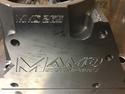
Ask and ye shall receive! I have attached photos of cam and bearings below. Sorry for the shitty pics, kinda hard to see in there. Also note that they appear to be identical to when they were installed, the variance in "color" shine was apparent the day i picked it up from the shop as well. All oil holes are around the 4 and 8 o'clock position.
Located in the Akron/Canton Ohio area.... obviously if I were to do this all over again, i would go elsewhere for machining work. However my only recourse (if I have any) is at this shop.
Crank was not cut, standard size main bearings. Clevite MS2199P
As mentioned previously, rods were all resized after measuring out of round from ARP bolts. .002" oversized bearings were used Clevite CB1776A
this is an entirely different motor than the first one that spun rod bearings
How do you KNOW that? I thought this was a "rebuilt" short block you bought someplace? What of its history do you know, before it was "rebuilt"? How do you KNOW that THIS ONE didn't spin rod bearings, TOO, and that was what sent it to the "rebuilder"?
I have nothing against "rebuilders", or buying a "rebuilt" motor, with only a few exceptions. This is one of them: it's cheeeeeeeper for most of them to "clean" their blocks in whatever standard fashion, and take this exact risk and just pay the warranty claims, than it is to do what I described. Kinda like it was cheeeeeeeeper for Frod to just pay the death claims for exploding Pintos than it would have been to change the rear end housing or alter the gas tank. The other exceptions being, minimal attention to detail in the machine work (boring blocks "on the wear" instead of in the right place for example); and choice of parts.
I still don't see the death and destruction that was in your oil, though. Cam & its bearings look fine. You sure can see the PILES of metal chips in the oil passage across the back of the block behind the rear cover though, on the ends of the dowels.
How do you KNOW that? I thought this was a "rebuilt" short block you bought someplace? What of its history do you know, before it was "rebuilt"? How do you KNOW that THIS ONE didn't spin rod bearings, TOO, and that was what sent it to the "rebuilder"?
I have nothing against "rebuilders", or buying a "rebuilt" motor, with only a few exceptions. This is one of them: it's cheeeeeeeper for most of them to "clean" their blocks in whatever standard fashion, and take this exact risk and just pay the warranty claims, than it is to do what I described. Kinda like it was cheeeeeeeeper for Frod to just pay the death claims for exploding Pintos than it would have been to change the rear end housing or alter the gas tank. The other exceptions being, minimal attention to detail in the machine work (boring blocks "on the wear" instead of in the right place for example); and choice of parts.
I still don't see the death and destruction that was in your oil, though. Cam & its bearings look fine. You sure can see the PILES of metal chips in the oil passage across the back of the block behind the rear cover though, on the ends of the dowels.
I KNOW that because I still have my old block lol. As I mentioned, I bought the "new-to-me" block from a member on here, and inspected the crank/cam/rod bearings before dropping it off at the shop. Everything was in great shape, I just wanted it gone over and checked with the new ARP hardware.
But i agree on the death and destruction note though. I did not see anything that would procure that much garbage which is why I am especially confused..... The only answer thus far would be that it all that was hiding in the block and is still being flushed out, with the addition of some bearing bits from the mains/thrust.
Hi Hero, your report is the BEST I have seen here about bearing inspection, good work.
I observe the #3 Thrust Bearing is in VERY POOR shape.
The art of an engine "swap" is such that you MUST measure Crank End Float when in the car, connected to the fully assembled transmission.
My "guess" at the cause ? (both times)
Lance
Thanks for your input and compliments! I hate asking for help, but when I do, I like to make sure I am well informed and have all the data before posting.
I did fail to mention in the OP that this is a T56 car. Correct me if I'm wrong, but there shouldnt be any reason the machine shop could not set end play without the transmission in place correct?
This is also an interesting bit of information I found when I looked up the main bearing set on the summit site:
Hi Hero, the crankshaft/pilot bearing/input shaft ALL must match in a length requirement.
The Thrust wear STATES a problem, SO I ASK "what side is the wear front/rear ?
Gas Monkey Built a 6-Wheel Ferrari Testarossa With a Corvette LT4 Engine
Slideshow: The controversial Ferrari F6 swaps its original flat-12 for a Corvette Z06-derived LT4 V8 and sends power to four rear wheels through a custom-built drivetrain.
7 Most Reliable High-Performance Engines GM Has Ever Built
Slideshow:These GM engines didn't just make huge power, they survived abuse, boost, track days, and six-digit mileage with a reputation for refusing to quit.
6 Common C5 Corvette Failures and What's Involved In Repairing Them
Slideshow: From wobbling harmonic balancers to failed EBCMs, these are the issues that define long-term C5 ownership and what repairs typically involve.
Retro Modern Bandit Pontiac Trans AM Comes With Burt Reynolds' Autograph
Slideshow: A modern Camaro transformed into a retro icon, this limited-run "Bandit" build blends nostalgia with brute force in a way few revivals manage.
Top 10 Greatest Cadillac V Series Performance Models Ever, Ranked
Slideshow: Cadillac didn't just crash the high-performance luxury vehicle party, it showed up loud, supercharged, and occasionally a little unhinged...






 Bearing Failure Analysis