





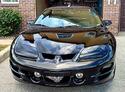



Roller Rocker Arm opinions...

Thread Starter
12 Second Club


Joined: Dec 2017
Posts: 1,034
Likes: 224
From: San Antonio
 Roller Rocker Arm opinions...
 What is the general consensus on the Scorpion full roller rocker arms? They have 1.8 ratio rockers that they claim will clear the stock valve covers. I'm thinking this would be a nice upgrade for the stock 5.3L engines.
My neighbor's GMC (5.3L) has a lifter knock until it warms up. It sounds like a classic high-mileage LS lifter knock/tapping sound. I'm trying to get him set-up with new lifters and springs, but I figured we might as well swap the rocker arms as well. I just don't want any fitment issues. That's why I was leaning towards the Scorpion rockers. They seem to clear stock valve covers.
I have even considered swapping my stock rocker arms out for a set of 1.8 Scorpion full roller rockers. My high-er lift cam is not as forgiving on the valve train as the stock cam. I'm sure the roller tips would help to ease any side-loading with the cam's max .600" lift. With 1.8 rockers, my max lift would be .660". I have .660" lift BTR springs, so they should hold... My biggest concern is with piston to valve clearance. I didn't swap the heads, so I don't know what the PTV clearance is right now. I would hate to bend a valve.
My neighbor's GMC (5.3L) has a lifter knock until it warms up. It sounds like a classic high-mileage LS lifter knock/tapping sound. I'm trying to get him set-up with new lifters and springs, but I figured we might as well swap the rocker arms as well. I just don't want any fitment issues. That's why I was leaning towards the Scorpion rockers. They seem to clear stock valve covers.
I have even considered swapping my stock rocker arms out for a set of 1.8 Scorpion full roller rockers. My high-er lift cam is not as forgiving on the valve train as the stock cam. I'm sure the roller tips would help to ease any side-loading with the cam's max .600" lift. With 1.8 rockers, my max lift would be .660". I have .660" lift BTR springs, so they should hold...
My biggest concern is with piston to valve clearance. I didn't swap the heads, so I don't know what the PTV clearance is right now. I would hate to bend a valve. Valve lift has almost no effect on ptov clearance. It's when the exhaust valve is closing that is critical. The rocker ratio does increase the ramp rate of the cam lobe, so if your ptov was close before you would want to check it if going to 1.8.
Also it typically take more valve spring to control the valve train when a heavy nosed roller rocker is used. All roller rockers are heavier on the nose than a stock LS rocker. So a valve spring upgrade is often needed to get the full benefit of a 1.8 rocker.
I'd pick an appropriate aftermarket cam and valve spring kit and get a new set of stock rockers.
I'd pick an appropriate aftermarket cam and valve spring kit and get a new set of stock rockers.
Thread Starter
12 Second Club
Joined: Dec 2017
Posts: 1,034
Likes: 224
From: San Antonio
Ok, I'll just stick with my stock rocker arms for my current engine. I already have upgraded springs and an aftermarket cam (see signature).
I was a little concerned about the reliability of aluminum rocker arms. I see that I'm not the only one. I do think there is some benefit to an increased ratio, especially with a smaller or stock cam. Having the valve open further should allow more air flow, no matter the duration.
I was a little concerned about the reliability of aluminum rocker arms. I see that I'm not the only one. I do think there is some benefit to an increased ratio, especially with a smaller or stock cam. Having the valve open further should allow more air flow, no matter the duration.
Trending Topics

TECH Apprentice

Joined: Oct 2002
Posts: 317
Likes: 3
From: TX
I have over a 100,000 miles and 6 years on yella terra 1.8 aluminum roller rockers in a 2002 Tahoe with a stock cam 5.3L engine with Ls6 valve springs. They added a nice little pep, no regrets or failures on these yet.
LS1 Tech Stories
The Best V8 Stories One Small Block at Time

Gas Monkey Built a 6-Wheel Ferrari Testarossa With a Corvette LT4 Engine
Verdad Gallardo
7 Most Reliable High-Performance Engines GM Has Ever Built
Verdad Gallardo
Amazing '71 Camaro Restomod Is Modern Muscle Car Under the Skin
Verdad Gallardo
6 Common C5 Corvette Failures and What's Involved In Repairing Them
Pouria Savadkouei
Retro Modern Bandit Pontiac Trans AM Comes With Burt Reynolds' Autograph
Verdad Gallardo
Top 10 Greatest Cadillac V Series Performance Models Ever, Ranked
Pouria Savadkouei
Top 10 Most Powerful Chevy Trucks Ever Made!

Hennessey's New Supercharged Silverado ZR2 Has 700 HP
Verdad Gallardo
Coachbuilt N2A Anteros Is an LS2-Powered C6 Corvette In Italian Clothes
Verdad Gallardo If I were to run aluminum those would be one of my choices.

My YT rockers are 10 grams heavier over the nose, vs. an OEM steel rocker. I weighed them myself to see the difference. For comparison sake, a Ti retainer for a beehive spring weighs about 5-6 grams...depending on who’s Ti retainer you have...while a steel retainer weighs about 11 grams for a beehive spring. You can double these weights for standard sized retainers, such as those used for a dual spring setup.
You could run a Ti retainer with an aluminum rocker and offset around half of the added weight that the spring will see from the rocker. The question you have to ask here is what are you trying to achieve? Roller rockers will add weight at the valve vs. an Oem steel rocker, there’s no question. Added weight...even 5-6 grams...will cost you rpm which is power, by sending the valve into float a few hundred rpm sooner. You offset the added weight by adding valve spring.
With cam profiles that have high lift, say .650” and up (debatable subject, I know) the roller rockers become necessary due to the Oem stamped steel rocker simply running out of pad, and severely side loading the valve, which causes increased guide and stem wear. But with cam profiles such as this, more duration is always present, which requires more valvespring, so typically the heavier rocker arm is taken into account when selecting springs.
Reliability will always be compromised when using an aluminum roller rocker arm. But aftermarket springs rated higher than Oem springs for a performance camshaft will rarely last as long as the Oem springs will have, as well. Any time there’s an upgrade regarding performance, to any part of an engine, there’s always going to be trade-offs and compromises made to other components, either in the engine itself, or the transmission connected to it, and possibly even the rear end.
Material selection is important regarding upgrades. There are different offerings of materials regarding performance rocker arms. You can purchase roller rockers made of different grades of steel, but the steel units are heavier than their aluminum counterpart, which requires even more spring, which is harder on valve seats and valves. More spring requires stronger pushrods, etc, hence the trade-offs. Ti valves come into the equation eventually regarding valvetrain weight, which further compromises the setup due to the lifespan of Ti being much shorter than steel. We are constantly chasing our tails in the pursuit of power. At the end of the day, Oem rockers are suitable for most builds, unless it’s a max-effort type.
You could run a Ti retainer with an aluminum rocker and offset around half of the added weight that the spring will see from the rocker. The question you have to ask here is what are you trying to achieve? Roller rockers will add weight at the valve vs. an Oem steel rocker, there’s no question. Added weight...even 5-6 grams...will cost you rpm which is power, by sending the valve into float a few hundred rpm sooner. You offset the added weight by adding valve spring.
With cam profiles that have high lift, say .650” and up (debatable subject, I know) the roller rockers become necessary due to the Oem stamped steel rocker simply running out of pad, and severely side loading the valve, which causes increased guide and stem wear. But with cam profiles such as this, more duration is always present, which requires more valvespring, so typically the heavier rocker arm is taken into account when selecting springs.
Reliability will always be compromised when using an aluminum roller rocker arm. But aftermarket springs rated higher than Oem springs for a performance camshaft will rarely last as long as the Oem springs will have, as well. Any time there’s an upgrade regarding performance, to any part of an engine, there’s always going to be trade-offs and compromises made to other components, either in the engine itself, or the transmission connected to it, and possibly even the rear end.
Material selection is important regarding upgrades. There are different offerings of materials regarding performance rocker arms. You can purchase roller rockers made of different grades of steel, but the steel units are heavier than their aluminum counterpart, which requires even more spring, which is harder on valve seats and valves. More spring requires stronger pushrods, etc, hence the trade-offs. Ti valves come into the equation eventually regarding valvetrain weight, which further compromises the setup due to the lifespan of Ti being much shorter than steel. We are constantly chasing our tails in the pursuit of power. At the end of the day, Oem rockers are suitable for most builds, unless it’s a max-effort type.


TECH Resident


Joined: Jun 2013
Posts: 814
Likes: 231
From: Nebraska, The Good Life
My YT rockers are 10 grams heavier over the nose, vs. an OEM steel rocker. I weighed them myself to see the difference. For comparison sake, a Ti retainer for a beehive spring weighs about 5-6 grams...depending on who’s Ti retainer you have...while a steel retainer weighs about 11 grams for a beehive spring. You can double these weights for standard sized retainers, such as those used for a dual spring setup.
You could run a Ti retainer with an aluminum rocker and offset around half of the added weight that the spring will see from the rocker. The question you have to ask here is what are you trying to achieve? Roller rockers will add weight at the valve vs. an Oem steel rocker, there’s no question. Added weight...even 5-6 grams...will cost you rpm which is power, by sending the valve into float a few hundred rpm sooner. You offset the added weight by adding valve spring.
With cam profiles that have high lift, say .650” and up (debatable subject, I know) the roller rockers become necessary due to the Oem stamped steel rocker simply running out of pad, and severely side loading the valve, which causes increased guide and stem wear. But with cam profiles such as this, more duration is always present, which requires more valvespring, so typically the heavier rocker arm is taken into account when selecting springs.
Reliability will always be compromised when using an aluminum roller rocker arm. But aftermarket springs rated higher than Oem springs for a performance camshaft will rarely last as long as the Oem springs will have, as well. Any time there’s an upgrade regarding performance, to any part of an engine, there’s always going to be trade-offs and compromises made to other components, either in the engine itself, or the transmission connected to it, and possibly even the rear end.
Material selection is important regarding upgrades. There are different offerings of materials regarding performance rocker arms. You can purchase roller rockers made of different grades of steel, but the steel units are heavier than their aluminum counterpart, which requires even more spring, which is harder on valve seats and valves. More spring requires stronger pushrods, etc, hence the trade-offs. Ti valves come into the equation eventually regarding valvetrain weight, which further compromises the setup due to the lifespan of Ti being much shorter than steel. We are constantly chasing our tails in the pursuit of power. At the end of the day, Oem rockers are suitable for most builds, unless it’s a max-effort type.
You could run a Ti retainer with an aluminum rocker and offset around half of the added weight that the spring will see from the rocker. The question you have to ask here is what are you trying to achieve? Roller rockers will add weight at the valve vs. an Oem steel rocker, there’s no question. Added weight...even 5-6 grams...will cost you rpm which is power, by sending the valve into float a few hundred rpm sooner. You offset the added weight by adding valve spring.
With cam profiles that have high lift, say .650” and up (debatable subject, I know) the roller rockers become necessary due to the Oem stamped steel rocker simply running out of pad, and severely side loading the valve, which causes increased guide and stem wear. But with cam profiles such as this, more duration is always present, which requires more valvespring, so typically the heavier rocker arm is taken into account when selecting springs.
Reliability will always be compromised when using an aluminum roller rocker arm. But aftermarket springs rated higher than Oem springs for a performance camshaft will rarely last as long as the Oem springs will have, as well. Any time there’s an upgrade regarding performance, to any part of an engine, there’s always going to be trade-offs and compromises made to other components, either in the engine itself, or the transmission connected to it, and possibly even the rear end.
Material selection is important regarding upgrades. There are different offerings of materials regarding performance rocker arms. You can purchase roller rockers made of different grades of steel, but the steel units are heavier than their aluminum counterpart, which requires even more spring, which is harder on valve seats and valves. More spring requires stronger pushrods, etc, hence the trade-offs. Ti valves come into the equation eventually regarding valvetrain weight, which further compromises the setup due to the lifespan of Ti being much shorter than steel. We are constantly chasing our tails in the pursuit of power. At the end of the day, Oem rockers are suitable for most builds, unless it’s a max-effort type.
My YT rockers are 10 grams heavier over the nose, vs. an OEM steel rocker. I weighed them myself to see the difference. For comparison sake, a Ti retainer for a beehive spring weighs about 5-6 grams...depending on who’s Ti retainer you have...while a steel retainer weighs about 11 grams for a beehive spring. You can double these weights for standard sized retainers, such as those used for a dual spring setup.
You could run a Ti retainer with an aluminum rocker and offset around half of the added weight that the spring will see from the rocker. The question you have to ask here is what are you trying to achieve? Roller rockers will add weight at the valve vs. an Oem steel rocker, there’s no question. Added weight...even 5-6 grams...will cost you rpm which is power, by sending the valve into float a few hundred rpm sooner. You offset the added weight by adding valve spring.
With cam profiles that have high lift, say .650” and up (debatable subject, I know) the roller rockers become necessary due to the Oem stamped steel rocker simply running out of pad, and severely side loading the valve, which causes increased guide and stem wear. But with cam profiles such as this, more duration is always present, which requires more valvespring, so typically the heavier rocker arm is taken into account when selecting springs.
Reliability will always be compromised when using an aluminum roller rocker arm. But aftermarket springs rated higher than Oem springs for a performance camshaft will rarely last as long as the Oem springs will have, as well. Any time there’s an upgrade regarding performance, to any part of an engine, there’s always going to be trade-offs and compromises made to other components, either in the engine itself, or the transmission connected to it, and possibly even the rear end.
Material selection is important regarding upgrades. There are different offerings of materials regarding performance rocker arms. You can purchase roller rockers made of different grades of steel, but the steel units are heavier than their aluminum counterpart, which requires even more spring, which is harder on valve seats and valves. More spring requires stronger pushrods, etc, hence the trade-offs. Ti valves come into the equation eventually regarding valvetrain weight, which further compromises the setup due to the lifespan of Ti being much shorter than steel. We are constantly chasing our tails in the pursuit of power. At the end of the day, Oem rockers are suitable for most builds, unless it’s a max-effort type.
You could run a Ti retainer with an aluminum rocker and offset around half of the added weight that the spring will see from the rocker. The question you have to ask here is what are you trying to achieve? Roller rockers will add weight at the valve vs. an Oem steel rocker, there’s no question. Added weight...even 5-6 grams...will cost you rpm which is power, by sending the valve into float a few hundred rpm sooner. You offset the added weight by adding valve spring.
With cam profiles that have high lift, say .650” and up (debatable subject, I know) the roller rockers become necessary due to the Oem stamped steel rocker simply running out of pad, and severely side loading the valve, which causes increased guide and stem wear. But with cam profiles such as this, more duration is always present, which requires more valvespring, so typically the heavier rocker arm is taken into account when selecting springs.
Reliability will always be compromised when using an aluminum roller rocker arm. But aftermarket springs rated higher than Oem springs for a performance camshaft will rarely last as long as the Oem springs will have, as well. Any time there’s an upgrade regarding performance, to any part of an engine, there’s always going to be trade-offs and compromises made to other components, either in the engine itself, or the transmission connected to it, and possibly even the rear end.
Material selection is important regarding upgrades. There are different offerings of materials regarding performance rocker arms. You can purchase roller rockers made of different grades of steel, but the steel units are heavier than their aluminum counterpart, which requires even more spring, which is harder on valve seats and valves. More spring requires stronger pushrods, etc, hence the trade-offs. Ti valves come into the equation eventually regarding valvetrain weight, which further compromises the setup due to the lifespan of Ti being much shorter than steel. We are constantly chasing our tails in the pursuit of power. At the end of the day, Oem rockers are suitable for most builds, unless it’s a max-effort type.


Darth please explain how you have used lash caps , what application and combo of parts ? I didn't think you could use LS7 rockers on cathedral port heads .
My point was simply that adding lash caps will give you a larger deck on top of the valves to address the issue of running out of surface area at the valve tip
LS7 lash caps on LS7 valves on an LS7 with LS7 rockers. I put them on all 16 vs the typical intake only. .653 lift on a solid roller cam with shims under the trunions and custom pushrods to set lash. Worked great.
My point was simply that adding lash caps will give you a larger deck on top of the valves to address the issue of running out of surface area at the valve tip
My point was simply that adding lash caps will give you a larger deck on top of the valves to address the issue of running out of surface area at the valve tip
Thread Starter
12 Second Club
Joined: Dec 2017
Posts: 1,034
Likes: 224
From: San Antonio