When you click on links to various merchants on this site and make a purchase, this can result in this site earning a commission. Affiliate programs and affiliations include, but are not limited to, the eBay Partner Network.
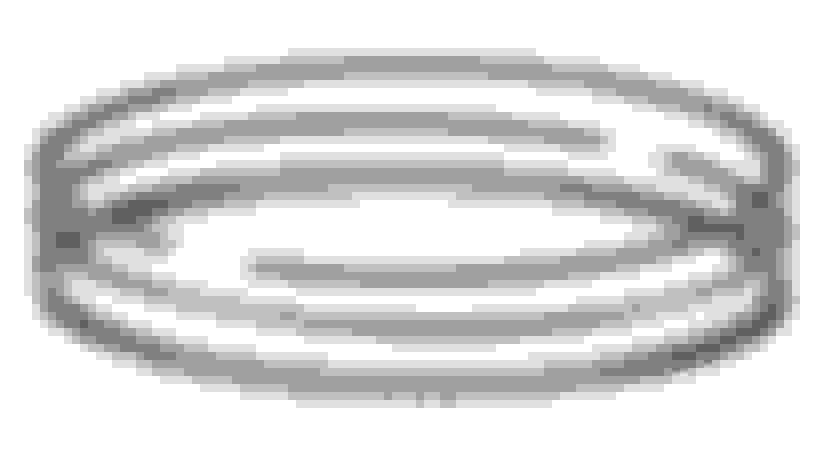
No doubt you have heard of Gas-Ported options for pistons used in professional grade high-end racing engines. Summit’s new GPX gas-ported piston rings add this performance to ANY stock cast, hypereutectic, and most forged pistons WITHOUT the expense and other potential downsides of gas-ported pistons.
How do they work? With a series of perfectly oriented slots on the top side of the top compression ring, the combustion charge is able to reach the inside the ring groove and fully activates the ring outwards toward the cylinder. The result is better seal, horsepower, and dramatically reduced blow-by. This also reduces the need for a catch-can.
1.) Gas-ported pistons get plugged over time because they don’t have exposure to the detergents in oil. Gas-ported rings are self-cleaning because they are always rotating and directly exposed to the detergents in the oil. The ports stay clean without carbon buildup.
2.) Gas-ports in pistons load and can wear narrow sections of cylinder walls adjacent to the ports. Gas-ported rings are in constant rotation and cylinder wear is even. Because the rings are only activated at peak pressures, no extra cylinder wear has been found compared to conventional rings.
3.) Oil-contamination is the greatest enemy to engine life. With a better seal between the combustion side and the bottom end, oil-contamination is greatly reduced with gas-ported piston rings. Oil life is greatly extended.
4.) Gas-ported pistons have thin areas in the top ring land near the valve reliefs. This causes the top ring land to lift with big nitrous or boost. When gas-ported piston rings are used instead, these critical areas of the piston remain at maximum strength.
Nearly all the ring sets (other than 5/64 top) utilize a Steel top ring, ductile seconds, and premium quality stainless oil rings. They are super flat and round with excellent finish. Better yet, they are available in nearly EVERY popular bore and thickness for virtually ANY piston brand or configuration.
1.0mm, 1.0mm, 2.0mm (Common with Mahle) 1.0mm, 1.0mm, 2.5mm 1.0mm, 1.2mm, 2.8mm (common on nearly U.S. Manufactured Premium Sport Compact brands). 1.2mm, 1.2mm, 3.0mm (common on Summit Pro LS 5.7L+ and many other premium U.S. Brands.) 1.5mm, 1.5mm, 2.5mm 1.5mm, 1.5mm, 3.0mm (common on Summit Pro LS 5.3, mid-range U.S. forged brands, and 90’s O.E.) .043 Back Cut,.043, 3.0mm (common Drag and Circle track low-friction racing pistons) .043 Back Cut, 1/16, 3/16 (common Big-Block Nitrous or boost) 1/16, 1/16, 3.0mm (Some Pro Tru LS Pistons) 1/16, 1/16, 3/16 (standard performance ring for all brands) 5/64, 5/64, 3/16 (common with inexpensive cast, hypereutectic, and forged pistons)
Special Note: Summit GPX 3/16 Oil-Rings are specially engineered with the lower friction and better seal of a 3mm Oil-ring, yet fit in 3/16 Grooves. This nets big increases in power versus old-design 3/16 Oil-ring packs.
If you are in need of piston rings, Summit Racing GPX gas-ported rings are an excellent way of picking up substantial power with huge reductions in blow-by for little extra money. Treat your next engine build to the future
Absolutely. We've always given people a choice in the 1.5 rings used on the 5.3's or the 1.2's used in 5.7L and larger. We have options now from the standard steel rings at $106 to this new technology currently in the $179 to $199 range.
The materials are much the same, but the big deal is it's introducing the Gas Ported Tech virtually across every platform, bore, thickness and brand of piston.
One other funny thing to note here. This isn't a problem in LS world, but every time we build an engine with 5/64, 5/64, 3/16 or 1/16, 1/16, 3/16 rings, the drag and break-away torque is just sickening. We re-engineered the 3/16 oil ring to behave like a 3mm, yet fit in the oil ring groove of the most common pistons out there. This by itself produces huge gains on top of the Gas Ports. They use the thinner rails of a 3mm with special expanders to take up the space. We're the first to really try and remedy this gap on a large scale for people with older platforms on a budget.
Absolutely. We've always given people a choice in the 1.5 rings used on the 5.3's or the 1.2's used in 5.7L and larger. We have options now from the standard steel rings at $106 to this new technology currently in the $179 to $199 range.
The materials are much the same, but the big deal is it's introducing the Gas Ported Tech virtually across every platform, bore, thickness and brand of piston.
One other funny thing to note here. This isn't a problem in LS world, but every time we build an engine with 5/64, 5/64, 3/16 or 1/16, 1/16, 3/16 rings, the drag and break-away torque is just sickening. We re-engineered the 3/16 oil ring to behave like a 3mm, yet fit in the oil ring groove of the most common pistons out there. This by itself produces huge gains on top of the Gas Ports. They use the thinner rails of a 3mm with special expanders to take up the space. We're the first to really try and remedy this gap on a large scale for people with older platforms on a budget.
This post wins the internet for today and tomorrow both…#winning
Say you have a low mileage LS and the bores are in good shape. Is honing necessary with these rings and what honing do you recommend?
We recommend checking with a dial bore gauge because even .001 wear opens up recommended piston to wall 20% in the case of our forged Pro Ls pistons that have .004 built into them. If things check out good, we like the Brush hones that Brush Research makes for some brands. These do a nice job of cleaning bores rather than removing metal.
Another thing to consider is rings break into the piston grooves as much as they do the cylinder wall. A new ring in an old piston never quite matches and a short life can be expected.
All this being said, we sell a lot of standard bore pistons and seldom get complaints except that guy that’s gone 140k miles and has .006-.007 piston to wall and wonders why they have cold piston slap.
We don't have singles available but we did a lot of the combinations that say a Manley Mod Motor piston may use. We'd be happy to add more to the lineup. Is it JE LS Specific pistons you are inquiring about? If so, that makes it pretty simple for us to establish the bore sizes required and get those coming.







 New! Summit GPX Gas Ported Piston Rings!