






Compression Questions

Thread Starter
Teching In
Joined: Dec 2023
Posts: 7
Likes: 0
 Compression Questions
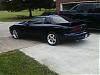
 This is my first post after reading and reading and rea..., well you know. I have a new build that I am planning. Starting with a stock 2001 Trans Am ls1 5.7, the motor is getting a little tired. My thoughts so far are to go with a stroker 383 build with a 54-459-11 (in231 ex239 lift in.617 ex.624 113 LSA) comp cam, but I am confused about the compression calculations that I am coming up with. (this is based on several online compression calculators) Stock it's a 10.2:1 comp , bore 3.898, stroke 3.622, 0cc flat pistons and 67cc 241 heads. I am changing to bore 3.905, stroke 4.00 with 6.125 length rods, new 0cc flat pistons, stock thickness head gasket and it calcs out to 11.22:1. If I go with 243 heads 64.5cc it goes to 11.55:, I consider that to high for any meaningful boost if I choose to go that way. If I went with the 317 heads 71cc it adjusts to 10.6:1. That seems like it would work well for the weekend cruiser I am planning but do any of these #'s seem right??? I am afraid I am missing something here. The last car I built was a 67 GTO and later a1967 firebird when I was 17 - 25 years old. I'm 55 now and a lot of this seems new to me. I knew sbc and pontiac motors fairly well but the ls type motors with all the possibilities are much different. I'm sure the machine shop could help clear things up but, I was hoping to get things planned before the $$$ spending starts. Any help would be appreciated.
What's the plan for the car? Naturally aspirated now and boost later or straight to boost?
can build for natural aspirated now but keep in mind ring gap will be different for boost than na.
Or gap it enough now and use a small combustion chamber now to get compression. Change heads when you get boost.
can build for natural aspirated now but keep in mind ring gap will be different for boost than na.
Or gap it enough now and use a small combustion chamber now to get compression. Change heads when you get boost.
Sounds like a fun build! Depending on usage, that cam in a 383 should be a good choice....IF you have a good tuner. I can see 500hp in this build with that cam and good heads. Tuning will make or break with that big of cam......

TECH Fanatic


Joined: May 2016
Posts: 1,292
Likes: 436
From: St. Louis
Congratulations on building your first LS. These engines are incredibly durable and are incredibly robust in stock form. The factory tolerances are so much better than the older stuff you worked on before that much less machine work is needed when building something.
Don't be afraid of some compression. Everybody loves to forget that a STOCK LS2 came from the factory with 11.1:1cr! That's a factory engine that You can run on 87 octane for its entire life without breaking it.
People boost the LS2 all the time with excellent results. The more compression you start with, the more power you'll make. You're going to have to tune it regardless so You're just leaving power on the table going with the lower compression ratio. 11.55 is nothing to worry about. My current combo maths out to 11.9:1 and my Cam closes the intake valve at 76° @0.006" so I can daily drive it year round in St. Louis with zero issue. Works just fine on 87 octane however I Go with 91-93 usually as the exhaust smell is less offensive sitting in traffic with the more expensive gas though there is really no measurable difference in power or drivability between fuel grades.
The factory ignition system is so much more accurate than the old stuff that the added compression is absolutely no trouble at all because the PCM is able to much more accurately control the timing at lower speeds than any old distributor. Even if you did get some spark knock, The PCM would pull timing until you were able to adjust the tune to compensate. Timing is efficiency and often less is more, so again the more compression you start with the less timing and boost you'll need to make the same power if you decide to add it later on down the road.
Don't be afraid of some compression. Everybody loves to forget that a STOCK LS2 came from the factory with 11.1:1cr! That's a factory engine that You can run on 87 octane for its entire life without breaking it.
People boost the LS2 all the time with excellent results. The more compression you start with, the more power you'll make. You're going to have to tune it regardless so You're just leaving power on the table going with the lower compression ratio. 11.55 is nothing to worry about. My current combo maths out to 11.9:1 and my Cam closes the intake valve at 76° @0.006" so I can daily drive it year round in St. Louis with zero issue. Works just fine on 87 octane however I Go with 91-93 usually as the exhaust smell is less offensive sitting in traffic with the more expensive gas though there is really no measurable difference in power or drivability between fuel grades.
The factory ignition system is so much more accurate than the old stuff that the added compression is absolutely no trouble at all because the PCM is able to much more accurately control the timing at lower speeds than any old distributor. Even if you did get some spark knock, The PCM would pull timing until you were able to adjust the tune to compensate. Timing is efficiency and often less is more, so again the more compression you start with the less timing and boost you'll need to make the same power if you decide to add it later on down the road.
Thread Starter
Teching In
Joined: Dec 2023
Posts: 7
Likes: 0
What's the plan for the car? Naturally aspirated now and boost later or straight to boost?
can build for natural aspirated now but keep in mind ring gap will be different for boost than na.
Or gap it enough now and use a small combustion chamber now to get compression. Change heads when you get boost.
can build for natural aspirated now but keep in mind ring gap will be different for boost than na.
Or gap it enough now and use a small combustion chamber now to get compression. Change heads when you get boost.

TECH Enthusiast


Joined: Sep 2019
Posts: 532
Likes: 630
A few points to remember to conserve money, time, and labor:
You seem to know this but the LS1 and LS6 engines can't be overbored more than a small hone, like 5-10 thou. This is an option to get a fresh bore, and pistons are available, just keep this in mind. That piston will probably be how you chose your compression ratio as well.
The 4.0" stroke crank in a stock length cylinder sleeve LS1 or LS6 block can cause more than acceptable piston rock. Its also very expensive not just in the crank but in other things like oil pan and given the choice between that extra stroke or spending extra on the intake/heads/exhaust/tune I would chose to spend money on the top end as I think that would gain more power. If you are worried about strength the stock 3.66" crank is very strong, capable of over 1000hp, the weak point is the stock piston followed by the stock rod. The most popular option is to replace pistons and keep the rods if under 7000rpm.
Maximize fun, even if it's at the cost of maximum horsepower.
You seem to know this but the LS1 and LS6 engines can't be overbored more than a small hone, like 5-10 thou. This is an option to get a fresh bore, and pistons are available, just keep this in mind. That piston will probably be how you chose your compression ratio as well.
The 4.0" stroke crank in a stock length cylinder sleeve LS1 or LS6 block can cause more than acceptable piston rock. Its also very expensive not just in the crank but in other things like oil pan and given the choice between that extra stroke or spending extra on the intake/heads/exhaust/tune I would chose to spend money on the top end as I think that would gain more power. If you are worried about strength the stock 3.66" crank is very strong, capable of over 1000hp, the weak point is the stock piston followed by the stock rod. The most popular option is to replace pistons and keep the rods if under 7000rpm.
Maximize fun, even if it's at the cost of maximum horsepower.
Thread Starter
Teching In
Joined: Dec 2023
Posts: 7
Likes: 0
Congratulations on building your first LS. These engines are incredibly durable and are incredibly robust in stock form. The factory tolerances are so much better than the older stuff you worked on before that much less machine work is needed when building something.
Don't be afraid of some compression. Everybody loves to forget that a STOCK LS2 came from the factory with 11.1:1cr! That's a factory engine that You can run on 87 octane for its entire life without breaking it.
People boost the LS2 all the time with excellent results. The more compression you start with, the more power you'll make. You're going to have to tune it regardless so You're just leaving power on the table going with the lower compression ratio. 11.55 is nothing to worry about. My current combo maths out to 11.9:1 and my Cam closes the intake valve at 76° @0.006" so I can daily drive it year round in St. Louis with zero issue. Works just fine on 87 octane however I Go with 91-93 usually as the exhaust smell is less offensive sitting in traffic with the more expensive gas though there is really no measurable difference in power or drivability between fuel grades.
The factory ignition system is so much more accurate than the old stuff that the added compression is absolutely no trouble at all because the PCM is able to much more accurately control the timing at lower speeds than any old distributor. Even if you did get some spark knock, The PCM would pull timing until you were able to adjust the tune to compensate. Timing is efficiency and often less is more, so again the more compression you start with the less timing and boost you'll need to make the same power if you decide to add it later on down the road.
Don't be afraid of some compression. Everybody loves to forget that a STOCK LS2 came from the factory with 11.1:1cr! That's a factory engine that You can run on 87 octane for its entire life without breaking it.
People boost the LS2 all the time with excellent results. The more compression you start with, the more power you'll make. You're going to have to tune it regardless so You're just leaving power on the table going with the lower compression ratio. 11.55 is nothing to worry about. My current combo maths out to 11.9:1 and my Cam closes the intake valve at 76° @0.006" so I can daily drive it year round in St. Louis with zero issue. Works just fine on 87 octane however I Go with 91-93 usually as the exhaust smell is less offensive sitting in traffic with the more expensive gas though there is really no measurable difference in power or drivability between fuel grades.
The factory ignition system is so much more accurate than the old stuff that the added compression is absolutely no trouble at all because the PCM is able to much more accurately control the timing at lower speeds than any old distributor. Even if you did get some spark knock, The PCM would pull timing until you were able to adjust the tune to compensate. Timing is efficiency and often less is more, so again the more compression you start with the less timing and boost you'll need to make the same power if you decide to add it later on down the road.
Good to hear that. The compression #'s made me nervous because the 67 GTO was a 421ci bored .30 over with wedge pistons to 12.0:1 and if I didn't run 104 octane, it pinged like no tomorrow. I am just getting in to the Hp tuner thing, I have a long way to go before I get it completely, but its making sense to me. I have a stock 2021 RS LT-1 Camaro and its got a 6.2L that I believe is 11.0:1. But then I was on a hot rod thread and they were insisting on no more than 10.0:1 with boost otherwise you need octane boost or meth to run pump gas. I am sure they were talking SBC motors.

If I do this right my trans am stroker should smoke my newer camaro!!
Trending Topics

On The Tree
Joined: Feb 2022
Posts: 196
Likes: 72
From: Grand Rapids, MI
That compression is nothing to worry about naturally aspirated, just make sure you get a GOOD tune. Someone reputable.
With boost, you will be limited by fuel octane with that high of compression. You will want e85 or race gas if you want more than 10psi boost because you will have to retard the timing very low and it will not be optimal. That being said, 10 pounds of boost on a high compression engine like what you are planning will make alot of power!
I honestly would just sell the LS1, and put your money into a different block. The 383 you are planning adds a ton of money to the build for not much gains. I personally would look for an aluminum 5.3. gen 4. Stock they will handle all sorts of power compared to a stock LS1.
With boost, you will be limited by fuel octane with that high of compression. You will want e85 or race gas if you want more than 10psi boost because you will have to retard the timing very low and it will not be optimal. That being said, 10 pounds of boost on a high compression engine like what you are planning will make alot of power!
I honestly would just sell the LS1, and put your money into a different block. The 383 you are planning adds a ton of money to the build for not much gains. I personally would look for an aluminum 5.3. gen 4. Stock they will handle all sorts of power compared to a stock LS1.
LS1 Tech Stories
The Best V8 Stories One Small Block at Time

Top 10 Greatest Cadillac V Series Performance Models Ever, Ranked
Pouria Savadkouei
Top 10 Most Powerful Chevy Trucks Ever Made!

Hennessey's New Supercharged Silverado ZR2 Has 700 HP
Verdad Gallardo
Coachbuilt N2A Anteros Is an LS2-Powered C6 Corvette In Italian Clothes
Verdad Gallardo
Awesome K5 Blazer Restomod Comes With C7 Corvette Power
Verdad Gallardo
10 Camaros You Should Never Buy

10 LS Engine Myths That Refuse to Die
Verdad Gallardo
Five Reasons the Camaro Was the Most Pivotal Player in the Pony Car Wars 2.0
Brett Foote
10 Reasons the LS7 Is GM's Most Extreme Naturally Aspirated V8 Engine Ever
Verdad Gallardo Thread Starter
Teching In
Joined: Dec 2023
Posts: 7
Likes: 0
A few points to remember to conserve money, time, and labor:
You seem to know this but the LS1 and LS6 engines can't be overbored more than a small hone, like 5-10 thou. This is an option to get a fresh bore, and pistons are available, just keep this in mind. That piston will probably be how you chose your compression ratio as well.
The 4.0" stroke crank in a stock length cylinder sleeve LS1 or LS6 block can cause more than acceptable piston rock. Its also very expensive not just in the crank but in other things like oil pan and given the choice between that extra stroke or spending extra on the intake/heads/exhaust/tune I would chose to spend money on the top end as I think that would gain more power. If you are worried about strength the stock 3.66" crank is very strong, capable of over 1000hp, the weak point is the stock piston followed by the stock rod. The most popular option is to replace pistons and keep the rods if under 7000rpm.
Maximize fun, even if it's at the cost of maximum horsepower.
You seem to know this but the LS1 and LS6 engines can't be overbored more than a small hone, like 5-10 thou. This is an option to get a fresh bore, and pistons are available, just keep this in mind. That piston will probably be how you chose your compression ratio as well.
The 4.0" stroke crank in a stock length cylinder sleeve LS1 or LS6 block can cause more than acceptable piston rock. Its also very expensive not just in the crank but in other things like oil pan and given the choice between that extra stroke or spending extra on the intake/heads/exhaust/tune I would chose to spend money on the top end as I think that would gain more power. If you are worried about strength the stock 3.66" crank is very strong, capable of over 1000hp, the weak point is the stock piston followed by the stock rod. The most popular option is to replace pistons and keep the rods if under 7000rpm.
Maximize fun, even if it's at the cost of maximum horsepower.
Thread Starter
Teching In
Joined: Dec 2023
Posts: 7
Likes: 0
That compression is nothing to worry about naturally aspirated, just make sure you get a GOOD tune. Someone reputable.
With boost, you will be limited by fuel octane with that high of compression. You will want e85 or race gas if you want more than 10psi boost because you will have to retard the timing very low and it will not be optimal. That being said, 10 pounds of boost on a high compression engine like what you are planning will make alot of power!
I honestly would just sell the LS1, and put your money into a different block. The 383 you are planning adds a ton of money to the build for not much gains. I personally would look for an aluminum 5.3. gen 4. Stock they will handle all sorts of power compared to a stock LS1.
With boost, you will be limited by fuel octane with that high of compression. You will want e85 or race gas if you want more than 10psi boost because you will have to retard the timing very low and it will not be optimal. That being said, 10 pounds of boost on a high compression engine like what you are planning will make alot of power!
I honestly would just sell the LS1, and put your money into a different block. The 383 you are planning adds a ton of money to the build for not much gains. I personally would look for an aluminum 5.3. gen 4. Stock they will handle all sorts of power compared to a stock LS1.
On The Tree
Joined: Feb 2022
Posts: 196
Likes: 72
From: Grand Rapids, MI
Sounds like you are familiar with the LS series of engines. You really cant go wrong with any of them. I run a 10.8:1CR forged lq9 deal in my car and it is for sure spicy! No matter what you do it will blow your tired LS1 out of the water.
For what you are doing you DO NOT need a fancy forged engine. The bottom end in these engines in stock form are good for tons of rpm and horsepower with proper valvetrain. I really wish I didn't sink so much money into the bottom end of my engine, because I could be doing everything I am currently doing and more with stock pistons, rods, etc.
Not to derail the thread, but one very critical piece that I do not see you mentioning is the transmission behind this engine. Whether it is a 4l60 or a t56, you will want to look into upgrades there.
For what you are doing you DO NOT need a fancy forged engine. The bottom end in these engines in stock form are good for tons of rpm and horsepower with proper valvetrain. I really wish I didn't sink so much money into the bottom end of my engine, because I could be doing everything I am currently doing and more with stock pistons, rods, etc.
Not to derail the thread, but one very critical piece that I do not see you mentioning is the transmission behind this engine. Whether it is a 4l60 or a t56, you will want to look into upgrades there.
Thread Starter
Teching In
Joined: Dec 2023
Posts: 7
Likes: 0
Sounds like you are familiar with the LS series of engines. You really cant go wrong with any of them. I run a 10.8:1CR forged lq9 deal in my car and it is for sure spicy! No matter what you do it will blow your tired LS1 out of the water.
For what you are doing you DO NOT need a fancy forged engine. The bottom end in these engines in stock form are good for tons of rpm and horsepower with proper valvetrain. I really wish I didn't sink so much money into the bottom end of my engine, because I could be doing everything I am currently doing and more with stock pistons, rods, etc.
Not to derail the thread, but one very critical piece that I do not see you mentioning is the transmission behind this engine. Whether it is a 4l60 or a t56, you will want to look into upgrades there.
For what you are doing you DO NOT need a fancy forged engine. The bottom end in these engines in stock form are good for tons of rpm and horsepower with proper valvetrain. I really wish I didn't sink so much money into the bottom end of my engine, because I could be doing everything I am currently doing and more with stock pistons, rods, etc.
Not to derail the thread, but one very critical piece that I do not see you mentioning is the transmission behind this engine. Whether it is a 4l60 or a t56, you will want to look into upgrades there.
On The Tree
Joined: Feb 2022
Posts: 196
Likes: 72
From: Grand Rapids, MI
Sounds like you've got it under control.
In my experience you'll want a little bigger stall than that. Try 3200-3400. Do not get a cheap converter! Dollars spent is directly proportional to performance when it comes to torque converters.
I don't play with 4l60e's anymore. They just don't survive. I tore up my very built one(only things missing were billet input and Sonnax smart drum) in less than 4000 miles. I am very abusive to my car though. If you drive like a more reasonable human an upgraded 4l60 will probably be ok. For way less money I have a much stronger 4l80e. If there is forced induction in the future do not waste your time or money on the 4l60e. Just my experience.
In my experience you'll want a little bigger stall than that. Try 3200-3400. Do not get a cheap converter! Dollars spent is directly proportional to performance when it comes to torque converters.
I don't play with 4l60e's anymore. They just don't survive. I tore up my very built one(only things missing were billet input and Sonnax smart drum) in less than 4000 miles. I am very abusive to my car though. If you drive like a more reasonable human an upgraded 4l60 will probably be ok. For way less money I have a much stronger 4l80e. If there is forced induction in the future do not waste your time or money on the 4l60e. Just my experience.
Thread Starter
Teching In
Joined: Dec 2023
Posts: 7
Likes: 0
Sounds like you've got it under control.
In my experience you'll want a little bigger stall than that. Try 3200-3400. Do not get a cheap converter! Dollars spent is directly proportional to performance when it comes to torque converters.
I don't play with 4l60e's anymore. They just don't survive. I tore up my very built one(only things missing were billet input and Sonnax smart drum) in less than 4000 miles. I am very abusive to my car though. If you drive like a more reasonable human an upgraded 4l60 will probably be ok. For way less money I have a much stronger 4l80e. If there is forced induction in the future do not waste your time or money on the 4l60e. Just my experience.
In my experience you'll want a little bigger stall than that. Try 3200-3400. Do not get a cheap converter! Dollars spent is directly proportional to performance when it comes to torque converters.
I don't play with 4l60e's anymore. They just don't survive. I tore up my very built one(only things missing were billet input and Sonnax smart drum) in less than 4000 miles. I am very abusive to my car though. If you drive like a more reasonable human an upgraded 4l60 will probably be ok. For way less money I have a much stronger 4l80e. If there is forced induction in the future do not waste your time or money on the 4l60e. Just my experience.
Most of what I am learning about ls motors I am learning here. I have thought about the trans a little, 2800 stall and a bullet proofed trans also a strange 12 bolt or a 9" probably with 3.55 gear. I don't know much about the 4l60 that's in it, theT56 or I saw that some were going with a 4l80. I got a lot of learning to do there yet. Then the subframe and suspension, this is going to be a process but I got the time. I just don't want to go all half assed, I want this thing to be done right. Its not going to be a racer, it will be a weekend cruiser that can hold its own in a race. Maybe a few times a year I will go and play at the track. Thanks for all the info, I am always open to change my mind for a better plan.



On The Tree
Joined: Dec 2022
Posts: 172
Likes: 25
Congratulations on building your first LS. These engines are incredibly durable and are incredibly robust in stock form. The factory tolerances are so much better than the older stuff you worked on before that much less machine work is needed when building something.
Don't be afraid of some compression. Everybody loves to forget that a STOCK LS2 came from the factory with 11.1:1cr! That's a factory engine that You can run on 87 octane for its entire life without breaking it.
People boost the LS2 all the time with excellent results. The more compression you start with, the more power you'll make. You're going to have to tune it regardless so You're just leaving power on the table going with the lower compression ratio. 11.55 is nothing to worry about. My current combo maths out to 11.9:1 and my Cam closes the intake valve at 76° @0.006" so I can daily drive it year round in St. Louis with zero issue. Works just fine on 87 octane however I Go with 91-93 usually as the exhaust smell is less offensive sitting in traffic with the more expensive gas though there is really no measurable difference in power or drivability between fuel grades.
The factory ignition system is so much more accurate than the old stuff that the added compression is absolutely no trouble at all because the PCM is able to much more accurately control the timing at lower speeds than any old distributor. Even if you did get some spark knock, The PCM would pull timing until you were able to adjust the tune to compensate. Timing is efficiency and often less is more, so again the more compression you start with the less timing and boost you'll need to make the same power if you decide to add it later on down the road.
Don't be afraid of some compression. Everybody loves to forget that a STOCK LS2 came from the factory with 11.1:1cr! That's a factory engine that You can run on 87 octane for its entire life without breaking it.
People boost the LS2 all the time with excellent results. The more compression you start with, the more power you'll make. You're going to have to tune it regardless so You're just leaving power on the table going with the lower compression ratio. 11.55 is nothing to worry about. My current combo maths out to 11.9:1 and my Cam closes the intake valve at 76° @0.006" so I can daily drive it year round in St. Louis with zero issue. Works just fine on 87 octane however I Go with 91-93 usually as the exhaust smell is less offensive sitting in traffic with the more expensive gas though there is really no measurable difference in power or drivability between fuel grades.
The factory ignition system is so much more accurate than the old stuff that the added compression is absolutely no trouble at all because the PCM is able to much more accurately control the timing at lower speeds than any old distributor. Even if you did get some spark knock, The PCM would pull timing until you were able to adjust the tune to compensate. Timing is efficiency and often less is more, so again the more compression you start with the less timing and boost you'll need to make the same power if you decide to add it later on down the road.

I don’t agree with whats been written at all. I would go to the turbo section to ask turbo build questions. I’ve built dozens of turbo setups… Base compression just adds needless complication and narrows the tuning window a ton. Boost will roughly add the same 4% power *per pound* if setup well. Bumping a whole point of compression only adds around 4%. And will narrow your tuning window by making cylinder pressures much more peaky. There is zero reason to run over 10:1 on any basic street/strip boosted motor in most cases. The difference is less than 1lb of added boost between 10:1 and 11:1. Just add a pound of boost on a lower compression build and you will be miles ahead in most cases.
On top of that I’d suggest not using an LS1 block. Why spend money to an anemic block build? I’d look at 4” bore motors if you are building a monster. You can use most of your ls1 parts… Or IMO most are better off building an alum 5.3 or even a 4.8. They have much more meat between the cyls, ability to overbore, better deck surface, etc etc. The alum 5.3 is also a siamese block and likely one of the strongest OEM blocks out there.
Comes down to what your power goal is ultimately. Then using the best parts for the least amount of money to get you there. IMHO 383 LS1 with big compression and boost isn’t the way to do that. You don’t need cubes to make power with boost. In most cases for a street/strip setup you are better off with a motor that makes LESS power at low RPM. Other wise when you add boost it will just blow the tires off…. Then you are pulling power to plant the tire. You 100% don’t need an 11:1+ 383 to make a street strip 700-1000ish crank HP turbo small block. Its an expensive, impractical, and poor choice for most IMO. Basically the exact opposite of an NA build.
Just my .02.
On top of that I’d suggest not using an LS1 block. Why spend money to an anemic block build? I’d look at 4” bore motors if you are building a monster. You can use most of your ls1 parts… Or IMO most are better off building an alum 5.3 or even a 4.8. They have much more meat between the cyls, ability to overbore, better deck surface, etc etc. The alum 5.3 is also a siamese block and likely one of the strongest OEM blocks out there.
Comes down to what your power goal is ultimately. Then using the best parts for the least amount of money to get you there. IMHO 383 LS1 with big compression and boost isn’t the way to do that. You don’t need cubes to make power with boost. In most cases for a street/strip setup you are better off with a motor that makes LESS power at low RPM. Other wise when you add boost it will just blow the tires off…. Then you are pulling power to plant the tire. You 100% don’t need an 11:1+ 383 to make a street strip 700-1000ish crank HP turbo small block. Its an expensive, impractical, and poor choice for most IMO. Basically the exact opposite of an NA build.
Just my .02.
Last edited by Forcefed86; Jan 3, 2024 at 03:53 PM.
TECH Fanatic
Joined: May 2016
Posts: 1,292
Likes: 436
From: St. Louis
Thanks for learning me something forcefed86 ! I've seen a few working combos with higher compression but You're right, there's not a big difference in performance and that's why I thought it didn't much matter. I'd agree more care and time should or would probably be needed to build the VE and spark tables and you'd more carefully watch the wide band across the loaded RPM range to protect the engine from the increased heat though. That's the other thing I didn't consider was the added heat strain put on the cooling system at lower engine speeds right off the bat, That's not good either.
My personal experience testing the limits with these things are limited to naturally aspirated combos where I've tried smaller or shorter cams with earlier intake valve closure trying to find the limits of DCR at lower RPM under load on pump gas and when you get it right it makes a big difference in throttle response and transient torque for a given combo so I thought it would help with low speed response and turbo lagging when more cam overlap is used
Back to the basics I think I get it. I can sometimes forget the longblock engine is simply just an air pump on its own but then if you add the boost The smaller combustion chamber becomes physically less effective inside the engine for a given fuel as the boost pressure and engine speed coincide where the volume of the air over the piston would be matched to the intake manifold pressure. Think about it like cc'ing the combustion chamber on the heads with a pipette of fuel instead of water or oil haha
My personal experience testing the limits with these things are limited to naturally aspirated combos where I've tried smaller or shorter cams with earlier intake valve closure trying to find the limits of DCR at lower RPM under load on pump gas and when you get it right it makes a big difference in throttle response and transient torque for a given combo so I thought it would help with low speed response and turbo lagging when more cam overlap is used
Back to the basics I think I get it. I can sometimes forget the longblock engine is simply just an air pump on its own but then if you add the boost The smaller combustion chamber becomes physically less effective inside the engine for a given fuel as the boost pressure and engine speed coincide where the volume of the air over the piston would be matched to the intake manifold pressure. Think about it like cc'ing the combustion chamber on the heads with a pipette of fuel instead of water or oil haha

