





Cam advice? Split, reverse split or equal?

The LS1 based engine has a really good exhaust port as far as OEM stds go. For years if an OEM exhaust port was in the mid 60% range it was a good port. Now bolt on an intake to the head and the ratio may go to 67% on the exhaust compared to the intake...because of the restriction of the intake. You would still need to crutch the exhaust port with duration.
Now jump ahead to the LS1, you have an exhaust that flows 74% for agrument sake of the intake. You bolt the LS1 intake on and it reduces the intake by 7% say, now the ratio is 81% of exhaust to intake. This would have to be considered in my world as a canadate for a reverse pattern. Now throw desired powerband and CID into the equation and the camshaft can be calculated by some.
OEM's have crutched the exhaust for years, now we have an exhaust port that flows great air. What to do?
Chris
Now jump ahead to the LS1, you have an exhaust that flows 74% for agrument sake of the intake. You bolt the LS1 intake on and it reduces the intake by 7% say, now the ratio is 81% of exhaust to intake. This would have to be considered in my world as a canadate for a reverse pattern. Now throw desired powerband and CID into the equation and the camshaft can be calculated by some.
OEM's have crutched the exhaust for years, now we have an exhaust port that flows great air. What to do?
Chris
So around 80% is the number for you?
Also, in contrast to what you said, say you add a FAST 90mm intake and throttle body. You would need more duration on the exhaust side, correct?
Also, in contrast to what you said, say you add a FAST 90mm intake and throttle body. You would need more duration on the exhaust side, correct?
My contact called me back about the intakes, yes they have a new 6.0liter intake manifold "project" in development with production scheduled in about 18 months. So I guess GM is going to address this. With what has been told to me about our project with GM, it only made sense an improved manifold would be need to reach goals of the project.
Chris
Chris
Originally Posted by J-Rod
You can't live and die by DD. I use EAPro, and the numbers it generates are completely wrong for the dyno tested combos I have. I'm still working on figuring out where it is wrong.
GIGO. DD and other programs are nice, but they make certain assumptions in many cases that are wrong.
You can't say that an LS1 will always like a Reverse split. You can't say it will always like a standard split. What you can say is that if you gather the right data and apply some well tested design principles you will tend to come to certain conclusions.
GIGO. DD and other programs are nice, but they make certain assumptions in many cases that are wrong.
You can't say that an LS1 will always like a Reverse split. You can't say it will always like a standard split. What you can say is that if you gather the right data and apply some well tested design principles you will tend to come to certain conclusions.
i have used DD2003 to show what happens when you use certain cams. i don't care what the numbers DD2003 produce. but it is pretty good in determining curves.
he comes in saying the LS intakes are so restrictive you need to crutch it with more intake than exhaust duration. then turns around and quotes a head flow theory of needing more than 75% exhaust to intake flow to want a reverse slpit cam. then he shows me a flow percentage of a 5.3 head showing less than 75%. using that theory say to use a cam with more exhaust to intake duration.
then J-ROD puts up a flow comparison of a LS6 head with both a FAST intake and a LS6 attached to it. with another theory of 7% loss for moderate engines. again proving the LS series of intakes just aren't that restrictive.
i'm just tired of submitting proof of my statements and the only thing he comes back with is the intakes are so restrictive. and doesn't even try to substantiate his claims otherwise. and when called to the carpet about it, he starts backpeddling.
ok let's use the flow percentages for the 5.3 head that sportside 5.3 posted up. then i'll add in the results J-ROD put in for the percentage change adding the LS6 and FAST intake.
lift-----5.3----LS6----FAST
.200---72%---73%---74%
.300---67%---69%---71%
.400---69%---72%---75%
.500---75%---83%---84%
.600---77%---84%---87%
the only time the flow percentage is above 75% is at the .500-.600 lift range. and how long is the engine at that lift? for a fraction of time. my point in the comp 216/200 thread was the guys in the truck section have a better manifold than i do in my 99 and 00 formulas. the truck intake flows better on most areas than the LS6 intake. until you reach upper rpms. why spend $800 for an intake that's only going to help in the upper rpms? truck don't need it. and why buy it, if it's only adding about 10-15 hp. why turn such high rpms? especially in a truck. if i can make the same power from 2000-6000 as motors with bigger intakes and TBs make in the 3000-7000 range, why bother turning the rpms? less stress on the motor and drivetrain. longer durability. and better driveability is maintained. i've always done it this way. and i've done equally as well or better than most with bigger stuff.
just like VHP, i concentrate on the torque aspect of the motor. torque produces quicker ET. horsepower produces more MPH. look at the VHP cams, they are making the same power and ET as others with bigger cams. hell, click the pink banner. go to timeslips. look at all the parts installed and then dyno and track tested. the airlid, filter, and MAF ends for instance. didn't do squat for ET. but they definately helped MPH.
lift-----5.3----LS6----FAST
.200---72%---73%---74%
.300---67%---69%---71%
.400---69%---72%---75%
.500---75%---83%---84%
.600---77%---84%---87%
the only time the flow percentage is above 75% is at the .500-.600 lift range. and how long is the engine at that lift? for a fraction of time. my point in the comp 216/200 thread was the guys in the truck section have a better manifold than i do in my 99 and 00 formulas. the truck intake flows better on most areas than the LS6 intake. until you reach upper rpms. why spend $800 for an intake that's only going to help in the upper rpms? truck don't need it. and why buy it, if it's only adding about 10-15 hp. why turn such high rpms? especially in a truck. if i can make the same power from 2000-6000 as motors with bigger intakes and TBs make in the 3000-7000 range, why bother turning the rpms? less stress on the motor and drivetrain. longer durability. and better driveability is maintained. i've always done it this way. and i've done equally as well or better than most with bigger stuff.
just like VHP, i concentrate on the torque aspect of the motor. torque produces quicker ET. horsepower produces more MPH. look at the VHP cams, they are making the same power and ET as others with bigger cams. hell, click the pink banner. go to timeslips. look at all the parts installed and then dyno and track tested. the airlid, filter, and MAF ends for instance. didn't do squat for ET. but they definately helped MPH.
Last edited by mrr23; Oct 12, 2004 at 06:24 PM.
Originally Posted by PewterZ28
So around 80% is the number for you?
Also, in contrast to what you said, say you add a FAST 90mm intake and throttle body. You would need more duration on the exhaust side, correct?
Also, in contrast to what you said, say you add a FAST 90mm intake and throttle body. You would need more duration on the exhaust side, correct?
LS1 Tech Stories
The Best V8 Stories One Small Block at Time

Topdon ONE vs. Artidiag 800 BT2: Which is the Diagnostic Tablet For You?
Pouria Savadkouei
Gas Monkey Built a 6-Wheel Ferrari Testarossa With a Corvette LT4 Engine
Verdad Gallardo
7 Most Reliable High-Performance Engines GM Has Ever Built
Verdad Gallardo
Amazing '71 Camaro Restomod Is Modern Muscle Car Under the Skin
Verdad Gallardo
6 Common C5 Corvette Failures and What's Involved In Repairing Them
Pouria Savadkouei
Retro Modern Bandit Pontiac Trans AM Comes With Burt Reynolds' Autograph
Verdad Gallardo
Top 10 Greatest Cadillac V Series Performance Models Ever, Ranked
Pouria Savadkouei
Top 10 Most Powerful Chevy Trucks Ever Made!

Hennessey's New Supercharged Silverado ZR2 Has 700 HP
Verdad Gallardo
Pewter your on the right track.
If the intake is the restriction, you add intake duration.
If the exhaust is the restriction, you add exhaust duration.
It all depends on the setup, but that is one option.
Holding the valves open longer to compensate for a lack of flow.
If the intake is the restriction, you add intake duration.
If the exhaust is the restriction, you add exhaust duration.
It all depends on the setup, but that is one option.
Holding the valves open longer to compensate for a lack of flow.
Okay,
if you added a fast intake to. . .for example 346CID and plan on a max of 6400 rpm and the exhaust to intake ratio was in the 73% range then a duration split of a couple degrees favoring the exhaust would be in order. Note I like to see flow numbers with the header primary size to be used bolted on the head and flowed. This will tell you how good the VJ is.
Chris
if you added a fast intake to. . .for example 346CID and plan on a max of 6400 rpm and the exhaust to intake ratio was in the 73% range then a duration split of a couple degrees favoring the exhaust would be in order. Note I like to see flow numbers with the header primary size to be used bolted on the head and flowed. This will tell you how good the VJ is.
Chris

TECH Senior Member
Joined: Mar 2004
Posts: 14,620
Likes: 17
From: BFE
Pewter your on the right track.
If the intake is the restriction, you add intake duration.
If the exhaust is the restriction, you add exhaust duration.
It all depends on the setup, but that is one option.
Holding the valves open longer to compensate for a lack of flow.
If the intake is the restriction, you add intake duration.
If the exhaust is the restriction, you add exhaust duration.
It all depends on the setup, but that is one option.
Holding the valves open longer to compensate for a lack of flow.

mrr23:
You haven't been here long enough I guess, but the reverse cams were heavily researched and proven over 2 years ago. Check out this thread fro April of 2002.
https://ls1tech.com/forums/generation-iii-internal-engine/64678-tr-230-224-reverse-split-cam-dyno-results.html
Basically a case of "been there, done that".
You haven't been here long enough I guess, but the reverse cams were heavily researched and proven over 2 years ago. Check out this thread fro April of 2002.
https://ls1tech.com/forums/generation-iii-internal-engine/64678-tr-230-224-reverse-split-cam-dyno-results.html
Basically a case of "been there, done that".
__________________
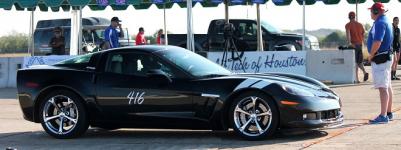
2013 Corvette Grand Sport A6 LME forged 416, Greg Good ported TFS 255 LS3 heads, 222/242 .629"/.604" 121LSA Pat G blower cam, ARH 1 7/8" headers, ESC Novi 1500 Supercharger w/8 rib direct drive conversion, 747rwhp/709rwtq on 93 octane, 801rwhp/735rwtq on race fuel, 10.1 @ 147.25mph 1/4 mile, 174.7mph Half Mile.
2016 Corvette Z51 M7 Magnuson Heartbeat 2300 supercharger, TSP LT headers, Pat G tuned, 667rwhp, 662rwtq, 191mph TX Mile.
2009.5 Pontiac G8 GT 6.0L, A6, AFR 230v2 heads. 506rwhp/442rwtq. 11.413 @ 121.29mph 1/4 mile, 168.7mph TX Mile
2000 Pewter Ram Air Trans Am M6 heads/cam 508 rwhp/445 rwtq SAE, 183.092 TX Mile
2022 Cadillac Escalade 6.2L A10 S&B CAI, Corsa catback.
2023 Corvette 3LT Z51 soon to be modified.
Custom LSX tuning in person or via email press here.
2013 Corvette Grand Sport A6 LME forged 416, Greg Good ported TFS 255 LS3 heads, 222/242 .629"/.604" 121LSA Pat G blower cam, ARH 1 7/8" headers, ESC Novi 1500 Supercharger w/8 rib direct drive conversion, 747rwhp/709rwtq on 93 octane, 801rwhp/735rwtq on race fuel, 10.1 @ 147.25mph 1/4 mile, 174.7mph Half Mile.
2016 Corvette Z51 M7 Magnuson Heartbeat 2300 supercharger, TSP LT headers, Pat G tuned, 667rwhp, 662rwtq, 191mph TX Mile.
2009.5 Pontiac G8 GT 6.0L, A6, AFR 230v2 heads. 506rwhp/442rwtq. 11.413 @ 121.29mph 1/4 mile, 168.7mph TX Mile
2000 Pewter Ram Air Trans Am M6 heads/cam 508 rwhp/445 rwtq SAE, 183.092 TX Mile
2022 Cadillac Escalade 6.2L A10 S&B CAI, Corsa catback.
2023 Corvette 3LT Z51 soon to be modified.
Custom LSX tuning in person or via email press here.
hey sportside 5.3, someone found the thread for you. so, the dyno in that thread http://www.converter.cc/TR230-224dyno.jpg did exactly what my DD2003 model did when i reversed the VHP047 cam. loss of power below 5500 rpm. then picked up over 5500 vs a standard split. yep been there done that. sacrifice low end to gain top end. all it did was move the rpm band up and add a little more horsepower. then and only then after peak did it start to make alot more horsepower. and this is comparing a single pattern cam vs a reverse split. they upped the intake duration and lift, and raised the lift. did exactly what i've been trying to say. by adding more intake duration, you raise the rpm at which it starts to make more horsepower. and some guy here (sportside 5.3) laughed at me when i said that earlier in this post. now there's indisputable proof of it.
now if you are looking to make maximum horsepower, it looks like the way to go. but at what price? now you have to turn the motor to almost 7000 rpm to take advantage of the added power. i need more gearing. need a better intake. for an automatic, may or may not need a higher stall. for someone not wanting to do that, the reverse split just isn't the way to go. again i state, why turn more rpms for the added power?
cliff notes: a reverse split cam just doesn't make any more power than single pattern cam until really high rpms. unless you are willing to turn 7000 rpms, it's not worth it.
Originally Posted by patrick g
OK, here's the results in a nutshell. I picked up about 6-7 rwhp over my trusty TR224 cam (both power peaks at 6100 rpms), and gained 35-60 rwhp at higher rpms with no loss in low or mid-range torque and no loss in driveability. Here's a breakdown of what I changed:
Before: Thunder Racing 224/224, .564/.564 112 LSA cam (4 degrees of advance ground in).
Best dyno run with converter locked: 407 rwhp @ 6100 rpms and 390 rwtq at 5000 rpms (385 rwtq between 4400 and 5200 rpms).
Best dyno run unlocked: 390.4 rwhp (390 from 5800 rpms to 6600 rpms)
After: Thunder Racing 230/224, .569/.564 111 LSA cam (2 degrees of advance ground in).
Best dyno run with converter locked: 413.7 rwhp @ 6100 rpms and 390 rwtq at 4900 rpms (torque curve was an overlay of the 224/224 cam until 5800 rpms).
Best dyno run unlocked: 395.5 rwhp
Here's the dyno sheet: http://www.converter.cc/TR230-224dyno.jpg
About all I can tell you is that the hp curve is an overlay of the 224/224 cam until 5800 rpms, then is starts to pull away. The power curve is completely flat, not falling below 400 rwhp until 6800 rpms. At 6600 rpms, the 230/224 reverse split cam is still in the 410 rwhp range while the 224/224 is down to about 375 rwhp. At 6800 rpms, the 230/224 has 395 rwhp and the 224/224 is down to 335 rwhp. So if you were willing to shift the motor around 6600-6800 rpms, you're going to be rewarded with 35-60 more rwhp. But at the true power peak (6100 rpms for both cams), the "reverse split" cam is only worth about 6-7 over the awesome TR 224/224.
Before: Thunder Racing 224/224, .564/.564 112 LSA cam (4 degrees of advance ground in).
Best dyno run with converter locked: 407 rwhp @ 6100 rpms and 390 rwtq at 5000 rpms (385 rwtq between 4400 and 5200 rpms).
Best dyno run unlocked: 390.4 rwhp (390 from 5800 rpms to 6600 rpms)
After: Thunder Racing 230/224, .569/.564 111 LSA cam (2 degrees of advance ground in).
Best dyno run with converter locked: 413.7 rwhp @ 6100 rpms and 390 rwtq at 4900 rpms (torque curve was an overlay of the 224/224 cam until 5800 rpms).
Best dyno run unlocked: 395.5 rwhp
Here's the dyno sheet: http://www.converter.cc/TR230-224dyno.jpg
About all I can tell you is that the hp curve is an overlay of the 224/224 cam until 5800 rpms, then is starts to pull away. The power curve is completely flat, not falling below 400 rwhp until 6800 rpms. At 6600 rpms, the 230/224 reverse split cam is still in the 410 rwhp range while the 224/224 is down to about 375 rwhp. At 6800 rpms, the 230/224 has 395 rwhp and the 224/224 is down to 335 rwhp. So if you were willing to shift the motor around 6600-6800 rpms, you're going to be rewarded with 35-60 more rwhp. But at the true power peak (6100 rpms for both cams), the "reverse split" cam is only worth about 6-7 over the awesome TR 224/224.
cliff notes: a reverse split cam just doesn't make any more power than single pattern cam until really high rpms. unless you are willing to turn 7000 rpms, it's not worth it.
Originally Posted by mrr23
ok let's use the flow percentages for the 5.3 head that sportside 5.3 posted up. then i'll add in the results J-ROD put in for the percentage change adding the LS6 and FAST intake.
lift-----5.3----LS6----FAST
.200---72%---73%---74%
.300---67%---69%---71%
.400---69%---72%---75%
.500---75%---83%---84%
.600---77%---84%---87%
the only time the flow percentage is above 75% is at the .500-.600 lift range. and how long is the engine at that lift? for a fraction of time. my point in the comp 216/200 thread was the guys in the truck section have a better manifold than i do in my 99 and 00 formulas. the truck intake flows better on most areas than the LS6 intake. until you reach upper rpms. why spend $800 for an intake that's only going to help in the upper rpms? truck don't need it. and why buy it, if it's only adding about 10-15 hp. why turn such high rpms? especially in a truck. if i can make the same power from 2000-6000 as motors with bigger intakes and TBs make in the 3000-7000 range, why bother turning the rpms? less stress on the motor and drivetrain. longer durability. and better driveability is maintained. i've always done it this way. and i've done equally as well or better than most with bigger stuff.
just like VHP, i concentrate on the torque aspect of the motor. torque produces quicker ET. horsepower produces more MPH. look at the VHP cams, they are making the same power and ET as others with bigger cams. hell, click the pink banner. go to timeslips. look at all the parts installed and then dyno and track tested. the airlid, filter, and MAF ends for instance. didn't do squat for ET. but they definately helped MPH.
lift-----5.3----LS6----FAST
.200---72%---73%---74%
.300---67%---69%---71%
.400---69%---72%---75%
.500---75%---83%---84%
.600---77%---84%---87%
the only time the flow percentage is above 75% is at the .500-.600 lift range. and how long is the engine at that lift? for a fraction of time. my point in the comp 216/200 thread was the guys in the truck section have a better manifold than i do in my 99 and 00 formulas. the truck intake flows better on most areas than the LS6 intake. until you reach upper rpms. why spend $800 for an intake that's only going to help in the upper rpms? truck don't need it. and why buy it, if it's only adding about 10-15 hp. why turn such high rpms? especially in a truck. if i can make the same power from 2000-6000 as motors with bigger intakes and TBs make in the 3000-7000 range, why bother turning the rpms? less stress on the motor and drivetrain. longer durability. and better driveability is maintained. i've always done it this way. and i've done equally as well or better than most with bigger stuff.
just like VHP, i concentrate on the torque aspect of the motor. torque produces quicker ET. horsepower produces more MPH. look at the VHP cams, they are making the same power and ET as others with bigger cams. hell, click the pink banner. go to timeslips. look at all the parts installed and then dyno and track tested. the airlid, filter, and MAF ends for instance. didn't do squat for ET. but they definately helped MPH.
mrr23<
You must not have read the thread or you are absolutely clueless...my 230/224 cam gave me the same bottom end power as my 224/224 cam, the same driveability as my 224/224 cam, but it made LOTS more power up top. Why? Because it was better matched to my combo. Great exhaust flow, so-so intake. That was the whole idea behind using it back in 2002. We didn't have LSX intakes and 90mm TBs back then.
Oh, and by the way...Horsepower wins races, not torque...any real racer knows that.
You must not have read the thread or you are absolutely clueless...my 230/224 cam gave me the same bottom end power as my 224/224 cam, the same driveability as my 224/224 cam, but it made LOTS more power up top. Why? Because it was better matched to my combo. Great exhaust flow, so-so intake. That was the whole idea behind using it back in 2002. We didn't have LSX intakes and 90mm TBs back then.
Oh, and by the way...Horsepower wins races, not torque...any real racer knows that.
__________________
2013 Corvette Grand Sport A6 LME forged 416, Greg Good ported TFS 255 LS3 heads, 222/242 .629"/.604" 121LSA Pat G blower cam, ARH 1 7/8" headers, ESC Novi 1500 Supercharger w/8 rib direct drive conversion, 747rwhp/709rwtq on 93 octane, 801rwhp/735rwtq on race fuel, 10.1 @ 147.25mph 1/4 mile, 174.7mph Half Mile.
2016 Corvette Z51 M7 Magnuson Heartbeat 2300 supercharger, TSP LT headers, Pat G tuned, 667rwhp, 662rwtq, 191mph TX Mile.
2009.5 Pontiac G8 GT 6.0L, A6, AFR 230v2 heads. 506rwhp/442rwtq. 11.413 @ 121.29mph 1/4 mile, 168.7mph TX Mile
2000 Pewter Ram Air Trans Am M6 heads/cam 508 rwhp/445 rwtq SAE, 183.092 TX Mile
2022 Cadillac Escalade 6.2L A10 S&B CAI, Corsa catback.
2023 Corvette 3LT Z51 soon to be modified.
Custom LSX tuning in person or via email press here.
2013 Corvette Grand Sport A6 LME forged 416, Greg Good ported TFS 255 LS3 heads, 222/242 .629"/.604" 121LSA Pat G blower cam, ARH 1 7/8" headers, ESC Novi 1500 Supercharger w/8 rib direct drive conversion, 747rwhp/709rwtq on 93 octane, 801rwhp/735rwtq on race fuel, 10.1 @ 147.25mph 1/4 mile, 174.7mph Half Mile.
2016 Corvette Z51 M7 Magnuson Heartbeat 2300 supercharger, TSP LT headers, Pat G tuned, 667rwhp, 662rwtq, 191mph TX Mile.
2009.5 Pontiac G8 GT 6.0L, A6, AFR 230v2 heads. 506rwhp/442rwtq. 11.413 @ 121.29mph 1/4 mile, 168.7mph TX Mile
2000 Pewter Ram Air Trans Am M6 heads/cam 508 rwhp/445 rwtq SAE, 183.092 TX Mile
2022 Cadillac Escalade 6.2L A10 S&B CAI, Corsa catback.
2023 Corvette 3LT Z51 soon to be modified.
Custom LSX tuning in person or via email press here.
Originally Posted by Cstraub
Okay,
Note I like to see flow numbers with the header primary size to be used bolted on the head and flowed. This will tell you how good the VJ is.
Chris
Note I like to see flow numbers with the header primary size to be used bolted on the head and flowed. This will tell you how good the VJ is.
Chris
Mrr23.
You just proved, box cam A which happened to be a reverse split isn't as good as box cam B. And automatically jump to the conclusion that reverse splits are designed for top end power?
One cam should meet the criteria for the setup. Throwing 2 box cams at it, and one works better means....
Outta compare more than .050 specs also.
You just proved, box cam A which happened to be a reverse split isn't as good as box cam B. And automatically jump to the conclusion that reverse splits are designed for top end power?
a reverse split cam just doesn't make any more power than single pattern cam until really high rpms. unless you are willing to turn 7000 rpms, it's not worth it.
Outta compare more than .050 specs also.
Last edited by SportSide 5.3; Oct 12, 2004 at 06:37 PM.
Originally Posted by Patrick G
mrr23<
You must not have read the thread or you are absolutely clueless...my 230/224 cam gave me the same bottom end power as my 224/224 cam, the same driveability as my 224/224 cam, but it made LOTS more power up top. Why? Because it was better matched to my combo. Great exhaust flow, so-so intake. That was the whole idea behind using it back in 2002. We didn't have LSX intakes and 90mm TBs back then.
Oh, and by the way...Horsepower wins races, not torque...any real racer knows that.
You must not have read the thread or you are absolutely clueless...my 230/224 cam gave me the same bottom end power as my 224/224 cam, the same driveability as my 224/224 cam, but it made LOTS more power up top. Why? Because it was better matched to my combo. Great exhaust flow, so-so intake. That was the whole idea behind using it back in 2002. We didn't have LSX intakes and 90mm TBs back then.
Oh, and by the way...Horsepower wins races, not torque...any real racer knows that.
no horsepower doesn't wins races. they both do. any REAL racer knows that. let me show you how that works as well. i put an electric cutout on my 00 formula. wow i should go quicker. better flowing exhaust right? dyno showed a 11/13 gain. now i go to the track. here's the results. and this was with 200 hp n2o. it cost me low end to gain mph. no ET change. horsepower creates MPH.
distance ------- closed ------ open
60ft ----------- 1.987 ------- 2.074
1/8 ------------ 7.902 ------- 7.912
mph ----------- 93.20 ------- 93.97
1/4 ------------ 12.102 ------ 12.080
mph ----------- 117.12 ------ 118.06
Last edited by mrr23; Oct 12, 2004 at 06:44 PM.