


Compression


Hmm that's a good question, I thought some one smarter than I would have answered by now.
You want the highest compression possible without detonation for the grade of fuel and the engine temperature, taking into account any presure bled off by cam overlap.
Since the stock cam has less than zero overlap, it doesn't bleed off cylinder presure. A cam in the 230 range like yours would have a certain amount of intake/exhaust overlap, so you would benefit from a higher than stock compression ratio. How much higher is the question. I guess go by the experiance of others. Since higher temperatures increase the chance of detonation, a 160* T-stat is a good way to go.
You want the highest compression possible without detonation for the grade of fuel and the engine temperature, taking into account any presure bled off by cam overlap.
Since the stock cam has less than zero overlap, it doesn't bleed off cylinder presure. A cam in the 230 range like yours would have a certain amount of intake/exhaust overlap, so you would benefit from a higher than stock compression ratio. How much higher is the question. I guess go by the experiance of others. Since higher temperatures increase the chance of detonation, a 160* T-stat is a good way to go.
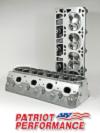
To accurately determine your compression ratio you would have to start by cc'ing the combustion chambers. You then determine the compressed thickness of your head gaskets. Go online and find a compression ratio calculator. (Many companies have these on their website) You will have to enter information such as bore size, stoke, combustion chamber size, how far below or above deck the piston is, gasket thickness, and piston dish or dome in cc's. This will give your compression ratio.









