






Downside to titanium valves?

Thread Starter
TECH Senior Member
iTrader: (4)
Joined: Jul 2004
Posts: 8,092
Likes: 13
From: Little Rhody
 Downside to titanium valves?
 Besides cost, what are the down sides to titanium valves in a street driven car? They seem to have steel inserts or lash caps to take abuse from the rocker. Is valve guide wear an issue or longevity on the seat?
Originally Posted by vettenuts
Besides cost, what are the down sides to titanium valves in a street driven car? They seem to have steel inserts or lash caps to take abuse from the rocker. Is valve guide wear an issue or longevity on the seat?
I'd really like to know this....since im considering the TI valve option on some ET 240's.
I used to run 2.08" and 1.6" titanium valves in my old solid lifter 1st gen sbc Brownfield heads. Some say not to go to heavy on the nitrous, but unfortunately the motro spun some bearings.
Thread Starter
TECH Senior Member
iTrader: (4)
Joined: Jul 2004
Posts: 8,092
Likes: 13
From: Little Rhody
Originally Posted by Gunnar@Patriot
Part of the downside is the valve seat. A copper beryllium seat can be used, but it offers a short life (approx. 5,000 miles).
Trending Topics
LS1 Tech Stories
The Best V8 Stories One Small Block at Time

Top 10 Greatest Cadillac V Series Performance Models Ever, Ranked
Pouria Savadkouei
Top 10 Most Powerful Chevy Trucks Ever Made!

Hennessey's New Supercharged Silverado ZR2 Has 700 HP
Verdad Gallardo
Coachbuilt N2A Anteros Is an LS2-Powered C6 Corvette In Italian Clothes
Verdad Gallardo
Awesome K5 Blazer Restomod Comes With C7 Corvette Power
Verdad Gallardo
10 Camaros You Should Never Buy

10 LS Engine Myths That Refuse to Die
Verdad Gallardo
Five Reasons the Camaro Was the Most Pivotal Player in the Pony Car Wars 2.0
Brett Foote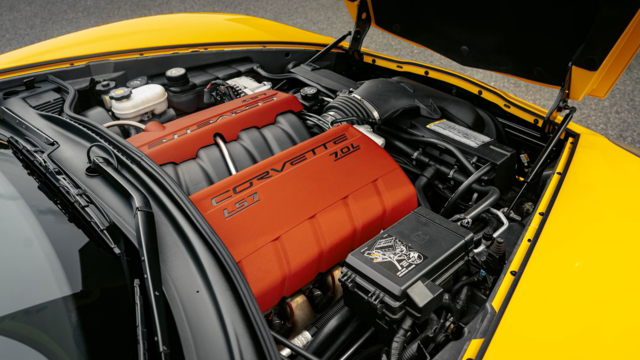
10 Reasons the LS7 Is GM's Most Extreme Naturally Aspirated V8 Engine Ever
Verdad Gallardo
I've heard the valve job goes down hill after a few thousand miles with an agressive cam profile. I figured gm gets away with it by using a ramp rate that is not really steep to be easier on the valves.

On The Tree
Joined: Sep 2005
Posts: 105
Likes: 0
From: Detroit - suburbs
Ti valves can be used on iron seats - but after a while the seat will beat a recess in the valve. You the grind the valve, run it, 'til it happens again. At some point you trash the valves and replace them with new. Or you pair the Ti valves with copper-berylium seats and let the two live happily together, until they need to be replaced. Basically you pay now (valves & seats) or you pay later (Ti valves over and over).

I'm going to try and revive this one...
So is it just the cam profile that makes the Ti valves okay in the LS7? I figure better info may be out there now. What did GM use for the seats?
I'd really like to build an L92 head engine, but right now it seems all that big flow on top may be somewhat wasted if we're running into valve float at 6300+ (some reports) due to the valvetrain being somewhat heavy. I'm looking for a Ti option that would fit a car that sees the roadcourse and some street duty.
So is it just the cam profile that makes the Ti valves okay in the LS7? I figure better info may be out there now. What did GM use for the seats?
I'd really like to build an L92 head engine, but right now it seems all that big flow on top may be somewhat wasted if we're running into valve float at 6300+ (some reports) due to the valvetrain being somewhat heavy. I'm looking for a Ti option that would fit a car that sees the roadcourse and some street duty.
Last edited by Brody; Sep 6, 2008 at 04:11 PM.
http://www.popularhotrodding.com/tec...iew/index.html
"As a further step towards valve heat transfer, the valve seats are copper infiltrated, improving their thermal transfer characteristics over standard seats."
So are the LS7 seats the copper beryllium that supposedly only last 5000miles? Surely not. At the same time, I'm not sure if this is a process that's easily done to non-LS7 heads once they're cast.
"As a further step towards valve heat transfer, the valve seats are copper infiltrated, improving their thermal transfer characteristics over standard seats."
So are the LS7 seats the copper beryllium that supposedly only last 5000miles? Surely not. At the same time, I'm not sure if this is a process that's easily done to non-LS7 heads once they're cast.

Just run a solid roller so you can lose the valvetrain weight in the lifters and run a stiffer spring to reduce valve float, since you did say it would only see some street duty. In the process you might be able to save some money instead of spending it all on titanium.

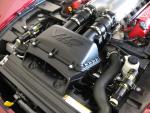
My new engine will have 7mm titanium intake valves. I'm not sure if I want to have the intake seats replaced yet. I need to get the valves turned down and at this point I could run a 2.055 or change the seats and run a 2.08. I'll be using comp 26089 valve springs, titanium retainers, 3/8th pushrods, and an aggresive solid roller.
Even if the valves don't last long you can get titanium intake valves on Ebay for $50 a set. I got my del west 7mm intake valves for $45. Then I need to get them turned down which will cost about $60. For $105 that's something that's worth the potential short life span.
Even if the valves don't last long you can get titanium intake valves on Ebay for $50 a set. I got my del west 7mm intake valves for $45. Then I need to get them turned down which will cost about $60. For $105 that's something that's worth the potential short life span.


I'm going to try and revive this one...
So is it just the cam profile that makes the Ti valves okay in the LS7? I figure better info may be out there now. What did GM use for the seats?
I'd really like to build an L92 head engine, but right now it seems all that big flow on top may be somewhat wasted if we're running into valve float at 6300+ (some reports) due to the valvetrain being somewhat heavy. I'm looking for a Ti option that would fit a car that sees the roadcourse and some street duty.
So is it just the cam profile that makes the Ti valves okay in the LS7? I figure better info may be out there now. What did GM use for the seats?
I'd really like to build an L92 head engine, but right now it seems all that big flow on top may be somewhat wasted if we're running into valve float at 6300+ (some reports) due to the valvetrain being somewhat heavy. I'm looking for a Ti option that would fit a car that sees the roadcourse and some street duty.
Titanium is not very good at dissipating heat and is relatively soft. So it needs a seat and preferrably a guide material which can "suck" the heat out and for a race engine with radical lift profiles, will take the beating instead of the titanium valve. Replacing seats is usually a lot cheaper than buying all new valves, especially custom valves.
When you heat treat titanium, it gets very hard. Comparable to steel even, but it gets brittle. So manufacturers harden just the tip, or use a hardened steel cap. If it weren't for the hardened tip, the rocker would eat right through the tip, and eventually into the retainer, like so:

Here, there was a lifter failure which allowed enough lash to let the cap come off (which was found in the lifter tray of the adjacent cylinder). The rocker ate through the tip, and into the retainer and keepers. Here is what happened as a result of a little cap coming off:


What I advise you to do is to talk to the manufacturers and get an idea of what is suitable for your engine. They can tell you more accurately what kind of valve could handle the conditions you have in mind.

My new engine will have 7mm titanium intake valves. I'm not sure if I want to have the intake seats replaced yet. I need to get the valves turned down and at this point I could run a 2.055 or change the seats and run a 2.08. I'll be using comp 26089 valve springs, titanium retainers, 3/8th pushrods, and an aggresive solid roller.
Even if the valves don't last long you can get titanium intake valves on Ebay for $50 a set. I got my del west 7mm intake valves for $45. Then I need to get them turned down which will cost about $60. For $105 that's something that's worth the potential short life span.
Even if the valves don't last long you can get titanium intake valves on Ebay for $50 a set. I got my del west 7mm intake valves for $45. Then I need to get them turned down which will cost about $60. For $105 that's something that's worth the potential short life span.

 That had to take a while to get that bad.
