



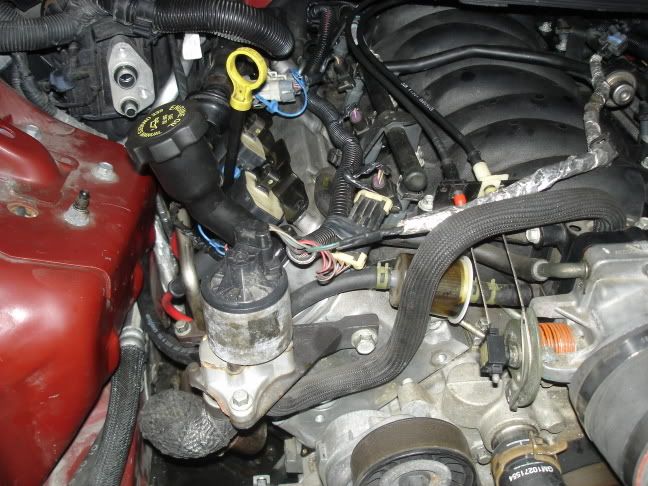


when checking out a camaro...

TECH Enthusiast
Joined: Jul 2003
Posts: 580
Likes: 0
From: The Republic of Texas

Originally Posted by ssheets
According to someone high up at GM they were the same. They were cast in different plants and look slightly different on the outside, but in 02 they never made LS1 blocks. That's what I was told by someone considered one of the most knowledgeable on Fbodys
The blocks were cast in two different places, when casting was suspended at one place, where I don't remember, GM started using blocks cast at another location. One does have a slightly different finish. The type of block you have is denoted on the back left hand side of the block, just below where the cylinder head sits on the block. GM hi tech performance magazine actually had a small article on this very subject about a year or two ago.
Originally Posted by Joker
Whoever told you that is flat out wrong, as casting continued for the LS version that was used in later engines. A percentage of the blocks used in 01-02 were LS6 blocks, that much is true, not all were however. This has been proven over and over again in countless threads on the subject. If you search, you will find where people actually thought they had an LS6 motor, etc... The type of block you have will have no impact on the other externals and the package is essentially the very same.
The blocks were cast in two different places, when casting was suspended at one place, where I don't remember, GM started using blocks cast at another location. One does have a slightly different finish. The type of block you have is denoted on the back left hand side of the block, just below where the cylinder head sits on the block. GM hi tech performance magazine actually had a small article on this very subject about a year or two ago.
The blocks were cast in two different places, when casting was suspended at one place, where I don't remember, GM started using blocks cast at another location. One does have a slightly different finish. The type of block you have is denoted on the back left hand side of the block, just below where the cylinder head sits on the block. GM hi tech performance magazine actually had a small article on this very subject about a year or two ago.
Now I haven't torn down engines and checked them out, but I'm telling you what I was told by a very reliabel source within GM Camaro division.
Lemme guess was it Scott?
Here is the skinny on the LS6 block info.
The Nemak plant in Mexico was the manufacturer of the LS6 block. They contained a higher nickle content then the standard LS1 and thus were a bit stronger.
Between 10-15% of 2001 F-bods had the LS6 block and about 25% of 2002s had them.
Don't believe me then you can check for yourself on either your 2001 or 2002 by looking at the deck of the block on the driver's side of the car. When you go exploring in that cave look for these numbers on the deck of the block: 12561168
If you see that on your block, Eureka you have an LS6 block...just make sure to use a safety harness just incase you get stuck in your engine bay while cave exploring.
Starting in 2003 all LS1/LS6 engines used the Nemak plant's LS6 casting.
So there you have it.
Here is the skinny on the LS6 block info.
The Nemak plant in Mexico was the manufacturer of the LS6 block. They contained a higher nickle content then the standard LS1 and thus were a bit stronger.
Between 10-15% of 2001 F-bods had the LS6 block and about 25% of 2002s had them.
Don't believe me then you can check for yourself on either your 2001 or 2002 by looking at the deck of the block on the driver's side of the car. When you go exploring in that cave look for these numbers on the deck of the block: 12561168
If you see that on your block, Eureka you have an LS6 block...just make sure to use a safety harness just incase you get stuck in your engine bay while cave exploring.
Starting in 2003 all LS1/LS6 engines used the Nemak plant's LS6 casting.
So there you have it.
Originally Posted by Whitten
Lemme guess was it Scott?
Here is the skinny on the LS6 block info.
The Nemak plant in Mexico was the manufacturer of the LS6 block. They contained a higher nickle content then the standard LS1 and thus were a bit stronger.
Between 10-15% of 2001 F-bods had the LS6 block and about 25% of 2002s had them.
Don't believe me then you can check for yourself on either your 2001 or 2002 by looking at the deck of the block on the driver's side of the car. When you go exploring in that cave look for these numbers on the deck of the block: 12561168
If you see that on your block, Eureka you have an LS6 block...just make sure to use a safety harness just incase you get stuck in your engine bay while cave exploring.
Starting in 2003 all LS1/LS6 engines used the Nemak plant's LS6 casting.
So there you have it.
Here is the skinny on the LS6 block info.
The Nemak plant in Mexico was the manufacturer of the LS6 block. They contained a higher nickle content then the standard LS1 and thus were a bit stronger.
Between 10-15% of 2001 F-bods had the LS6 block and about 25% of 2002s had them.
Don't believe me then you can check for yourself on either your 2001 or 2002 by looking at the deck of the block on the driver's side of the car. When you go exploring in that cave look for these numbers on the deck of the block: 12561168
If you see that on your block, Eureka you have an LS6 block...just make sure to use a safety harness just incase you get stuck in your engine bay while cave exploring.
Starting in 2003 all LS1/LS6 engines used the Nemak plant's LS6 casting.
So there you have it.

I owe him a call and maybe I'll ask him again, but that's how I remember it. Like I said, I'd already read all the threads about casting numbers, finish and the aforementioned bullseye near the passenger side head on the block deck. I was surprised whenhe told me about the change in 02.
Originally Posted by ssheets
Yeah, that's what I read priror to talking to what's his name. He said the same thing only had the date in 02 not 03. He could be wrong, but again that's what he told me. Oh he did mention the higher nickel content and the two different appearences of block surfaces. He made it a point to say that was irrelevent.....
I owe him a call and maybe I'll ask him again, but that's how I remember it. Like I said, I'd already read all the threads about casting numbers, finish and the aforementioned bullseye near the passenger side head on the block deck. I was surprised whenhe told me about the change in 02.
I owe him a call and maybe I'll ask him again, but that's how I remember it. Like I said, I'd already read all the threads about casting numbers, finish and the aforementioned bullseye near the passenger side head on the block deck. I was surprised whenhe told me about the change in 02.
Originally Posted by Whitten
Hey things do change, and honestly I take what I read from other sources with a grain of salt when compared to a good source on the inside...besides it is more fun to say you have a man on the inside.

I would be intersted to know if any bulders have noticed the difference on teardowns? I know one difference is in the alloy which would not be noticable, but isn't there some difference in the bottom end structure too????
TECH Enthusiast
Joined: Jul 2003
Posts: 580
Likes: 0
From: The Republic of Texas
The only difference on an LS6 block than that of an LS1 is the different oil channels/valleys and the casting number, all else is the exact same. The block itself does not provide any other difference in the engine, having an LS6 block did nothing for additional power in these cars as everything else in that motor are/were LS1 components.
The difference on an actual LS6 motor is in the camshaft, the springs, the pushrods/valves, the oil pump, the higher compression ratio, and the better flowing heads. None of the LS6 motors were EVER installed in an Fbod by the factory, no matter what anyone wants you to believe, they were installed by aftermarket companies and private owners.
I've run into several people who claim that since it was an LS6 block, it had to be an LS6 motor, which has never been the case. One was even "a knowledgable expert" at a Super Chevy event who evidently sold cars at a chevy dealership....
The original motor out of my car did have an LS6 block (which blew up as easy as an LS1), I replaced it with an actual LS6 405hp crate engine from GM, which in stock form laid down 390 hp at the wheels when I dynoed it. A few mods later.....
Upon tear down, all the parts were just like every other LS1 motor we (myself and a few people at TSP) had ever seen.....
The difference on an actual LS6 motor is in the camshaft, the springs, the pushrods/valves, the oil pump, the higher compression ratio, and the better flowing heads. None of the LS6 motors were EVER installed in an Fbod by the factory, no matter what anyone wants you to believe, they were installed by aftermarket companies and private owners.
I've run into several people who claim that since it was an LS6 block, it had to be an LS6 motor, which has never been the case. One was even "a knowledgable expert" at a Super Chevy event who evidently sold cars at a chevy dealership....
The original motor out of my car did have an LS6 block (which blew up as easy as an LS1), I replaced it with an actual LS6 405hp crate engine from GM, which in stock form laid down 390 hp at the wheels when I dynoed it. A few mods later.....
Upon tear down, all the parts were just like every other LS1 motor we (myself and a few people at TSP) had ever seen.....
LS1 Tech Stories
The Best V8 Stories One Small Block at Time

Gas Monkey Built a 6-Wheel Ferrari Testarossa With a Corvette LT4 Engine
Verdad Gallardo
7 Most Reliable High-Performance Engines GM Has Ever Built
Verdad Gallardo
Amazing '71 Camaro Restomod Is Modern Muscle Car Under the Skin
Verdad Gallardo
6 Common C5 Corvette Failures and What's Involved In Repairing Them
Pouria Savadkouei
Retro Modern Bandit Pontiac Trans AM Comes With Burt Reynolds' Autograph
Verdad Gallardo
Top 10 Greatest Cadillac V Series Performance Models Ever, Ranked
Pouria Savadkouei
Top 10 Most Powerful Chevy Trucks Ever Made!

Hennessey's New Supercharged Silverado ZR2 Has 700 HP
Verdad Gallardo
Coachbuilt N2A Anteros Is an LS2-Powered C6 Corvette In Italian Clothes
Verdad Gallardo
Originally Posted by Joker
The only difference on an LS6 block than that of an LS1 is the different oil channels/valleys and the casting number, all else is the exact same. The block itself does not provide any other difference in the engine, having an LS6 block did nothing for additional power in these cars as everything else in that motor are/were LS1 components.
The difference on an actual LS6 motor is in the camshaft, the springs, the pushrods/valves, the oil pump, the higher compression ratio, and the better flowing heads. None of the LS6 motors were EVER installed in an Fbod by the factory, no matter what anyone wants you to believe, they were installed by aftermarket companies and private owners.
I've run into several people who claim that since it was an LS6 block, it had to be an LS6 motor, which has never been the case. One was even "a knowledgable expert" at a Super Chevy event who evidently sold cars at a chevy dealership....
The original motor out of my car did have an LS6 block (which blew up as easy as an LS1), I replaced it with an actual LS6 405hp crate engine from GM, which in stock form laid down 390 hp at the wheels when I dynoed it. A few mods later.....
Upon tear down, all the parts were just like every other LS1 motor we (myself and a few people at TSP) had ever seen.....
The difference on an actual LS6 motor is in the camshaft, the springs, the pushrods/valves, the oil pump, the higher compression ratio, and the better flowing heads. None of the LS6 motors were EVER installed in an Fbod by the factory, no matter what anyone wants you to believe, they were installed by aftermarket companies and private owners.
I've run into several people who claim that since it was an LS6 block, it had to be an LS6 motor, which has never been the case. One was even "a knowledgable expert" at a Super Chevy event who evidently sold cars at a chevy dealership....
The original motor out of my car did have an LS6 block (which blew up as easy as an LS1), I replaced it with an actual LS6 405hp crate engine from GM, which in stock form laid down 390 hp at the wheels when I dynoed it. A few mods later.....
Upon tear down, all the parts were just like every other LS1 motor we (myself and a few people at TSP) had ever seen.....
I do recall reading somewhere that the LS6 block had improved windage for slightly less parasitic losses. This amount was never quantified and for marketing purposes was pretty much shrugged off.
