







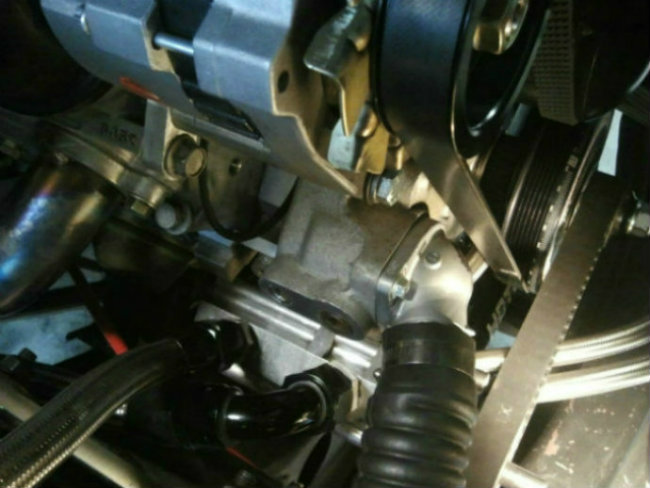




blocking off heater lines on waterpump

Thread Starter
Teching In
Joined: Jan 2013
Posts: 6
Likes: 0
 blocking off heater lines on waterpump
 I am not running a heater and would like to cap the waterpump outlets for the heater. Does this cause any issues? I though I read somewhere that it did. Just wondering if anyone had any experience with that?
Hey man, buy this. It allows the water/coolant to run in and out as it was designed to do. I wouldn't just cap them off.
I have one of these in my car, with two clamps, just in case my heater core starts to leak or one of my heater hoses that are attached to the water pump pop on my while I'm driving somewhere. This thing pops right on in 5 minutes and you're good to go.
You can drive with it forever, it hurts nothing. I used it for about 6 months when one of my heater hoses broke last winter. Works perfectly.
Just use a razor knife to cut the longer end to fit....and it will fit like it was made by GM for the water pump ports.
It has two different diameter ends that fit both ports perfectly. 3/4" and 5/8" IIRC
http://www.amazon.com/Dayco-87629-Sm.../dp/B000C0YQGM
.
I have one of these in my car, with two clamps, just in case my heater core starts to leak or one of my heater hoses that are attached to the water pump pop on my while I'm driving somewhere. This thing pops right on in 5 minutes and you're good to go.
You can drive with it forever, it hurts nothing. I used it for about 6 months when one of my heater hoses broke last winter. Works perfectly.
Just use a razor knife to cut the longer end to fit....and it will fit like it was made by GM for the water pump ports.
It has two different diameter ends that fit both ports perfectly. 3/4" and 5/8" IIRC
http://www.amazon.com/Dayco-87629-Sm.../dp/B000C0YQGM
.
Seems like the ones who have "problems" capping the outlets are people who's cars are more severely loaded, as in hills and mountains. I have no elevations where I am other than an occasional freeway overpass and my car never overheats.
The system was designed to have coolant running through at all times. Even the marine version of the motor rubs a hose between the 2 poerst. That being said, I have 2 swap running heater control valves that block the flow and have no issues. Somewhere, in the conversion forun, there is a part number for the short crossover hose, I would run it.
Trending Topics
LS1 Tech Stories
The Best V8 Stories One Small Block at Time

Topdon ONE vs. Artidiag 800 BT2: Which is the Diagnostic Tablet For You?
Pouria Savadkouei
Gas Monkey Built a 6-Wheel Ferrari Testarossa With a Corvette LT4 Engine
Verdad Gallardo
7 Most Reliable High-Performance Engines GM Has Ever Built
Verdad Gallardo
Amazing '71 Camaro Restomod Is Modern Muscle Car Under the Skin
Verdad Gallardo
6 Common C5 Corvette Failures and What's Involved In Repairing Them
Pouria Savadkouei
Retro Modern Bandit Pontiac Trans AM Comes With Burt Reynolds' Autograph
Verdad Gallardo
Top 10 Greatest Cadillac V Series Performance Models Ever, Ranked
Pouria Savadkouei
Top 10 Most Powerful Chevy Trucks Ever Made!

Hennessey's New Supercharged Silverado ZR2 Has 700 HP
Verdad Gallardo Thread Starter
Teching In
Joined: Jan 2013
Posts: 6
Likes: 0
I would like to cap them if possible, how did you guys do it? Did you tap the hole for a pipe plug? On a side note what is the best place for a mechanical water temp guage? Could it be one of the blockes heater holes/
Pull the hose barbs, then tap 1/2" NPT and 3/8" NPT. That's a good idea on using one port for a temp gauge, use a pipe reducer to get to the size of your sender.

TECH Enthusiast
iTrader: (5)
Joined: Jan 2010
Posts: 676
Likes: 2
From: Huntsville, Alabama - SA, TX is home
I've got to bring this thread back, because of the experince that I had yesterday.
USE THE U-HOSE!
I didnt believe that there was any need to have coolant flow through those two point and saw no point in the somewhat ugly U-bend hose. I figured that it could be done just like the old SBC and cap them. I didn't take into consideration the design of the pump, because why would the heater ports have anything to do with how the coolant system operated.
Well I've been driving my 5.3 swapped '87 Chevy Truck for the past two weeks and working the bugs out. I noticed that the coolant was warmer then it should be. It never would over heat, but was definitely warm. It has a stock thermostat and I'm currently in the Alabama heat.
Normal driving/cruise/idle it would stay around 201*. Once under a load, as in climbing a hill or accelerating onto a freeway, it would climb up to about 213* usually. Even at 65mph when accelerating. If I would coast or cruise, it would cool back down. Once, I went up a large hill and it got up to 224*.
So while the engine was at 212* I got out and tested tested hot spots with my inferred temp gun. I noticed that the upper and lower hoses were cool at around 175*. Radiator was even cool to the touch. This showed me that I have a flow issue and water isn't flowing through the radiator to cool the engine.
That night I changed the thermostat. Test the next day, same issue. So I changed out the coolant sender. Same issue...
I was just about to change the water pump, when I decided to try opening the heater control vavle and see what would happen. I had no faith in this helping any at all. I had never even searched this subject on LS1tech, because I just knew that you could cap them off.
With the HCV open, I went out on a test drive and the temps dropped right down to where they should be. 197* cruise temp and under a load the hottest that I could get it was 203*, but that is probably becasue my fans dont turn on until 205* right now(need to adjust the tune still). THAT IS A 10* DROP IN TEMP AT THE LEAST.
I thought maybe it was just an air bubble that blew out when I opened the heater control vavle. So I closed the vavle again and went for a test drive. The temps jumped right back up to 213*. I then opened the vavle and they dropped back down.
CRAZY!
Lesson: Use the U-Bend hose!
All of those test drives where under a lot of load on the engine. Hills, brake and gas, anything to put a load on it. Cruising temps appeared acceptable.
I've attached a pic of my heater hoses and the HCV.
USE THE U-HOSE!
I didnt believe that there was any need to have coolant flow through those two point and saw no point in the somewhat ugly U-bend hose. I figured that it could be done just like the old SBC and cap them. I didn't take into consideration the design of the pump, because why would the heater ports have anything to do with how the coolant system operated.
Well I've been driving my 5.3 swapped '87 Chevy Truck for the past two weeks and working the bugs out. I noticed that the coolant was warmer then it should be. It never would over heat, but was definitely warm. It has a stock thermostat and I'm currently in the Alabama heat.
Normal driving/cruise/idle it would stay around 201*. Once under a load, as in climbing a hill or accelerating onto a freeway, it would climb up to about 213* usually. Even at 65mph when accelerating. If I would coast or cruise, it would cool back down. Once, I went up a large hill and it got up to 224*.
So while the engine was at 212* I got out and tested tested hot spots with my inferred temp gun. I noticed that the upper and lower hoses were cool at around 175*. Radiator was even cool to the touch. This showed me that I have a flow issue and water isn't flowing through the radiator to cool the engine.
That night I changed the thermostat. Test the next day, same issue. So I changed out the coolant sender. Same issue...
I was just about to change the water pump, when I decided to try opening the heater control vavle and see what would happen. I had no faith in this helping any at all. I had never even searched this subject on LS1tech, because I just knew that you could cap them off.
With the HCV open, I went out on a test drive and the temps dropped right down to where they should be. 197* cruise temp and under a load the hottest that I could get it was 203*, but that is probably becasue my fans dont turn on until 205* right now(need to adjust the tune still). THAT IS A 10* DROP IN TEMP AT THE LEAST.
I thought maybe it was just an air bubble that blew out when I opened the heater control vavle. So I closed the vavle again and went for a test drive. The temps jumped right back up to 213*. I then opened the vavle and they dropped back down.
CRAZY!
Lesson: Use the U-Bend hose!
All of those test drives where under a lot of load on the engine. Hills, brake and gas, anything to put a load on it. Cruising temps appeared acceptable.
I've attached a pic of my heater hoses and the HCV.

I've done a little research on this subject and I am inputting what I found for future searchers.
first, this site has quite a lot of info here:
http://www.pirate4x4.com/tech/billav...CoolingSystems
I think I see what is happening, yet has not been described elsewhere, so I will attempt now. The rear port (engine block side) of the heater (smaller hose) is where the water pump SENDS hot water to the heater. This much should be obvious from looking at the diagrams. What you don't see typed anywhere is the common sense in big red letters: This is the water pump sending hot water from the hot engine to the heater core (so it can send you heat into the vehicle). So this hot water runs through the heater core and several feet of line, and it cools off some. Maybe not a lot, but some sure. It returns to the front of the water pump slightly cooler. That is, common sense tongue: the front return line from the heater core is expecting slightly cooler water. I realize this is the same location that the cooler water from the radiator is also returning to. It seems like the front of the water pump is the obvious place for cooler water to return to, still using common sense here, just trying to be as clear as possible with my line of thinking.
So lets look at the situation where we loop the line instead of running the heater core. Now, hot water from the engine side is returning to the cold side of the pump. Is the flow negligible? Maybe, I don't know. But what does make sense to me is blocking this route, instead of sending hot water right back to the front of the line, to the cold side of the radiator, so to speak.
However, even on it's best day, the heater core probably doesn't cool the water that much. I feel like both situations are applicable to some degree; that is, you can loop is, or block it, either way will essentially "work". However, in the event of looping it, I would still prefer to reduce the flow, block the port a little, to at least prevent some of the very hot-engine water from returning to the front of the pump, which seems like it would make the engine more difficult to keep cool (thread topic). My reasoning is this: there is no way to stop the flow of hot water returning to the radiator inlet, therefore, we have no way of knowing how much of the water pump's "work" is being diverted to merely recycling hot water through the engine. In other words, any hot water that returns to the front of the water pump via looped heater core lines will displace a portion of cold water returning from the radiator. For example, say the return water from the radiator temperature is very cold, 150*F as it is leaving the radiator. When this 150*F water mixes with the heater core "loop" water, which might be 200*F, it may average out to a risen 180*F and go into the engine at 180*F, giving the engine this "bottom line" temperature (nobody has a temp sensor in their lower radiator hose?), such that no matter how hard the radiator works to reduce the temperature of water it sends back to the engine, the engine doesn't seem to be able to cool properly. Is the flow difference negligible? Am I worried about spilled milk? I want to remind everyone that I do not know. However, there is certainly SOME flow when the line is looped, where NONE is obviously preferable.
Last, the above poster is remarking the lower coolant temperature when the heater core is not blocked. I suppose it worth mentioning that the heater core is a "mini radiator" and it should be obvious that hot water will cool (In the lines and heater core) thus returning to the engine cooler than it was when it was sent out, which must have attributed to his lower coolant temperatures.
first, this site has quite a lot of info here:
http://www.pirate4x4.com/tech/billav...CoolingSystems
I think I see what is happening, yet has not been described elsewhere, so I will attempt now. The rear port (engine block side) of the heater (smaller hose) is where the water pump SENDS hot water to the heater. This much should be obvious from looking at the diagrams. What you don't see typed anywhere is the common sense in big red letters: This is the water pump sending hot water from the hot engine to the heater core (so it can send you heat into the vehicle). So this hot water runs through the heater core and several feet of line, and it cools off some. Maybe not a lot, but some sure. It returns to the front of the water pump slightly cooler. That is, common sense tongue: the front return line from the heater core is expecting slightly cooler water. I realize this is the same location that the cooler water from the radiator is also returning to. It seems like the front of the water pump is the obvious place for cooler water to return to, still using common sense here, just trying to be as clear as possible with my line of thinking.
So lets look at the situation where we loop the line instead of running the heater core. Now, hot water from the engine side is returning to the cold side of the pump. Is the flow negligible? Maybe, I don't know. But what does make sense to me is blocking this route, instead of sending hot water right back to the front of the line, to the cold side of the radiator, so to speak.
However, even on it's best day, the heater core probably doesn't cool the water that much. I feel like both situations are applicable to some degree; that is, you can loop is, or block it, either way will essentially "work". However, in the event of looping it, I would still prefer to reduce the flow, block the port a little, to at least prevent some of the very hot-engine water from returning to the front of the pump, which seems like it would make the engine more difficult to keep cool (thread topic). My reasoning is this: there is no way to stop the flow of hot water returning to the radiator inlet, therefore, we have no way of knowing how much of the water pump's "work" is being diverted to merely recycling hot water through the engine. In other words, any hot water that returns to the front of the water pump via looped heater core lines will displace a portion of cold water returning from the radiator. For example, say the return water from the radiator temperature is very cold, 150*F as it is leaving the radiator. When this 150*F water mixes with the heater core "loop" water, which might be 200*F, it may average out to a risen 180*F and go into the engine at 180*F, giving the engine this "bottom line" temperature (nobody has a temp sensor in their lower radiator hose?), such that no matter how hard the radiator works to reduce the temperature of water it sends back to the engine, the engine doesn't seem to be able to cool properly. Is the flow difference negligible? Am I worried about spilled milk? I want to remind everyone that I do not know. However, there is certainly SOME flow when the line is looped, where NONE is obviously preferable.
Last, the above poster is remarking the lower coolant temperature when the heater core is not blocked. I suppose it worth mentioning that the heater core is a "mini radiator" and it should be obvious that hot water will cool (In the lines and heater core) thus returning to the engine cooler than it was when it was sent out, which must have attributed to his lower coolant temperatures.

TECH Regular
Joined: Sep 2011
Posts: 431
Likes: 1
From: Washington
I've ran my car with the heater core lines blocked with great success. I run a standalone so monitoring engine temps is easy. I run a 10% under drive crank pulley and stock F body water pump. Coolant temps stayed at thermostat temp with engine fan cycling as normal, with fan on all the time the engine would cool about 8* below thermostat This was in Datsun as a street car and drag car.
I've since switched to the mezeire pump, both heater core lines blocked and a 180* stat with hole drilled. Fan will cycle temp in the 190* range like I have programmed but will run about 172* with fan on full
The stock pump and thermostat is setup with a bypass thermostat, meaning when it's closed to the radiator water not only short circuits the heater core, but also short circuits thermostat till it opens, when all the water gos to the radiator and through the thermostat
So I would believe the heater core cooling the water some and possibly showing cooler engine temps. And some of the heater core lines, the return to the pump is used to vent heads
I vent all four corners of my setup to the cold side radiator tank with a 1/4 stainless tube
I've since switched to the mezeire pump, both heater core lines blocked and a 180* stat with hole drilled. Fan will cycle temp in the 190* range like I have programmed but will run about 172* with fan on full
The stock pump and thermostat is setup with a bypass thermostat, meaning when it's closed to the radiator water not only short circuits the heater core, but also short circuits thermostat till it opens, when all the water gos to the radiator and through the thermostat
So I would believe the heater core cooling the water some and possibly showing cooler engine temps. And some of the heater core lines, the return to the pump is used to vent heads
I vent all four corners of my setup to the cold side radiator tank with a 1/4 stainless tube

Staging Lane

Joined: Feb 2019
Posts: 72
Likes: 13
I'm working on an LS swap into my 65 C10. My preference would be to remove the heater altogether. I won't be driving it in the winter. Problem is that heat and, in particular, defrost are necessary to pass our government safety inspections. I've read many posts that say not to block flow on the heater hose circuit. I plan to use a heater hose shut off valve that will bypass the heater core but keep the coolant flowing in a loop. That's the way the factory does them on these motors. There are several of these by passing valves available. I bought one that is cable operated. I also bought one of those short u shaped hoses to use just when I'm getting the motor started up.

Registered User
Joined: Sep 2019
Posts: 4
Likes: 0
From: South Carolina
Hey man,
Im running an LQ4 with an LS1 waterpump. Stroked, 88mm turbo, H/C/I, on3 4" intercooler, big radiator, holley EFI, A/C and heater core deleted and im just getting on the road and running into cooling issues. Fans kick on at 185 through the holley and I have a factory thermostat which is 195 i think but either way, temp gets to 195 quickly, then slowly climbs. sits around 210 while driving and have seen 240 and rising before killing it in traffic. I had the heater core loop but the more i read, the less sense that makes. So im experimenting with plugging it. You mentioned drilling a hole in the thermostat, what does this do and where do you drill the hole? Assuming we have the same style thermostat (taller one with 2 springs). ive read about deleting the thermostat and putting a freeze plug with a hole drilled to restrict flow through bypass.
Im running an LQ4 with an LS1 waterpump. Stroked, 88mm turbo, H/C/I, on3 4" intercooler, big radiator, holley EFI, A/C and heater core deleted and im just getting on the road and running into cooling issues. Fans kick on at 185 through the holley and I have a factory thermostat which is 195 i think but either way, temp gets to 195 quickly, then slowly climbs. sits around 210 while driving and have seen 240 and rising before killing it in traffic. I had the heater core loop but the more i read, the less sense that makes. So im experimenting with plugging it. You mentioned drilling a hole in the thermostat, what does this do and where do you drill the hole? Assuming we have the same style thermostat (taller one with 2 springs). ive read about deleting the thermostat and putting a freeze plug with a hole drilled to restrict flow through bypass.
Staging Lane
Joined: Feb 2019
Posts: 72
Likes: 13
Hey man,
Im running an LQ4 with an LS1 waterpump. Stroked, 88mm turbo, H/C/I, on3 4" intercooler, big radiator, holley EFI, A/C and heater core deleted and im just getting on the road and running into cooling issues. Fans kick on at 185 through the holley and I have a factory thermostat which is 195 i think but either way, temp gets to 195 quickly, then slowly climbs. sits around 210 while driving and have seen 240 and rising before killing it in traffic. I had the heater core loop but the more i read, the less sense that makes. So im experimenting with plugging it. You mentioned drilling a hole in the thermostat, what does this do and where do you drill the hole? Assuming we have the same style thermostat (taller one with 2 springs). ive read about deleting the thermostat and putting a freeze plug with a hole drilled to restrict flow through bypass.
Im running an LQ4 with an LS1 waterpump. Stroked, 88mm turbo, H/C/I, on3 4" intercooler, big radiator, holley EFI, A/C and heater core deleted and im just getting on the road and running into cooling issues. Fans kick on at 185 through the holley and I have a factory thermostat which is 195 i think but either way, temp gets to 195 quickly, then slowly climbs. sits around 210 while driving and have seen 240 and rising before killing it in traffic. I had the heater core loop but the more i read, the less sense that makes. So im experimenting with plugging it. You mentioned drilling a hole in the thermostat, what does this do and where do you drill the hole? Assuming we have the same style thermostat (taller one with 2 springs). ive read about deleting the thermostat and putting a freeze plug with a hole drilled to restrict flow through bypass.
Registered User
Joined: Sep 2019
Posts: 4
Likes: 0
From: South Carolina
Looking through the flow path, looping appears to bypass the radiator. so if i plug it, maybe more flow wont go to the radiator but less flow will skip the radiator going straight back through thermostat. Maybe the right answer is to plug the heater core return and redirect the "to" heater core port to the radiator. And when i say looping it, i dont mean letting it circulate through the heater core and back. I mean putting the 6" rubber hose in place of the entire "loop" where the heater core would go.


Looking through the flow path, looping appears to bypass the radiator. so if i plug it, maybe more flow wont go to the radiator but less flow will skip the radiator going straight back through thermostat. Maybe the right answer is to plug the heater core return and redirect the "to" heater core port to the radiator. And when i say looping it, i dont mean letting it circulate through the heater core and back. I mean putting the 6" rubber hose in place of the entire "loop" where the heater core would go.
What fan/shroud/radiator setup are you running?
Registered User
Joined: Sep 2019
Posts: 4
Likes: 0
From: South Carolina
I ran the same engine both ways and the temp stayed the same. It really sounds like you have a fan or shroud issue, If it stays at 210 while driving and gets hotter while in stop and go traffic then you aren't getting enough air through the radiator while sitting or low speeds.
What fan/shroud/radiator setup are you running?
What fan/shroud/radiator setup are you running?