




LS427/570 LS7 from GMPP - Experience or Discussion
 LS427/570 LS7 from GMPP - Experience or Discussion
 Happened to see this when looking at GM Performance Parts etc.Opinions? Experience?
Has the titanium rods, titanium intake valves, cnc'd heads, intake, tb, injectors, coil packs, oil pan mid 12k price. Cam seems a little small but ~500whp is probably a given even with 227/242 cam.
Chevy Performance Parts - LS7 427/570
Has the titanium rods, titanium intake valves, cnc'd heads, intake, tb, injectors, coil packs, oil pan mid 12k price. Cam seems a little small but ~500whp is probably a given even with 227/242 cam.
Chevy Performance Parts - LS7 427/570
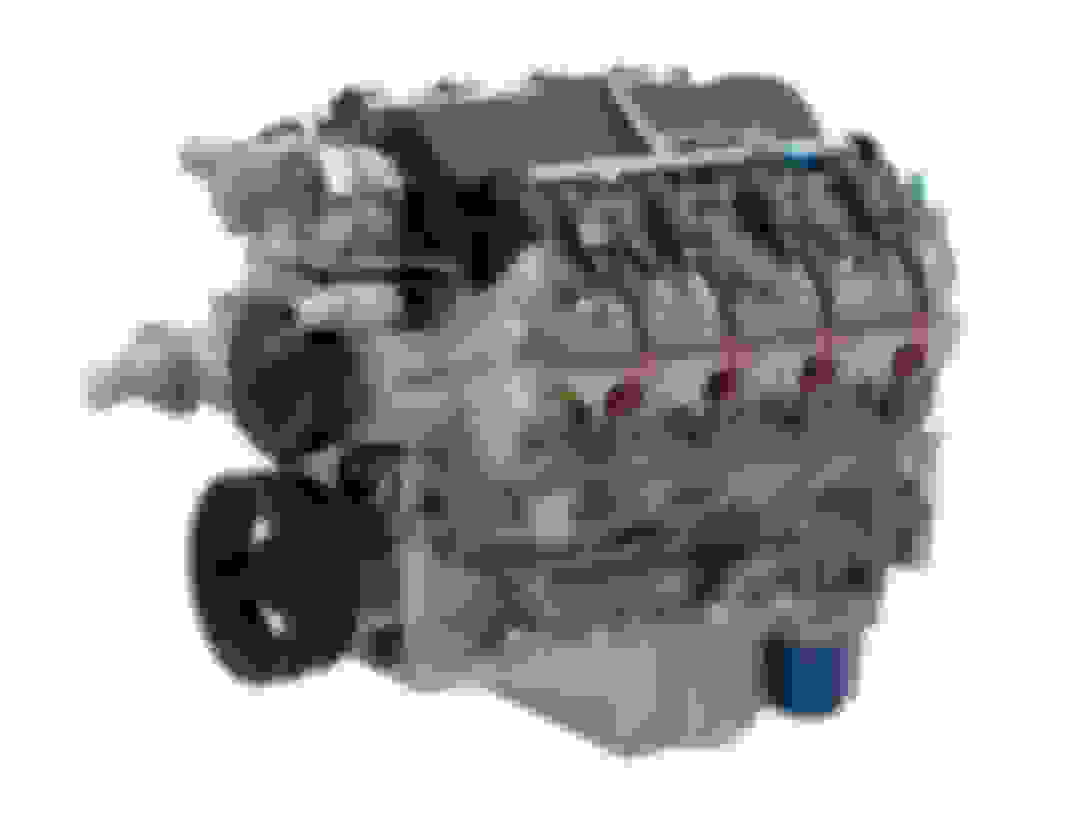
PART NO. 19421004
LS427/570 Tech Specs
- Part Number: 19421004
- Engine Type: LS-Series Small-Block V-8
- Displacement (cu. in.): 427 (7.0L)
- Bore x Stroke (in.): 4.125 x 4.000 (101.6 x 92 mm)
- Block (P/N 12602689): Cast aluminum block with 6-bolt, cross-bolted main caps
- Crankshaft (P/N 12611649): Forged steel
- Connecting Rods (P/N 12661677): Forged titanium
- Pistons: Hypereutectic aluminum
- Camshaft Type (P/N 19419859): Hydraulic roller
- Valve Lift (in.): .591 intake/.590 exhaust
- Camshaft Duration (@.050 in.): 227º intake/242º exhaust
- Camshaft Lobe Separation Angle: 116º
- Cylinder Heads: CNC-ported LS7-style ports with 70 cc combustion chambers
- Valve Size (in.): 2.200 titanium intake, 1.610 sodium-filled exhaust
- Compression Ratio: 11.0:1
- Rocker Arms: Investment-cast, roller-bearing trunnion
- Rocker Arm Ratio: 1.8:1 (offset intake)
- Recommended Fuel: Premium pump
- Maximum Recommended RPM: 7000 rpm
- Balanced: Internal
-
Found an article on the Corvette Forum. Says the same acceptance tests were ran on engine as the production LS7 and there hasn't been the valve issue with the crate engines.
chevrolet-performance-ls427-570

On The Tree
Joined: Feb 2020
Posts: 199
Likes: 55
From: NJ
I like this engine and what if offers for the money. Especially for something like I built and the way I use it. I also don't expect any LS7 to be reliable after ~30k miles.
It's hard to tell if the rod, sleeve, and valve failures are related to bad ownership or just not putting your foot down enough with this engine. Brand new LS3 ($5,000 for long block, $7,800 for dressed) looks more attractive when it puts down 450-500whp on average with a custom camshaft+bolts ons VS $12,000 questionable reliability LS7 that tops out around 525-575whp on stock heads. No need to mention specific dyno numbers, stock redlines, and power under the curve nonsense. The LS7 will be faster but is it really worth double the money over an LS3 to you?
It's hard to tell if the rod, sleeve, and valve failures are related to bad ownership or just not putting your foot down enough with this engine. Brand new LS3 ($5,000 for long block, $7,800 for dressed) looks more attractive when it puts down 450-500whp on average with a custom camshaft+bolts ons VS $12,000 questionable reliability LS7 that tops out around 525-575whp on stock heads. No need to mention specific dyno numbers, stock redlines, and power under the curve nonsense. The LS7 will be faster but is it really worth double the money over an LS3 to you?
It comes with a 24 month 50k mile warranty. The 24 month timeframe kind of sucks for going in a hotrod cruiser, but they're willing to throw a 50k mile warranty on it.
Why do they recommend 15W/50 is probably the biggest question I have? I've never seen that from an LS engine before, and modern engine trends are to put thinner and thinner oil.
I think this engine is an amazing deal when you consider the parts in it. An ls7 block alone is ~$3900. Yes the LS3 is close on peak performance numbers after a cam, but you have 51 less cubic inches, a cast crank, cast rods, pistons without valve reliefs, and while you might hit the same 480-500whp you'll be way down on average power through the rev range.
Plus it is a mf ls7 which will always be a "poster on the wall" level engine for me. Forged crank, forged Ti rods, titanium intakes, the magic 427 cubic inches. You know you've got one of the baddest factory NA engines ever built.
Swap the cam and throw an msd intake on it and you're at 580 whp easy easy and no other modifications needed. With headers and any other intake you're at 525whp with this thing all day and it would "drive like stock" with that camshaft.
Why do they recommend 15W/50 is probably the biggest question I have? I've never seen that from an LS engine before, and modern engine trends are to put thinner and thinner oil.
I think this engine is an amazing deal when you consider the parts in it. An ls7 block alone is ~$3900. Yes the LS3 is close on peak performance numbers after a cam, but you have 51 less cubic inches, a cast crank, cast rods, pistons without valve reliefs, and while you might hit the same 480-500whp you'll be way down on average power through the rev range.
Plus it is a mf ls7 which will always be a "poster on the wall" level engine for me. Forged crank, forged Ti rods, titanium intakes, the magic 427 cubic inches. You know you've got one of the baddest factory NA engines ever built.
Swap the cam and throw an msd intake on it and you're at 580 whp easy easy and no other modifications needed. With headers and any other intake you're at 525whp with this thing all day and it would "drive like stock" with that camshaft.
Last edited by spanks13; Nov 2, 2021 at 11:44 AM.
Trending Topics

This is how it made 570 hp - through exhaust manifolds, with water pump, apparently with heavy 15W/50 oil, and with a production style airbox. An ls3 is going to be extremely outclassed even if you spend the extra $6k on mods.
LS1 Tech Stories
The Best V8 Stories One Small Block at Time

Gas Monkey Built a 6-Wheel Ferrari Testarossa With a Corvette LT4 Engine
Verdad Gallardo
7 Most Reliable High-Performance Engines GM Has Ever Built
Verdad Gallardo
Amazing '71 Camaro Restomod Is Modern Muscle Car Under the Skin
Verdad Gallardo
6 Common C5 Corvette Failures and What's Involved In Repairing Them
Pouria Savadkouei
Retro Modern Bandit Pontiac Trans AM Comes With Burt Reynolds' Autograph
Verdad Gallardo
Top 10 Greatest Cadillac V Series Performance Models Ever, Ranked
Pouria Savadkouei
Top 10 Most Powerful Chevy Trucks Ever Made!

Hennessey's New Supercharged Silverado ZR2 Has 700 HP
Verdad Gallardo
Coachbuilt N2A Anteros Is an LS2-Powered C6 Corvette In Italian Clothes
Verdad Gallardo
I've got one to replace the LS3 I had in my RX8.
I looked at building my LS3 for a target of 525-550whp N/A and ended up going with the LS427 for a few reasons.
First, In my opinion, for my power target, the LS7 was going to be an easier engine to live with. To hit that power on the LS3 N/A I was likely going to need quite of a bit of work, and it would likely be difficult to make pleasant when commuting. Hitting those numbers with forced induction would be easy on the LS3. However, I'm very limited with packaging in my engine bay and didn't want to make the compromises needed to get turbos or a supercharger to fit.
Second, I priced out the parts and work needed to build the LS3 I ended up around $8500(that's just my estimate for what I wanted to do, maybe more, maybe less.) If I sold my LS3 for 3500-4500 it would be close to the same cost to acquire the LS427. I felt that the difference in cost between the two was offset by the warranty, and milder manners offered by the LS427 at my power goal. Plus I've got room to make more power if I want to throw a bigger cam and heads at it down the road.
On the 15w/50 recommendation I think that's because GM offered this as a motorsports engine and expected it to be used on a drag strip or other racetrack. GM's recommendation for the Camaro Z/28 is to use 15w/50 for track/competitive driving. The LS427 is likely built from GM's leftover stock of Z/28 engines with a new oil pan and cam added. My engine has serial numbers that indicate build dates from late 2014 and then rework dates from mid/late 2020 on it.
There's not much data on the cam GM used on these engines. The cam for the part number they list is not available and there is no information other than what's already provided on the marketing material for the engine(interestingly some of the marketing I've seen has the specs for the stock cam.) The advertised lift on the new cam seemed low to me, but I checked the lift off the pushrod with the rocker removed and it seemed to jive with the advertised lift number with 1.8 rockers. Take that with a grain of salt though as I just took a quick measurement with a dial gauge and it likely wasn't super accurate.
Haven't had a chance to drive the car with the new engine yet as what should have been a weekend swap has turned into months of scope creep improving things I did when I swapped out the rotary back in 2015.
I looked at building my LS3 for a target of 525-550whp N/A and ended up going with the LS427 for a few reasons.
First, In my opinion, for my power target, the LS7 was going to be an easier engine to live with. To hit that power on the LS3 N/A I was likely going to need quite of a bit of work, and it would likely be difficult to make pleasant when commuting. Hitting those numbers with forced induction would be easy on the LS3. However, I'm very limited with packaging in my engine bay and didn't want to make the compromises needed to get turbos or a supercharger to fit.
Second, I priced out the parts and work needed to build the LS3 I ended up around $8500(that's just my estimate for what I wanted to do, maybe more, maybe less.) If I sold my LS3 for 3500-4500 it would be close to the same cost to acquire the LS427. I felt that the difference in cost between the two was offset by the warranty, and milder manners offered by the LS427 at my power goal. Plus I've got room to make more power if I want to throw a bigger cam and heads at it down the road.
On the 15w/50 recommendation I think that's because GM offered this as a motorsports engine and expected it to be used on a drag strip or other racetrack. GM's recommendation for the Camaro Z/28 is to use 15w/50 for track/competitive driving. The LS427 is likely built from GM's leftover stock of Z/28 engines with a new oil pan and cam added. My engine has serial numbers that indicate build dates from late 2014 and then rework dates from mid/late 2020 on it.
There's not much data on the cam GM used on these engines. The cam for the part number they list is not available and there is no information other than what's already provided on the marketing material for the engine(interestingly some of the marketing I've seen has the specs for the stock cam.) The advertised lift on the new cam seemed low to me, but I checked the lift off the pushrod with the rocker removed and it seemed to jive with the advertised lift number with 1.8 rockers. Take that with a grain of salt though as I just took a quick measurement with a dial gauge and it likely wasn't super accurate.
Haven't had a chance to drive the car with the new engine yet as what should have been a weekend swap has turned into months of scope creep improving things I did when I swapped out the rotary back in 2015.

That's awesome man - yes I lost my morning looking into this as well. I never paid attention that it comes with the fbody pan too. The only mods I would need to do is put my improved racing oil pan baffle in the pan, swap crank pulleys and water pump and the engine would drop in place. I have an LS2 swapped FD rx7 and I blew the motor up earlier this year. I just went through and spec'ed out a few flavors of an LS3 build and I must say that none of them peg the scales of both excitement and easy install like this ls7 crate does. The mild manners plus performance really make this seem like a great fit. LS3 crate motor was too boring, modified LS3 crate motor is getting costly, kind of rowdy and still not where I want power wise, and lastly building a stroker ls3 (the only option that would be an upgrade over my stroked ls2 I blew up) would be expensive but my biggest concern is my time - I'd probably never finish the project.
If I weren't needing to save for a down payment right now for a house I think I would've already ordered one this morning. It is killing me lol.
If I weren't needing to save for a down payment right now for a house I think I would've already ordered one this morning. It is killing me lol.


I've got one to replace the LS3 I had in my RX8.
I looked at building my LS3 for a target of 525-550whp N/A and ended up going with the LS427 for a few reasons.
First, In my opinion, for my power target, the LS7 was going to be an easier engine to live with. To hit that power on the LS3 N/A I was likely going to need quite of a bit of work, and it would likely be difficult to make pleasant when commuting. Hitting those numbers with forced induction would be easy on the LS3. However, I'm very limited with packaging in my engine bay and didn't want to make the compromises needed to get turbos or a supercharger to fit.
Second, I priced out the parts and work needed to build the LS3 I ended up around $8500(that's just my estimate for what I wanted to do, maybe more, maybe less.) If I sold my LS3 for 3500-4500 it would be close to the same cost to acquire the LS427. I felt that the difference in cost between the two was offset by the warranty, and milder manners offered by the LS427 at my power goal. Plus I've got room to make more power if I want to throw a bigger cam and heads at it down the road.
Haven't had a chance to drive the car with the new engine yet as what should have been a weekend swap has turned into months of scope creep improving things I did when I swapped out the rotary back in 2015.
I looked at building my LS3 for a target of 525-550whp N/A and ended up going with the LS427 for a few reasons.
First, In my opinion, for my power target, the LS7 was going to be an easier engine to live with. To hit that power on the LS3 N/A I was likely going to need quite of a bit of work, and it would likely be difficult to make pleasant when commuting. Hitting those numbers with forced induction would be easy on the LS3. However, I'm very limited with packaging in my engine bay and didn't want to make the compromises needed to get turbos or a supercharger to fit.
Second, I priced out the parts and work needed to build the LS3 I ended up around $8500(that's just my estimate for what I wanted to do, maybe more, maybe less.) If I sold my LS3 for 3500-4500 it would be close to the same cost to acquire the LS427. I felt that the difference in cost between the two was offset by the warranty, and milder manners offered by the LS427 at my power goal. Plus I've got room to make more power if I want to throw a bigger cam and heads at it down the road.
Haven't had a chance to drive the car with the new engine yet as what should have been a weekend swap has turned into months of scope creep improving things I did when I swapped out the rotary back in 2015.

Your appraisal and needs sounds right to me.
Do you suppose the cam lift is under .600 to avoid stress issues on valve train given history etc?
I lost yesterday afternoon doing that as well
I just went through and spec'ed out a few flavors of an LS3 build and I must say that none of them peg the scales of both excitement and easy install like this ls7 crate does. The mild manners plus performance really make this seem like a great fit. LS3 crate motor was too boring, modified LS3 crate motor is getting costly, kind of rowdy and still not where I want power wise, and lastly building a stroker ls3 (the only option that would be an upgrade over my stroked ls2 I blew up)lol.
If I weren't needing to save for a down payment right now for a house I think I would've already ordered one this morning. It is killing me lol.
Last edited by 99 Black Bird T/A; Nov 2, 2021 at 07:09 PM.

I was considering this engine. The price is right, but it comes with all the LS7 flaws, namely titanium parts, thin crack-prone sleeves and unreliable valve guides.
For the price, it is a good motor for a weekend cruiser, if installed as-is.
In my case, I’d swap the camshaft, valve springs and intake before even installing it. Also I’d add Improved crank scraper.
That said, LS7 weak points would still be there.
Instead I decided to send aluminum 6.0 to RED for Darton sleeves, bought 434 rotating assembly and will work with Tony Mamo to complete top end. It will cost more, but will make more power and LS7 weak points will be eliminated.
For the price, it is a good motor for a weekend cruiser, if installed as-is.
In my case, I’d swap the camshaft, valve springs and intake before even installing it. Also I’d add Improved crank scraper.
That said, LS7 weak points would still be there.
Instead I decided to send aluminum 6.0 to RED for Darton sleeves, bought 434 rotating assembly and will work with Tony Mamo to complete top end. It will cost more, but will make more power and LS7 weak points will be eliminated.


Hell....the stock LS7 cam has .593"/.588" lift. So the cam in this engine is not much different at all, as far as lift is concerned.
KW

TECH Senior Member


Joined: Jul 2009
Posts: 8,034
Likes: 663
The price on this engine is very attractive but as chino stated, Reliability is a huge unknown. Bad cylinders and valve guide/valves are a time bomb waiting to happen.
the issues with the valve train is with a stock cam. It will be worse with a big cam. I believe. the GM warranty requires it to be professionally install too. Prolly have to use the stock tune. If anything goes wrong, GM will try hard to not warranty it.
the issues with the valve train is with a stock cam. It will be worse with a big cam. I believe. the GM warranty requires it to be professionally install too. Prolly have to use the stock tune. If anything goes wrong, GM will try hard to not warranty it.



Way over priced imo . Warranty isn't worth it imo ..99% of the time they won't cover it anyway. Build you a nice 416 that makes more at the tire than this engine does at the crank for less.

Teching In
Joined: Oct 2006
Posts: 27
Likes: 1
From: Iowa
Can you spell out this recipe you speak of on the 416? By the time you add in machine shop labor, parts, I am coming up with 10-12K no matter what. I am only looking at the aluminum blocks no iron in my figures. The LS7 has the intake and oil pan that will fit my swap so that hurts the LS3 too having to buy those parts. The LS7 seems like a screaming deal and I happen to love the idea of Ti bits that is bespoke tech most people would give a left nut for. I wonder what the fail ratio of LS7s are in total. We only see the failures. Any guesses on total number of LS7's made then divide by maybe the 200 failures people have posted?
I'd agree with the sentiment that it's probably not worth it for most people. The LS7 ultimately has too many little flaws that make it a poor overall choice given the other options. It's probably why very few people are actually buying it.
Allegedly GM had addressed most of the issues with valve guides and rod galling by the time these engines were built in 2014, but I've seen some evidence that's not the case. I'll be keeping a close eye on those issues over time by regular oil analysis and inspecting the valves. Ultimately I'll be doing the heads before 10K miles, mainly for more power, but also more piece of mind.
GM covering a catastrophic failure under warranty is likely just a chimera. However, at least there is some potential for recourse with an early crib death.
I had thought about doing a 416 stroker on my LS3, but decided against it due to some of the issues around the short sleeve and skirt wear. I definitely could have made more power for a similar price, but it wasn't the right choice for me and what I wanted.
I've had too many issues in the past with shops doing bare minimum quality work even while charging premium prices. I'm sure I could have found someone to do a good job, but I didn't want to have to put in the time and effort to vet a shop and then throw the dice again anyways.
Baring any constraints, the best choice would have been throw forced induction at it. I could have built a turbo kit and made >600whp for probably less than half the price.
Allegedly GM had addressed most of the issues with valve guides and rod galling by the time these engines were built in 2014, but I've seen some evidence that's not the case. I'll be keeping a close eye on those issues over time by regular oil analysis and inspecting the valves. Ultimately I'll be doing the heads before 10K miles, mainly for more power, but also more piece of mind.
GM covering a catastrophic failure under warranty is likely just a chimera. However, at least there is some potential for recourse with an early crib death.
I had thought about doing a 416 stroker on my LS3, but decided against it due to some of the issues around the short sleeve and skirt wear. I definitely could have made more power for a similar price, but it wasn't the right choice for me and what I wanted.
I've had too many issues in the past with shops doing bare minimum quality work even while charging premium prices. I'm sure I could have found someone to do a good job, but I didn't want to have to put in the time and effort to vet a shop and then throw the dice again anyways.
Baring any constraints, the best choice would have been throw forced induction at it. I could have built a turbo kit and made >600whp for probably less than half the price.
I'm not really up on the LS7 "issues" as new C6Z06 or new 5th Gen Z28 was out of my reach for a long time. Never trusted the maintenance on either of the pre-owned C6Z06's I test drove.
There are a several C6Z06 owners with 100,000+ miles on their LS7's without any issues. I assumed if the LS7 wasn't beat on regularly on a Road Course Track Day it held up as well as other LS engines.
I thought it was when LS7's are constantly pulling the big revs at track days with multiple sessions and lots of laps where the bad things seem to start happening. Like oil consumption goes up way up, like the track dogs using a quart per day. Then the valve guide wear git started.
The general view sounds like LS7's are only reliable for ~30,000 miles of daily driving and not reliable for drag strip or road course use?
Not arguing just asking.
There are a several C6Z06 owners with 100,000+ miles on their LS7's without any issues. I assumed if the LS7 wasn't beat on regularly on a Road Course Track Day it held up as well as other LS engines.
I thought it was when LS7's are constantly pulling the big revs at track days with multiple sessions and lots of laps where the bad things seem to start happening. Like oil consumption goes up way up, like the track dogs using a quart per day. Then the valve guide wear git started.
The general view sounds like LS7's are only reliable for ~30,000 miles of daily driving and not reliable for drag strip or road course use?
Not arguing just asking.