


LS7 GM Intake vs. Sheet Metal?
Thread Starter
10 Second Club
iTrader: (5)
Joined: Nov 2003
Posts: 1,649
Likes: 0
From: Ft. Lauderdale, FL
 LS7 GM Intake vs. Sheet Metal?
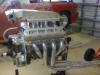
 Has anyone done any Dyno or track comparison of a LS7 headed motor with a GM LS7 Intake vs. any kind of Sheet Metal LS7 Style intake?
Some have reported with a set of 39?cfm ported LS7 heads that a cleaned up Factor GM LS7 intake, the combo can flow in the neighborhood of 350cfm through the intake.
How much additional power would it make with a Sheet Metal intake that would not restrict the flow?
Also, not sure if the correct runner length Sheet metal intake could be made to fit under the cowl of the f-body.
Beck makes some real nice sheet metal intake that fit under the cowl of the f-body, but the runners are about 5 3/8 inch long, do you thing that this is a little short for a 427 LS7 style headed solid roller motor that would turn max 8,000rpm?
Bob
Some have reported with a set of 39?cfm ported LS7 heads that a cleaned up Factor GM LS7 intake, the combo can flow in the neighborhood of 350cfm through the intake.
How much additional power would it make with a Sheet Metal intake that would not restrict the flow?
Also, not sure if the correct runner length Sheet metal intake could be made to fit under the cowl of the f-body.
Beck makes some real nice sheet metal intake that fit under the cowl of the f-body, but the runners are about 5 3/8 inch long, do you thing that this is a little short for a 427 LS7 style headed solid roller motor that would turn max 8,000rpm?
Bob
I'm very interested in this as well. I have a set of fairly high flowing ls7 heads that are indeed limited by the gm manifold. from talking with beck, they claim they can make ~ 50 peak hp more, but after 7k 80 hp and so on...it doesn't fall off near as bad and can continue to make power.
also, i'm not super wild about the idea as it would not be an optimal intake due to the hood/height issues, at least on a stock hood on a corvette.
also, i'm not super wild about the idea as it would not be an optimal intake due to the hood/height issues, at least on a stock hood on a corvette.
Most sheet metal intakes flow like crap due to there boxy design. There more for an all out full race/blown application. The Victor style intakes will generally out power them by a good bit and cost a fraction of the fabricated peice.
Thats what I hear anyway..
Thats what I hear anyway..
Originally Posted by Jeremiah
Most sheet metal intakes flow like crap due to there boxy design. There more for an all out full race/blown application. The Victor style intakes will generally out power them by a good bit and cost a fraction of the fabricated peice.
Thats what I hear anyway..
Thats what I hear anyway..
huh? You cannot make blanket statements about sheet metal intakes..No 2 are the same..If the intake is designed right nothing will beat it.(Sheet metal that is)
Originally Posted by sr71bbjr
huh? You cannot make blanket statements about sheet metal intakes..No 2 are the same..If the intake is designed right nothing will beat it.(Sheet metal that is)
solid roller with 8000rpm i would go with the bad *** BECK sheemetal, GFORCE is going to run a 455 solid roller C5r based motor with a beck that hsould be nice, like i said sheemetal will be optimal in the rpm you plan on running it in
Originally Posted by SSilverSSurfer
solid roller with 8000rpm i would go with the bad *** BECK sheemetal, GFORCE is going to run a 455 solid roller C5r based motor with a beck that hsould be nice, like i said sheemetal will be optimal in the rpm you plan on running it in
Just like putting a cylender head on a stock motor that flowed 370 at 600, the peak numbers might look better but under the curve it will suffer.
Trending Topics

TECH Apprentice
Joined: Oct 2004
Posts: 329
Likes: 0
We think about it, 455 cubic inch is 47 cubic inch greater than 408 cubic inch. Or a lil bit more than 10% larger.
A 408 is 62 cubic inch larger than a 346 or about 17% larger.
408 can make 510, 520, 530rwtq. 455 when doing right should be 10% greater than this or about 560,570,580rwtq.
A 408 is 62 cubic inch larger than a 346 or about 17% larger.
408 can make 510, 520, 530rwtq. 455 when doing right should be 10% greater than this or about 560,570,580rwtq.
LS1 Tech Stories
The Best V8 Stories One Small Block at Time

Gas Monkey Built a 6-Wheel Ferrari Testarossa With a Corvette LT4 Engine
Verdad Gallardo
7 Most Reliable High-Performance Engines GM Has Ever Built
Verdad Gallardo
Amazing '71 Camaro Restomod Is Modern Muscle Car Under the Skin
Verdad Gallardo
6 Common C5 Corvette Failures and What's Involved In Repairing Them
Pouria Savadkouei
Retro Modern Bandit Pontiac Trans AM Comes With Burt Reynolds' Autograph
Verdad Gallardo
Top 10 Greatest Cadillac V Series Performance Models Ever, Ranked
Pouria Savadkouei
Top 10 Most Powerful Chevy Trucks Ever Made!

Hennessey's New Supercharged Silverado ZR2 Has 700 HP
Verdad Gallardo
Coachbuilt N2A Anteros Is an LS2-Powered C6 Corvette In Italian Clothes
Verdad Gallardo


Originally Posted by Bowtiejoni
Just think the amount of R&D gm has spent on intake desing and comapare it any aftermarket manufactures resources.. And you have the answer.
I dont know a whole lot about the new LS7 intakes but I know a Fast 90/90 will kill over at about 6500 on a big cube mod effort NA street set up. I would think the complex engine management/fuel injection combined with the torque of the extra cubes there would be minimal drivability loss from the Carb style intake on a street/strip car?
Thread Starter
10 Second Club
iTrader: (5)
Joined: Nov 2003
Posts: 1,649
Likes: 0
From: Ft. Lauderdale, FL
Originally Posted by Blown04Z06
the LS7 carb style intake could be an option and would still fit under the hood. i think they are out but you would have to have someone machine the boss's for injectors.
I haven’t thought about the GM LS7 Carb intake, machine the injector bosses and get a 90 elbow and that might work.
Not sure if it will fit under my WS6 hood.
It would be n ice see some Dyno/Track comparisons, guess if I waited a year.
Thanks for all the info

Originally Posted by Jeremiah
Most sheet metal intakes flow like crap due to there boxy design. There more for an all out full race/blown application. The Victor style intakes will generally out power them by a good bit and cost a fraction of the fabricated peice.
Thats what I hear anyway..
Thats what I hear anyway..


Originally Posted by sr71bbjr
huh? You cannot make blanket statements about sheet metal intakes..No 2 are the same..If the intake is designed right nothing will beat it.(Sheet metal that is)

On The Tree
Joined: Aug 2006
Posts: 102
Likes: 0
Beck sheetmetal all the way. I have had three of his intakes and Ive try'd most of the other aftermarket intakes and by fare Becks intakes out flow the others. Not only that the intake looks great seating in the engine bay. What can I say its a work of art. He is making a sheetmetal intake for my C5R heads and I will be posting some pics as soon as I get the intake. You all know the saying "you have to pay to play"!!!!!!!!
Originally Posted by Nate_Taufer
Flow like crap? Don't talk about what you dont know. The only reason they lose lowend power is runner length, not boxy design.
Example...A cam shaft spend the least amount of time a peak lift so why concentrate all of the effort to maximize flow at peak lift? In a race only aplication where the engine will spends the majority of its time in exess of 7000RPM a manifold that makes best power in this erea "like the fabricated peice" might be the better option. I dont know of any fabricated intakes that arent designed to operate at extremely high RPMs. Other wise why would you spend the money to buy an intake that doesnt perform like one thats over ten times cheaper....because it looks good in the engine bay?
Originally Posted by Jeremiah
Probably not the best choice of wording, let me try again. In a street driven application a Victor would be the better choice IMO and I believe it would out flow the fabricated piece in the low and mid lift numbers by quite a bit. Peak flow numbers are a small part of a mutch larger picture with a "street driven" car.
Example...A cam shaft spend the least amount of time a peak lift so why concentrate all of the effort to maximize flow at peak lift? In a race only aplication where the engine will spends the majority of its time in exess of 7000RPM a manifold that makes best power in this erea "like the fabricated peice" might be the better option. I dont know of any fabricated intakes that arent designed to operate at extremely high RPMs. Other wise why would you spend the money to buy an intake that doesnt perform like one thats over ten times cheaper....because it looks good in the engine bay?
Example...A cam shaft spend the least amount of time a peak lift so why concentrate all of the effort to maximize flow at peak lift? In a race only aplication where the engine will spends the majority of its time in exess of 7000RPM a manifold that makes best power in this erea "like the fabricated peice" might be the better option. I dont know of any fabricated intakes that arent designed to operate at extremely high RPMs. Other wise why would you spend the money to buy an intake that doesnt perform like one thats over ten times cheaper....because it looks good in the engine bay?
A properly fabricated sheet metal intake will outflow a composite and carb style manifold at every lift point. The only reason they lose lowend power is because they are a shorter runner. If you study anything on wave tuning you would see why this is so.
Also camshafts hit every lift point twice (except for obviously absolute max) so that pretty much kills your low lift theory. And camshaft size doesnt dictate where or if the manifold will make power.
I hope you are understanding what I am saying, because based on your statements you are misunderstanding the way an engine makes power.
Nate
avalanche, bay, budget, car, comparison, engine, fabricated, fabrication, intake, intakes, ls1, ls7, metal, race, sheet, sheetmetal
