


L83 power potential

Holy crap that's a lot. I've heard from a couple people that would know that headers add about 25 rwhp, so you're saying a cutout gave another 25 ish on top of that?? If so that's nuts to get that much power from just headers and opening up the exhaust

On The Tree
Joined: Jan 2004
Posts: 166
Likes: 2
From: Bahrain

1 7/8 will work best with L83
My plan was to do headers and search for a used 6.2 exhaust (3.5"). And then maybe do a better muffler in the 6.2 exhaust. From what you have seen do you think that would be enough to get the extra power you're seeing from the cutout? I've had my days with extremely loud exhausts, all of my fast cars in the last 20 years have been loud. This truck is really a luxury truck and I don't want it to lose that feel. And I want power but I don't want it screaming *** loud and still only be a 13 second vehicle, be different if it was a few seconds faster..
On The Tree
Joined: Jan 2004
Posts: 166
Likes: 2
From: Bahrain
My plan was to do headers and search for a used 6.2 exhaust (3.5"). And then maybe do a better muffler in the 6.2 exhaust. From what you have seen do you think that would be enough to get the extra power you're seeing from the cutout? I've had my days with extremely loud exhausts, all of my fast cars in the last 20 years have been loud. This truck is really a luxury truck and I don't want it to lose that feel. And I want power but I don't want it screaming *** loud and still only be a 13 second vehicle, be different if it was a few seconds faster..
If you are really concerned with being too loud.. then probably the 6.2 should work but i never tried it.
I would do a 1 7/8 headers with 3 inch collector merging to 3.5" y pipe and then a cut out... keeping the rest of the exhausts stock and turn it on/off when you want.
If you are really concerned with being too loud.. then probably the 6.2 should work but i never tried it.
If you are really concerned with being too loud.. then probably the 6.2 should work but i never tried it.
I still have a hard time seeing a 50hp gain from headers and a cutout. That's crazy numbers.

TECH Senior Member


Joined: Jun 2016
Posts: 22,301
Likes: 3,625
From: Central Cal.
Either way, I've had a plan to do headers and 3.5" exhaust from a 6.2 truck, this just makes me feel even better about doing it. And if I "only" gain 25, i'll still be tickled.. because now matter how you cut it, 25 from an exhaust upgrade is big.
However, I'm weird, I also want to do the exhaust upgrades in hopes of getting a mpg or 2. If it don't no biggie, if it does then the exhaust paid for itself. But a couple of guys have said they saw an increase in mpg after headers.
TECH Senior Member
Joined: Jun 2016
Posts: 22,301
Likes: 3,625
From: Central Cal.
If a better exhaust gains 25HP, then I would say it's a slam dunk efficiency gains too, as all that power came without increasing fuel/air, just relieving backpressure AND tuning the pulses.
LS1 Tech Stories
The Best V8 Stories One Small Block at Time

6 Gifts Neither Your Dad Nor Grad Will Shove Into the 'Trinket Drawer'
Brett Foote
Topdon ONE vs. Artidiag 800 BT2: Which is the Diagnostic Tablet For You?
Pouria Savadkouei
Gas Monkey Built a 6-Wheel Ferrari Testarossa With a Corvette LT4 Engine
Verdad Gallardo
7 Most Reliable High-Performance Engines GM Has Ever Built
Verdad Gallardo
Amazing '71 Camaro Restomod Is Modern Muscle Car Under the Skin
Verdad Gallardo
6 Common C5 Corvette Failures and What's Involved In Repairing Them
Pouria Savadkouei
Retro Modern Bandit Pontiac Trans AM Comes With Burt Reynolds' Autograph
Verdad Gallardo
Top 10 Greatest Cadillac V Series Performance Models Ever, Ranked
Pouria Savadkouei
Top 10 Most Powerful Chevy Trucks Ever Made!
Exactly. And I try to make power through efficiency as often as possible, it's always the best way since it's always a win win win
TECH Senior Member
Joined: Jun 2016
Posts: 22,301
Likes: 3,625
From: Central Cal.
To me, power gain thru a better exhaust is free. I know the system costs, but this power involves NO extra fuel. It's just the engine not working as hard. Like you said.... win win win!

Staging Lane
Joined: Sep 2016
Posts: 67
Likes: 1
What your doing is allowing the system to exhaust more spent air/fuel more efficiently. When you retune for the better breathing you likely adding fuel to compensate.
Pumping more air for the same amount of fuel means the system starts to run lean and the ECU isn't going to allow that. I highly doubt the stock system out of the factory is dumping fuel into the motor that it can't get the best use of. Its not like the old days where engines were setup to run rich to compensate for bad fuel, timing advance etc. Now we have systems that are pretty advanced and able to run reliably on much tighter margins. Thus why you won't see a performance change without tuning to match.
Staging Lane
Joined: Sep 2016
Posts: 67
Likes: 1
That's not really how it works.
Assuming you can move more air in the same amount of time allows you to add more fuel for that period of time. So if you're going to use 360hp to accelerate hard and then you do exhaust and intake work with a tune to support it you can now use say 400hp and get there faster you're also going to need to burn the added amount of fuel to get to 400hp. On the flip if you're on the hwy cruising and it takes say 100hp to maintain your speed the amount of fuel you're gonna use is the same. You may get a bit of a bump in milage from the efficiency gain you get from easier flow but I highly doubt its something you'd be able to notice in real life. Most tuners when they're tuning will also add a bit of timing and massage the fuel maps to lean out the rich areas, THIS will definitely net you a mileage boost.
All the benefit comes from the tuning one way or another. All the headers are doing is allowing you to burn more air/fuel. Remember these are DBW engines so the ECU is modulating how much the throttle body will open not your foot. Your foot basically says how much of the total available air/fuel you would like to burn at any given time.
Telling yourself you can justify the expense of headers with fuel savings on these motors is delusional in the real world. What happens is you get a bit better milage on the hwy because of the added timing and modified fuel tables, results you probably could have gotten without headers or intake. Then you put your foot harder into it under acceleration because you like the sound and seat of the pants experience more than you did stock, burning up all the fuel you saved on the hwy and likely more. Its chasing pennies with dollars...
Not saying there are no performance gains from headers but I'd be super skeptical of any fuel savings simply because you added headers. Your not doing it to get more milage anyhow, if thats what you really wanted you'd be driving a smaller vehicle with a smaller engine.
Assuming you can move more air in the same amount of time allows you to add more fuel for that period of time. So if you're going to use 360hp to accelerate hard and then you do exhaust and intake work with a tune to support it you can now use say 400hp and get there faster you're also going to need to burn the added amount of fuel to get to 400hp. On the flip if you're on the hwy cruising and it takes say 100hp to maintain your speed the amount of fuel you're gonna use is the same. You may get a bit of a bump in milage from the efficiency gain you get from easier flow but I highly doubt its something you'd be able to notice in real life. Most tuners when they're tuning will also add a bit of timing and massage the fuel maps to lean out the rich areas, THIS will definitely net you a mileage boost.
All the benefit comes from the tuning one way or another. All the headers are doing is allowing you to burn more air/fuel. Remember these are DBW engines so the ECU is modulating how much the throttle body will open not your foot. Your foot basically says how much of the total available air/fuel you would like to burn at any given time.
Telling yourself you can justify the expense of headers with fuel savings on these motors is delusional in the real world. What happens is you get a bit better milage on the hwy because of the added timing and modified fuel tables, results you probably could have gotten without headers or intake. Then you put your foot harder into it under acceleration because you like the sound and seat of the pants experience more than you did stock, burning up all the fuel you saved on the hwy and likely more. Its chasing pennies with dollars...
Not saying there are no performance gains from headers but I'd be super skeptical of any fuel savings simply because you added headers. Your not doing it to get more milage anyhow, if thats what you really wanted you'd be driving a smaller vehicle with a smaller engine.
TECH Senior Member
Joined: Jun 2016
Posts: 22,301
Likes: 3,625
From: Central Cal.
You missed my point. Exhaust restriction is something an engine works to overcome by it working harder to push the exhaust out the pipe. This uses more fuel. This has been true even in carbureted engines. Yes, the mixture leans out with a freer flowing exhaust, but even after correcting thru rejetting, there is a fuel savings. Not much, but there nonetheless. And the harder an engine has to work, the more benefit a better exhaust shows.
And I agree, buying headers is a VERY expensive way to gain fuel mileage.
And I agree, buying headers is a VERY expensive way to gain fuel mileage.
On The Tree
Joined: Feb 2013
Posts: 173
Likes: 12
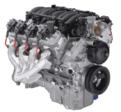
I have an L83 in my 16 Sierra Elevation (3.42 gears/tow package/trailer brake) and I love it, its a 6 speed auto, not the 8 speed but with the GU6 (3.42's) its a good setup, never owned a motor with Direct Injection until now. I am not touching mine besides a nice cold air intake, but I could see them making formidable power for a 325 cubic inch motor, the stock BHP number of 355 HP/383 TQ are impressive for a 5.3
I'm not sure that is entirely true.
What your doing is allowing the system to exhaust more spent air/fuel more efficiently. When you retune for the better breathing you likely adding fuel to compensate.
Pumping more air for the same amount of fuel means the system starts to run lean and the ECU isn't going to allow that. I highly doubt the stock system out of the factory is dumping fuel into the motor that it can't get the best use of. Its not like the old days where engines were setup to run rich to compensate for bad fuel, timing advance etc. Now we have systems that are pretty advanced and able to run reliably on much tighter margins. Thus why you won't see a performance change without tuning to match.
What your doing is allowing the system to exhaust more spent air/fuel more efficiently. When you retune for the better breathing you likely adding fuel to compensate.
Pumping more air for the same amount of fuel means the system starts to run lean and the ECU isn't going to allow that. I highly doubt the stock system out of the factory is dumping fuel into the motor that it can't get the best use of. Its not like the old days where engines were setup to run rich to compensate for bad fuel, timing advance etc. Now we have systems that are pretty advanced and able to run reliably on much tighter margins. Thus why you won't see a performance change without tuning to match.
That's not really how it works.
Assuming you can move more air in the same amount of time allows you to add more fuel for that period of time. So if you're going to use 360hp to accelerate hard and then you do exhaust and intake work with a tune to support it you can now use say 400hp and get there faster you're also going to need to burn the added amount of fuel to get to 400hp. On the flip if you're on the hwy cruising and it takes say 100hp to maintain your speed the amount of fuel you're gonna use is the same. You may get a bit of a bump in milage from the efficiency gain you get from easier flow but I highly doubt its something you'd be able to notice in real life. Most tuners when they're tuning will also add a bit of timing and massage the fuel maps to lean out the rich areas, THIS will definitely net you a mileage boost.
All the benefit comes from the tuning one way or another. All the headers are doing is allowing you to burn more air/fuel. Remember these are DBW engines so the ECU is modulating how much the throttle body will open not your foot. Your foot basically says how much of the total available air/fuel you would like to burn at any given time.
Telling yourself you can justify the expense of headers with fuel savings on these motors is delusional in the real world. What happens is you get a bit better milage on the hwy because of the added timing and modified fuel tables, results you probably could have gotten without headers or intake. Then you put your foot harder into it under acceleration because you like the sound and seat of the pants experience more than you did stock, burning up all the fuel you saved on the hwy and likely more. Its chasing pennies with dollars...
Not saying there are no performance gains from headers but I'd be super skeptical of any fuel savings simply because you added headers. Your not doing it to get more milage anyhow, if thats what you really wanted you'd be driving a smaller vehicle with a smaller engine.
Assuming you can move more air in the same amount of time allows you to add more fuel for that period of time. So if you're going to use 360hp to accelerate hard and then you do exhaust and intake work with a tune to support it you can now use say 400hp and get there faster you're also going to need to burn the added amount of fuel to get to 400hp. On the flip if you're on the hwy cruising and it takes say 100hp to maintain your speed the amount of fuel you're gonna use is the same. You may get a bit of a bump in milage from the efficiency gain you get from easier flow but I highly doubt its something you'd be able to notice in real life. Most tuners when they're tuning will also add a bit of timing and massage the fuel maps to lean out the rich areas, THIS will definitely net you a mileage boost.
All the benefit comes from the tuning one way or another. All the headers are doing is allowing you to burn more air/fuel. Remember these are DBW engines so the ECU is modulating how much the throttle body will open not your foot. Your foot basically says how much of the total available air/fuel you would like to burn at any given time.
Telling yourself you can justify the expense of headers with fuel savings on these motors is delusional in the real world. What happens is you get a bit better milage on the hwy because of the added timing and modified fuel tables, results you probably could have gotten without headers or intake. Then you put your foot harder into it under acceleration because you like the sound and seat of the pants experience more than you did stock, burning up all the fuel you saved on the hwy and likely more. Its chasing pennies with dollars...
Not saying there are no performance gains from headers but I'd be super skeptical of any fuel savings simply because you added headers. Your not doing it to get more milage anyhow, if thats what you really wanted you'd be driving a smaller vehicle with a smaller engine.
You missed my point. Exhaust restriction is something an engine works to overcome by it working harder to push the exhaust out the pipe. This uses more fuel. This has been true even in carbureted engines. Yes, the mixture leans out with a freer flowing exhaust, but even after correcting thru rejetting, there is a fuel savings. Not much, but there nonetheless. And the harder an engine has to work, the more benefit a better exhaust shows.
And I agree, buying headers is a VERY expensive way to gain fuel mileage.
And I agree, buying headers is a VERY expensive way to gain fuel mileage.
You guys are both right and I get both your points. Suprathepeg yes we understand more air in means more fuel needs to come in, but what G Atsma is trying to say is if you can do something to make the burn more efficient you will gain power and mpg. In this scenario since the stock exhaust is so restrictive it it causing you to use more throttle than necessary to make X power to roll the truck down the road. If you can make the burn more efficient then you can over come the excessive use of throttle for X amount of power. And in that scenario you open the throttle blade less letting less air in the engine but the burning of the fuel is more efficient so it now makes the some power output with less airflow. And I don't know who you're referring to chasing pennies with dollars, I'm not gonna do headers for MPG, I'm gonna do them for power and then I'm gonna smile when I see that I also gained a hair of mpg. Then I'll smile even more when I stomp on it and enjoy it. Then I'll smile when I can pass the gas station my buddy had to stop at cause he wanted to do gears to go faster and dropped mpg in the process..
Efficiency of the burn, not efficiency of the flow. Yes we are increasing the efficiency of the flow here but one aspect is the air quality in the cylinder due to better exhaust scavenging and less exhaust reversion back into the cylinder, and better cylinder filling over all. So we're now getting more power from the same amount of fuel, therefore less fuel can be used to do the same work.... cruise 70mph for example. If I can get more energy out of X amount of fuel, then I can use less fuel for the same work.
And as for headers being expensive, it's actually one of the lowest cost items that will add power and mpg to these trucks. By the way one of the top tuners in the world and I just had a conversation about this, he's seen mpg increases on these trucks from just a catback, I just noticed a small gain from replacing the stock muffler and flapper valve with a straight through magnaflow. The other ways to gain mpg is minimize waste through drag (on the body or drive line) or drop weight.. LRR (low rolling resistance) tires which are roughly $1000 for a set of good tires, a tune which is roughly $300-$400 and headers are also $400 for good ones (speed engineering). The other things to help are to do aerodynamic things to help with wind resistance, or things like electric water pumps, light weight drive shafts & wheels and tires, or crank scrapers. But LT motors already have a crank scraper (confirmed this with improved racing), the drive shaft is super light, the axles won't get much lighter, and I don't have 6k or more for forged lightweight wheels, so there isn't much left to do on these trucks that GM didn't already do. They adjust alternator output based on need, they went to electric power steering, they already have electric fans, they have variable output oil pumps, 4cyl mode etc to help with mpg.
Last edited by 00pooterSS; Jul 11, 2018 at 12:02 PM.