




HP tuners help

Thread Starter
Staging Lane
Joined: Nov 2007
Posts: 99
Likes: 0
From: Glenolden, PA
 HP tuners help
 How much more HP can you get from an HP tuner versus a vector motorsports ecm??? Vector Motorsports claims a gain of 15-20whp on a stock car (I think). They also say that they have tunes for a car with an aftermarket intake. So if they can get an honest 20whp, how much more can the HP tuner offer??? Is it worth all of the time and dyno time money???

TECH Fanatic
Joined: Jul 2007
Posts: 1,115
Likes: 0
From: Reading, Pennsylvania
If you're going to be doing alot of mods than I'd say it's worth it. HP tuners pretty much gives you endless possibilities to what you can do. You can only do so much with a pre-tuned ecm.
fixed for you 
HP tuners is nearly the same cost as a vector tune isnt it? HP tuners lets you tune your car as well as your friends (up to 4 tunes) as much as you want for as long as you want. Its a challenge and gives you an education in tuning cars that you can use forever. Besides, how can you be sure that a can-tune is dialed in for YOUR car?
HP tuners is nearly the same cost as a vector tune isnt it? HP tuners lets you tune your car as well as your friends (up to 4 tunes) as much as you want for as long as you want. Its a challenge and gives you an education in tuning cars that you can use forever. Besides, how can you be sure that a can-tune is dialed in for YOUR car?
Thread Starter
Staging Lane
Joined: Nov 2007
Posts: 99
Likes: 0
From: Glenolden, PA
you can't be sure that it is tuned for YOUR car but as long as it is close to how much peak HP I can get, I will be satisfied. I agree though that you can't put a price on the knowledge learned from tuning. As far as mods go, I am only looking to put the K&N CAI, and a magnaflow cat-back with the hogan DP. Maybe, and this is a highly unlikely maybe, a small dry shot of the funny gas. If we are only talking about a 5wHP difference between the vector and the HP tuner then I may as well get the vector. If the tuner allows 4 other cars to be tuned, is there anyone willing to tune my car then for some $$$ once I get my cai and my exhaust???
fixed for you
HP tuners is nearly the same cost as a vector tune isnt it? HP tuners lets you tune your car as well as your friends (up to 4 tunes) as much as you want for as long as you want. Its a challenge and gives you an education in tuning cars that you can use forever. Besides, how can you be sure that a can-tune is dialed in for YOUR car?
HP tuners is nearly the same cost as a vector tune isnt it? HP tuners lets you tune your car as well as your friends (up to 4 tunes) as much as you want for as long as you want. Its a challenge and gives you an education in tuning cars that you can use forever. Besides, how can you be sure that a can-tune is dialed in for YOUR car?
I can't tell you how many times I've changed my tune, for better or for worse; at least I can modify it, not somebody else. There is nothing bad about vector, just learn to use HPT yourself and you won't have to bend over every time you want to change something.

On The Tree
Joined: Mar 2007
Posts: 155
Likes: 0
From: Sedalia MO
Also if your looking at adding nitrous, be very carefull about using a canned tune. Personally, I wouldn't get the vector ecu if I was going to add nitrous. On the other hand, if you went with the HP tuner, you could use it to tune for nitrous.
Trending Topics
Yep
Pretty extensive range of tuning options - to name just the more likely candidates for tuning:
Transmission:
Differential Score
Shift points
Transmission torque management
TCC duty cycle
Shift pressure
Engine:
Airflow(Maf and VE)
Torque Management
DOD enable/disable
Power Enrichment
Timing
Idle airflow
Rev Limiter
Remove speed governor
There are also custom operating systems available such as a 2-bar tune for those who may follow Jay down the turbo trail.

Pretty extensive range of tuning options - to name just the more likely candidates for tuning:
Transmission:
Differential Score
Shift points
Transmission torque management
TCC duty cycle
Shift pressure
Engine:
Airflow(Maf and VE)
Torque Management
DOD enable/disable
Power Enrichment
Timing
Idle airflow
Rev Limiter
Remove speed governor
There are also custom operating systems available such as a 2-bar tune for those who may follow Jay down the turbo trail.
LS1 Tech Stories
The Best V8 Stories One Small Block at Time

Top 10 Greatest Cadillac V Series Performance Models Ever, Ranked
Pouria Savadkouei
Top 10 Most Powerful Chevy Trucks Ever Made!

Hennessey's New Supercharged Silverado ZR2 Has 700 HP
Verdad Gallardo
Coachbuilt N2A Anteros Is an LS2-Powered C6 Corvette In Italian Clothes
Verdad Gallardo
Awesome K5 Blazer Restomod Comes With C7 Corvette Power
Verdad Gallardo
10 Camaros You Should Never Buy

10 LS Engine Myths That Refuse to Die
Verdad Gallardo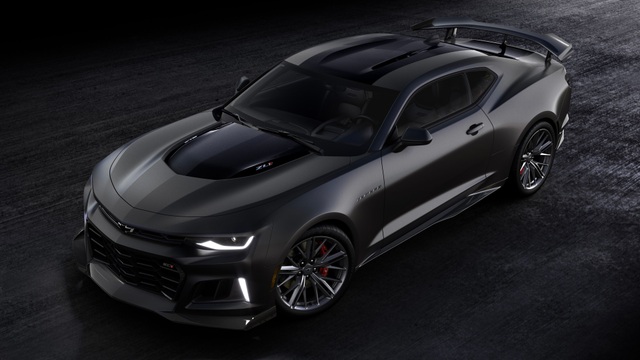
Five Reasons the Camaro Was the Most Pivotal Player in the Pony Car Wars 2.0
Brett Foote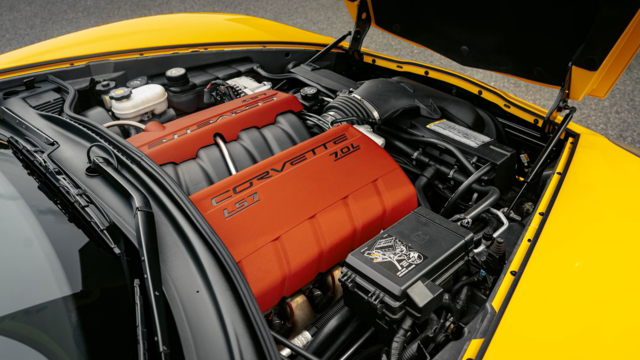
10 Reasons the LS7 Is GM's Most Extreme Naturally Aspirated V8 Engine Ever
Verdad Gallardo Thread Starter
Staging Lane
Joined: Nov 2007
Posts: 99
Likes: 0
From: Glenolden, PA
ok, ok, you guys talked me into it. I am going to go with HP tuners. I have a question though, if I go with a touch screen in dash type receiver, can I put the HP software into the hard drive on that thing?? That would be cool.
When communicating with the VCM, accessories need to be off - no other activity on the data bus (it seems that at least the stereo actually shares a data bus with the VCM). This means not opening and closing doors, running windows, door locks, using ON*...while reading or flashing the VCM or the process may fail part way through.
There have been some aftermarket stereo's that won't "shut up" when reading or writing to the VCM. The stock ones are commanded by the VCM to shut down communications during the read/write process - for some aftermarket equipment, it may only be solved by removing the stereo fuse.
EDIT: You prpbably want the Pro version to get "stand alone" data logging and the ability to directly log WBO2 output. I also hear that HPT has a handheld that will be released next year, but no specifics on it's capabilities or limitations.
Last edited by TiredGXP; Dec 16, 2007 at 12:25 PM.
I'm going to guess no.
When communicating with the VCM, accessories need to be off - no other activity on the data bus (it seems that at least the stereo actually shares a data bus with the VCM). This means not opening and closing doors, running windows, door locks, using ON*...while reading or flashing the VCM or the process may fail part way through.
There have been some aftermarket stereo's that won't "shut up" when reading or writing to the VCM. The stock ones are commanded by the VCM to shut down communications during the read/write process - for some aftermarket equipment, it may only be solved by removing the stereo fuse.
EDIT: You prpbably want the Pro version to get "stand alone" data logging and the ability to directly log WBO2 output. I also hear that HPT has a handheld that will be released next year, but no specifics on it's capabilities or limitations.
When communicating with the VCM, accessories need to be off - no other activity on the data bus (it seems that at least the stereo actually shares a data bus with the VCM). This means not opening and closing doors, running windows, door locks, using ON*...while reading or flashing the VCM or the process may fail part way through.
There have been some aftermarket stereo's that won't "shut up" when reading or writing to the VCM. The stock ones are commanded by the VCM to shut down communications during the read/write process - for some aftermarket equipment, it may only be solved by removing the stereo fuse.
EDIT: You prpbably want the Pro version to get "stand alone" data logging and the ability to directly log WBO2 output. I also hear that HPT has a handheld that will be released next year, but no specifics on it's capabilities or limitations.
 .
. Good question.
Using a dyno would be best, but there are ways around that.
You don't need a dyno to get the VE table (e40 VCM) or MAF tables right - just use the WB and HPT.
When dealing with timing, I typically check my 0-100 kmh times and KR (both from the HPT log). Although it usually tends to be the XX-100 times due to feathering the throttle to eliminate wheel spin. If you export the log to excel, you can chart the WOT speed or RPM against time for any given timing settings. My operating assumption is that if it's revving quicker and KR is absent, then the change was good.
As 0-100 involves a shift from 1st to 2nd, the same process can be used to check effect of modifying transmission TM, shift pressure, shift speed/RPM. I usually do a few passes on one log and then average the results. When logging acceleration runs, I try to have the minimum number of PID's being logged to give the maximum resolution - i.e. just log RPM, Speed, Total Advance, KR, ETC%. That gives you something like 20 frames per second.
I also have a g-tech, which gives me some idea of 60 ft time, and also shows 0-60 mph, (no quarter miles on the local highway) but won't let me filter out wheel spin.
Using a dyno would be best, but there are ways around that.
You don't need a dyno to get the VE table (e40 VCM) or MAF tables right - just use the WB and HPT.
When dealing with timing, I typically check my 0-100 kmh times and KR (both from the HPT log). Although it usually tends to be the XX-100 times due to feathering the throttle to eliminate wheel spin. If you export the log to excel, you can chart the WOT speed or RPM against time for any given timing settings. My operating assumption is that if it's revving quicker and KR is absent, then the change was good.
As 0-100 involves a shift from 1st to 2nd, the same process can be used to check effect of modifying transmission TM, shift pressure, shift speed/RPM. I usually do a few passes on one log and then average the results. When logging acceleration runs, I try to have the minimum number of PID's being logged to give the maximum resolution - i.e. just log RPM, Speed, Total Advance, KR, ETC%. That gives you something like 20 frames per second.
I also have a g-tech, which gives me some idea of 60 ft time, and also shows 0-60 mph, (no quarter miles on the local highway) but won't let me filter out wheel spin.

TECH Fanatic
Joined: Jul 2006
Posts: 1,732
Likes: 0
From: K.C.
you can use hpt on a windows based pda, or car pc setup instead of having to lug around a laptop everywhere
just a word to the wise. besure you know what you're doing before making any big changes. save every change to a different file name so you don't overwrite something you know worked before.
just a word to the wise. besure you know what you're doing before making any big changes. save every change to a different file name so you don't overwrite something you know worked before.
Thread Starter
Staging Lane
Joined: Nov 2007
Posts: 99
Likes: 0
From: Glenolden, PA
ok, I have an old laptop that I can use though, instead of buying something new. I don't mind the lugging. lol. tired GXP, I am a noob to all of the terminology so can you plz tell me what the heck all of your acronyms mean like VE, TM, KR, etc etc.

VE = volumetric effeciency (I think :/)
TM = torque managemant
KR = knock retard
MAF = mass air flow (as in the sensor)
WB = wide band (as in O2 sensor)
WOT = wide open throttle
RPM = revolutions per minute
MPH = miles per hour
PID = ???????????????
I.E. = An abbreviation for id est, a Latin phrase meaning “that is.” It indicates that an explanation or paraphrase is about to follow.
TM = torque managemant
KR = knock retard
MAF = mass air flow (as in the sensor)
WB = wide band (as in O2 sensor)
WOT = wide open throttle
RPM = revolutions per minute
MPH = miles per hour
PID = ???????????????
I.E. = An abbreviation for id est, a Latin phrase meaning “that is.” It indicates that an explanation or paraphrase is about to follow.