When you click on links to various merchants on this site and make a purchase, this can result in this site earning a commission. Affiliate programs and affiliations include, but are not limited to, the eBay Partner Network.
On my 700 mile trip last week I went through 2 quarts of oil. The leaking isn't new, it normally pisses oil all over parking spots like a dog marking its territory, but I noticed now that it really only happens when under load. There is no blue smoke out of the exhaust, plugs are not fouled, and no blue smoke on startup. It fires up immediately when I turn the key but I haven't done a compression test, but I don't think it's excessive blow by. I got 26mpg at 80 across the Appalachian mountains. It almost looked like a grayish haze behind me like a fog sometimes going up mountains but it could have been my paranoia and just clouds or my dirty mirrors.
On long 6% grades at 80mph at 2000 rpm in cruise control I start to smell oil burning, not like combustion burning, like fingerprints off a header, I see marks where it drops off the valvecovers and down the block onto the headers, some from around the CCV. The CCV tube is new, valvecovers gaskets are new, timing seals are new, and so is the CCV gromet, and I'm getting a new PCV valve today because that's my first (cheap) suspect, but under load the PCV doesn't really do much as there isn't a lot of vacuum. There is oil all over the bottom of the car, and when I washed it yesterday the whole bumper was covered in a raw oil film. The leak marks on a driveway are about 6' long, from the motor back to the driveshaft, even dripping off the rear end a little. The valve cover webbing is cut for the rockers, so I don't know if it's splashing up to the CCV or what.
Next suspect is the intake manifold gasket and China wall rtv bead. What else causes excessive crankcase pressure except blow by? I really don't think it's blow by because the motor feels so healthy. I run synthetic 5w30.
I would assume it's the intake manifold before suspecting anything else. Oil pressure goes up with rpm since it is cam driven, therefore more pressure more likely to squeeze out of any already leaky areas. This oil leak location can cause it to drop on the exhaust and burn up leaving a smoke trail.
check around your oil sending unit, the wind turbulence under the hood at speed will make the oil go everywhere, and under load the sending unit will see more pressure..
The PCV system is supposed to provide a slight vacuum to the crankcase to help keep the oil from pressing into the engine's seals. If the PCV system fails the oil gradually begins to work its way (faster) past the engine's seals. Once it makes it to the "edge" so to speak, it can easily drip out when you go to WOT because there is very little PCV action at WOT in most engines.
If your engine is in good health, the problem is in the PCV system, and can be corrected by verifying the crankcase is sealed (pressure test it gently) and then replacing all PCV hardware. The vacuum applied by the system might help gradually reduce your existing oil leaks, or not, but it will certainly slow them down to some extent.
Next, if the engine is NOT in good health, i.e. blow-by, you will need to provide an exit path for the PCV route. i.e. instead of having it lead to the fresh air side of things (factory PCV location is after the air filter, feeds the crankcase) You will probably need some sort of catch can, thereby directing the blow-by oil into a safe storage space until you can fix the real problem (rings probably). You can check the rings using a leak-down tester, and to some extent, a compression test may reveal some useful info as well.
Another "band-aid" approach I will mention, (although not the best way...) is to create a restriction at the air filter (use too small of an air filter) and leave the OEM pcv attached to the fresh air inlet we just talked about. This way, when you hit WOT, there will be a stronger vacuum signal in the PCV hose from the air-filter pathway (because it is restrictive some). This causes a loss of power of course, but the provided vacuum due to the restriction will feed the crankcase a negative pressure during WOT and help keep oil inside it.
I'd clean the living **** out of the motor using simple green from top to bottom, go run around, do some WOT stuff, come back and start feeling around the engine from the top down. Because the back bumper is covered in oil I do not think you have any sort of internal issue. Intake manifold leaks are from oil vapors and do not leak like what you're describing unless there is sealant missing from the intake/block. If it's pouring out like you say, and under load, then I'd believe the leak is coming from a source where there is oil flow activity, like around the timing cover or rear main. Somewhere where there's a great volume of oil and around the oil pan.
Originally Posted by kingtal0n
The PCV system is supposed to provide a slight vacuum to the crankcase to help keep the oil from pressing into the engine's seals. If the PCV system fails the oil gradually begins to work its way (faster) past the engine's seals. Once it makes it to the "edge" so to speak, it can easily drip out when you go to WOT because there is very little PCV action at WOT in most engines.
Most cars have a fail safe, i.e. a breather tube which is neutral flowing so that very thing doesn't happen, and any pressure is then channeled into the intake plenum.
I'd clean the living **** out of the motor using simple green from top to bottom, go run around, do some WOT stuff, come back and start feeling around the engine from the top down. Because the back bumper is covered in oil I do not think you have any sort of internal issue. Intake manifold leaks are from oil vapors and do not leak like what you're describing unless there is sealant missing from the intake/block. If it's pouring out like you say, and under load, then I'd believe the leak is coming from a source where there is oil flow activity, like around the timing cover or rear main. Somewhere where there's a great volume of oil and around the oil pan.
Most cars have a fail safe, i.e. a breather tube which is neutral flowing so that very thing doesn't happen, and any pressure is then channeled into the intake plenum.
IDK I had an oil leak from the back of the intake before I knew how to properly seal it and it leaked pretty horribly. Oil leaked all over the trans pan, exhaust, underside of the car, etc. Left big stains where ever I park too and actually got bad enough to the point that I left a smoke screen behind me.
I can't remember how well I put the intake on this motor, I can't even remember if I bought new intake gaskets or in my broke college years I said **** it and reused the gaskets. Sounds like I should just pull the intake if the PCV doesn't fix it. Thanks guys.
I can't remember how well I put the intake on this motor, I can't even remember if I bought new intake gaskets or in my broke college years I said **** it and reused the gaskets. Sounds like I should just pull the intake if the PCV doesn't fix it. Thanks guys.
Just remember there's 3 big things to do when changing the intake gaskets.
1) use plenty of rtv
2) set it straight down onto the block/heads, don't let it slide it around
3) let it cure for 24 hours
IDK I had an oil leak from the back of the intake before I knew how to properly seal it and it leaked pretty horribly. Oil leaked all over the trans pan, exhaust, underside of the car, etc. Left big stains where ever I park too and actually got bad enough to the point that I left a smoke screen behind me.
Had that happen too and discovered little-to-no sealant where it was leaking. Even after figuring out what to do it would spring a leak once in awhile, but never to the point of coating the underside or back bumper.
Originally Posted by myltwon
Just remember there's 3 big things to do when changing the intake gaskets.
1) use plenty of rtv
2) set it straight down onto the block/heads, don't let it slide it around
3) let it cure for 24 hours
As well as checking the torque on the bolts after a few heat cycles.
Remember when using RTV, let it skin over, dont apply the sealant then right away put your intake on, this may cause the sealant to squeeze out and leave some voids..
Most cars have a fail safe, i.e. a breather tube which is neutral flowing so that very thing doesn't happen, and any pressure is then channeled into the intake plenum.
Think of what you are saying, if there is pressure pushing the air of the crankcase, then that pressure is higher than atmospheric. Meaning it is still applying pressure to the oil seals. No, it isn't a LARGE pressure, it isn't several PSI or anything (unless the rings are bad). but that tiny, eety beety pressure does has an influence, and it does have a gradual push effect the leads to faster leaking from all seals, that IS the pressure we are trying to prevent with our pcv action. and I think you meant Intake Duct. The plenum would be in a vacuum state, that is the pcv valve side of things, and if that clogs it leads to the condition you are saying we have a failsafe for (the intake air filter duct -> crank case is the neutral tube you are thinking of)
Check from Top to Bottom and Front to Back for sure. I had a oil leak out of the front of the oil pan, timing cover, that covered the entire underneath of my car to the point it covered my rear bumper too. Just be sure to cover your bases to find any oil leaks and fix them all at once instead of one after the other.
Think of what you are saying, if there is pressure pushing the air of the crankcase, then that pressure is higher than atmospheric. Meaning it is still applying pressure to the oil seals. No, it isn't a LARGE pressure, it isn't several PSI or anything (unless the rings are bad).
If there is abnormal blow-by then yes, there can be an influence if it is more than a breather tube can handle. Then I can see what you're saying. Normal blow-by the breather tube is enough to compensate at WOT when there is no vacuum.
and I think you meant Intake Duct. The plenum would be in a vacuum state, that is the pcv valve side of things, and if that clogs it leads to the condition you are saying we have a failsafe for (the intake air filter duct -> crank case is the neutral tube you are thinking of)
I should have been more clear. The LT1 the breather tube is plumbed into the throttle body and before the throttle blades therefore flow remains neutral.
Normal blow-by the breather tube is enough to compensate at WOT when there is no vacuum.
This is a solution for "max performance". If you are willing to deal with a little less performance/power, then you can use a slightly restrictive air filter to provide some PCV action during WOT using this same "neutral" tube. Personal preference but something to be aware of, many factory turbocharged vehicles are using this concept since there is almost no way to use a paper element on an OEM turbo engine without some amount of pressure drop in front of the compressor, they use this low pressure for WOT pcv action, via crankcase tube connected directly to the valve cover through a baffle of course.
This is a solution for "max performance". If you are willing to deal with a little less performance/power, then you can use a slightly restrictive air filter to provide some PCV action during WOT using this same "neutral" tube. Personal preference but something to be aware of, many factory turbocharged vehicles are using this concept since there is almost no way to use a paper element on an OEM turbo engine without some amount of pressure drop in front of the compressor, they use this low pressure for WOT pcv action, via crankcase tube connected directly to the valve cover through a baffle of course.
Or you can use Bernoulli's principle and no air filter restriction is needed......
This is a solution for "max performance". If you are willing to deal with a little less performance/power, then you can use a slightly restrictive air filter to provide some PCV action during WOT using this same "neutral" tube.
Filtered breathers have been around since the beginning of time and there have been a fair share who've used them for LT1's with the mindset it would work better than the stock PCV system, when in all actuality it made no difference and left an oily film all over the engine bay
Once you confirm you don't have or fixed source of leak and you still **** oil through seals at high RPM...you could rig up a air pump to evacuate crankcase pressure if that is what is going on.
More for Turbo boost cars but work on FI NA cars RaceTronixs makes a wiring harness to rig up the stock air pump
So I finally updated the registration and drove it yesterday, as when I got home I found the bolts for the valve covers leaking, running off the valve cover, sitting in the lip before the head, and oil boiling there and smoking. Also found I think the front of the intake is leaking, as the block is soaked in oil, so those 2 leaks are combining for a nasty mess. I pulled and cleaned the valve cover bolts and washers to try to seal better, but may need new valvecovers and washers. What appears to happen is it leaks a ton always, then when it's under load it gets hot enough to start burning off, I don't think it's leaking due to being pushed out by positive crankcase pressure under load, it just starts smoking when the heads get really hot.
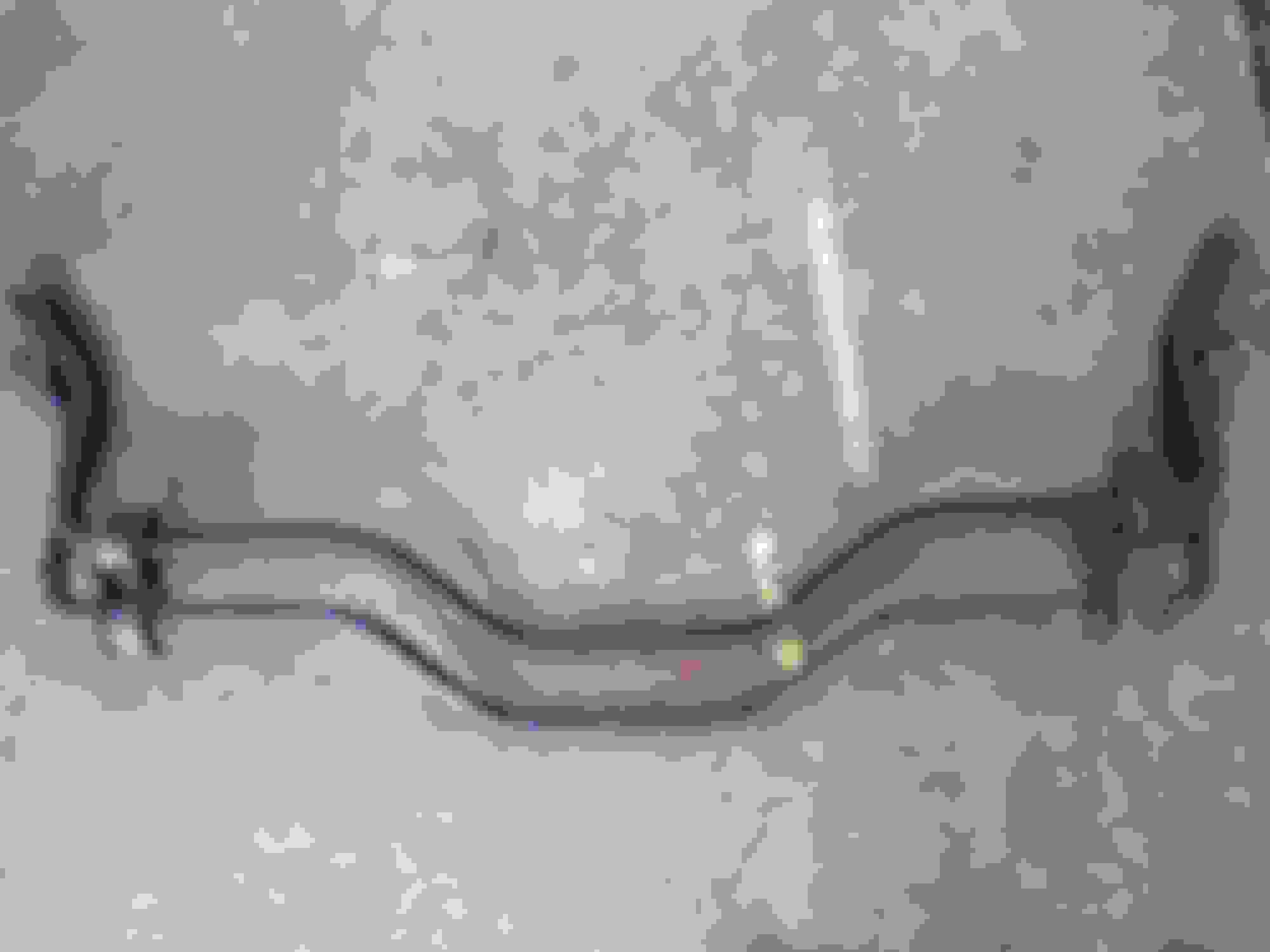
While I was dicking around I finally swapped the 23mm 91 formula rear sway bar back to the stock 19mm bar, the underside of the whole car is ******* disgusting, covered in oil combined with road dust it's like a paste.
Drove it to work today, and my **** eating grin couldn't have been bigger. It now inspires confidence on any turn, no more fighting the *** end from always wanting to come around, it rolls a little more but keeps the tires planted. There are no signs of any oversteer, just very very mild under steer when you push it really hard, but a tiny push of throttle hooks it up and it rockets out of a turn. So lesson learned, 23mm rear bar is too big for a 32mm front bar on a square tire setup, and it's better to over do the front bar than go too big on the rear, like Strano always said. The 23 would be a good cheap drag bar, but with an impact and a wrench, the 5 minutes it took to change is worth swapping them out after a track day. I need to get time to pull the intake and get the oil leak sealed, then I want to try this thing out on a road course.
Last edited by bufmatmuslepants; Jul 28, 2016 at 05:55 AM.
Before I tune an engine, I pressure test the crankcase. Use an air compressor to apply about 1~psi to the crank case and check for leaks. You will find all the weak spots in the gaskets this way, and holes you did not know about.
By sealing up the crankcase properly, using high quality gaskets and so forth, you will help control the oil seepage. It will also improve the engine longevity by helping the PCV system do it's job. 'Big' engines (500+CID) with blowers often run vacuum pumps; to do this effectively this same principle is applied: the engine is pressure tested and sealed up really really well prior to being run. This results with slight bump to power output.
How tight are you torquing down those bolts on the VC's? Your headers are hot enough even at idle to burn oil. That oil is being pushed out somehow, and if it isn't blow by then the bolts are too loose.
Gas Monkey Built a 6-Wheel Ferrari Testarossa With a Corvette LT4 Engine
Slideshow: The controversial Ferrari F6 swaps its original flat-12 for a Corvette Z06-derived LT4 V8 and sends power to four rear wheels through a custom-built drivetrain.
7 Most Reliable High-Performance Engines GM Has Ever Built
Slideshow:These GM engines didn't just make huge power, they survived abuse, boost, track days, and six-digit mileage with a reputation for refusing to quit.
6 Common C5 Corvette Failures and What's Involved In Repairing Them
Slideshow: From wobbling harmonic balancers to failed EBCMs, these are the issues that define long-term C5 ownership and what repairs typically involve.
Retro Modern Bandit Pontiac Trans AM Comes With Burt Reynolds' Autograph
Slideshow: A modern Camaro transformed into a retro icon, this limited-run "Bandit" build blends nostalgia with brute force in a way few revivals manage.
Top 10 Greatest Cadillac V Series Performance Models Ever, Ranked
Slideshow: Cadillac didn't just crash the high-performance luxury vehicle party, it showed up loud, supercharged, and occasionally a little unhinged...
Coachbuilt N2A Anteros Is an LS2-Powered C6 Corvette In Italian Clothes
Slideshow: A one-off sports car that looks like a vintage Italian exotic-but hides a C6 Corvette underneath-just sold for the price of a new mid-engine Corvette.






 Oil leak under load