






355 vs. 383

I think a 355 with all forged pieces are awesome for spray, but the added stroke of the 383 provides more torque on motor. I had always thought that a 383 would be for a stricly on motor application, because the rotating assembly would have more mass due to the longer rods. The 355 would rev quicker due to the semi-stock rotating assembly with only the added weight of the .030 pistons.

TECH Apprentice
Joined: May 2005
Posts: 300
Likes: 0
From: Boise Idaho
Originally Posted by Evil Eric
I think a 355 with all forged pieces are awesome for spray, but the added stroke of the 383 provides more torque on motor. I had always thought that a 383 would be for a stricly on motor application, because the rotating assembly would have more mass due to the longer rods. The 355 would rev quicker due to the semi-stock rotating assembly with only the added weight of the .030 pistons.

TECH Fanatic
Joined: Jun 2002
Posts: 1,979
Likes: 3
From: Upstate NY
Originally Posted by whynot
I don't think it's that they are short lived, just shorter lived with the longer stroke, puts a little more wear on the pistons, rings, and cylinder walls.
3.48 to 3.75 = 0.27" per stroke = 0.54" per rotation
0.54" X 1000 rpm's = 540" = 45' per minute
100000 miles on a car with 3.23 gears, and .70 overdrive
100000 X 3.23 = 323000 X .70 = 226100 rotations
355ci 226100 rotations X (3.48X2) = 1573656" = 131138' = 24.84 miles of piston travel
383ci 226100 rotations X (3.75X2) = 1695750" = 141312' = 26.76 miles of piston travel
so in theory a 383 would have 1.0775 times the wear of a 355
but then again how many of us are building them to go for the long road, not me
3.48 to 3.75 = 0.27" per stroke = 0.54" per rotation
0.54" X 1000 rpm's = 540" = 45' per minute
100000 miles on a car with 3.23 gears, and .70 overdrive
100000 X 3.23 = 323000 X .70 = 226100 rotations
355ci 226100 rotations X (3.48X2) = 1573656" = 131138' = 24.84 miles of piston travel
383ci 226100 rotations X (3.75X2) = 1695750" = 141312' = 26.76 miles of piston travel
so in theory a 383 would have 1.0775 times the wear of a 355
but then again how many of us are building them to go for the long road, not me

IF 60 mph in OD was 2000 rpm and you drove the whole 100K in OD, the engine would turn over about 200 million revs. Remember it's about 2000 revs per mile in OD, not 2 revs per mile. Because we don't cruise always in OD, 100K is more like 300-350 million revs or about 30,000+ miles of piston travel.
My LT1 has over 106K on it now and it still uses virtually no oil (Mobil 1 since the first change). I'm always impressed with the durability built into modern engines.
383 vs. 350 really isn't about engine wear, IMO. I suspect that a built 355 or 383 will suffer a lot more from being "exercised" than will a unbuilt one. If you have it, use it!
My $.02

Joined: Nov 2001
Posts: 10,023
Likes: 6
From: LT1 land...the "409" of the 90s!
I am with Old Stroker 
I went with a 380 LT1. In the end I spent a lot of extra money and research to get the heads to flow enough to feed the extra 30 cubic inch's. CFM numbers mean nothing. It is all about port design
I went with a 380 LT1. In the end I spent a lot of extra money and research to get the heads to flow enough to feed the extra 30 cubic inch's. CFM numbers mean nothing. It is all about port design
LS1 Tech Stories
The Best V8 Stories One Small Block at Time

Top 10 Greatest Cadillac V Series Performance Models Ever, Ranked
Pouria Savadkouei
Top 10 Most Powerful Chevy Trucks Ever Made!

Hennessey's New Supercharged Silverado ZR2 Has 700 HP
Verdad Gallardo
Coachbuilt N2A Anteros Is an LS2-Powered C6 Corvette In Italian Clothes
Verdad Gallardo
Awesome K5 Blazer Restomod Comes With C7 Corvette Power
Verdad Gallardo
10 Camaros You Should Never Buy

10 LS Engine Myths That Refuse to Die
Verdad Gallardo
Five Reasons the Camaro Was the Most Pivotal Player in the Pony Car Wars 2.0
Brett Foote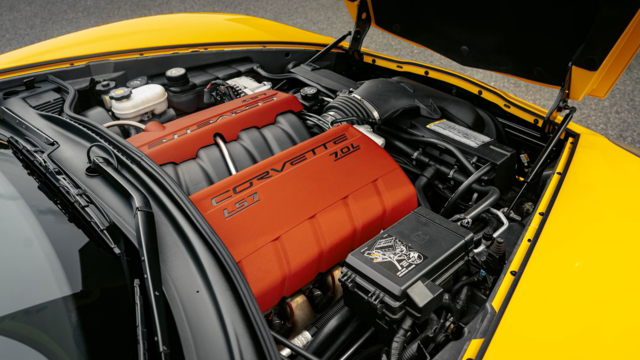
10 Reasons the LS7 Is GM's Most Extreme Naturally Aspirated V8 Engine Ever
Verdad Gallardo
383 is a good balance of quick reving and more torque. A 350 will rev more easily and a 396 should be able to make more torque, but the 383 balances these properties pretty well hence their popularity.

From what I see at the local track f-bodies have enough problems trying to hook without specifically looking for torque. When I was only putting about 260rwhp down I could take most LS1 cars past the 1/8th after which they usually passed me. This even happened with me on street tires and them running Nittos.

Joined: Nov 2001
Posts: 10,023
Likes: 6
From: LT1 land...the "409" of the 90s!
they sell kits in Many forms If you get a new crank go ahead and get a 3.500 in stroke. Puts most pistons closer to the deck so you do not have to cut it as much You only get a few extra inch's but I like having all the deck I can get
If you were looking for a 383 kit we have one laying here and a 4 bolt Splayed main block, she is a virgin bore and deck  .
.
If you get a new crank go ahead and get a 3.500 in stroke. Puts most pistons closer to the deck so you do not have to cut it as much You only get a few extra inch's but I like having all the deck I can get If you were looking for a 383 kit we have one laying here
and a 4 bolt Splayed main block, she is a virgin bore and deck . 


