












Anyone NOT running vent lines from back of head?

Function of steam vent lines
Now I've just searched for 40 minutes. Looked all over Darts site, looked all over a few boards (search is broken on here), and DART does Not make an LTx head casting. So if your engine is an LT1 (assuming it is) then I guess they were some how converted over to LTX heads if that's even possible?
Steam Vents:
The LT1 has strategically placed steam vents at the back of both cylinder heads. Since the heads are the hottest part of the engine, pockets of steam can be more easily generated there. The steam vents are connected together by a crossover vent tube at the back of the heads, which directs any steam and a small flow of coolant to the front of the engine where it flows through the throttle body, warming it for improved cold weather performance. After passing through the throttle body, most of the steam is condensed back into liquid coolant and returned to the system.
In LT1 B/D-cars, coolant exiting the throttle body is passed directly into a pressurized coolant reservoir where any air remaining in the coolant is completely scavenged. In LT1 F-cars, coolant from the throttle body connects to the heater outlet via a vented "tee" connector, where any trapped air in the system can be bled off manually. Eliminating steam pockets and foam in the coolant allows for more uniform cooling system performance, preventing hot spots and potential overheating.
The LT1 has strategically placed steam vents at the back of both cylinder heads. Since the heads are the hottest part of the engine, pockets of steam can be more easily generated there. The steam vents are connected together by a crossover vent tube at the back of the heads, which directs any steam and a small flow of coolant to the front of the engine where it flows through the throttle body, warming it for improved cold weather performance. After passing through the throttle body, most of the steam is condensed back into liquid coolant and returned to the system.
In LT1 B/D-cars, coolant exiting the throttle body is passed directly into a pressurized coolant reservoir where any air remaining in the coolant is completely scavenged. In LT1 F-cars, coolant from the throttle body connects to the heater outlet via a vented "tee" connector, where any trapped air in the system can be bled off manually. Eliminating steam pockets and foam in the coolant allows for more uniform cooling system performance, preventing hot spots and potential overheating.
Originally Posted by 96lt1m6
i looked at Tony Sheppards pics of his converted AFR's and they had the x-over tubes in them!maybe you should pm him or maybe he will chime in

Staging Lane
Joined: Jul 2006
Posts: 93
Likes: 0
[QUOTE]
Steam Vents:
The LT1 has strategically placed steam vents at the back of both cylinder heads. Since the heads are the hottest part of the engine, pockets of steam can be more easily generated there. The steam vents are connected together by a crossover vent tube at the back of the heads, which directs any steam and a small flow of coolant to the front of the engine where it flows through the throttle body, warming it for improved cold weather performance. After passing through the throttle body, most of the steam is condensed back into liquid coolant and returned to the system.
In LT1 B/D-cars, coolant exiting the throttle body is passed directly into a pressurized coolant reservoir where any air remaining in the coolant is completely scavenged. In LT1 F-cars, coolant from the throttle body connects to the heater outlet via a vented "tee" connector, where any trapped air in the system can be bled off manually. Eliminating steam pockets and foam in the coolant allows for more uniform cooling system performance, preventing hot spots and potential overheating.
[UNQUOTE]
Alas, I don't have an F, B, or D- body, just an LT1 motor and tranny out of a B-body '95 Caprice, but I have been wondering about these "steam pipes" for a while myself. From reading about the popular "throttle body bypass", it appears that the bypass consists of routing the steam pipe directly into a hose that goes into the coolant reservoir. Now, all coolant reservoirs that I'm aware of are vented to the atmosphere, and it would seem that this bypass would vent the pressurized coolant system and make the radiator pressure cap completely irrelevant.
However, the above discussion suggests that the outlet of the throttle body steam coolant goes into either a pressurized reservoir or a "vented Tee fitting", both of which might preserve the coolant system pressure depending on how they worked.
So I'm still confused. When you did your throttle body bypass, is there any fixture between the steam pipe and the coolant reservoir? What's it like and where do all of its connections attach to?
Wondering -- Gary
Sorry I can't figure out how to do the quoting thing correctly...
Steam Vents:
The LT1 has strategically placed steam vents at the back of both cylinder heads. Since the heads are the hottest part of the engine, pockets of steam can be more easily generated there. The steam vents are connected together by a crossover vent tube at the back of the heads, which directs any steam and a small flow of coolant to the front of the engine where it flows through the throttle body, warming it for improved cold weather performance. After passing through the throttle body, most of the steam is condensed back into liquid coolant and returned to the system.
In LT1 B/D-cars, coolant exiting the throttle body is passed directly into a pressurized coolant reservoir where any air remaining in the coolant is completely scavenged. In LT1 F-cars, coolant from the throttle body connects to the heater outlet via a vented "tee" connector, where any trapped air in the system can be bled off manually. Eliminating steam pockets and foam in the coolant allows for more uniform cooling system performance, preventing hot spots and potential overheating.
[UNQUOTE]
Alas, I don't have an F, B, or D- body, just an LT1 motor and tranny out of a B-body '95 Caprice, but I have been wondering about these "steam pipes" for a while myself. From reading about the popular "throttle body bypass", it appears that the bypass consists of routing the steam pipe directly into a hose that goes into the coolant reservoir. Now, all coolant reservoirs that I'm aware of are vented to the atmosphere, and it would seem that this bypass would vent the pressurized coolant system and make the radiator pressure cap completely irrelevant.
However, the above discussion suggests that the outlet of the throttle body steam coolant goes into either a pressurized reservoir or a "vented Tee fitting", both of which might preserve the coolant system pressure depending on how they worked.
So I'm still confused. When you did your throttle body bypass, is there any fixture between the steam pipe and the coolant reservoir? What's it like and where do all of its connections attach to?
Wondering -- Gary
Sorry I can't figure out how to do the quoting thing correctly...
Last edited by Z48LT-1; Sep 14, 2006 at 08:49 AM. Reason: separate my addition from quoted material
LS1 Tech Stories
The Best V8 Stories One Small Block at Time

Gas Monkey Built a 6-Wheel Ferrari Testarossa With a Corvette LT4 Engine
Verdad Gallardo
7 Most Reliable High-Performance Engines GM Has Ever Built
Verdad Gallardo
Amazing '71 Camaro Restomod Is Modern Muscle Car Under the Skin
Verdad Gallardo
6 Common C5 Corvette Failures and What's Involved In Repairing Them
Pouria Savadkouei
Retro Modern Bandit Pontiac Trans AM Comes With Burt Reynolds' Autograph
Verdad Gallardo
Top 10 Greatest Cadillac V Series Performance Models Ever, Ranked
Pouria Savadkouei
Top 10 Most Powerful Chevy Trucks Ever Made!

Hennessey's New Supercharged Silverado ZR2 Has 700 HP
Verdad Gallardo
Coachbuilt N2A Anteros Is an LS2-Powered C6 Corvette In Italian Clothes
Verdad Gallardo
Staging Lane
Joined: Jul 2006
Posts: 61
Likes: 0
From: Cleveland, OH
My son had a '99 GrandAm in which the reservoir wasn't vented to the atmosphere. It didn't even have a cap on the radiator. The reservoir was located on top of the pass. side fender well, and that was how you filled the system.
Here's a pic of the F-body coolant lines, compliments of shoebox.
http://shbox.com/1/95-97_hoses.jpg
Here's a pic of the F-body coolant lines, compliments of shoebox.
http://shbox.com/1/95-97_hoses.jpg


They arent vent lines, They are coolant lines. Coolant flows out of them into the top of the radiator( or thru the throttle body and then into the top of the radiator if you havent done the bypass). If you didnt have them then the passages that flow from the block into the heads would be restricted which im pretty sure would cause major problems.
Originally Posted by red95ssclone
They arent vent lines, They are coolant lines. Coolant flows out of them into the top of the radiator( or thru the throttle body and then into the top of the radiator if you havent done the bypass). If you didnt have them then the passages that flow from the block into the heads would be restricted which im pretty sure would cause major problems.
Coolant does flow through them but they are for venting. IE: "foam tube"

There are at least a few models out there with pressurized coolant tanks like the Caprice has. as someone already said about a Grand Am there is no cap on the radiator and that pressure cap is on this bottle a circulating part of the system.
Originally Posted by Tony Shepherd
Coolant does flow through them but they are for venting. IE: "foam tube"
Their intent is to vent foam and steam that might otherwise accumulate at that high point, BUT to do that they need to flow somewhere coolant seeking to equalize pressure differential takes that path of least resistance too. Think of it like this, how much would it be able to "vent" if you just put a plugged pipe there? It wouldn't, it would just be another high point for that stuff to accumulate.
I find it rediculous how much people stress over this thing. What is your problem with it? (general question not one person a lot of folks seem to want to delete it) The fact some old carbed POS didn't need it so it must be useless? Hell there are folks out there plumbing this -AN to increase flow and one guy even reports more even exhaust temps from doing so.
Heads are subject to a massive amount of heat in a very short period of time when we step in the throttle, the thin stock castings allow a lot of that heat to get to the cooling system and I can assure you there is localized boiling going on as a result, the high mount "vent" line lets that steam escape the head without having to try to drive it down through the block which would not happen well given steam is lighter than liquid water.
Far as the comments on the amount of heat that gets into the cooling system that is a necessary evil but reality is any heat that escapes without being used to expand combustion gasses and push the piston is waste, in a perfect world engines would not have cooling systems but reality is that without one they do not last long. The other "problem" is that when components get too hot the A/F mixture can ignite before the spark, ideally you could stop the components like heads from absorbing the heat to stop that detonation but we can't so we cool them instead. Last I checked the best efficiency number an internal combustion engine achieved was like 37-8%, meaning over 60% of the energy released is pumped out the exhaust or radiator.
I find it rediculous how much people stress over this thing. What is your problem with it? (general question not one person a lot of folks seem to want to delete it) The fact some old carbed POS didn't need it so it must be useless? Hell there are folks out there plumbing this -AN to increase flow and one guy even reports more even exhaust temps from doing so.
Heads are subject to a massive amount of heat in a very short period of time when we step in the throttle, the thin stock castings allow a lot of that heat to get to the cooling system and I can assure you there is localized boiling going on as a result, the high mount "vent" line lets that steam escape the head without having to try to drive it down through the block which would not happen well given steam is lighter than liquid water.
Far as the comments on the amount of heat that gets into the cooling system that is a necessary evil but reality is any heat that escapes without being used to expand combustion gasses and push the piston is waste, in a perfect world engines would not have cooling systems but reality is that without one they do not last long. The other "problem" is that when components get too hot the A/F mixture can ignite before the spark, ideally you could stop the components like heads from absorbing the heat to stop that detonation but we can't so we cool them instead. Last I checked the best efficiency number an internal combustion engine achieved was like 37-8%, meaning over 60% of the energy released is pumped out the exhaust or radiator.
Staging Lane
Joined: Jul 2006
Posts: 93
Likes: 0
After some research, and just to correct my earlier misinformation, as 96capricemgr mentioned, the overflow tank on these engines is, in fact, pressurized, so my ignorant comment about "all coolant reservoirs vented to the atmosphere" was completely wrong. I've no idea about how much flow goes through the "steam pipe" but I'm definitely going to plumb it through my coolant reservoir (scored a 'vette unit off of ebay -- much smaller than the caprice model) with the radiator cap on the inlet). I'm now thinking that the overflow tank/coolant reservoir is a lot more involved in the cooling system than in the "bad old days"...
Don't fix it if it ain't broke.
Cheers -- Gary
Don't fix it if it ain't broke.
Cheers -- Gary

TECH Enthusiast
Joined: Nov 2005
Posts: 520
Likes: 0
Originally Posted by Z48LT-1
After some research, and just to correct my earlier misinformation, as 96capricemgr mentioned, the overflow tank on these engines is, in fact, pressurized, so my ignorant comment about "all coolant reservoirs vented to the atmosphere" was completely wrong. I've no idea about how much flow goes through the "steam pipe" but I'm definitely going to plumb it through my coolant reservoir (scored a 'vette unit off of ebay -- much smaller than the caprice model) with the radiator cap on the inlet). I'm now thinking that the overflow tank/coolant reservoir is a lot more involved in the cooling system than in the "bad old days"...
Don't fix it if it ain't broke.
Cheers -- Gary
Don't fix it if it ain't broke.
Cheers -- Gary
Gary,
On the LT1 corvette cooling system. there's an radiator surge tank (pressurized vessel with the radiator cap
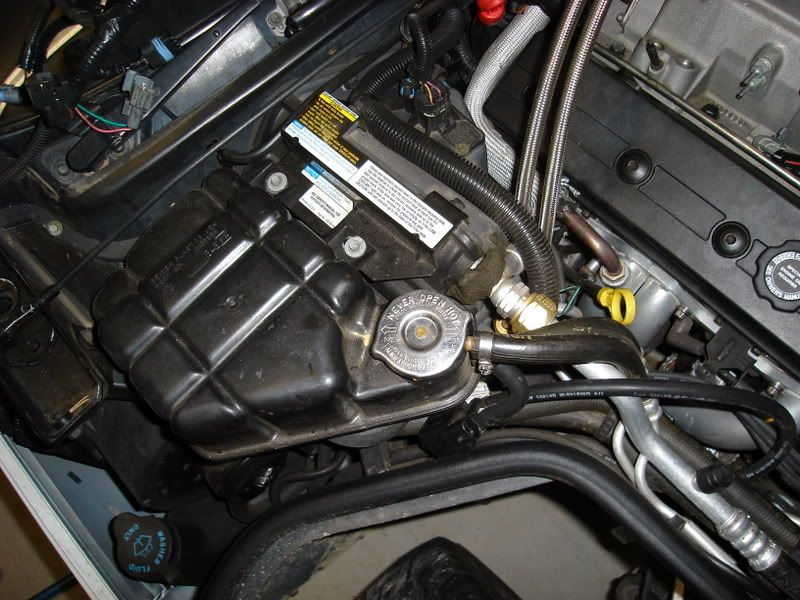 , and a coolant recovery reservoir, IE the overflow tank so you'll still need an overflow tank
 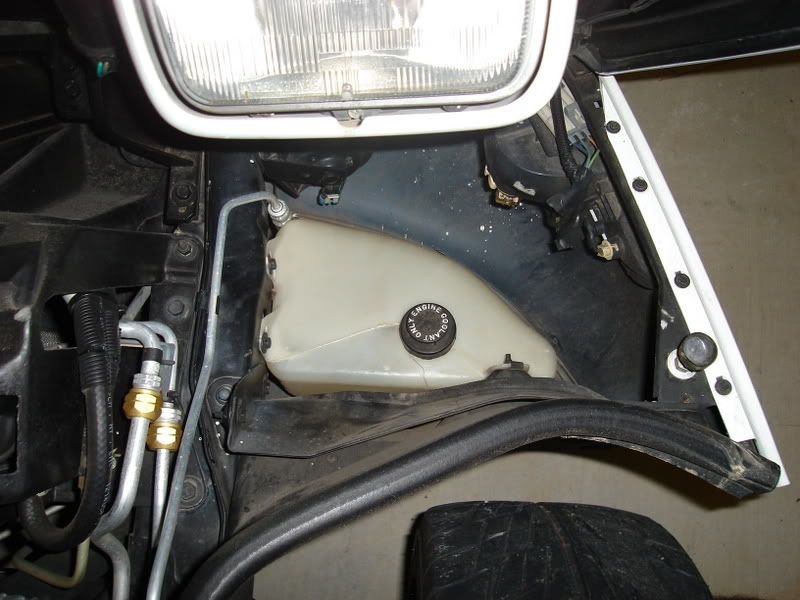 .
.As for removing the (air bleed pipe) I left mine since I figured GM would have left them off if they were unnecessary.
Mike
Last edited by aboatguy; Nov 22, 2006 at 07:06 PM.

I am running braided lines from the back of my heads, and I thought about routing that line to my aftermarket coolant recovery tank?? Could I do that??
I would like to bypass the spot on the radiator b/c I plan on getting a Rad without the Provision.
I would like to bypass the spot on the radiator b/c I plan on getting a Rad without the Provision.

The steam vent lines need to go back into the pressurized part of the cooling system. On a 94 camaro, it does that via a t fitting back into the radiator, whether or not you've bypassed the circuit that runs through the throttle body.
As for the origanal poster: If your engine builder feels they are unneeded, I'm certain they will have no problem providing you with a WRITTEN warranty stating that they are responsible for ALL parts and labor costs, as well as loss of use of transportation, should your vehicle ever develop any cooling problems.
Yeah, right. The motor NEEDS the venting from the heads, AND it contributes to more even cooling of the rear cylinders to have the vents at the rear. If your builder feels otherwise, I personally would either require them to PROPERLY convert the heads for reverse flow use, with the steam passages and venting, or REQUIRE a written warranty for any and all cooling problems or detonation problems.
Or course, I wouldn't have used heads not designed for use with an LT1 in the first place.
As for the origanal poster: If your engine builder feels they are unneeded, I'm certain they will have no problem providing you with a WRITTEN warranty stating that they are responsible for ALL parts and labor costs, as well as loss of use of transportation, should your vehicle ever develop any cooling problems.
Yeah, right. The motor NEEDS the venting from the heads, AND it contributes to more even cooling of the rear cylinders to have the vents at the rear. If your builder feels otherwise, I personally would either require them to PROPERLY convert the heads for reverse flow use, with the steam passages and venting, or REQUIRE a written warranty for any and all cooling problems or detonation problems.
Or course, I wouldn't have used heads not designed for use with an LT1 in the first place.

TECH Senior Member
iTrader: (3)
Joined: Oct 2006
Posts: 7,564
Likes: 4
From: Decatur, TN (N-W of Athens)
Originally Posted by red95ssclone
Im not sure what you mean by venting. Everytime i have pulled these there is a solid stream of coolant flowing from the heads. If it is a vent then how do they utilize these lines to warm up the throttle body? Im not saying im right, I just would like to know because im trying to find a cooling problem on a new longblock i just installed.
 Not a lot of liquids turn to steam at "room temperature"
  When the motor is hot and running, that's when the steam is made.
The steam, which is partially evaporated liquid, runs into a single line, which on it's way to the throttle body, cools the coolant. The coolant then condenses back into liquid form, but is still pipping hot, which then goes through the throttle body. Thats why we all bypass that crap lol We try so hard to get nice cool air into the engine, but when the intake is being warmed up by 150+F coolant, it kinda screws up all we've done
