




any destroked builds out there

Thread Starter
On The Tree
Joined: Jan 2007
Posts: 152
Likes: 0
From: IL

limited to class rules 72mm turbo
550 lift cam
220cc intake
smaller motor thinks the turbo, cam, and inatke size larger
flow numbers for turbo better on smaller motor if maxing out turbo
need to make 1000 flywheel and run 8.70 at 3400 lbs on bfg 275/60 radials
550 lift cam
220cc intake
smaller motor thinks the turbo, cam, and inatke size larger
flow numbers for turbo better on smaller motor if maxing out turbo
need to make 1000 flywheel and run 8.70 at 3400 lbs on bfg 275/60 radials
better rod ratio. Also, you can turn faster rpms with a shorter stroke. I don't think the idea is practical because the crank, rods, and pistons will have to be custom depending on how detail the build is.

And I get a weight break for running a smaller engine. . . hehe
But this is more for Autocrossing. . .and not dragracing.
Trending Topics
When has this ever been the case? Rod ratios and rpms don't make up for displacement. Period. When was the last time you saw someone DE-stroke for power?
Since I don't know what kind of racing or under what class rules the OP intends to run, I'll try not to speculate on any rules he hasn't yet mentioned. I find it hard to imagine that the engine displacement isn't subject to some form of restriction or penalty, so the OP must be considering a motor smaller than the class rules allow. The only case where a smaller motor might be faster is when it is given a weight break.
But generally speaking, if a motor is to be restricted by turbo size, it's most effective to run a motor as big as you can get away with. The lower the rpm and the lower the boost you can max out the turbo with (think restrictor), the more efficient the motor will be and the more net power it will make. Smaller motors that must run higher rpm and boost to push the same amount of air will be handicapped with higher friction, higher exhaust back-pressure, and higher thermal losses.
Since I don't know what kind of racing or under what class rules the OP intends to run, I'll try not to speculate on any rules he hasn't yet mentioned. I find it hard to imagine that the engine displacement isn't subject to some form of restriction or penalty, so the OP must be considering a motor smaller than the class rules allow. The only case where a smaller motor might be faster is when it is given a weight break.
But generally speaking, if a motor is to be restricted by turbo size, it's most effective to run a motor as big as you can get away with. The lower the rpm and the lower the boost you can max out the turbo with (think restrictor), the more efficient the motor will be and the more net power it will make. Smaller motors that must run higher rpm and boost to push the same amount of air will be handicapped with higher friction, higher exhaust back-pressure, and higher thermal losses.
LS1 Tech Stories
The Best V8 Stories One Small Block at Time

Topdon ONE vs. Artidiag 800 BT2: Which is the Diagnostic Tablet For You?
Pouria Savadkouei
Gas Monkey Built a 6-Wheel Ferrari Testarossa With a Corvette LT4 Engine
Verdad Gallardo
7 Most Reliable High-Performance Engines GM Has Ever Built
Verdad Gallardo
Amazing '71 Camaro Restomod Is Modern Muscle Car Under the Skin
Verdad Gallardo
6 Common C5 Corvette Failures and What's Involved In Repairing Them
Pouria Savadkouei
Retro Modern Bandit Pontiac Trans AM Comes With Burt Reynolds' Autograph
Verdad Gallardo
Top 10 Greatest Cadillac V Series Performance Models Ever, Ranked
Pouria Savadkouei
Top 10 Most Powerful Chevy Trucks Ever Made!

Hennessey's New Supercharged Silverado ZR2 Has 700 HP
Verdad Gallardo
there are hp gains from a shorter stroke due to the pistons/rings not moving up and down in the bore as much,compared to a longer stroke motor..this means that the motor has to be spun higher to make the big numbers..
[QUOTE=drz;10462224]When has this ever been the case? Rod ratios and rpms don't make up for displacement. Period. When was the last time you saw someone DE-stroke for power?
QUOTE]
Well i've never seen this first hand, but if you ever get a chance to look up a engine builder by the name of Henry "Smokey" Yunick you'll find he has built some crazy horse power motors with shorter skrokes and higher rod ratios.
I understand the saying "there's no replacement for displacement", however there are other build formulas for making big hp.
QUOTE]
Well i've never seen this first hand, but if you ever get a chance to look up a engine builder by the name of Henry "Smokey" Yunick you'll find he has built some crazy horse power motors with shorter skrokes and higher rod ratios.
I understand the saying "there's no replacement for displacement", however there are other build formulas for making big hp.

When has this ever been the case? Rod ratios and rpms don't make up for displacement. Period. When was the last time you saw someone DE-stroke for power?
Since I don't know what kind of racing or under what class rules the OP intends to run, I'll try not to speculate on any rules he hasn't yet mentioned. I find it hard to imagine that the engine displacement isn't subject to some form of restriction or penalty, so the OP must be considering a motor smaller than the class rules allow. The only case where a smaller motor might be faster is when it is given a weight break.
But generally speaking, if a motor is to be restricted by turbo size, it's most effective to run a motor as big as you can get away with. The lower the rpm and the lower the boost you can max out the turbo with (think restrictor), the more efficient the motor will be and the more net power it will make. Smaller motors that must run higher rpm and boost to push the same amount of air will be handicapped with higher friction, higher exhaust back-pressure, and higher thermal losses.
Since I don't know what kind of racing or under what class rules the OP intends to run, I'll try not to speculate on any rules he hasn't yet mentioned. I find it hard to imagine that the engine displacement isn't subject to some form of restriction or penalty, so the OP must be considering a motor smaller than the class rules allow. The only case where a smaller motor might be faster is when it is given a weight break.
But generally speaking, if a motor is to be restricted by turbo size, it's most effective to run a motor as big as you can get away with. The lower the rpm and the lower the boost you can max out the turbo with (think restrictor), the more efficient the motor will be and the more net power it will make. Smaller motors that must run higher rpm and boost to push the same amount of air will be handicapped with higher friction, higher exhaust back-pressure, and higher thermal losses.

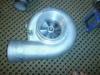
 ive heard about de-stroke but ????
 . Its not always the displacment that wins race's. Its the effiency of the used power, or average power.
If no rules are guiding your choice, you would be best served with the largest engine that is of sound mechanical design.
That being said, I have built class engines that used a shorter than stock stroke and ran very well and if the guy that made the original post wants a smaller engine I say have at it!!
Kurt
That being said, I have built class engines that used a shorter than stock stroke and ran very well and if the guy that made the original post wants a smaller engine I say have at it!!
Kurt

FormerVendor
Joined: Nov 2001
Posts: 3,065
Likes: 6
From: Houston, Tx.

it's not a crazy idea..Sprint Cup motors run somehere around a 3.25 stroke.(tho the bore is huge)
there are hp gains from a shorter stroke due to the pistons/rings not moving up and down in the bore as much,compared to a longer stroke motor..this means that the motor has to be spun higher to make the big numbers..
there are hp gains from a shorter stroke due to the pistons/rings not moving up and down in the bore as much,compared to a longer stroke motor..this means that the motor has to be spun higher to make the big numbers..
I'm sure you'll agree, increasing the stroke to 4" from 3.75 in the 383 would make more power than the original 4"x3.75" configuration (ignoring rod/cam complications). Similarly, a 4" crank swapped in the 377 would also make more power. Conversely, a 3.25" stroke crank would cost both motors power, even though you might be able to spin them to the moon (assuming the valve train is up to the task).
In any racing class where displacement is free or only lightly penalized, the front runners will not be leaving any displacement on the table. In any racing class where short-stroke motors are favored over much bigger motors, it's only because displacement is heavily penalized, usually by vehicle weight or intake restrictors.
FormerVendor
Joined: Nov 2001
Posts: 3,065
Likes: 6
From: Houston, Tx.
Well i've never seen this first hand, but if you ever get a chance to look up a engine builder by the name of Henry "Smokey" Yunick you'll find he has built some crazy horse power motors with shorter skrokes and higher rod ratios.
I understand the saying "there's no replacement for displacement", however there are other build formulas for making big hp.
Smoky also noted to the guy that asked him about destroking for power that they had all cheated by building larger engines than were allowed including Roush and many in NASCAR but no one ever cheated by building a really small motor !!!!!!!! (with super long rods) .........enough said.

TECH Enthusiast
Joined: Aug 2006
Posts: 502
Likes: 1
Katech already answered this for you in the Advanced Engineering forum in a post by someone else looking to build a destroked ls...check there
But, instead of de-stroking a 5.7L or 6.0L....
just buy a 5.3L......since it is just under 330ci
as for the in-depth discussion on rod ratio, etc......
We all are forgetting one small problem to overcome in using this theory to gain high rpm power........
the LS series can't spin that high without puking it's parts all over creation without easily spending well over 100K in research and fabrication to make it there.......
But, instead of de-stroking a 5.7L or 6.0L....
just buy a 5.3L......since it is just under 330ci
as for the in-depth discussion on rod ratio, etc......
We all are forgetting one small problem to overcome in using this theory to gain high rpm power........
the LS series can't spin that high without puking it's parts all over creation without easily spending well over 100K in research and fabrication to make it there.......
Last edited by Dan Stewart; Nov 12, 2008 at 02:55 AM.

I completely agree, I have spoken to Erik YEARS ago about pistons and how they correlate in Indy cars, quite interesting.