





Lifter Shootout which lifter and why? Everyone's opinions welcome
TECH Enthusiast
Joined: Jun 2005
Posts: 546
Likes: 0
From: Wichita, KS

I have read this entire thread and while I admit I cannot yet totally comprehend everything in it, I find myself still wondering what the best lifters are for the money. I have a stock cube LS6 500hp build I'm piecing together now and am looking for a good hydraulic lifter that can hold to occasional blasts to 7500rpm and hopefully help with the "sewing machine" valvetrain noise. I'm leaning towards the Johnson 2110 but would like a link bar set up but I'm not sure I can justify the price increase.
Thoughts and suggestions greatly appreciated.
Thoughts and suggestions greatly appreciated.
I still say the ST2126LSR from Johnson is the way to go as it provides much more accurate valve timing after say 6500 when a hydraulic lifter is having issues with pump up and bleed down at that rate. Going with either a SLR or short-travel takes away some of the inherent "slop" in the hydraulic equation.
If you'd rather just ditch hydraulic all together, grab the Morel UltraPros and something like a Cam Motion LLSR and run a solid roller. At 6500+ with essentially the same profile to a hyd, you'll gain probably 20-30HP at peak and possibly 50-100HP past peak as the solid roller will simply hold on. This drives the peak up higher than the natural frequency we see with the longer runner intake manifolds. In fact, it's not uncommon for a FAST to peak in the 6900 range with a sold roller profile and hold on to 7500. It really does move the curve up about 500 rpm when comparing profiles of similar size.
Further, the equivalent-sized solid roller will drive better as it will produce more vacuum and has much more lobe area to make more power and torque everywhere along the curve.
If you'd rather just ditch hydraulic all together, grab the Morel UltraPros and something like a Cam Motion LLSR and run a solid roller. At 6500+ with essentially the same profile to a hyd, you'll gain probably 20-30HP at peak and possibly 50-100HP past peak as the solid roller will simply hold on. This drives the peak up higher than the natural frequency we see with the longer runner intake manifolds. In fact, it's not uncommon for a FAST to peak in the 6900 range with a sold roller profile and hold on to 7500. It really does move the curve up about 500 rpm when comparing profiles of similar size.
Further, the equivalent-sized solid roller will drive better as it will produce more vacuum and has much more lobe area to make more power and torque everywhere along the curve.
I'm going from stock to the Johnson 2116ST lifters. Having them EDM for dedicated axle oiling for additional 150. The ST has .053 total travel, which is about as close as you can get to solids.
Jake, are you saying 20-30 over a high end set up like that or are you saying 20-30 over the LS7 lifters?
Jake, are you saying 20-30 over a high end set up like that or are you saying 20-30 over the LS7 lifters?

On The Tree
Joined: Jan 2014
Posts: 108
Likes: 1
From: Down under
I think with this comment you already have, just save the extra money and do it right. You won't regret spending more, but you may just regret not spending more if a lifter turns in the tray at 7500RPM.
Best wishes,
Jason.
Best wishes,
Jason.
I have a stock cube LS6 500hp build I'm piecing together now and am looking for a good hydraulic lifter that can hold to occasional blasts to 7500rpm and hopefully help with the "sewing machine" valvetrain noise. I'm leaning towards the Johnson 2110 but would like a link bar set up but I'm not sure I can justify the price increase.
Thoughts and suggestions greatly appreciated.
Thoughts and suggestions greatly appreciated.
I'm going from stock to the Johnson 2116ST lifters. Having them EDM for dedicated axle oiling for additional 150. The ST has .053 total travel, which is about as close as you can get to solids.
Jake, are you saying 20-30 over a high end set up like that or are you saying 20-30 over the LS7 lifters?
Jake, are you saying 20-30 over a high end set up like that or are you saying 20-30 over the LS7 lifters?
You have to measure pushrod length to get preload right. I ended up with 7.572" for an avg of about .034-.038" preload.
And 3/8" fit cathedral port stock heads...
However, 11/32" will clear no problem and is enough for hydraulic applications. I'd only step up to 3/8" if you're running heavy rockers or a solid roller.
And 3/8" fit cathedral port stock heads...
However, 11/32" will clear no problem and is enough for hydraulic applications. I'd only step up to 3/8" if you're running heavy rockers or a solid roller.
LS1 Tech Stories
The Best V8 Stories One Small Block at Time

Top 10 Greatest Cadillac V Series Performance Models Ever, Ranked
Pouria Savadkouei
Top 10 Most Powerful Chevy Trucks Ever Made!

Hennessey's New Supercharged Silverado ZR2 Has 700 HP
Verdad Gallardo
Coachbuilt N2A Anteros Is an LS2-Powered C6 Corvette In Italian Clothes
Verdad Gallardo
Awesome K5 Blazer Restomod Comes With C7 Corvette Power
Verdad Gallardo
10 Camaros You Should Never Buy

10 LS Engine Myths That Refuse to Die
Verdad Gallardo
Five Reasons the Camaro Was the Most Pivotal Player in the Pony Car Wars 2.0
Brett Foote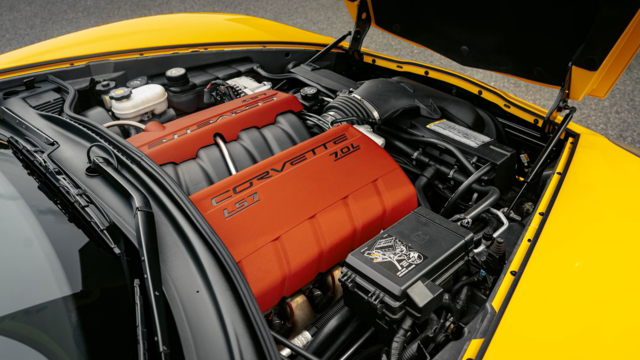
10 Reasons the LS7 Is GM's Most Extreme Naturally Aspirated V8 Engine Ever
Verdad Gallardo
I still say the ST2126LSR from Johnson is the way to go as it provides much more accurate valve timing after say 6500 when a hydraulic lifter is having issues with pump up and bleed down at that rate. Going with either a SLR or short-travel takes away some of the inherent "slop" in the hydraulic equation.
If you'd rather just ditch hydraulic all together, grab the Morel UltraPros and something like a Cam Motion LLSR and run a solid roller. At 6500+ with essentially the same profile to a hyd, you'll gain probably 20-30HP at peak and possibly 50-100HP past peak as the solid roller will simply hold on. This drives the peak up higher than the natural frequency we see with the longer runner intake manifolds. In fact, it's not uncommon for a FAST to peak in the 6900 range with a sold roller profile and hold on to 7500. It really does move the curve up about 500 rpm when comparing profiles of similar size.
Further, the equivalent-sized solid roller will drive better as it will produce more vacuum and has much more lobe area to make more power and torque everywhere along the curve.
If you'd rather just ditch hydraulic all together, grab the Morel UltraPros and something like a Cam Motion LLSR and run a solid roller. At 6500+ with essentially the same profile to a hyd, you'll gain probably 20-30HP at peak and possibly 50-100HP past peak as the solid roller will simply hold on. This drives the peak up higher than the natural frequency we see with the longer runner intake manifolds. In fact, it's not uncommon for a FAST to peak in the 6900 range with a sold roller profile and hold on to 7500. It really does move the curve up about 500 rpm when comparing profiles of similar size.
Further, the equivalent-sized solid roller will drive better as it will produce more vacuum and has much more lobe area to make more power and torque everywhere along the curve.
As for switching over to a solid lifter, I haven't given it much thought because it is mainly street driven and don't really want to have to adjust the rockers all the time. Is the extra hp over the entire curve really worth the extra work/ upkeep?


What's the difference between the ST2126LSR & ST2116LSR? CamMotion's site says the 2126 has axle oiling, but the bullet points both reference 'precision oiling'. If that is the only difference, what are the benefits of axle oiling?
http://store.cammotion.com/johnson-s...raulic-lifters
http://store.cammotion.com/johnson-s...raulic-lifters
http://store.cammotion.com/johnson-s...raulic-lifters
http://store.cammotion.com/johnson-s...raulic-lifters
What's the difference between the ST2126LSR & ST2116LSR? CamMotion's site says the 2126 has axle oiling, but the bullet points both reference 'precision oiling'. If that is the only difference, what are the benefits of axle oiling? http://store.cammotion.com/johnson-s...raulic-lifters http://store.cammotion.com/johnson-s...raulic-lifters
LS1Tech Sponsor


Joined: Sep 2004
Posts: 819
Likes: 561
What's the difference between the ST2126LSR & ST2116LSR? CamMotion's site says the 2126 has axle oiling, but the bullet points both reference 'precision oiling'. If that is the only difference, what are the benefits of axle oiling?
http://store.cammotion.com/johnson-s...raulic-lifters
http://store.cammotion.com/johnson-s...raulic-lifters
http://store.cammotion.com/johnson-s...raulic-lifters
http://store.cammotion.com/johnson-s...raulic-lifters
There is more.....the less expensive 2116 linked above doesn't have the axle oiling feature. And its a "limited travel" lifter that has more travel than the more expensive short travel (.093 vs .058). Both are high quality.....short travels require more precise pushrod lengths and I normally recommend my clients check every cylinder with the short travel. FWIW, stock lifters can have plunger travel approaching .200, so .093 is alot less even in the limited travel option.
Axle oiling refers to the wheel actually getting pressurized oil to it from the lifter galley as opposed to having to rely on "splash oiling" from the crank which can be very little at idle and low RPM. It adds big time to the reliability factor.
PM me for more info, pricing, etc., and I can help guide you into which unit might be best for your application etc. assuming your in the market for lifters at the moment. The right lifter is worth serious power in an engine with more spring pressure, cam ramp intensity, and RPM and is often overlooked in budget and non budget builds for that matter.
-Tony
__________________

www.mamomotorsports.com
Tony@MamoMotorsports.com
Anything worth doing is worth doing well. Build it right the first time....its alot cheaper than building it twice!!
www.mamomotorsports.com
Tony@MamoMotorsports.com
Anything worth doing is worth doing well. Build it right the first time....its alot cheaper than building it twice!!

Please explain.
I think you may be confusing harmonics (natural frequencies) and stiffness, while one is a function of the other they do not equate. Oh, and I didn't do a test it was an analysis, which for a single diameter is closed form. Closed form was used to confirm the single diameter results and provide a confidence level in the analysis methods being used in my little study. There are also two stiffness values of concern, axial and bending. However, if you can maximize the bending bending then axial shouldn't be a concern for a pushrod (although there are extreme cases that could be hypothesized where this might not hold true).
Note also that you can get a single taper pushrod, largest OD on the bottom and tapering to the top. I didn't examine this case in my personal study.
Not sure if you read my post on this study, if not I can provide a link.
I think you may be confusing harmonics (natural frequencies) and stiffness, while one is a function of the other they do not equate. Oh, and I didn't do a test it was an analysis, which for a single diameter is closed form. Closed form was used to confirm the single diameter results and provide a confidence level in the analysis methods being used in my little study. There are also two stiffness values of concern, axial and bending. However, if you can maximize the bending bending then axial shouldn't be a concern for a pushrod (although there are extreme cases that could be hypothesized where this might not hold true).
Note also that you can get a single taper pushrod, largest OD on the bottom and tapering to the top. I didn't examine this case in my personal study.
Not sure if you read my post on this study, if not I can provide a link.

Thread Starter
TECH Veteran
iTrader: (14)
Joined: Mar 2009
Posts: 4,444
Likes: 9
From: Pompano Beach FL
I had inquired about the comp r lifters....They are VERY sensitive to preload most people I saw were running .007-.010 of preload to get the best results. if not they would be noisy, for the average guy thats just too close to achieve a good preload window. however i never heard any complaints about what they can handle or the quality

I had inquired about the comp r lifters....They are VERY sensitive to preload most people I saw were running .007-.010 of preload to get the best results. if not they would be noisy, for the average guy thats just too close to achieve a good preload window. however i never heard any complaints about what they can handle or the quality
Comp XER281 Cam
Comp R lifters .002-.004 preload
Comp 7-16 pushrods w/ guide plates
Comp Pro Magnum 1.75 Chromoly full roller rockers
Patriot Dual Gold Extreme Valve Springs w/ titanium retainers
and the Custom made billet aluminum rev kit w/300# Chrome Silicone springs