








This Is For Real...

F1 cars basically are meant to blow into a million pieces yet keep the cockpit safe... I guess they are stupid to...
http://www.world-racing.com/AugustWS2010pr%20.html
Type: 2010 Scion tC
Engine: Descendant 2AZ-FE Factory Scion tC 4 cylinder
Transmission: Weismann Transmissions + Lockers
Suspension: Penske Racing Shocks
Rear End: Winter's Quik-Change
Brakes: Brembo Race
BHP: 1,400+
TQ: 1,000+
Weight: 2205 lbs. w/ 160lb driver + fluids

Stupid is your inability to wrap your mind about what is being done with a car in a class that has allowed him to garner success.
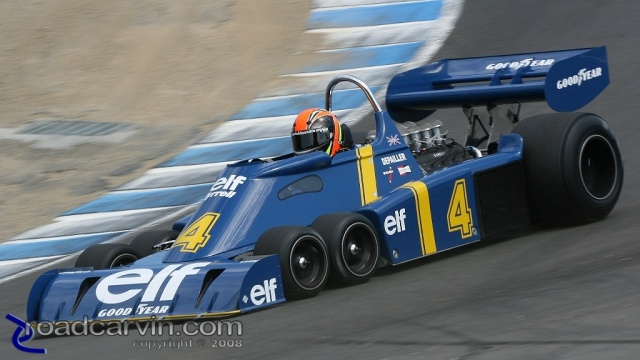
I am sure you thought the 70's in Formula 1 was a gigantic waste of time as well when cars like the Tyrell P-34 were running around the track:

Banned
Joined: Feb 2010
Posts: 53
Likes: 0
From: Joshua Texas
They arent spending that kind of money, and stuck at around 140mph. Those are purpose built race cars, built to be the fastest of the fast in any weather over some insane tracks/ courses. At the speeds they hit, its pretty hard to protect a driver. My point is why do that much with THAT car. I can see a bolt on racing class that shows that their car can be sporty and somewhat cool, but what is the point of trying to run that chassis that hard?
Banned
Joined: Feb 2010
Posts: 53
Likes: 0
From: Joshua Texas
Ask and you shall recieve:
http://www.world-racing.com/AugustWS2010pr%20.html
Type: 2010 Scion tC
Engine: Descendant 2AZ-FE Factory Scion tC 4 cylinder
Transmission: Weismann Transmissions + Lockers
Suspension: Penske Racing Shocks
Rear End: Winter's Quik-Change
Brakes: Brembo Race
BHP: 1,400+
TQ: 1,000+
Weight: 2205 lbs. w/ 160lb driver + fluids
http://www.world-racing.com/AugustWS2010pr%20.html
Type: 2010 Scion tC
Engine: Descendant 2AZ-FE Factory Scion tC 4 cylinder
Transmission: Weismann Transmissions + Lockers
Suspension: Penske Racing Shocks
Rear End: Winter's Quik-Change
Brakes: Brembo Race
BHP: 1,400+
TQ: 1,000+
Weight: 2205 lbs. w/ 160lb driver + fluids
Originally Posted by eHow.com
The two main advantages of a front-wheel drivetrain are fuel efficiency and traction. In a front-wheel drive vehicle, the engine and differential are located in the front end. The engine filters all of its power through the differential into the front wheels, which creates a pulling effect. As Popularmechanics.com notes, this type of vehicle has less weight in the back, and is usually smaller, due to most major parts being located under the hood. This produces a more fuel-efficient vehicle.
Since most of a front-wheel drive vehicle's weight is in the front, it will have better traction in poor weather conditions.
LS1 Tech Stories
The Best V8 Stories One Small Block at Time

6 Common C5 Corvette Failures and What's Involved In Repairing Them
Pouria Savadkouei
Retro Modern Bandit Pontiac Trans AM Comes With Burt Reynolds' Autograph
Verdad Gallardo
Top 10 Greatest Cadillac V Series Performance Models Ever, Ranked
Pouria Savadkouei
Top 10 Most Powerful Chevy Trucks Ever Made!

Hennessey's New Supercharged Silverado ZR2 Has 700 HP
Verdad Gallardo
Coachbuilt N2A Anteros Is an LS2-Powered C6 Corvette In Italian Clothes
Verdad Gallardo
Awesome K5 Blazer Restomod Comes With C7 Corvette Power
Verdad Gallardo
10 Camaros You Should Never Buy

10 LS Engine Myths That Refuse to Die
Verdad Gallardo Banned
Joined: Feb 2010
Posts: 53
Likes: 0
From: Joshua Texas
Traction as an advantage of fwd? That was a long ago debunked myth. Weight transfer more than eliminates the benefit of more of the vehicles weight being over the front wheels, with the exception of being on ice. With the additional downside of loss of steering if the tires are spinning.
Remember, not everyone lives their life a quarter mile at a time. I don't think the article gives the FWD platform the traction advantage when increasing speed, but under poor weather conditions during normal part throttle cruising. You don't have to be accelerating to lose traction, in whch case there is no weight transfer.
Speaking of weight transfer, would the FWD platform have the advantage when braking?


Banned
Joined: Feb 2010
Posts: 53
Likes: 0
From: Joshua Texas
Debunked by who?
Remember, not everyone lives their life a quarter mile at a time. I don't think the article gives the FWD platform the traction advantage when increasing speed, but under poor weather conditions during normal part throttle cruising. You don't have to be accelerating to lose traction, in whch case there is no weight transfer.
Speaking of weight transfer, would the FWD platform have the advantage when braking?
Remember, not everyone lives their life a quarter mile at a time. I don't think the article gives the FWD platform the traction advantage when increasing speed, but under poor weather conditions during normal part throttle cruising. You don't have to be accelerating to lose traction, in whch case there is no weight transfer.
Speaking of weight transfer, would the FWD platform have the advantage when braking?
Drive wheels shouldnt dictate braking performance, the balance of the car, brakes, overall weight, bla bla bla, is what matters. Compression braking may play a small part, but then again, I count on the rear dragging a little into turns. Dont think I would like the compression braking coming from the front. Seems like a good way to slide out braking hard and downshifting coming into a turn.