






Generation V V8: The future of performance
Thread Starter
TECH Regular

Joined: Feb 2008
Posts: 458
Likes: 1
From: Keller, Texas
 Generation V V8: The future of performance
 The introduction of the Gen V is right around the corner and I am extremely excited. Nothing gives me the chills like GM V8 engines.
There is little confirmed information about this upcoming engine. I have been following the development for a while now and here's some info that I have gathered.
Direct Injection is confirmed. GM just announced that they are investing $100m into a New York plant that will produce the exotic fuel system parts. If you are not 100 percent sure what DI is, go look it up on Wikipedia. It's crazy. I can't want to see a nitrous Gen V car.
VVT and ATF will be a common feature across the board. Get ready for those delete kits. That's going to be a very popular modification.
There will be a revolutionized combustion system. There is little information about that technology, so it's anyone's guess what that means.
The 4.8 will be killed. Other than that, there is no hard evidence of displacement options. Rumors are predicting sizes all the way up to 7.4 liters.
OHV configuration is almost the best bet. There are talks of a "revised" camshaft location for better valvetrain geometry.
GM will more than likely ditch the superchargers for turbochargers.
The Gen V will be lighter than the LS-Series.
The ECU will be very complex. Tuning is going to be a bitch.
Little is know about the cylinder heads. I bet thats a very closely guarded secret. I going to guess that those heads are not going to play around.
I'm sure more info will leak out. Stay tuned.
Final note, GM knows how to design and build engines. They are the best in world. Pure domination. You know GM is going hard in the paint when they invest ONE BILLION dollars in a V8 engine. And everyone thought V8s are dead....
There is little confirmed information about this upcoming engine. I have been following the development for a while now and here's some info that I have gathered.
Direct Injection is confirmed. GM just announced that they are investing $100m into a New York plant that will produce the exotic fuel system parts. If you are not 100 percent sure what DI is, go look it up on Wikipedia. It's crazy. I can't want to see a nitrous Gen V car.
VVT and ATF will be a common feature across the board. Get ready for those delete kits. That's going to be a very popular modification.
There will be a revolutionized combustion system. There is little information about that technology, so it's anyone's guess what that means.
The 4.8 will be killed. Other than that, there is no hard evidence of displacement options. Rumors are predicting sizes all the way up to 7.4 liters.
OHV configuration is almost the best bet. There are talks of a "revised" camshaft location for better valvetrain geometry.
GM will more than likely ditch the superchargers for turbochargers.
The Gen V will be lighter than the LS-Series.
The ECU will be very complex. Tuning is going to be a bitch.
Little is know about the cylinder heads. I bet thats a very closely guarded secret. I going to guess that those heads are not going to play around.
I'm sure more info will leak out. Stay tuned.
Final note, GM knows how to design and build engines. They are the best in world. Pure domination. You know GM is going hard in the paint when they invest ONE BILLION dollars in a V8 engine. And everyone thought V8s are dead....
Welcome to the modern world Chevy!!!
Direct Injection... Been used for quite some time... Even Porsche uses it in their new motors... Granted the DI motors are now "jap motors" according to the forum, they are still being used. The original Metzger GT-1 style motor (3.6ltr) was replaced with the DI 3.8ltr...
If they make the ECU's like the Porsche/Lambo/etc.. computers where it relys on widebands (non-narrowband ****), multiple sensors, etc... You will see a HUGE drop in tuners. Look at the Lambo/Porsche/Audi/etc.. market. You see a lot of RESELLERS of tunes but only few ACTUAL tuners. The Bosch computer has about 4000 known maps in it... No more high/low octane tables...
Turbos are going on everything now, no real parasitic loss, easy to control the power, etc...
Still don't know why they would stay with an OHV motor because it's the big thing to go OHC...
As far as spending that kind of money take a look at F1 teams. Trying to find recent numbers but I know the 2003 spending for Ferrari alone was 1/2 billion in R&D. They spent over a 100 million on motors for the season. I know with the allowance of KERS the R&D cost were close to the billion dollar area...
Direct Injection... Been used for quite some time... Even Porsche uses it in their new motors... Granted the DI motors are now "jap motors" according to the forum, they are still being used. The original Metzger GT-1 style motor (3.6ltr) was replaced with the DI 3.8ltr...
If they make the ECU's like the Porsche/Lambo/etc.. computers where it relys on widebands (non-narrowband ****), multiple sensors, etc... You will see a HUGE drop in tuners. Look at the Lambo/Porsche/Audi/etc.. market. You see a lot of RESELLERS of tunes but only few ACTUAL tuners. The Bosch computer has about 4000 known maps in it... No more high/low octane tables...
Turbos are going on everything now, no real parasitic loss, easy to control the power, etc...
Still don't know why they would stay with an OHV motor because it's the big thing to go OHC...
As far as spending that kind of money take a look at F1 teams. Trying to find recent numbers but I know the 2003 spending for Ferrari alone was 1/2 billion in R&D. They spent over a 100 million on motors for the season. I know with the allowance of KERS the R&D cost were close to the billion dollar area...
Thread Starter
TECH Regular
Joined: Feb 2008
Posts: 458
Likes: 1
From: Keller, Texas
Welcome to the modern world Chevy!!!
Direct Injection... Been used for quite some time... Even Porsche uses it in their new motors... Granted the DI motors are now "jap motors" according to the forum, they are still being used. The original Metzger GT-1 style motor (3.6ltr) was replaced with the DI 3.8ltr...
If they make the ECU's like the Porsche/Lambo/etc.. computers where it relys on widebands (non-narrowband ****), multiple sensors, etc... You will see a HUGE drop in tuners. Look at the Lambo/Porsche/Audi/etc.. market. You see a lot of RESELLERS of tunes but only few ACTUAL tuners. The Bosch computer has about 4000 known maps in it... No more high/low octane tables...
Turbos are going on everything now, no real parasitic loss, easy to control the power, etc...
Still don't know why they would stay with an OHV motor because it's the big thing to go OHC...
As far as spending that kind of money take a look at F1 teams. Trying to find recent numbers but I know the 2003 spending for Ferrari alone was 1/2 billion in R&D. They spent over a 100 million on motors for the season. I know with the allowance of KERS the R&D cost were close to the billion dollar area...
Direct Injection... Been used for quite some time... Even Porsche uses it in their new motors... Granted the DI motors are now "jap motors" according to the forum, they are still being used. The original Metzger GT-1 style motor (3.6ltr) was replaced with the DI 3.8ltr...
If they make the ECU's like the Porsche/Lambo/etc.. computers where it relys on widebands (non-narrowband ****), multiple sensors, etc... You will see a HUGE drop in tuners. Look at the Lambo/Porsche/Audi/etc.. market. You see a lot of RESELLERS of tunes but only few ACTUAL tuners. The Bosch computer has about 4000 known maps in it... No more high/low octane tables...
Turbos are going on everything now, no real parasitic loss, easy to control the power, etc...
Still don't know why they would stay with an OHV motor because it's the big thing to go OHC...
As far as spending that kind of money take a look at F1 teams. Trying to find recent numbers but I know the 2003 spending for Ferrari alone was 1/2 billion in R&D. They spent over a 100 million on motors for the season. I know with the allowance of KERS the R&D cost were close to the billion dollar area...
Someone will figure out how to tune that ecu. It's going cost you though.
It's been clear that GM and other manufactures will produce more turbocharged engines.
I can't tell if you are being serious or sarcastic about the OHV vs OHC statement.
There is on way in hell you can compare the F1 engines to production engines.
Trending Topics
Wasn't being sarcastic on the OHV vs OHC. It's just the GM is one of the last companies around not using the OHC technology. Though if they do start using variable valve timing the car will def. have to be an OHC motor. It's just the new "hot" thing to do.
The ECU will be broken into quickly. Remember once you pass the security portions and make sure the Chksums are right the programming will be a breeze. Someone will do it very easily, all it takes is time and money. I just doubt you will see software like LS1Edit, HP Tuners, EFI Live, etc.. being sold so cheap (or if it's even sold). I know the cost to even get the basic stuff to do the Bosch ME computers and the "idiot" way of doing it going to cost you $35k+ and thats just in hardware and software... That's not teaching you how to tune it either. Going this route though will kill a lot of the tuning industry as far as custom tunes go though.
I threw the comparison of F1 into this because they spend money like that for just their "hobby" that helps promote their product. Considering what these companies are worth god knows how many times that it's really not that much to them.
I just found it funny that you mention that V8 is not dead... It has never been thought to be dead... Hell the 458 Ferrari is a V8, all the 360, 430, etc.. have been V8s as well. Even the Porsche uses a V8 in the Cayenne's. Remember the V8 wasn't an American motor to begin with, we didn't see our first one period until 10 years or so after the Brits. Wikipedia FTW...
The ECU will be broken into quickly. Remember once you pass the security portions and make sure the Chksums are right the programming will be a breeze. Someone will do it very easily, all it takes is time and money.
I just doubt you will see software like LS1Edit, HP Tuners, EFI Live, etc.. being sold so cheap (or if it's even sold). I know the cost to even get the basic stuff to do the Bosch ME computers and the "idiot" way of doing it going to cost you $35k+ and thats just in hardware and software... That's not teaching you how to tune it either. Going this route though will kill a lot of the tuning industry as far as custom tunes go though. I threw the comparison of F1 into this because they spend money like that for just their "hobby" that helps promote their product. Considering what these companies are worth god knows how many times that it's really not that much to them.
I just found it funny that you mention that V8 is not dead... It has never been thought to be dead... Hell the 458 Ferrari is a V8, all the 360, 430, etc.. have been V8s as well. Even the Porsche uses a V8 in the Cayenne's. Remember the V8 wasn't an American motor to begin with, we didn't see our first one period until 10 years or so after the Brits. Wikipedia FTW...
LS1 Tech Stories
The Best V8 Stories One Small Block at Time

Topdon ONE vs. Artidiag 800 BT2: Which is the Diagnostic Tablet For You?
Pouria Savadkouei
Gas Monkey Built a 6-Wheel Ferrari Testarossa With a Corvette LT4 Engine
Verdad Gallardo
7 Most Reliable High-Performance Engines GM Has Ever Built
Verdad Gallardo
Amazing '71 Camaro Restomod Is Modern Muscle Car Under the Skin
Verdad Gallardo
6 Common C5 Corvette Failures and What's Involved In Repairing Them
Pouria Savadkouei
Retro Modern Bandit Pontiac Trans AM Comes With Burt Reynolds' Autograph
Verdad Gallardo
Top 10 Greatest Cadillac V Series Performance Models Ever, Ranked
Pouria Savadkouei
Top 10 Most Powerful Chevy Trucks Ever Made!

Hennessey's New Supercharged Silverado ZR2 Has 700 HP
Verdad Gallardo Since my LS1 had been long gone before you and PLENTY of others joined this forum I have a big background in the LSx and Ford 4V world. At the moment we have 2x GM ('09 Z71 and '08 Yukon, I swap back and fourth with my mom and brother; but those are the 2 cars I drive daily), 2x Chrysler ('07 SRT8 and '09 Wrangler), 2x Porsche ('02 and '07 TT's), and my moms '03 Lexus LS430 (probably will end up with a 460 in the next month). So basically we cover most spectrum of the world.
Out of reliability it goes Lexus > Porsche > GM > Chrysler ... The Lexus has just been an AWESOME car as far as comfort, little problems, etc... My brother's car since its relativily stock has been awesome and my car for the first year when it was unmolested was very good (hardly any problems as well). The GM vehicles (This round of them have been fairly good, stupid issues that they've had to go in for, but nothing to major). The Chrysler vehicles... Well I'm not a big fan of them needless to say other than for looks.
I love all makes and models of cars but I just get annoyed when I see people that think one brand is the end all... Remember if it weren't for Ford family member where would GM be
Out of reliability it goes Lexus > Porsche > GM > Chrysler ... The Lexus has just been an AWESOME car as far as comfort, little problems, etc... My brother's car since its relativily stock has been awesome and my car for the first year when it was unmolested was very good (hardly any problems as well). The GM vehicles (This round of them have been fairly good, stupid issues that they've had to go in for, but nothing to major). The Chrysler vehicles... Well I'm not a big fan of them needless to say other than for looks.
I love all makes and models of cars but I just get annoyed when I see people that think one brand is the end all... Remember if it weren't for Ford family member where would GM be
Thread Starter
TECH Regular
Joined: Feb 2008
Posts: 458
Likes: 1
From: Keller, Texas
I think GM realized the greater cost of producing DOHC engines when they developed LT5. The LS6 and LT5 produce near equal power, however I bet the LS6 is far cheaper to produce because of the simpler OHV design.
I have little to no knowledge of modern ECUs and tuning capabilities. I just know thats its going to be difficult challenge.
F1 teams do learn new things and integrate them into production cars. The cost of F1 is ridiculous IMO. It's a huge turn off for me. It's cool that's so competitive, but it's hard to be a fan of something that you can never own.
I was referring to hippies hating on V8s. Idiots... It's sad about the Viper V10 though. That murder is completely related to energy costs.
I have little to no knowledge of modern ECUs and tuning capabilities. I just know thats its going to be difficult challenge.
F1 teams do learn new things and integrate them into production cars. The cost of F1 is ridiculous IMO. It's a huge turn off for me. It's cool that's so competitive, but it's hard to be a fan of something that you can never own.
I was referring to hippies hating on V8s. Idiots... It's sad about the Viper V10 though. That murder is completely related to energy costs.
Since my LS1 had been long gone before you and PLENTY of others joined this forum I have a big background in the LSx and Ford 4V world. At the moment we have 2x GM ('09 Z71 and '08 Yukon, I swap back and fourth with my mom and brother; but those are the 2 cars I drive daily), 2x Chrysler ('07 SRT8 and '09 Wrangler), 2x Porsche ('02 and '07 TT's), and my moms '03 Lexus LS430 (probably will end up with a 460 in the next month). So basically we cover most spectrum of the world.
Out of reliability it goes Lexus > Porsche > GM > Chrysler ... The Lexus has just been an AWESOME car as far as comfort, little problems, etc... My brother's car since its relativily stock has been awesome and my car for the first year when it was unmolested was very good (hardly any problems as well). The GM vehicles (This round of them have been fairly good, stupid issues that they've had to go in for, but nothing to major). The Chrysler vehicles... Well I'm not a big fan of them needless to say other than for looks.
I love all makes and models of cars but I just get annoyed when I see people that think one brand is the end all... Remember if it weren't for Ford family member where would GM be
Out of reliability it goes Lexus > Porsche > GM > Chrysler ... The Lexus has just been an AWESOME car as far as comfort, little problems, etc... My brother's car since its relativily stock has been awesome and my car for the first year when it was unmolested was very good (hardly any problems as well). The GM vehicles (This round of them have been fairly good, stupid issues that they've had to go in for, but nothing to major). The Chrysler vehicles... Well I'm not a big fan of them needless to say other than for looks.
I love all makes and models of cars but I just get annoyed when I see people that think one brand is the end all... Remember if it weren't for Ford family member where would GM be


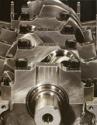


The V-type OHV engine still has its pros over the V-type OHC engines. One major advantage is the smaller packaging, which leads to smaller vehicle cross sections, which leads to less drag coefficents, which leads to better fuel mileage and top speed...etc.
Thread Starter
TECH Regular
Joined: Feb 2008
Posts: 458
Likes: 1
From: Keller, Texas
I'm not going to argue with you about Porsche. It's a great brand. However, I don't like '07ish and up Toyota products at all. Toyota's reputation has gone down will considerably since '08. However, Toyota, and even more Lexus, made stealer cars in 90s and early 2000s. I wouldn't buy a new Japanese luxury car. I'd choose a German brand over any Japanese brand if that was my thing. Chrysler sucks. I'm not going to waste my time.
My motto is if you don't buy GM, then buy a Ford. I like to think that GM and Ford are brothers that hate each other.
My motto is if you don't buy GM, then buy a Ford. I like to think that GM and Ford are brothers that hate each other.
Last edited by texas94z; Apr 13, 2011 at 04:42 PM.



I'm glad to see this news. I wonder if it's going to have any relation to gen3/4 engines? But if The cam location is revised prolly nothing will interchange with current ls engines



Registered User
Joined: Apr 2011
Posts: 0
Likes: 0
(1) Pushrod OHV = More Power + Less Weight + Smaller Engine Compartments. An OHV engine is smaller and lighter because its heads are so much smaller than the wide and fat DOHC heads. Eg. A GM LS3 6.2 liter V8 -- despite its larger displacement -- is more powerful, more compact and lighter than a BMW S65 4.0 liter V8. How much more powerful? 430 hp / 424 lb-ft for the LS3 vs 414 hp / 295 lb-ft for the S65. How much lighter? 183 kg for the LS3 vs 202 kg for the S65. Hence, if you want the most power in the smallest, lightest package, the Pushrod OHV design is superior. And, had the M3 gotten Smallblock Pushrod power it'll be a faster car.
(2) Pushrod OHV = Better Fuel Economy. A Pushrod V8, 1/4 has many camshafts, 1/4 as many cam sprockets and bearings and 1/2 as many valves. Hence, a Pushrod engine tends to have lower frictional loses. Aspiration losses is about the same at cruise simply because no matter how well an engine breathes (and DOHC motors do breathe better), at cruise the engine is being choked by the throttle body. This restricts airflow to the minimum amount needed to burn a given amount of fuel to produce just enough power to maintain speed. All of this is compounded by the fact that lower torque DOHC motors of smaller displacements tend to need to operate at higher rpms at cruise -- which further increases frictional losses. Eg. Despite a nearly 4,000 lbs weight and blocky areodyamics, a Camaro SS gets an EPA rating of 16 mpg (city) / 25 mpg (hwy) with a 6.2 liter 400 hp motor, whereas a BMW M3 gets 14 mpg (city) / 20 mpg (hwy) from its 4.0 liter 414 hp engine and a C63 AMG gets 12 mpg (city) / 19 mpg (hwy) with its 451 hp 6.3 liter M156 DOHC V8. This is despite both Germans having 7-speed transmissions to the Camaro's ubiquitous 6-speed 6L80.
(3) Pushrods can incorporate VVT or even Independent VVT. You can put a cam phaser on the in-block cam just as easily as you can on a SOHC motor. You are looking for independent Intake and Exhaust phasing, you can still do it on an in block cam pushrod engine -- you'll simply use a concentric cam-in-cam setup. In fact, this has already been used in the Dodge Viper 8.4 liter V10.
(4) Pushrod OHV = Lower Cost. Less parts, less complications, lower costs. Not much to explain here.
So... What's not to like? Well...
(1) Pushrod engines need to be of a larger displacement to produce the same power. Even if it may be lighter and smaller, this presents a problem in markets where misguided politicians have put in place a displacement tax. Regardless of mpg or performance, larger displacement means a higher tax on the car.
(2) Pushrod engines, because of their larger displacement also have bigger and heavier reciprocating assemblies -- pistons, rods, etc. This in turn equates to higher levels of vibrations and reduced levels of perceived refinement (especially) at higher rpms.
(3) Pushrod engines are being slandered and bad mouthed into something undesirable by people who do not really understand or care about the technical and scientific reality. So, they often carry with them a marketing and perception challenge.

Gm already has variable valve timing on their v8 engines... And gm does have dual overhead cam engines... Just no v8's. The problem with dohc engines is really simple in relation to pushrod motors... More moving parts on an ohc engine, more **** to **** up.