





500whp 5.3 N/A possible?
Thread Starter
Joined: Apr 2017
Posts: 305
Likes: 11
From: Washington NC
 500whp 5.3 N/A possible?
 Before I put together my turbo setup for the focus I am going to try and see how much power I can make out of a 5.3 N/A without going "too radical" on it.
I know there are 5.7's and 6.0's making it but its just airflow. So with enough rpms it should be possible.
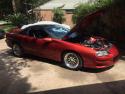
Currently my car makes 386whp at 7200rpms .
https://ls1tech.com/forums/dynamomet...ottom-end.html
Right now I am still in the planning stages so any input would be nice.
345ft lbs carried out to 7600rpms would get me there.
Right now my tq is 280 at 7200.
obviously I need better flowing heads and more compression.
Thoughts?
I know there are 5.7's and 6.0's making it but its just airflow. So with enough rpms it should be possible.
Currently my car makes 386whp at 7200rpms .
https://ls1tech.com/forums/dynamomet...ottom-end.html
Right now I am still in the planning stages so any input would be nice.
345ft lbs carried out to 7600rpms would get me there.
Right now my tq is 280 at 7200.
obviously I need better flowing heads and more compression.
Thoughts?
EAP Report = 580 Bench Hi Speed1, your cam spec 229/242 .631"/.631" 114 C/L WITH 12:1 C.R. and Race Fuel = 580 HP @ 7600 RPM (bench)
That engine Torque would be 420 (bench)
The Rolling Road = 18%-22% loss with your AT.
Thus a MUCH larger Camshaft + Vacuum Pump for crankcase pressure reduction, possibly ???
Lance
That engine Torque would be 420 (bench)
The Rolling Road = 18%-22% loss with your AT.
Thus a MUCH larger Camshaft + Vacuum Pump for crankcase pressure reduction, possibly ???
Lance
Thread Starter
Joined: Apr 2017
Posts: 305
Likes: 11
From: Washington NC
I bought another set of 5.3 heads. I am going to send the to katech to be cnc'ed.
I know the 5.3 heads dont flow as well as other option but I am thinking the smaller combustion chambers as well as the smaller intake valve with my little bore might be beneficial.
I need to try and keep the valvetrain as light as possible.
I know the 5.3 heads dont flow as well as other option but I am thinking the smaller combustion chambers as well as the smaller intake valve with my little bore might be beneficial.
I need to try and keep the valvetrain as light as possible.
Trending Topics
Thread Starter
Joined: Apr 2017
Posts: 305
Likes: 11
From: Washington NC
Also Im pretty sure that at really high rpms a sheet metal intake would make a little more than the fast.
If you look at the dyno charts on this test
http://www.hotrod.com/articles/20-ls...ifolds-tested/
the fast is falling off at 7000rpms and the sheet metal one is still climbing.
Im pretty sure the fast is the best all around intake but for peak numbers i would think a short runner intake will be better.
Last edited by topspeed1; Oct 19, 2017 at 09:56 AM.
LS1 Tech Stories
The Best V8 Stories One Small Block at Time

Topdon ONE vs. Artidiag 800 BT2: Which is the Diagnostic Tablet For You?
Pouria Savadkouei
Gas Monkey Built a 6-Wheel Ferrari Testarossa With a Corvette LT4 Engine
Verdad Gallardo
7 Most Reliable High-Performance Engines GM Has Ever Built
Verdad Gallardo
Amazing '71 Camaro Restomod Is Modern Muscle Car Under the Skin
Verdad Gallardo
6 Common C5 Corvette Failures and What's Involved In Repairing Them
Pouria Savadkouei
Retro Modern Bandit Pontiac Trans AM Comes With Burt Reynolds' Autograph
Verdad Gallardo
Top 10 Greatest Cadillac V Series Performance Models Ever, Ranked
Pouria Savadkouei
Top 10 Most Powerful Chevy Trucks Ever Made!

Hennessey's New Supercharged Silverado ZR2 Has 700 HP
Verdad Gallardo

Thread Starter
Joined: Apr 2017
Posts: 305
Likes: 11
From: Washington NC
Also im not saying that it is gonna for sure make it but with the right cam and enough compression it should be close

Thread Starter
Joined: Apr 2017
Posts: 305
Likes: 11
From: Washington NC
It bases hp on how long it takes to spin up the drum. So how can you change that? make the drum lighter? You can play with correction factor and change it a few hp up or down but other than that you cannot make big changes.


Any way you go about it, you're going to have a tough time getting an NA 5.3L to put down 500rwhp. It would be much easier to do that with a turbo setup and it would probably be less expensive and more reliable too.
Originally Posted by topspeed1
I use a dynojet and the numbers cannot me manipulated on it like other dynos.
Also im not saying that it is gonna for sure make it but with the right cam and enough compression it should be close
Also im not saying that it is gonna for sure make it but with the right cam and enough compression it should be close
Thread Starter
Joined: Apr 2017
Posts: 305
Likes: 11
From: Washington NC
As far as that weight is concerned, if you were crazy enough to grind it off it would only be a few hp. I have done several tests with different weight wheels on the dyno and a few lbs doesnt make much difference.
I have owned a dynojet 224x for 10 years now and i have had people tell me that when a 4 banger makes 700whp my dyno must read high, but those are the same people that dyno their 2 valve mustang and tell me it must read low.
This whole argument is irrelevant to my original post. A dyno is a tuning tool and the only reasonable way to test parts to see if they make power. It isnt feasible to go to the track and test everything.
Back to the original argument. 500whp 5.3 .
Your car makes 519whp with a stock 5.7.
Hp is just air flow, If you can make it with a 5.7 then you can make it with a 5.3 with more rpm.

Restricted User
Joined: Mar 2014
Posts: 7,192
Likes: 109
From: Ohio
SAE and STP correction factors are technically number manipulations, as neither is the number that the vehicle actually produced on the dyno.
Most dynojets have SAE, STD, DIN, ECC, JIS, and 'uncorrected' correction factors built it. All will give different numbers. Anyone with a bit of knowledge around how WinPEP works can easily create new correction factors however they want, giving you any number you wish. Name that correction factor SAE, and you have everyone fooled. Without too much effort and some computer knowledge you can easily edit the details of the actual SAE correction factor and manipulate numbers however you want.
I've seen cars put down less than 1000 HP at a mile of altitude suddenly make 1200whp thanks to SAE correction factors, even though that car did not, or may not EVER actually produce 1200whp.
So to say that you can't manipulate numbers, you're crazy. Software alone can be used to edit any number you want in a matter of minutes. Hardware is easy also.
The hardware side? Those weights make a MAJOR difference, not just a few HP as you say. When you're talking about an inertia based setup, the software must be calibrated to exactly how much those weights weigh in order to achieve accurate readings. Knocking off those weights makes a DRAMATIC different in readouts.
Most dynojets have SAE, STD, DIN, ECC, JIS, and 'uncorrected' correction factors built it. All will give different numbers. Anyone with a bit of knowledge around how WinPEP works can easily create new correction factors however they want, giving you any number you wish. Name that correction factor SAE, and you have everyone fooled. Without too much effort and some computer knowledge you can easily edit the details of the actual SAE correction factor and manipulate numbers however you want.
I've seen cars put down less than 1000 HP at a mile of altitude suddenly make 1200whp thanks to SAE correction factors, even though that car did not, or may not EVER actually produce 1200whp.
So to say that you can't manipulate numbers, you're crazy. Software alone can be used to edit any number you want in a matter of minutes. Hardware is easy also.
The hardware side? Those weights make a MAJOR difference, not just a few HP as you say. When you're talking about an inertia based setup, the software must be calibrated to exactly how much those weights weigh in order to achieve accurate readings. Knocking off those weights makes a DRAMATIC different in readouts.
Originally Posted by topspeed1
Back to the original argument. 500whp 5.3 .
Your car makes 519whp with a stock 5.7.
Hp is just air flow, If you can make it with a 5.7 then you can make it with a 5.3 with more rpm.


Thread Starter
Joined: Apr 2017
Posts: 305
Likes: 11
From: Washington NC
SAE and STP correction factors are technically number manipulations, as neither is the number that the vehicle actually produced on the dyno.
Most dynojets have SAE, STD, DIN, ECC, JIS, and 'uncorrected' correction factors built it. All will give different numbers. Anyone with a bit of knowledge around how WinPEP works can easily create new correction factors however they want, giving you any number you wish. Name that correction factor SAE, and you have everyone fooled. Without too much effort and some computer knowledge you can easily edit the details of the actual SAE correction factor and manipulate numbers however you want.
I've seen cars put down less than 1000 HP at a mile of altitude suddenly make 1200whp thanks to SAE correction factors, even though that car did not, or may not EVER actually produce 1200whp.
So to say that you can't manipulate numbers, you're crazy. Software alone can be used to edit any number you want in a matter of minutes. Hardware is easy also.
The hardware side? Those weights make a MAJOR difference, not just a few HP as you say. When you're talking about an inertia based setup, the software must be calibrated to exactly how much those weights weigh in order to achieve accurate readings. Knocking off those weights makes a DRAMATIC different in readouts.
Most dynojets have SAE, STD, DIN, ECC, JIS, and 'uncorrected' correction factors built it. All will give different numbers. Anyone with a bit of knowledge around how WinPEP works can easily create new correction factors however they want, giving you any number you wish. Name that correction factor SAE, and you have everyone fooled. Without too much effort and some computer knowledge you can easily edit the details of the actual SAE correction factor and manipulate numbers however you want.
I've seen cars put down less than 1000 HP at a mile of altitude suddenly make 1200whp thanks to SAE correction factors, even though that car did not, or may not EVER actually produce 1200whp.
So to say that you can't manipulate numbers, you're crazy. Software alone can be used to edit any number you want in a matter of minutes. Hardware is easy also.
The hardware side? Those weights make a MAJOR difference, not just a few HP as you say. When you're talking about an inertia based setup, the software must be calibrated to exactly how much those weights weigh in order to achieve accurate readings. Knocking off those weights makes a DRAMATIC different in readouts.
Just to let you know I had a long conversation with an engineer from dynojet this afternoon. He advised that if you were dumb enough to remove those weights it would only net you a few net hp. And also you would have to know alot more than basic computer skills to change the software.
Just go back to whatever dynopak or whatever other bs dyno you choose and stop posting on my thread unless it has to do with the orginal 500whp 5.3 discussion.