




Cryogenics and micropolishing rotating parts

Thread Starter
TECH Resident


Joined: Oct 2014
Posts: 898
Likes: 71
 Cryogenics and micropolishing rotating parts
 I've talked to a couple of you guys offline about this, but I'd like to know everyone's opinions on cryogenic freezing and micropolishing rotating parts for less friction, better wear, and slight increases in hp.
I am especially interested in engine and driveline parts such as crank, Ross, pistons, valves, transmission gears, rear end differential and gears... basically any part that causes friction.
I'm interested in making my car as efficient as possible at the track and this is part of the process.
I am especially interested in engine and driveline parts such as crank, Ross, pistons, valves, transmission gears, rear end differential and gears... basically any part that causes friction.
I'm interested in making my car as efficient as possible at the track and this is part of the process.
I have to ask about the whole build you are doing? It's something that the average person doesn't do because of the cost versus gain ratio. The only people I hear doing it have big budgets and rules to abide by so they try to get every last bit of power to give them an edge while constrained by engine size or other rules. Edit: Nascar is a perfect example, They do everything possible for small gains but it's what they have to do to stay competitive.
Thread Starter
TECH Resident
Joined: Oct 2014
Posts: 898
Likes: 71
It's a N/A LS1. I haven't decided on the stroke, but I have Mamo 220s and a Mamo ported MSD intake along with a bunch of the misc. parts such as gaskets, lifters, injectors, etc.
I'll be running a LLSR cam and turning it pretty good.
The car will still be a street car, but leans heavy towards a drag car.
I'm looking at maximizing it's potential, because I'm nerdy like that.
I'll be running a LLSR cam and turning it pretty good.
The car will still be a street car, but leans heavy towards a drag car.
I'm looking at maximizing it's potential, because I'm nerdy like that.
There are plenty of low or no cost ways to make your car faster. Power to weight ratio comes to mind, Lighten the car as much as possible, Run all synthetic lubes. Cold air intake and so on.
It's not as expensive as you think it is.
Here is a company with a pretty good rep. See their price list.
http://www.performancemetal.net/
Here is a company with a pretty good rep. See their price list.
http://www.performancemetal.net/
Trending Topics
LS1 Tech Stories
The Best V8 Stories One Small Block at Time

Gas Monkey Built a 6-Wheel Ferrari Testarossa With a Corvette LT4 Engine
Verdad Gallardo
7 Most Reliable High-Performance Engines GM Has Ever Built
Verdad Gallardo
Amazing '71 Camaro Restomod Is Modern Muscle Car Under the Skin
Verdad Gallardo
6 Common C5 Corvette Failures and What's Involved In Repairing Them
Pouria Savadkouei
Retro Modern Bandit Pontiac Trans AM Comes With Burt Reynolds' Autograph
Verdad Gallardo
Top 10 Greatest Cadillac V Series Performance Models Ever, Ranked
Pouria Savadkouei
Top 10 Most Powerful Chevy Trucks Ever Made!

Hennessey's New Supercharged Silverado ZR2 Has 700 HP
Verdad Gallardo
Coachbuilt N2A Anteros Is an LS2-Powered C6 Corvette In Italian Clothes
Verdad Gallardo Thread Starter
TECH Resident
Joined: Oct 2014
Posts: 898
Likes: 71
Yeah, a lot of people see it as a waste of money, and there's definitely easier ways to get more power, but I'm just a nerd for this kind of stuff. Lol
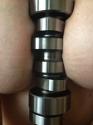
My opinion is that it is worth it. If you compare prices on a transmission from rpm, it adds approx $300 to a $2400 transmission. Similarly it adds about $300-$500 to have all the bearings, gears, everything micropolished.
And one thing to consider -- say you are already max effort. Heads, cam, intake, port work, vacuum pump, throw the kitchen sink in there. Where are you going to make more power? If you are running 243 heads and a 227 cam, yeah don't bother. Agreed. You could spray it sure. And really that's about all that is left. Boost would be a whole new build or at least heads, and certainly not cheaper.
And one thing to consider -- say you are already max effort. Heads, cam, intake, port work, vacuum pump, throw the kitchen sink in there. Where are you going to make more power? If you are running 243 heads and a 227 cam, yeah don't bother. Agreed. You could spray it sure. And really that's about all that is left. Boost would be a whole new build or at least heads, and certainly not cheaper.
Thread Starter
TECH Resident
Joined: Oct 2014
Posts: 898
Likes: 71
I agree with Darth. If you're saying you're max effort N/A then this is a process that has to be looked at. I would say guys using a lot of boost and spray probably could benefit from the cryogenic process as well. Not from a hp standpoint but a parts longevity standpoint.
The pro mods and pro stock guys aren't doing it for no reason.
The pro mods and pro stock guys aren't doing it for no reason.
The main reason they do it has little to do with longevity, They are constrained by rules. They have a weight/cubic inch limit and need every advantage they can get so they spend lots of time doing R&D to find every small gain they can find. Most of them also have a large budget. They spend more on shocks than most people have in their entire car.
The reason I don't see it being worth it on hobby grade street/strip car with small exceptions for strength is the cost versus real world performance gains. If you went front to back treating all rotating parts your only going to see a small performance gain and that means running low viscosity lubes that aren't all that street friendly. If you have a weak link where durability is an issue like the trans then it's a good idea but when it comes to the engine and rearend you're not likely to see much in the way of a performance gain, Durability shouldn't be an issue if you bought good parts to begin with.
There are better ways to spend that money that will lower your times if you're on a budget that will actually see bigger gains per dollar and last much longer than the than those treatments. Shed weight where you can and concentrate on any rotating parts like wheels and rotors and possibly the driveshaft. Fill it full of synthetic fluids. Remove all the heat/ ac related parts from under the hood and dash. Lighter is not only faster it's easier on the driveline.
I raced Microsprints for a few years, We had a minimum weight and engine size limit so we concentrated on rotating mass, I spent a decent amount of my budget on the engine removing the charging system, Remove gears not needed from the trans, Light weight flywheel, Removing the charging system to save weight and drag on the engine. Ceramic bearings anywhere they could be used. In the end it might have shaved a couple tenths off a 12 second lap. Two tenths doesn't sound like a lot but when you run 15-20 laps it can mean the difference between running up front and being last.
If there were no weight or engine rules I could have went a bigger engine and shed weight and probably knocked more than a second or two off my lap times.
The reason I don't see it being worth it on hobby grade street/strip car with small exceptions for strength is the cost versus real world performance gains. If you went front to back treating all rotating parts your only going to see a small performance gain and that means running low viscosity lubes that aren't all that street friendly. If you have a weak link where durability is an issue like the trans then it's a good idea but when it comes to the engine and rearend you're not likely to see much in the way of a performance gain, Durability shouldn't be an issue if you bought good parts to begin with.
There are better ways to spend that money that will lower your times if you're on a budget that will actually see bigger gains per dollar and last much longer than the than those treatments. Shed weight where you can and concentrate on any rotating parts like wheels and rotors and possibly the driveshaft. Fill it full of synthetic fluids. Remove all the heat/ ac related parts from under the hood and dash. Lighter is not only faster it's easier on the driveline.
I raced Microsprints for a few years, We had a minimum weight and engine size limit so we concentrated on rotating mass, I spent a decent amount of my budget on the engine removing the charging system, Remove gears not needed from the trans, Light weight flywheel, Removing the charging system to save weight and drag on the engine. Ceramic bearings anywhere they could be used. In the end it might have shaved a couple tenths off a 12 second lap. Two tenths doesn't sound like a lot but when you run 15-20 laps it can mean the difference between running up front and being last.
If there were no weight or engine rules I could have went a bigger engine and shed weight and probably knocked more than a second or two off my lap times.

Restricted User
Joined: Mar 2014
Posts: 7,192
Likes: 109
From: Ohio
I wonder about this a lot. I know a lot of guys that heat treat parts for strength. They swear by it as much as the cryo guys do.
I've heat treated axles before in a 600 degree oven using a 600/400/200 method and the axles came out slightly blue in color and I never managed to break one.
I've also seen what happens to driveshafts when torsion tests are done on them and they test one that's been frozen with liquid nitrogen. It shatters well below the normal failure point.
Take that with a grain of salt, as I haven't seen the test done with one after it was frozen and returned to operating temps.
I've heat treated axles before in a 600 degree oven using a 600/400/200 method and the axles came out slightly blue in color and I never managed to break one.
I've also seen what happens to driveshafts when torsion tests are done on them and they test one that's been frozen with liquid nitrogen. It shatters well below the normal failure point.
Take that with a grain of salt, as I haven't seen the test done with one after it was frozen and returned to operating temps.
I wonder about this a lot. I know a lot of guys that heat treat parts for strength. They swear by it as much as the cryo guys do.
I've heat treated axles before in a 600 degree oven using a 600/400/200 method and the axles came out slightly blue in color and I never managed to break one.
I've also seen what happens to driveshafts when torsion tests are done on them and they test one that's been frozen with liquid nitrogen. It shatters well below the normal failure point.
Take that with a grain of salt, as I haven't seen the test done with one after it was frozen and returned to operating temps.
I've heat treated axles before in a 600 degree oven using a 600/400/200 method and the axles came out slightly blue in color and I never managed to break one.
I've also seen what happens to driveshafts when torsion tests are done on them and they test one that's been frozen with liquid nitrogen. It shatters well below the normal failure point.
Take that with a grain of salt, as I haven't seen the test done with one after it was frozen and returned to operating temps.

Teching In
Joined: May 2018
Posts: 19
Likes: 13
From: Moo Hampshire
Adding to the great post that @LLLosingit made, we build motorcycle engines where ever-decreasing levels of friction yield better performance on the track. I personally have every transmission that comes out as part of a major build - that I haven't seen before* - get REM Chem's ISF extra special shiny treatment. We do it not so much for friction reduction as for adding to the bike's anti-false-neutral/shifting smoothness properties. On circuit bikes, we have found no advantage in cryogenic and/or nitriding of gears and shafts. It's an added expense without measurable benefit. I am sure I could racers to buy into this if I was less than honest, but these things already cost a fair amount to build.
Drag race/LSR motorcycle engines have few build constraints but each of those builds make use of additional lubricity treatments. For the reasons stated above I never tick the surface hardening box. On really potent drag race engines(big bore w/N2O, turbo, or really crazy NA) we install billet transmission shafts..not simply outputs, but these are typically the first to shear. The maker of the billet stuff has the usual suspects in stock and all parts are pre-micropolished.
One more bit of drivel. On a certain build the camshafts are extremely expensive with one vendor getting 2,500USD for a pair. We have our own grinds and the cams are gun drilled as well as ISF'd. We have never even seen anything like camshaft wear on these jewel-like pieces. I am uncertain as to whether or not this is a confirmation of surface treating the camshafts, valve springs and followers, but the engines are turned up to 15,000 RPM and the first inspection interval is 30 hours of track time. That's many years(decades?) of drag strip thrashing. I have yet to see even one broken valve spring in the ~30 engines of this type involved in roadracing/LSR events/drag racing.
I do car stuff too, but this sort of thing would only seem of benefit where every piece of low-hanging fruit has been picked. I have used other coatings and treatments in car stuff, but only if it's 'free' such as Wiseco's ArmorGlide coating. Nitriding on a racing crankshaft should be a given. I'm mostly evidence driven. Via no pre-conceived notions I try and avoid confirmation bias; but in motorsports there is a lot of BS passed around as fact. I'm not a Missourian, but 'Show Me.'
*If I have seen it come through, I already gave it the special shiny treatment.
Drag race/LSR motorcycle engines have few build constraints but each of those builds make use of additional lubricity treatments. For the reasons stated above I never tick the surface hardening box. On really potent drag race engines(big bore w/N2O, turbo, or really crazy NA) we install billet transmission shafts..not simply outputs, but these are typically the first to shear. The maker of the billet stuff has the usual suspects in stock and all parts are pre-micropolished.
One more bit of drivel. On a certain build the camshafts are extremely expensive with one vendor getting 2,500USD for a pair. We have our own grinds and the cams are gun drilled as well as ISF'd. We have never even seen anything like camshaft wear on these jewel-like pieces. I am uncertain as to whether or not this is a confirmation of surface treating the camshafts, valve springs and followers, but the engines are turned up to 15,000 RPM and the first inspection interval is 30 hours of track time. That's many years(decades?) of drag strip thrashing. I have yet to see even one broken valve spring in the ~30 engines of this type involved in roadracing/LSR events/drag racing.
I do car stuff too, but this sort of thing would only seem of benefit where every piece of low-hanging fruit has been picked. I have used other coatings and treatments in car stuff, but only if it's 'free' such as Wiseco's ArmorGlide coating. Nitriding on a racing crankshaft should be a given. I'm mostly evidence driven. Via no pre-conceived notions I try and avoid confirmation bias; but in motorsports there is a lot of BS passed around as fact. I'm not a Missourian, but 'Show Me.'
*If I have seen it come through, I already gave it the special shiny treatment.
