






SOHC for LS

Thread Starter
Staging Lane
Joined: Dec 2024
Posts: 83
Likes: 7
From: San Diego, California USA

Using a 450 hp Pratt & Whitney versus a Tony Special V-8 piston engine, de-rated to 450 hp:
- - - - - - - - - - - - P&W - - - - - - - - Tony V-8
Horsepower - - - - 450 hp - - - - - - - 450 hp
Fuel burn Hour 1 - 50 GPH - - - - - - - 40 GPH (GPH = US Gallons Per Hour)
Furl burn cruise - - 30 GPH - - - - - - - 22 GPH
Critical altitude - - 7500 feet - - - - - 18,000 feet
Cost new - - - - - - $500k - - - - - - - $200k
Hot section - - - - - $150k - - - - - - - N/A
Overhaul cost - - - $350k - - - - - - - $50k
TBO - - - - - - - - - 3600 hours - - - - 2000 hours
The biggest single advantage is COST… lower fuel costs, lower acquisition cost, lower overhaul costs, lower replacement cost, with the same or increased performance.
One metric not considered is that to fly a 1000 nautical mile mission with the same model aircraft, one equipped with two of the P&W turbine engines, and the other with two Tony V-8 engines, both at the same speed overall speed of 250 Knots (4 hours):
Fuel burn - - - - - 280 US gallons - - 175 US gallons
Fuel weight - - - 1850 pounds - - - - 1050 pounds
WEIGHT SAVINGS - 0 - - - - - - - - - (800 pounds)
COST of FUEL - - $1540 - - - - - - - - $1138
COST SAVINGS - - 0 - - - - - - - - - - $ (402)
JET-A @ $5.50 / US gallon (USA average, Jan 2025)
AVGAS @ $6.50 / US gallon (USA average, Jan 2025)
Last edited by TonyWilliams; Jan 10, 2025 at 07:04 PM.

TECH Senior Member


Joined: Jun 2016
Posts: 22,291
Likes: 3,616
From: Central Cal.
I think you are wildly underestimating your costs if they include development. Also, TBO on a new, untried engine is far less than 2k hours.
On your fuel burn numbers above, keep in mind that kerosene (aka jet/turbine fuel) is far less costly than avgas.
The turboprop is a tried and true, nearly bulletproof power source. Yours is not. It's all still only a pipe dream.
On your fuel burn numbers above, keep in mind that kerosene (aka jet/turbine fuel) is far less costly than avgas.
The turboprop is a tried and true, nearly bulletproof power source. Yours is not. It's all still only a pipe dream.

TECH Enthusiast
Joined: Aug 2021
Posts: 507
Likes: 190
Only a "B" Only a B, a 20-B is what I chose.
No Cams, No Valves with 500HP on Boost. (25K feet ceiling)
Twin plugs as STANDARD
Three combustion chambers
Lite Weight engine
TWO ECU system and was certified by the FAA
No Cams, No Valves with 500HP on Boost. (25K feet ceiling)
Twin plugs as STANDARD
Three combustion chambers
Lite Weight engine
TWO ECU system and was certified by the FAA
I must say this is an industrious undertak-ing, that hopefully doesn't lead to the undertake-r! I cut my mechanical teeth on SOHC Honda motorcycle engines, then DOHC Yoshimura Kawasaki engines. While they certainly hold all the cards for high rpm capability, it doesn't seem that you need more rpm than the base LS platform is capable of. How many prop engines, like the Lycoming and older Continentals have an OHC setup? I'm not aware of any. This kinda sounds like a because-I-can project, not necessarily a because-it's-needed project. One thing about your goals I'm confused about. If you're going to use finger followers, don't you need a lifter between the finger and head, similar to the 2.2l Dodge engine of the 80s-90s, which OEM were hydraulic? Or are you talking about a Desmodromic valvetrain? I admire your ambition, but I think you're basically trading 6 of one for a half dozen of the other, if that makes sense. Plus a huge outlay of cash and time. I don't even want to know what someone will charge you to make up two totally custom, off the wall cams. OUCH!! Would need some mighty deep pockets. But hey-Where would we be if the naysayers talked Ed Cole out of the original design for the SBC? Ed always said "kick the Hell outta the status quo." You, sir, are aiming to kick the Devils *** outta Hell. I wish you the best......
Thread Starter
Staging Lane
Joined: Dec 2024
Posts: 83
Likes: 7
From: San Diego, California USA
Every vendor in the WORLD would call the parts that they make “for an LS”…
Thread Starter
Staging Lane
Joined: Dec 2024
Posts: 83
Likes: 7
From: San Diego, California USA
I think you are wildly underestimating your costs if they include development. Also, TBO on a new, untried engine is far less than 2k hours.
On your fuel burn numbers above, keep in mind that kerosene (aka jet/turbine fuel) is far less costly than avgas.
The turboprop is a tried and true, nearly bulletproof power source. Yours is not. It's all still only a pipe dream.
On your fuel burn numbers above, keep in mind that kerosene (aka jet/turbine fuel) is far less costly than avgas.
The turboprop is a tried and true, nearly bulletproof power source. Yours is not. It's all still only a pipe dream.
Yes, as a new design, the INITIAL TBO might be significantly less than 2000 hours. The design, however, is to go 2000 hours Time Between Overhaul (TBO).
You will never save the WEIGHT and MONEY with fuel on any trip with a turbine. For short haul, low altitude flights, the turbine will suck even MORE fuel per hour than on high altitude long haul trip. The Tony V-8 won’t have that problem.
During a 1000 nautical mile mission with the same model aircraft, one equipped with two 450 hp P&W turbine engines, and the other with two Tony 450 hp V-8 engines, both at the same speed overall speed of 250 Knots (4 hours):
Fuel burn - - - - - 280 US gallons - - 175 US gallons
Fuel weight - - - 1850 pounds - - - - 1050 pounds
WEIGHT SAVINGS - 0 - - - - - - - - - (800 pounds)
COST of FUEL - - $1540 - - - - - - - - $1138
COST SAVINGS - - 0 - - - - - - - - - - $ (402)
JET-A @ $5.50
AVGAS @ $6.50

Sharing a few parts with LS engines doesn't make it an LS engine.
Thread Starter
Staging Lane
Joined: Dec 2024
Posts: 83
Likes: 7
From: San Diego, California USA
The disadvantages are HUGE… low TBO, and HIGH fuel burn.
LS1 Tech Stories
The Best V8 Stories One Small Block at Time

6 Common C5 Corvette Failures and What's Involved In Repairing Them
Pouria Savadkouei
Retro Modern Bandit Pontiac Trans AM Comes With Burt Reynolds' Autograph
Verdad Gallardo
Top 10 Greatest Cadillac V Series Performance Models Ever, Ranked
Pouria Savadkouei
Top 10 Most Powerful Chevy Trucks Ever Made!

Hennessey's New Supercharged Silverado ZR2 Has 700 HP
Verdad Gallardo
Coachbuilt N2A Anteros Is an LS2-Powered C6 Corvette In Italian Clothes
Verdad Gallardo
Awesome K5 Blazer Restomod Comes With C7 Corvette Power
Verdad Gallardo
10 Camaros You Should Never Buy

10 LS Engine Myths That Refuse to Die
Verdad Gallardo Thread Starter
Staging Lane
Joined: Dec 2024
Posts: 83
Likes: 7
From: San Diego, California USA
Thread Starter
Staging Lane
Joined: Dec 2024
Posts: 83
Likes: 7
From: San Diego, California USA
I must say this is an industrious undertak-ing, that hopefully doesn't lead to the undertake-r! I cut my mechanical teeth on SOHC Honda motorcycle engines, then DOHC Yoshimura Kawasaki engines. While they certainly hold all the cards for high rpm capability, it doesn't seem that you need more rpm than the base LS platform is capable of. How many prop engines, like the Lycoming and older Continentals have an OHC setup? I'm not aware of any.
The 375 hp Continental GTSIO-520 engine, for example, was CERTIFIED in 1963 (yes, 61 years ago). People smoked cigarette and pipes, burned leaded gas in their cars that got 5-15 MPG, and that had no seat belts nor air bags. Those people couldn’t even comprehend an iPhone, or the internet, and had a life expectancy significantly lower than today.
This kinda sounds like a because-I-can project, not necessarily a because-it's-needed project. One thing about your goals I'm confused about. If you're going to use finger followers, don't you need a lifter between the finger and head, similar to the 2.2l Dodge engine of the 80s-90s, which OEM were hydraulic? Or are you talking about a Desmodromic valvetrain? I admire your ambition, but I think you're basically trading 6 of one for a half dozen of the other, if that makes sense. Plus a huge outlay of cash and time. I don't even want to know what someone will charge you to make up two totally custom, off the wall cams. OUCH!! Would need some mighty deep pockets.
For example, I stated that the camshafts would be driven by gears. What if the cylinder head gasket is a slightly different thickness, or the block or heads were milled down? There would be a problem with the gear clearances.
But hey-Where would we be if the naysayers talked Ed Cole out of the original design for the SBC? Ed always said "kick the Hell outta the status quo." You, sir, are aiming to kick the Devils *** outta Hell. I wish you the best......

This thread is a giant waste of time....also its stupid. lmao. The ls1 will easily meet your specs without your overly complicated nonsense. I work on RR t56 engines for a living......you sound just like a dumb *** engineer.


I would argue that he sounds more like an engineering student who came up with this "idea" as a project for a grade in class. It has zero to do with ls engines, and little to do with reality. Then again, in the corporate world a lot of people get paid good money to waste time on such "feasibility studies" that eventually accomplish nothing.
Thread Starter
Staging Lane
Joined: Dec 2024
Posts: 83
Likes: 7
From: San Diego, California USA
Last edited by TonyWilliams; Jan 26, 2025 at 02:02 PM.
I'm going to be installing my ls1 in a locomotive. I need to covert this to an external combustion engine fired by coal to be rail worthy. I figure I can move the crank outside of the block to save space and use less moving parts.

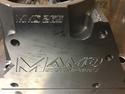


I’ve seen quite a few LS engines in aircraft. It’s been done and works great. No need to re-design the entire thing in my opinion, but I hope if this actually does happen, you come back and show us pics. I’m interested in seeing how it goes.
TECH Senior Member
Joined: Jun 2016
Posts: 22,291
Likes: 3,616
From: Central Cal.
The basic LS engine is a sound design. The major work to be done adapting it to aircraft usage lies in ensuring the cooling systems (coolant AND oil) are up to the job of cooling an engine that will be at much higher constant power settings than would transpire in the automotive realm. At the risk of oversimplifying, that is pretty much it.
The ignition and fuel systems are relatively bulletproof.
Thread Starter
Staging Lane
Joined: Dec 2024
Posts: 83
Likes: 7
From: San Diego, California USA
Our application is NOT experimental. While we will fly aircraft around, probably for years, as experimental, the ultimate goal is FAA certification. That has a number of requirements that aren’t really important here.
I won’t be able to do FAA certification with a GM produced engine, period. So, at a minimum, I could clone the LS-3, correct? Then, naturally, we start thinking about what makes things better for our application.
For starters, we would like to eliminate the oil pan, which would require a dry sump. Ok, where do you put the air/oil separator? I’d like to place it in a location that does NOT require hoses / fittings / brackets. Also, I’d like it to be in the prone (horizontal) position, but I can’t find anybody that’s done anything like that. So, that air / oil separator will likely be vertical, like everybody else does.
The Rolls Royce engine in the North American P51 Mustang had a tank wrapped around the output shaft. Clever.
Sure, it would be SUPER DUPER easy to just use the existing LS valvetrain, but the LS7 makes a great case for caution. It would help my design significantly to get the camshaft(s) up on top of the engine.
I like to tell my spouse that, “any monkey can fly an airplane”, and I firmly believe that the same is true about building an LS engine. It’s the quality of the final product that may vary somewhat, from person to person.
The whole reason to expose myself to a bunch of clowns here (and elsewhere) is for that nugget of useable data, or a clever idea that may be useful. But, maybe not so many here ;-)
Last edited by TonyWilliams; Jan 10, 2025 at 06:57 PM.
TECH Senior Member
Joined: Jun 2016
Posts: 22,291
Likes: 3,616
From: Central Cal.
For starters, we would like to eliminate the oil pan, which would require a dry sump. Ok, where do you put the air/oil separator? I’d like to place it in a location that does NOT require hoses / fittings / brackets. Also, I’d like it to be in the prone (horizontal) position, but I can’t find anybody that’s done anything like that. So, that air / oil separator will likely be vertical, like everybody else does.
Sure, it would be SUPER DUPER easy to just use the existing LS valvetrain, but the LS7 makes a great case for caution. It would help my design significantly to get the camshaft(s) up on top of the engine.
The whole reason to expose myself to a bunch of clowns here (and elsewhere) is for that nugget of useable data, or a clever idea that may be useful. But, maybe not so many here ;-)
Sure, it would be SUPER DUPER easy to just use the existing LS valvetrain, but the LS7 makes a great case for caution. It would help my design significantly to get the camshaft(s) up on top of the engine.
The whole reason to expose myself to a bunch of clowns here (and elsewhere) is for that nugget of useable data, or a clever idea that may be useful. But, maybe not so many here ;-)
The LS7 issues relate more with valve guides and block/head castings themselves. The valvetrain itself isn't the issue with LS7s.
I'm (and others here) glad you think so highly of us, though many here (not me) have engine knowledge that has been shown here to far surpass yours.
Most GA ICE powered a/c still use a wet sump. Unless you are planning aerobatics, a dry sump is mainly a complication you really don't need, along with an air/oil separator.
The LS7 issues relate more with valve guides and block/head castings themselves. The valvetrain itself isn't the issue with LS7s.
I'm (and others here) glad you think so highly of us, though many here (not me) have engine knowledge that has been shown here to far surpass yours.
The LS7 issues relate more with valve guides and block/head castings themselves. The valvetrain itself isn't the issue with LS7s.
I'm (and others here) glad you think so highly of us, though many here (not me) have engine knowledge that has been shown here to far surpass yours.