








Fast 90 Intake porting..

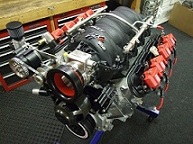
The intent of this thread is to discuss porting the FAST intake for the DIY folks, just like the DIY cylinder head threads so lets keep that in mind. The thread was kicked off by stating the work that Guitsboy and I did was merely a port match and we ran the grinder back into the runner just a few inches. We wanted to share our experience and listen to what others have done who've worked on their own intakes. The question was posed of what constitutes a "port" job on the FAST intake? That was not meant to question the integrity of the vendors, but simply to help us learn more about porting and how we can get more from our setups. The fact is that no one has given descriptions or pictures of their "ported" FAST intakes and the thread has gone off course. While the dyno testing will be great a critical component to that test will be what is considered a "ported" version of the intake.
Apologies to Tony M. and any other vendors who were bashed in this thread. The intent here was for education not vendor bashing. In fact some constructive criticism from experienced people would really help. Anyways, I felt that needed to be said since this thread got way out of hand and we have no more data than we had when the thread started.
Apologies to Tony M. and any other vendors who were bashed in this thread. The intent here was for education not vendor bashing. In fact some constructive criticism from experienced people would really help. Anyways, I felt that needed to be said since this thread got way out of hand and we have no more data than we had when the thread started.
Originally Posted by pdd
ill tell you guys what. i had tony m port my fast 90 and it came out beautiful. money well spent for someone looking for every last pony 
Last edited by jrp; Feb 7, 2007 at 12:55 PM.
Originally Posted by jrp
I've seen Tony's handy work as well, its very impressive, when are we going to see your results?

I was going to have mine ported by tony but somthing cam up and I had to use the money else where ( dam pets) should have just used a 10 cent bullet. Anyway since I'm an impatient person i ported it my self Ill post some pics as soon as it is complete.
LS1 Tech Stories
The Best V8 Stories One Small Block at Time

6 Common C5 Corvette Failures and What's Involved In Repairing Them
Pouria Savadkouei
Retro Modern Bandit Pontiac Trans AM Comes With Burt Reynolds' Autograph
Verdad Gallardo
Top 10 Greatest Cadillac V Series Performance Models Ever, Ranked
Pouria Savadkouei
Top 10 Most Powerful Chevy Trucks Ever Made!

Hennessey's New Supercharged Silverado ZR2 Has 700 HP
Verdad Gallardo
Coachbuilt N2A Anteros Is an LS2-Powered C6 Corvette In Italian Clothes
Verdad Gallardo
Awesome K5 Blazer Restomod Comes With C7 Corvette Power
Verdad Gallardo
10 Camaros You Should Never Buy

10 LS Engine Myths That Refuse to Die
Verdad Gallardo
We figured out the issue today. Tommy had a leaking fast intake!  New gasket ordered so we should be ready to get this done next week. I'll post the info in the dyno section as this thread has skewed out into left feild somewhere.
New gasket ordered so we should be ready to get this done next week. I'll post the info in the dyno section as this thread has skewed out into left feild somewhere. 



Does anyone know how much and/or where we could get our intakes flowed? I'd love to know how well my home ported Fest 90 flows and how repeatable each of the ports are to each other.


Originally Posted by ROCNDAV
Does anyone know how much and/or where we could get our intakes flowed? I'd love to know how well my home ported Fest 90 flows and how repeatable each of the ports are to each other.
Bottom line is the more effective you make the manifold the better the head will flow (the actual intake port) with the intake bolted up to it simulating the way things operate on your actual engine. The manifold shoots and directs the airflow into the runner and changes to its design shoot be evaluated with a cylinder head bolted in place.
A simplistic way to understand it is a better intake manifold design fools the engine into thinking you just bolted on a cylinder head that has an intake port some given amount of CFM's better. For instance....
A stock intake (LS1) will reduce a 300 CFM intake port by about 50 CFM's (ouch!)
An LS6 a little better at 42-45 CFM's....
A stock FAST somewhere in the 35 range and one of my ported FAST intakes closer to 25 CFM which by the way is pretty close to say what a reasonably good Super Victor single plane will knock down a 300 CFM 23' head. It takes a pretty bad-*** single plane with generous plenum volume and a well shaped tapered runner design to get that number closer to 20.
The closer your manifold design represents a straight shot with a radiused entry, the closer you get to flowing the same, or in some rare cases better, than the numbers achieved thru a typical radiused inlet fixture (NOT clay).
Just thought this info would be of some interest....
Tony
Last edited by Tony Mamo @ AFR; Feb 8, 2007 at 07:48 PM.


Tony, is this reduction in port flow with the intake bolted to the head linear with different head flow, or is it much better/worse at low or high flow rates? For example, you listed #'s at 300cfm. What would happen with 280cfm heads or 320cfm? Also, are the effects more or less pronounced at different valve lifts other than max? Sorry for all the Q's, but most of us don't have access to enough different heads/intakes to draw any statistically significant conclusions.
Originally Posted by gametech
Tony, is this reduction in port flow with the intake bolted to the head linear with different head flow, or is it much better/worse at low or high flow rates? For example, you listed #'s at 300cfm. What would happen with 280cfm heads or 320cfm? Also, are the effects more or less pronounced at different valve lifts other than max? Sorry for all the Q's, but most of us don't have access to enough different heads/intakes to draw any statistically significant conclusions.
All of the intakes hurt the flow more the higher the valve is lifted....meaning there were smaller losses lower in the curve but probably similar in percentages. At very low lifts all of the intakes are much closer but the more you open the valve the more the better shaped/designed intakes start to show their stuff. At some point lifting the valve higher shows no additional gains in net airflow as the intake becomes a larger restiction than the cylinder head....of course the better flowing manifolds take more lift and more flow before they get to that point.
Tony
Last edited by Tony Mamo @ AFR; Feb 8, 2007 at 09:35 PM.

Tony, I have a very basic question about porting intakes. I would assume that the goals are to:
1. Make sure that the interface between the intake runners of the manifold and cylinder head are a reasonably close match (port matched to eliminate any step discontinuity of airflow to the extent possible) and
2. Port the intake manifold runner back far enough and gradually enough (transition as imperceptible as possible) so that the boundary layer stays attached to the runner walls/roof/floor.
Is this the basic principle? Obviously, any flashing or rough transitions need to be dealt with just as one would on the short side radius on the floor of a port.
You don't have to answer this and I wouldn't blame you if you didn't. I respect the fact that you earn your living by your knowledge and skill and you probably consider a lot of what you do to be proprietary (especially the details).
I also want to say that for my part the disrespectful way that you and many of the other sponsors are treated all too often is inexcusable. I realize that you know that a lot of the folks who have diarrhea of the mouth are pretty immature and ignorant in the truest sense of the word. That's still no excuse for some of what goes on.
All my best,
Steve
1. Make sure that the interface between the intake runners of the manifold and cylinder head are a reasonably close match (port matched to eliminate any step discontinuity of airflow to the extent possible) and
2. Port the intake manifold runner back far enough and gradually enough (transition as imperceptible as possible) so that the boundary layer stays attached to the runner walls/roof/floor.
Is this the basic principle? Obviously, any flashing or rough transitions need to be dealt with just as one would on the short side radius on the floor of a port.
You don't have to answer this and I wouldn't blame you if you didn't. I respect the fact that you earn your living by your knowledge and skill and you probably consider a lot of what you do to be proprietary (especially the details).
I also want to say that for my part the disrespectful way that you and many of the other sponsors are treated all too often is inexcusable. I realize that you know that a lot of the folks who have diarrhea of the mouth are pretty immature and ignorant in the truest sense of the word. That's still no excuse for some of what goes on.
All my best,
Steve

TECH Fanatic


Joined: Aug 2005
Posts: 1,691
Likes: 1
From: Sunny London, UK
I think that buldge on the side is for guys who drop the manifold on stock engines. Maybe the buldge works like a venturi and helps keep velocity up.
Of course I just made that up, but you never know it could be on the right track
Of course I just made that up, but you never know it could be on the right track
Originally Posted by ringram
I think that buldge on the side is for guys who drop the manifold on stock engines. Maybe the buldge works like a venturi and helps keep velocity up.
Of course I just made that up, but you never know it could be on the right track
Of course I just made that up, but you never know it could be on the right track
Steve....#1 and #2 are exactly right....then add some additional shaping that FAST hadn't included in the design and your on the right track to a good flowing piece.
Two things are necessary to properly port one....knowing exactly what shapes and contours are the most effective (use of a flowbench and dyno paramount here) and then being able to accurately reproduce those shapes and contours accurately (by hand) eight times in a row. Most of the sub-par "ported intakes" I have seen had divots and lumps and bumps in the plastic because its very easy to remove plastic (versus aluminum) and it is not very forgiving if you lean the grinder in the wrong direction for even the most brief period of time (versus aluminum which you have to apply more pressure for significant material removal). Bottom line is its more difficult to get straight walls and perfectly contoured corners cutting a plastic intake than an aluminum intake. Not trying to scare anyone off...just stating facts.
If you have very good hand skills....are comfortable and have worked with die grinders in the past....and are very patient and willing to invest the time to do it right you would qualify for someone who might consider trying to tackle the job. If you don’t possess all of those attributes either bolt it on stock or pay someone you deem qualified to do it....otherwise you run a greater risk of hurting your power output than helping it. As I mentioned in a previous post....a ported intake from a known shop (not an individual) hurt the output of one particular engine I know of by almost 15 HP (versus a stock FAST)....don’t just jump in there unless you are confident you have the right tools and experience to do so....or have access to a pile of FAST intakes you can learn on

Tony M.