








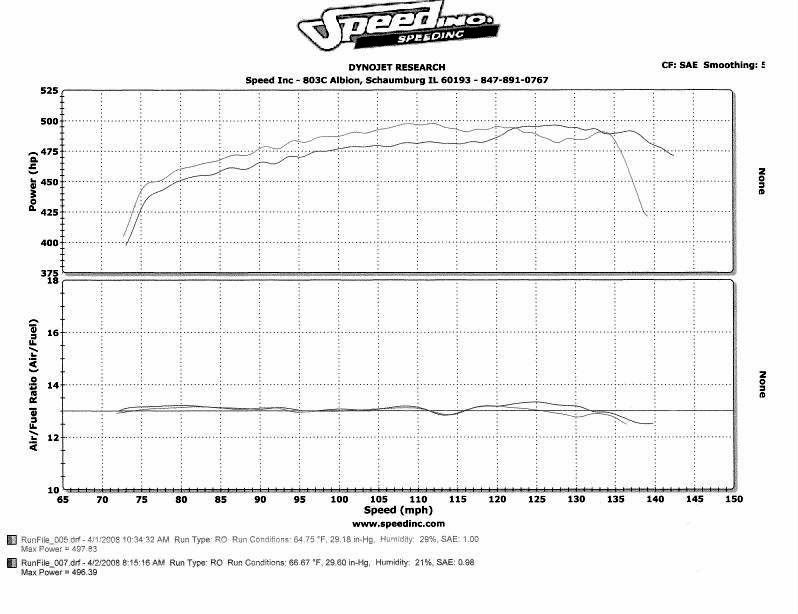
Who can explain this dyno graph?
 Who can explain this dyno graph?
 Ok this is my 402 LS2, 14-1, hyd roller (258/262 on a 110) Ported 243's, ported Vic jr and a 4150 TB. This is a drag setup 100%. One pull is with Comp pro mag 1.75 rockers and 3/8's pushrods that were.075 to long and binding on the heads (peaks at 6300 and makes alot more under the curve) . The other is with stock rockers and 5/16's pushrods with the proper preload of .060 on Caddy racing lifters. Last year with Comp R's, pro mag rockers with 5/16 pushrods and tired it peaked at 7100 and made 503rwhp. So how do I stop binding and correct pushrod length only to loose alot under the curve and 1 peak hp but gain 400 usable rpm?
I just want to thank Speed Inc for all there time and effort they put into getting the car sorted out. They even over nighted a set of pushrods for me and are awsome guys.
__________________
I just want to thank Speed Inc for all there time and effort they put into getting the car sorted out. They even over nighted a set of pushrods for me and are awsome guys.
__________________
Last edited by ONEBADWS6; Apr 3, 2008 at 12:19 PM.
We found 22 HP & 14 TQ more, at the rear wheels, with more preload on the lifter's on my cousins 402. We had .080" of preload on the GM racing lifters and made 510/477. With only changing the lifter preload to .160" he made 532/491.
Trending Topics
I also found more power and valvetrain stability with around .160" pre-load on my LS1 lifters.
LS1 Tech Stories
The Best V8 Stories One Small Block at Time

6 Common C5 Corvette Failures and What's Involved In Repairing Them
Pouria Savadkouei
Retro Modern Bandit Pontiac Trans AM Comes With Burt Reynolds' Autograph
Verdad Gallardo
Top 10 Greatest Cadillac V Series Performance Models Ever, Ranked
Pouria Savadkouei
Top 10 Most Powerful Chevy Trucks Ever Made!

Hennessey's New Supercharged Silverado ZR2 Has 700 HP
Verdad Gallardo
Coachbuilt N2A Anteros Is an LS2-Powered C6 Corvette In Italian Clothes
Verdad Gallardo
Awesome K5 Blazer Restomod Comes With C7 Corvette Power
Verdad Gallardo
10 Camaros You Should Never Buy

10 LS Engine Myths That Refuse to Die
Verdad Gallardo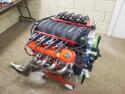
I would check the1.75 ratio against the 1.7 ratio with the extra .075". Did you have .060" between each coil at full lift? Are the 3/8" pushrods required. Good strength but extra weight at that rpm. I run the stock rockers at 7600 all day with no problems so far. The lifter is GM Racing # 88958689. Spring pressure is 135lbs. @ seat-355lbs. open. Yours is probably more radical. I have 7.400" Comp Hy-Tech 5/16" pushrods. Heads cut .030" with .051" head gasket. 241 head w/ET Perf CNC Stage 2. I have never heard of .160" preload, but we're still learning. In the old "solid" days, .002"-.006" made a big difference. You're talking .100" more preload. .040"-.080" is what I was told was the norm from ETP. The tighter more low end, the looser more top end. I run mine on the looser side, about .042" according to the dial when torqued. No valve train noise. Is it possible with the extra preload, the oil pressure at higher rpm is creating more lift by holding the pushrod higher in the lifter, still bleeding off enough to seat the valve, simulating a bigger cam producing extra power? Just trying to get a grasp. Ask Speed Inc. to factor what your cam is supposed to run. You can't get more rpms if the cam isn't made or degreed for it. Do you have a pushrod length checker and 7.5" caliper? You can set up different preloads, making sure your rocker arm tip stays generally in the center of the valve tip for correct geometry. Also, a tired motor can rev higher due to "loose parts". Who suggested the extra preload? Goes to Helicoil and OnebadWS6. My example was done 2 years ago, preload was recommended only 40-80.
The motor is fresh. The cam and combo was run in years prior with Comp R lifters which worked great for me (wish I never switched). Speed inc checked the length, preload ect for me. With a 7.300 pushrod the preload is .060. I just swapped out the pushrods so we'll see how it does.
Well I went back to the dyno with .110 preload and the mufflers on, picked up 10rwhp. Having .160 preload just made me uncomfortable but maybe at the end of the year I will try it.
I have seen a graph like that before! My car on the dyno on low boost makes a graph like that. It has to do with the converter. Mine flashe to a certain RPM(5200) and just sits there until the car catch's up with it! In high boost though it dosn't do that, only on low boost! It sound's like the car just plains out on the dyno for a few seconds then continue's to rev to the higher rpms.

Teching In
Joined: Dec 2006
Posts: 27
Likes: 0
From: texas
when u made the last pull and lost power what size pushrod was it? if u were using a shorter rocker and also if they are stock pushrods with a lot of lift could have something to do with pushrod flex and turning that much rpm on that cam could be pushing it on the lifters, also just curious but why are u running such a big hyd. roller on 14.1 turning over 7k if u put a solid with the same duration in it im sure it would pick up power across the board, i dont know thats a weird case im just throwing out some suggestions