


1937 Ford Sedan


Thread Starter
TECH Regular


Joined: Mar 2015
Posts: 485
Likes: 123
From: Tyler, TX
 1937 Ford Sedan
 While I was doing my fuel pump access door I realized that part of the trunk floor was sagging and the tank had little to zero clearance in this one area, so I decided to go ahead and do the repair.

Took some scrap strips and created a pattern

Worked the area over until I had plenty of clearance everywhere.

The real deal

I used all of the strength from the existing floor and used a 16 gauge panel to hold anything the wifey may pack Feels plenty stout. I completely welded it out and it actually stayed flat. Spot welded and seam sealed the bottom.

New floor and access door


Took some scrap strips and created a pattern

Worked the area over until I had plenty of clearance everywhere.

The real deal

I used all of the strength from the existing floor and used a 16 gauge panel to hold anything the wifey may pack
Feels plenty stout. I completely welded it out and it actually stayed flat. Spot welded and seam sealed the bottom.
New floor and access door




Thread Starter
TECH Regular
Joined: Mar 2015
Posts: 485
Likes: 123
From: Tyler, TX
1937 Ford Sedan Only 1 item completed this week due to a kink in my back. Anyway, made an access door for the master cylinder, which is under drivers side floorboard.


Note for Eric - used a luckier number for the fasteners this time - 10 was my sons kart number a few years ago


Note for Eric - used a luckier number for the fasteners this time - 10 was my sons kart number a few years ago


Thread Starter
TECH Regular
Joined: Mar 2015
Posts: 485
Likes: 123
From: Tyler, TX
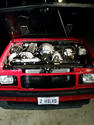
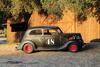
1937 Ford Sedan My son has been looking for a car and we brought this one home on Saturday. Good news......same 6.2 motor that is going in my project so I now have a good reference car


Thread Starter
TECH Regular
Joined: Mar 2015
Posts: 485
Likes: 123
From: Tyler, TX
1937 Ford Sedan Now back to the Hooptie The x brace centerpiece holds the chassis together in this type of car. The problem is when it is removed the frame moves around/pulls together and it is nearly impossible to get it back in. I came up with a simple fixture that clears everything and can be installed should the center piece and tranny ever need to be taken out of the car. Works like a charm! The center piece is a piece of 3/8" plate sandwiched between the 10 gauge channel and should hold it fine.


The x brace centerpiece holds the chassis together in this type of car. The problem is when it is removed the frame moves around/pulls together and it is nearly impossible to get it back in. I came up with a simple fixture that clears everything and can be installed should the center piece and tranny ever need to be taken out of the car. Works like a charm! The center piece is a piece of 3/8" plate sandwiched between the 10 gauge channel and should hold it fine.


Teching In
Joined: Mar 2009
Posts: 22
Likes: 17
From: Kilgore TX
37 I was at Keith's shop the day after Christmas. The 1,000 plus small details of his 37 are impressive, the complete package gives me a smile. Once again I was reminded, "once an Aggie Engineer, always an Aggie Engineer" He and his Fab Director Glenn are doing a top-shelf job. I look forward to the second test drive. [my first drive was when he brought it home before beginning the project]
Two thumbs up Harpman, my highest rating
Two thumbs up Harpman, my highest rating
Thread Starter
TECH Regular
Joined: Mar 2015
Posts: 485
Likes: 123
From: Tyler, TX
1937 Ford Sedan January was radiator month. Mounted the electric fan, made brackets for the A/C condenser, put some radiator hoses together, and figured out what to do with the steam line.
First I had to do some minor surgery on my radiator. Added some studs in the bottom plate to attach some brackets to.

Also had to extend the radiator flange down since it didn't allow me to mount the fan as low as it needed to be for air intake tube clearance.


I just did not want to use sheet metal screws to mount the condenser to the radiator so this is the idea phase of how to do it a different way with brackets.

Used the studs welded in earlier to mount this little platform bracket for the condenser.


Made some more brackets for the top.

Brackets painted, and pop riveted to the condenser. A fair amount of work, BUT no sheet metal screws

A few hours at the parts store yielded these hoses that I was able to splice together with the Gates Power Grip splices. If they don't leak I think these are great!

A swivel water neck from Vintage Air gave me a much better angle for the bottom hose.

.
First I had to do some minor surgery on my radiator. Added some studs in the bottom plate to attach some brackets to.

Also had to extend the radiator flange down since it didn't allow me to mount the fan as low as it needed to be for air intake tube clearance.


I just did not want to use sheet metal screws to mount the condenser to the radiator so this is the idea phase of how to do it a different way with brackets.

Used the studs welded in earlier to mount this little platform bracket for the condenser.


Made some more brackets for the top.

Brackets painted, and pop riveted to the condenser. A fair amount of work, BUT no sheet metal screws

A few hours at the parts store yielded these hoses that I was able to splice together with the Gates Power Grip splices. If they don't leak I think these are great!

A swivel water neck from Vintage Air gave me a much better angle for the bottom hose.

.
Looking good! I've used those shrink clamps before and had good luck with them. I only use them for what you're doing, splicing hoses together that will not need to be taken back apart.
Thread Starter
TECH Regular
Joined: Mar 2015
Posts: 485
Likes: 123
From: Tyler, TX
1937 Ford Sedan February the biggest thing checked off the list was the air intake system. According to one of my co workers, "Kevdog", February's focus was induction. Started with some mock up stuff.


At this point I ordered a 60 degree aluminum mandrel bend from HPS Silicone Hoses and a 90 degree boot. Also an Air Raid filter matching the mock up cardboard version on the all thread My buddy Bevis did the nice Tig work and I made a temporary stand to build to.

Replaced the temporary stand with this.

At this point I had to install the hood to find the least noticeable spot for the MAF sensor with clearance for connector.

Another standoff at the front of the coil cover for stability.

Spent waaay more time on this than I planned. Needed a way to get the fresh air port over to the intake and look clean (hidden). Took several parts to do it. Ended end building a plate for the front of the cylinder head so I could weld a tab for a hard line running through some very tight areas....BUT it worked.
Here are the parts.

Starts here. Pretty tight behind the compressor.


Ends up here.

I like the way most of the mounting hardware is not really seen from the top.

Air intake - done


At this point I ordered a 60 degree aluminum mandrel bend from HPS Silicone Hoses and a 90 degree boot. Also an Air Raid filter matching the mock up cardboard version on the all thread
My buddy Bevis did the nice Tig work and I made a temporary stand to build to.
Replaced the temporary stand with this.

At this point I had to install the hood to find the least noticeable spot for the MAF sensor with clearance for connector.

Another standoff at the front of the coil cover for stability.

Spent waaay more time on this than I planned. Needed a way to get the fresh air port over to the intake and look clean (hidden). Took several parts to do it. Ended end building a plate for the front of the cylinder head so I could weld a tab for a hard line running through some very tight areas....BUT it worked.
Here are the parts.

Starts here. Pretty tight behind the compressor.


Ends up here.

I like the way most of the mounting hardware is not really seen from the top.

Air intake - done

Thread Starter
TECH Regular
Joined: Mar 2015
Posts: 485
Likes: 123
From: Tyler, TX
1937 Ford Sedan One of my projects in March was to get the AC hoses and heater hoses figured out. Here is the before blank sheet of paper and the after pics. Fab Director helped get everything roughed out and I took it from there. Should have good access to the Trinary switch if needed from below, but most of this area gets covered up with an inner fender. AND thanks to Bill Arnold for turning me on to the reduced vapor barrier AC hoses they are GREAT to work with compared to the larger and not as flexible original style.


Here are the details how I got there.
This car has some severe taper in the nose so I built a temporary structure from the shock tower that I could build off of that I knew would clear the inner fenders.

Built this rod/bracket that bolts to the radiator and just rides in a bushing on the bottom to let it float just a bit and give me tabs to attach stuff to.

Everything is so tight I built these to get the service ports at the proper angles. There is less room than the picture shows especially with the inner fender on. Thanks to longtime friend John Burgess for doing the Tig work!

After the welding here is some polishing in process.

This was the way I did the firewall originally, but it just stood out a little too much for me. I didn't like the service ports up there, didn't like the bright blue caps, and didn't like the way it drew my attention to the shiny stuff right there soooo I redid that area.

I exchanged my polished bulkhead for a black one. Once the hoses were made I came with a way to fixture the 2 AC hoses and 2 heater hose fittings and took them down to a friends body shop for some black paint that matched the bulkhead. Thanks Phil and Mike! Doing it twice was a pain BUT I like it much better now


Here are the details how I got there.
This car has some severe taper in the nose so I built a temporary structure from the shock tower that I could build off of that I knew would clear the inner fenders.

Built this rod/bracket that bolts to the radiator and just rides in a bushing on the bottom to let it float just a bit and give me tabs to attach stuff to.

Everything is so tight I built these to get the service ports at the proper angles. There is less room than the picture shows especially with the inner fender on. Thanks to longtime friend John Burgess for doing the Tig work!

After the welding here is some polishing in process.

This was the way I did the firewall originally, but it just stood out a little too much for me. I didn't like the service ports up there, didn't like the bright blue caps, and didn't like the way it drew my attention to the shiny stuff right there soooo I redid that area.

I exchanged my polished bulkhead for a black one. Once the hoses were made I came with a way to fixture the 2 AC hoses and 2 heater hose fittings and took them down to a friends body shop for some black paint that matched the bulkhead. Thanks Phil and Mike! Doing it twice was a pain BUT I like it much better now

Last edited by Kharp; Apr 14, 2020 at 06:02 PM.
Looks great! I'm always impressed with the things you build, just to be able to build something else! Those fixtures for getting the service ports at just the right angle is something no one will ever know about, but shows a great eye for details.
Thread Starter
TECH Regular
Joined: Mar 2015
Posts: 485
Likes: 123
From: Tyler, TX
1937 Ford Sedan Thanks Eric for the kind words! Now that the AC is nailed down I can finish the fuel line run to the front. I left off where it transitions to the outside of the frame to avoid the exhaust. I had this piece already made, but I needed the other half.

I used some conduit to make a sample just to see what it would look like and then carved out a steel piece.

Here are the 2 halves that will bolt together and carry the fuel line through the frame. I'm running a piece of #6 braided stainless fuel line. Once it reaches the outside of the frame I will have it inside a piece of #12 braided line for protection.

Fuel line exits right under the running board.

The next obstacle was getting through the running board bracket. Had to enlarge a hole to get the line up against the frame.

Made another bracket for strength. It should now be strong enough that I can slot the back if necessary to be able to pull the running board without taking the fuel line off. I'll wait until later to see if its a big deal or not. Fab director help with this additional bracket. It looks simple from a distance BUT where the original running board mounted to the frame it had an offset and also fits the frame which has an arc in that area.

The next obstacle was where and how to get back inside the engine bay.

Going in right here.

Inside view.

Finished up.

Looking back underneath the running board.

From the top of the engine looking down the fuel line just disappears into a black hole.


I used some conduit to make a sample just to see what it would look like and then carved out a steel piece.

Here are the 2 halves that will bolt together and carry the fuel line through the frame. I'm running a piece of #6 braided stainless fuel line. Once it reaches the outside of the frame I will have it inside a piece of #12 braided line for protection.

Fuel line exits right under the running board.

The next obstacle was getting through the running board bracket. Had to enlarge a hole to get the line up against the frame.

Made another bracket for strength. It should now be strong enough that I can slot the back if necessary to be able to pull the running board without taking the fuel line off. I'll wait until later to see if its a big deal or not. Fab director help with this additional bracket. It looks simple from a distance BUT where the original running board mounted to the frame it had an offset and also fits the frame which has an arc in that area
.
The next obstacle was where and how to get back inside the engine bay.

Going in right here.

Inside view.

Finished up.

Looking back underneath the running board.

From the top of the engine looking down the fuel line just disappears into a black hole
.
Teching In
Joined: Jul 2020
Posts: 36
Likes: 15
From: Simi Valley, ca
Nice to see this build progressing so well. I missed a few years but since I’m back it’s been great to see such nice fab work.
I like your air intake setup, very similar to my first setup but after many years of struggling with high air intake temperature and maintenance issues I finally ditched the Z06 intake/throttle body and went with an Edelbrock Victor Jr and a Holley Sniper throttle body. I also junked the MAF and went with speed density tuning. These old cars look cleaner with an air cleaner on that Sniper anyway...at least in my opinion. The performance is actually a bit better and even my fuel mileage stays 20-22 mpg now.
You will enjoy the ride!! Keep up the awesome work.
I like your air intake setup, very similar to my first setup but after many years of struggling with high air intake temperature and maintenance issues I finally ditched the Z06 intake/throttle body and went with an Edelbrock Victor Jr and a Holley Sniper throttle body. I also junked the MAF and went with speed density tuning. These old cars look cleaner with an air cleaner on that Sniper anyway...at least in my opinion. The performance is actually a bit better and even my fuel mileage stays 20-22 mpg now.
You will enjoy the ride!! Keep up the awesome work.