


Jeep YJ LS swap problem


Thread Starter
Teching In
Joined: Dec 2015
Posts: 48
Likes: 0
From: WI
 Jeep YJ LS swap problem
 OK here go's. I swapped a 2003 Tahoe engine with a 4L60E transmission 2 years ago and it has been working great. Till this spring. It spends winter in the garage. It worked great for about the first 2 weeks this spring. I got it out then it started dying and doing the jerky stuff while trying to give it throttle plus it does this dying thing yet stays running (sometimes) and it has even backfired out the exhaust. It only does this sporadically and usually after It has run a bit and warmed up. I just replaced the fuel regulator I and have a fuel pump ready to get installed. It is a 1993 Jeep wrangler and I am using the stock fuel pump that puts out 45 psi fuel pressure at the rail. And with the pump when running and I pinch off the return line it reads 100+ psi.
When I remove the vacuum line to the regulator fuel psi. reads 52 psi. Any help is greatly appreciated. Thanks.
When I remove the vacuum line to the regulator fuel psi. reads 52 psi. Any help is greatly appreciated. Thanks.




Thread Starter
Teching In
Joined: Dec 2015
Posts: 48
Likes: 0
From: WI
Flex fuel engines are "I believe" operate at a lower psi. 42-48. This is the 03-04 models at least. Plus I have run it with the vac. line disconnected from the fuel psi. regulator and plugged, it reads 52 psi. and it still does the same things.

Trending Topics
Thread Starter
Teching In
Joined: Dec 2015
Posts: 48
Likes: 0
From: WI
I replaced the fuel regulator and it is within a pound of the one I removed. 44-45 psi and as I have stated when I pinch off the return line it reads 100+ psi so I know the pump puts out. Also as stated the pump psi reads 52 psi with the vac. line removed and plugged. I ran it like this and have the same problems. AS an update before all this started happening the first problem this year was that it would leak gas out of the fuel lines at the point where the frame fuel lines attach to the flexible snap on barbed lines that go to the injector rail. It would happen after it sat all night but after the initial gas leaking on the ground in the morning and it was great all day. I will get a second reading on the fuel psi. from a friends gauge to compare to. It could be the pump that is intermittent after it is warm. I just can not read the pressure when it has it's problem.
Thread Starter
Teching In
Joined: Dec 2015
Posts: 48
Likes: 0
From: WI


Thread Starter
Teching In
Joined: Dec 2015
Posts: 48
Likes: 0
From: WI
Except for the lines at the tank they are all new as of 2016 or later. This is really frustrating as it is summer and it has sat all winter. We really enjoy driving it this time of year with out salt on the roads because it sits in the garage all winter. I have drained the tank as low as I can and will start removing the tank tomorrow. I will then replace the pump/sending unit with a 20 gal. unit. It was/had a 15 gal. tank till I did the modification to allow it to take 20 gal of fuel. Why Jeep installed all of them using 20 gal. tanks but used different fill tubes to allow them to fill to 20 or 15 is quite a quandary. Thanks for all the help. At least I have the Chopper to ride. Cheers.
On The Tree

Joined: Oct 2015
Posts: 105
Likes: 1
From: Amelia, Ohio
If you're using any rubber hose in the tank that is not 30R10 rated, you likely are getting the rubber hose sludge in the filters or injectors. I've seen it turn into some pretty nasty stuff that can be hard to clean.
Thread Starter
Teching In
Joined: Dec 2015
Posts: 48
Likes: 0
From: WI
The hoses are 30 R14 and for high pressure fuel injection. We just started to remove the tank today. The rusty bolts are fighting us. It is slow going die grinding them off. I don't like using a torch that close to the poly tank. I hope to have it out tomorrow and replace the pump/sending unit assembly. Keep the ideas coming. Thanks again.

TECH Addict
Joined: Oct 2016
Posts: 2,513
Likes: 480
From: PDX-OR-USA
If its not been done,, do some searching on YJ upgrade to 20 gal tank ,,,,if you haven't done that,, while the tank is out its the perfect time, Jeep used the same tank for 15 and 20 gallons, they just extended the breather tube lower in to the tank so it stops the gas pumps quicker.. If you look in the upper tube on the tank its the vent, inside you'll see what looks like a piece of PVC pipe, pull it out with heavy needle nose pliers, its about a foot long, cut 1/2 of it off and put it back, 15 gal tank will now take 20 gallons, you want about 1.5 inches of air space in the top of the tank.. 
The plastic tanks shrink with age and will shrink enough to put pressure eon the bottom of the fuel pump assembly blocking the intake to the pump and blocking the return, this causes wildly changing fuel pressure resulting in stalling, running too rich, all kinds of happy stuff. I shortened the supply and return tubes about 1/2 inch each and drilled a 1/8 hole in the return pipe just above the pump so if it did get blocked it doesn't rocket up to 90PSi..
Also the Fuel filter in front of the drivers side wheel on the frame rail, the last a long long time but plug instantly when they finally wear out, something about the angle and stuff settling in the filter over time..
You can buy a stand alone pump and replace the stock one without changing much on the fuel tank drop, its a regular carter style (GM style) pump.
Buy a new sending unit gasket if you drop the tank, they are good for about 4 years then need replaced or they will leak.
Replace the bolts at the back of the tank with stainless ones, they get all the spray and mud off the rear and will rust themselves in solid.
The plastic tanks shrink with age and will shrink enough to put pressure eon the bottom of the fuel pump assembly blocking the intake to the pump and blocking the return, this causes wildly changing fuel pressure resulting in stalling, running too rich, all kinds of happy stuff. I shortened the supply and return tubes about 1/2 inch each and drilled a 1/8 hole in the return pipe just above the pump so if it did get blocked it doesn't rocket up to 90PSi..
Also the Fuel filter in front of the drivers side wheel on the frame rail, the last a long long time but plug instantly when they finally wear out, something about the angle and stuff settling in the filter over time..
You can buy a stand alone pump and replace the stock one without changing much on the fuel tank drop, its a regular carter style (GM style) pump.
Buy a new sending unit gasket if you drop the tank, they are good for about 4 years then need replaced or they will leak.
Replace the bolts at the back of the tank with stainless ones, they get all the spray and mud off the rear and will rust themselves in solid.
Thread Starter
Teching In
Joined: Dec 2015
Posts: 48
Likes: 0
From: WI
I have done the 20 gal. mod. during the swap and I replaced the fuel filter at the same time. This was 2016. This knowledge on the tank shrinkage and trimming the supply and return plus the drilling of the return is valuable to all Jeep owners and it is nice meeting another Jeep NUT here. Glad to meet you PDX. All bolts going in will be SS. Thanks for the info and I will forward this info to "JEEPFORUM.com". Thanks and I appreciate the info.
TECH Addict
Joined: Oct 2016
Posts: 2,513
Likes: 480
From: PDX-OR-USA
Cheers, you might find me over there occasionally ,, Yea the tank problem drove me crazy,,, initially it only was a problem with the temps in the 100 range, and the tank below half full (Less weight let the bottom of the tank pop upward.,, of course the final lesson was in a gravel pit in the middle of nowhere on a 105 degree day, dropping the tank because I thought I had a bad pump.. once I got it out,, I saw the wear mark on the bottom of the tank..  AFTER catching a ride 50 miles to town to get a pump..
Now if I can get my act together to replace the 2.5 with the LS I'm golden..
AFTER catching a ride 50 miles to town to get a pump..Now if I can get my act together to replace the 2.5 with the LS I'm golden..
Thread Starter
Teching In
Joined: Dec 2015
Posts: 48
Likes: 0
From: WI
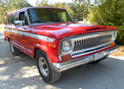
Here is my build with a 5.3 2003 LS style engine and a 4L60E GM transmission and a 8.8 Ford limited slip rear axle. It did take 2 winters. I did the engine and tranny first then the next winter did the suspension and axle. It is the best build I have done yet. The bikes are a close second.
http://www.jeepforum.com/forum/f12/i...mance-3299289/
http://www.jeepforum.com/forum/f12/i...mance-3299289/
Thread Starter
Teching In
Joined: Dec 2015
Posts: 48
Likes: 0
From: WI
We have the tank out and I am waiting for new straps. The old pump/filter is 1 inch longer than the new unit going in. It also does not look like the return line contacted the bottom because the fuel pump and pickup is longer than the return tube but I drilled a 1/8 hole in the new shorter unit. I also think the tank has been dropped because the flexible fuel lines from the tank to the metal lines on the frame have standard SS worm drive clamps on both ends.
Thread Starter
Teching In
Joined: Dec 2015
Posts: 48
Likes: 0
From: WI
I have the new fuel pump/sending unit in with new hi pressure lines and clamps installed. It started right up and I let it warm up then took it for a ride and a mile or so it had the same stalling, jerking, hesitation problems I had and still do. I hate to just throw parts and money but my next step is a crank pos. sensor at this point. The fuel pressure is still at 44-45 psi that I expected. I also have another fuel psi. regulator that I will install but I believe that it will still come in at 44-45 psi. running and this is for the FLEX vehicles as I understand it. Even with the problems when it does go it really does go with plenty of torque.
Last edited by LSXJeep; Jun 22, 2018 at 01:02 AM.

