


Is my radiator causing my overheating? Regarding the rows in the radiator

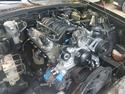


Also, how is your coolant crossover line ran? Sounds like you still have air in the system.

TECH Senior Member


Joined: Jun 2016
Posts: 22,287
Likes: 3,615
From: Central Cal.
If you could, send in a diagram of how your belt runs around the pulleys. This will answer Michael's very valid question above
OR, answer this- If the ribbed part of the belt is driven by the crank, does the BACK (non-ribbed side) of the belt ride on the water pump pulley? If so, the belt is driving the water pump correctly
OR, answer this- If the ribbed part of the belt is driven by the crank, does the BACK (non-ribbed side) of the belt ride on the water pump pulley? If so, the belt is driving the water pump correctly
Last edited by G Atsma; Jul 31, 2018 at 11:11 PM.


You're looking up top. More corrosion will show down low.
If it looks corroded down low, the tubes are blocked too.
Aluminum sheds heat to air better than brass.
One-row radiators flow more air than 2, 3, or 4 rows. If you can find an OEM size to fit your Chevelle in a one-row aluminum, it is guaranteed to outperform your antique clogged junk and will usually be cheap. My last stock replacement one-row lasted me 14+ yrs w/ a SBC in 120+F temps.
If it looks corroded down low, the tubes are blocked too.
Aluminum sheds heat to air better than brass.
One-row radiators flow more air than 2, 3, or 4 rows. If you can find an OEM size to fit your Chevelle in a one-row aluminum, it is guaranteed to outperform your antique clogged junk and will usually be cheap. My last stock replacement one-row lasted me 14+ yrs w/ a SBC in 120+F temps.


If you could, send in a diagram of how your belt runs around the pulleys. This will answer Michael's very valid question above
OR, answer this- If the ribbed part of the belt is driven by the crank, does the BACK (non-ribbed side) of the belt ride on the water pump pulley? If so, the belt is driving the water pump correctly
OR, answer this- If the ribbed part of the belt is driven by the crank, does the BACK (non-ribbed side) of the belt ride on the water pump pulley? If so, the belt is driving the water pump correctly
Of course, I never had the engine running before doing the new head gaskets - bought it from a salvage yard and installed the new gaskets
You're looking up top. More corrosion will show down low.
If it looks corroded down low, the tubes are blocked too.
Aluminum sheds heat to air better than brass.
One-row radiators flow more air than 2, 3, or 4 rows. If you can find an OEM size to fit your Chevelle in a one-row aluminum, it is guaranteed to outperform your antique clogged junk and will usually be cheap. My last stock replacement one-row lasted me 14+ yrs w/ a SBC in 120+F temps.
If it looks corroded down low, the tubes are blocked too.
Aluminum sheds heat to air better than brass.
One-row radiators flow more air than 2, 3, or 4 rows. If you can find an OEM size to fit your Chevelle in a one-row aluminum, it is guaranteed to outperform your antique clogged junk and will usually be cheap. My last stock replacement one-row lasted me 14+ yrs w/ a SBC in 120+F temps.
If the previous owner ran Dexcool in the radiator, it very well could be clogged up, that stuff isn't good in most swap situations. That said, the top part of the radiator doesn't look too bad to me, but like the others have said, it could be clogged down low.
Prev owner definitely ran DexCool in it, the residue I wiped off inside of it looks exactly like the residue build up you see in DexCool filled Silverado's coolant tanks
Did the radiator work fine before the LS swap?
Also on the thermostat issue, I know you changed it at some point. But from my experiences, it is best to stick with a GM / AC Delco factory part. Or boil it on the stove to ensure that the T-stat is opening fully while monitoring the water temp with a candy thermometer.
... Really the LS is more efficient than a similar SBC or BBC, so cooling shouldn't be that hard. Perhaps monitor with an infrared heat gun or mechanical gauge to ensure the dash gauge is reading correctly (bad ground?). At 230F when you stop that thing should be gurgling in pain before popping water out the overflow. Also oil pressure would start reading lower as coolant temp increases.
I did not catch the answer, but yes as others have said, you need to ensure the steam vents are routed properly to get the air out. Water pump mod or JTR inline adapter both work well.
Really bad luck would be something is wrong internally causing the heat build up...
Also on the thermostat issue, I know you changed it at some point. But from my experiences, it is best to stick with a GM / AC Delco factory part. Or boil it on the stove to ensure that the T-stat is opening fully while monitoring the water temp with a candy thermometer.
... Really the LS is more efficient than a similar SBC or BBC, so cooling shouldn't be that hard. Perhaps monitor with an infrared heat gun or mechanical gauge to ensure the dash gauge is reading correctly (bad ground?). At 230F when you stop that thing should be gurgling in pain before popping water out the overflow. Also oil pressure would start reading lower as coolant temp increases.
I did not catch the answer, but yes as others have said, you need to ensure the steam vents are routed properly to get the air out. Water pump mod or JTR inline adapter both work well.
Really bad luck would be something is wrong internally causing the heat build up...
Did the radiator work fine before the LS swap?
Also on the thermostat issue, I know you changed it at some point. But from my experiences, it is best to stick with a GM / AC Delco factory part. Or boil it on the stove to ensure that the T-stat is opening fully while monitoring the water temp with a candy thermometer.
... Really the LS is more efficient than a similar SBC or BBC, so cooling shouldn't be that hard. Perhaps monitor with an infrared heat gun or mechanical gauge to ensure the dash gauge is reading correctly (bad ground?). At 230F when you stop that thing should be gurgling in pain before popping water out the overflow. Also oil pressure would start reading lower as coolant temp increases.
I did not catch the answer, but yes as others have said, you need to ensure the steam vents are routed properly to get the air out. Water pump mod or JTR inline adapter both work well.
Really bad luck would be something is wrong internally causing the heat build up...
Also on the thermostat issue, I know you changed it at some point. But from my experiences, it is best to stick with a GM / AC Delco factory part. Or boil it on the stove to ensure that the T-stat is opening fully while monitoring the water temp with a candy thermometer.
... Really the LS is more efficient than a similar SBC or BBC, so cooling shouldn't be that hard. Perhaps monitor with an infrared heat gun or mechanical gauge to ensure the dash gauge is reading correctly (bad ground?). At 230F when you stop that thing should be gurgling in pain before popping water out the overflow. Also oil pressure would start reading lower as coolant temp increases.
I did not catch the answer, but yes as others have said, you need to ensure the steam vents are routed properly to get the air out. Water pump mod or JTR inline adapter both work well.
Really bad luck would be something is wrong internally causing the heat build up...
Not sure if the radiator worked or not before the swap. I bought it used, been having issues with it ever since.
I'm about to order the JTR inline adapter. Maybe where I have it plumbed into the radiator right now isn't good enough. The stock thermostat did the same thing, would slowly gradually overheat, same w/ the new thermostat (even though it isn't AC Delco)

so you did verify neither head gasket is on backwards? I have seen that twice now.
most LS t stats have a tab to keep the bleed valve at 12 oclock position, but it's good to verify it anyway.
next on my list would be burping the cooling system. fill the motor with coolant from the outlet at the top of the water pump. Put the hose on and fill the rad and hoses.
you might consider buying a vacuum filler kit. its a must of you mess with newer cars.
Unless you rad is totally blocked, even the tiniest radiator will cool an LS. We have used little scirocco and civic rads to make room for turbo plumbing and they stay plenty cool.
most LS t stats have a tab to keep the bleed valve at 12 oclock position, but it's good to verify it anyway.
next on my list would be burping the cooling system. fill the motor with coolant from the outlet at the top of the water pump. Put the hose on and fill the rad and hoses.
you might consider buying a vacuum filler kit. its a must of you mess with newer cars.
Unless you rad is totally blocked, even the tiniest radiator will cool an LS. We have used little scirocco and civic rads to make room for turbo plumbing and they stay plenty cool.
so you did verify neither head gasket is on backwards? I have seen that twice now.
most LS t stats have a tab to keep the bleed valve at 12 oclock position, but it's good to verify it anyway.
next on my list would be burping the cooling system. fill the motor with coolant from the outlet at the top of the water pump. Put the hose on and fill the rad and hoses.
you might consider buying a vacuum filler kit. its a must of you mess with newer cars.
Unless you rad is totally blocked, even the tiniest radiator will cool an LS. We have used little scirocco and civic rads to make room for turbo plumbing and they stay plenty cool.
most LS t stats have a tab to keep the bleed valve at 12 oclock position, but it's good to verify it anyway.
next on my list would be burping the cooling system. fill the motor with coolant from the outlet at the top of the water pump. Put the hose on and fill the rad and hoses.
you might consider buying a vacuum filler kit. its a must of you mess with newer cars.
Unless you rad is totally blocked, even the tiniest radiator will cool an LS. We have used little scirocco and civic rads to make room for turbo plumbing and they stay plenty cool.
The thermostat on my water pump is built into the filler next, so I'm not able to orient it a certain way
I bought one of the radiator funnel deals, ran the motor a good bit, reving/squeezing and getting all the air bubbles out. Was pretty certain I got all the bubbles out
Checked both sides of the engine and the head gasket tabs that are exposed are both closer to the front of the engine, which confirms they are correctly installed
I also checked the belt routing, and it matches the correct routing
I also checked the belt routing, and it matches the correct routing
If you’ve got an infrared temp gun, bring the car up into the 200-210f range and then shoot various parts of the radiator core. If clogged/deposited-up, you’ll find significant hot/cold spots. Otherwise there should be a pretty even distribution of temp drop from the hot side to the cool side.
If you’ve got an infrared temp gun, bring the car up into the 200-210f range and then shoot various parts of the radiator core. If clogged/deposited-up, you’ll find significant hot/cold spots. Otherwise there should be a pretty even distribution of temp drop from the hot side to the cool side.
Have a buddy with a 5.0L converted Volvo - had the stock 33 year old diesel radiator in it. Had intermittent overheating problems once he got the 5.0L running. His IR gun showed the bottom third of the radiator was "cold" when shot with the IR gun. Completely clogged. I had mentioned he ought not to trust a 33 year old rad.... 
Have a buddy with a 5.0L converted Volvo - had the stock 33 year old diesel radiator in it. Had intermittent overheating problems once he got the 5.0L running. His IR gun showed the bottom third of the radiator was "cold" when shot with the IR gun. Completely clogged. I had mentioned he ought not to trust a 33 year old rad....
A question for anyone though - I notice that If I turn the heater on when the car is at 220 degrees, the temp will drop down to 190 within a couple minutes. Could this be even more proof my radiator is complete crap??