




Yep, another thread about 60ft times
Thread Starter
11 Second Club
iTrader: (11)
Joined: Sep 2005
Posts: 287
Likes: 0
From: Crosslanes WV
 Yep, another thread about 60ft times
 I finally got me a set of Hoosier DR's (275's) on the stock WS6 wheels.. Took it up to the track and wasnt SUPER happy but the car did do better..
Previously I had been running a regular old set of Hankook street tires that had made pretty consistant upper 1.7X's which I thought was pretty damn good from a street tire but I had to "roll" into the throttle and I couldnt start spraying until the car found enough traction.. I ran a best of 7.56 on a 100 shot with the street tires..
Well now I went to the same track with the hoosiers and got my 60" down to mid 1.6X's and ran a best of 7.74 OFF the bottle which made me pretty happy.. So I went to put my 10 bolt to the test and tried spraying out of the hole which proved to be too much for the Hoosiers (2.25 60).. You guys are going to kill me when you hear my "setup" lol but its been working great on the street tires obviously so I didnt change anything.. On street tires I run about 18 lbs of pressure to pull my high 1.7X's.. On the Hoosiers I got down to about 14 lbs when I started getting the 1.6X's.. The back shocks are completely shot.. like total trash literally.. I havent replaced them because of the good 60's I have been getting previously.. I have a 150 pill in now with an otherwise bolt on car.. I have non adjustable control arms in stock location and an adjustable panhard but all other suspension is stock.. I might not have enough tire to be spraying out of the hole with but figured I would ask what direction you would start in to improve my launching.. I assume new shocks but maybe I am wrong
Previously I had been running a regular old set of Hankook street tires that had made pretty consistant upper 1.7X's which I thought was pretty damn good from a street tire but I had to "roll" into the throttle and I couldnt start spraying until the car found enough traction.. I ran a best of 7.56 on a 100 shot with the street tires..
Well now I went to the same track with the hoosiers and got my 60" down to mid 1.6X's and ran a best of 7.74 OFF the bottle which made me pretty happy.. So I went to put my 10 bolt to the test and tried spraying out of the hole which proved to be too much for the Hoosiers
(2.25 60).. You guys are going to kill me when you hear my "setup" lol but its been working great on the street tires obviously so I didnt change anything.. On street tires I run about 18 lbs of pressure to pull my high 1.7X's.. On the Hoosiers I got down to about 14 lbs when I started getting the 1.6X's.. The back shocks are completely shot.. like total trash literally.. I havent replaced them because of the good 60's I have been getting previously.. I have a 150 pill in now with an otherwise bolt on car.. I have non adjustable control arms in stock location and an adjustable panhard but all other suspension is stock.. I might not have enough tire to be spraying out of the hole with but figured I would ask what direction you would start in to improve my launching.. I assume new shocks but maybe I am wrong I would go with some Adjustable LCA brackets and get them in the bottom hole, at least some CE 3 way shocks if your on a real budget. And a progressive controller. This should get you there at your power level.
LOL@ not enough tire to spray out the hole.
You do know Justin Smith went 1.13 60' on a 275?
I think you need some relocation brackets and a set of single adjustable shocks.
With the shocks trashed like that I'd be willing to bet that the extension is so loose that it is hammering the tire into the track and causing it to spin.
You need a new set of shocks and may as well buy adjustable ones while your at it.
But please don't get the CE's 3 ways(they do have their place)but go ahead and at least get a set of QA1's which are the cheapest of the decent adjustable shocks.
My Afco's are a god send on a bad track.
You do know Justin Smith went 1.13 60' on a 275?
I think you need some relocation brackets and a set of single adjustable shocks.
With the shocks trashed like that I'd be willing to bet that the extension is so loose that it is hammering the tire into the track and causing it to spin.
You need a new set of shocks and may as well buy adjustable ones while your at it.
But please don't get the CE's 3 ways(they do have their place)but go ahead and at least get a set of QA1's which are the cheapest of the decent adjustable shocks.
My Afco's are a god send on a bad track.
A good set of shock would do you wonders. I would recommend a set of Strange single adjustables for the rear. They are affordable and work really well. If there is anything we can help you with let us know.
Kyle
Kyle
__________________
Glenn ***
Sales Tech
www.bmrsuspension.com
813.986.9302
Find a Quality alignment shop near you!
Glenn ***
Sales Tech
www.bmrsuspension.com
813.986.9302
Find a Quality alignment shop near you!
Thread Starter
11 Second Club
iTrader: (11)
Joined: Sep 2005
Posts: 287
Likes: 0
From: Crosslanes WV
Wow.. I obviously dont understand all the in/outs of setting up the suspension yet lol.. I was pretty much just using the frame of mind that with my good 60's on street tires I shouldnt change anything.. Can someone explain in simple terms the difference in the shocks mentioned? I am going to search it anyway but interested in hearing more about the ones in this thread
Wow.. I obviously dont understand all the in/outs of setting up the suspension yet lol.. I was pretty much just using the frame of mind that with my good 60's on street tires I shouldnt change anything.. Can someone explain in simple terms the difference in the shocks mentioned? I am going to search it anyway but interested in hearing more about the ones in this thread
I'll try to do this simple lol.
The extension setting of the shock is what pulls the body away from the tire and as it pulls away it exerts a downward force on the tire planting it.
Compression is what dictates how much the tire can push up not the body(opposite)
A looser extension setting will allow the body to separate from the tire and put more of a downward force on it helping with traction. Too much though and you'll hammer the tire so hard that it spins or shakes(wheel hop). Compression is what keeps the tire glued to the track as it goes down the track.
A radial likes to be smacked hard initially with very very little to no give whatsoever in the compression setting. The body needs to pull away some to exert that downward force and then the compression keeps it from hammering it into the ground so you get the best of both, traction and no shake. It's a fine line to walk which is why a double adjustable shock works better than a single adjustable shock.
A double can independently adjust both settings where as a single only adjusts the rebound and the compression is just along for the ride.
What do you need? It comes down to application and power level and how fast you really want to go and what you will satisfied and happy with.
Hope this helps.
Trending Topics
LS1 Tech Stories
The Best V8 Stories One Small Block at Time

6 Common C5 Corvette Failures and What's Involved In Repairing Them
Pouria Savadkouei
Retro Modern Bandit Pontiac Trans AM Comes With Burt Reynolds' Autograph
Verdad Gallardo
Top 10 Greatest Cadillac V Series Performance Models Ever, Ranked
Pouria Savadkouei
Top 10 Most Powerful Chevy Trucks Ever Made!

Hennessey's New Supercharged Silverado ZR2 Has 700 HP
Verdad Gallardo
Coachbuilt N2A Anteros Is an LS2-Powered C6 Corvette In Italian Clothes
Verdad Gallardo
Awesome K5 Blazer Restomod Comes With C7 Corvette Power
Verdad Gallardo
10 Camaros You Should Never Buy

10 LS Engine Myths That Refuse to Die
Verdad Gallardo
It's misleading saying guys are running such low 60's with drag radials. A near stock car with low profile drag radials won't run a great 60'. The side walls are to narrow on 17,18, and even 20" tires to really flatten them out. Espcially at near stock power levels. Yes you are asking too much from the tire.
I'm experimenting with 18" NTO5R's and it won't hook at anything above idel at the hit. Spraying out of the hole. Spin fest. The 16" MT's did better. They have more sidewall but are narrower.
I do have a built suspension. The car has been 1.3's on Hossier slicks.
A 15" drag radial is a different story. I bet on his 1.13 the tire was flat and wrinklred just like a true slick.
I'm experimenting with 18" NTO5R's and it won't hook at anything above idel at the hit. Spraying out of the hole. Spin fest. The 16" MT's did better. They have more sidewall but are narrower.
I do have a built suspension. The car has been 1.3's on Hossier slicks.
A 15" drag radial is a different story. I bet on his 1.13 the tire was flat and wrinklred just like a true slick.

Thread Starter
11 Second Club
iTrader: (11)
Joined: Sep 2005
Posts: 287
Likes: 0
From: Crosslanes WV
Awesome information guys.. I have been doing alot of searching and reading the sticky's and I cant really get "good" information that pertains directly to our cars.. I read the sticky and its explains all the geometry and everything but I think for newbie racers and casual weekend racers we would best benefit from more focused information like what you just gave me.. I will be getting a set of adjustable rear shocks and I will certainly post up with the results.. first race is May 12th so I gotta order soon
It's misleading saying guys are running such low 60's with drag radials. A near stock car with low profile drag radials won't run a great 60'. The side walls are to narrow on 17,18, and even 20" tires to really flatten them out. Espcially at near stock power levels. Yes you are asking too much from the tire.
I'm experimenting with 18" NTO5R's and it won't hook at anything above idel at the hit. Spraying out of the hole. Spin fest. The 16" MT's did better. They have more sidewall but are narrower.
I do have a built suspension. The car has been 1.3's on Hossier slicks.
A 15" drag radial is a different story. I bet on his 1.13 the tire was flat and wrinklred just like a true slick.
I'm experimenting with 18" NTO5R's and it won't hook at anything above idel at the hit. Spraying out of the hole. Spin fest. The 16" MT's did better. They have more sidewall but are narrower.
I do have a built suspension. The car has been 1.3's on Hossier slicks.
A 15" drag radial is a different story. I bet on his 1.13 the tire was flat and wrinklred just like a true slick.
Now about the 1.13 and the tire being flat and wrinkled like a true slick is totally false.
A drag radial is nothing like a slick and cannot be treated like a slick. You go and wrinkle the sidewall and hammer it flat into the pavement like a slick and see what happens. It's not going to work period.
A radial needs to be smacked hard as possible initially and have no give what so ever in the compression setting on the shock or the sidewall on the tire. A slight tiny bulge is normally the result.
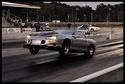
Here is a picture of my car on Hoosier 275/60's@17.5psi. Raceweight was 2970ish and this was a 1.31 60' IIRC.

As you can see the sidewall doesn't deflect at all but there is a the tiniest bulge at the contact patch and the sidewall is stiff. I have since tightened the compression more and loosened the extension slightly to get more separation and less give on the compression along with upping the air pressure to 19psi and have experimented with as low as 17 and as high as 22. We will see how the nitrous does with it.
Last edited by Fbodyjunkie06; Apr 17, 2012 at 09:06 PM.

I have just made one outing from the switch from qa-1's to da afcos and I'll tell you one thing, I would highly recommend the afcos. Sure there twice as much but there 37 X's better no joke! I would invest in some lca relocation brackets and save for some afcos from madman. There the best investment I've made to my car to date!
[QUOTE=Stumped1215;16209091]Yes but what he is saying is that you dont need more tire. You just need to optimize the setup you have now. A big tire is just a crutch for someone that cant set it up right.[/QU
Really I get that.
Really I get that.
I agree with what you said about the lower profile tire they won't perform to the level a 15" tire will. That said I have a friend with nothing but relocation brackets, lca's, torque arm and phb. Stock shocks and springs and goes 1.47-1.49 consistently at 3550 pounds on 17's all the time.
Now about the 1.13 and the tire being flat and wrinkled like a true slick is totally false.
A drag radial is nothing like a slick and cannot be treated like a slick. You go and wrinkle the sidewall and hammer it flat into the pavement like a slick and see what happens. It's not going to work period.
A radial needs to be smacked hard as possible initially and have no give what so ever in the compression setting on the shock or the sidewall on the tire. A slight tiny bulge is normally the result.
Here is a picture of my car on Hoosier 275/60's@17.5psi. Raceweight was 2970ish and this was a 1.31 60' IIRC.
As you can see the sidewall doesn't deflect at all but there is a the tiniest bulge at the contact patch and the sidewall is stiff. I have since tightened the compression more and loosened the extension slightly to get more separation and less give on the compression along with upping the air pressure to 19psi and have experimented with as low as 17 and as high as 22. We will see how the nitrous does with it.
Now about the 1.13 and the tire being flat and wrinkled like a true slick is totally false.
A drag radial is nothing like a slick and cannot be treated like a slick. You go and wrinkle the sidewall and hammer it flat into the pavement like a slick and see what happens. It's not going to work period.
A radial needs to be smacked hard as possible initially and have no give what so ever in the compression setting on the shock or the sidewall on the tire. A slight tiny bulge is normally the result.
Here is a picture of my car on Hoosier 275/60's@17.5psi. Raceweight was 2970ish and this was a 1.31 60' IIRC.
As you can see the sidewall doesn't deflect at all but there is a the tiniest bulge at the contact patch and the sidewall is stiff. I have since tightened the compression more and loosened the extension slightly to get more separation and less give on the compression along with upping the air pressure to 19psi and have experimented with as low as 17 and as high as 22. We will see how the nitrous does with it.
