



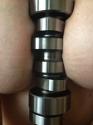





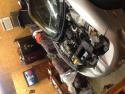

NA SBE LS3 Record?

When is this thing going to the track?! New hood setup looks sick! Did I read that you are running a RPS twin disc now? What's the weight of the new piece? I know its heavier than the previous clutch but I am sure your 60 foots will love you.

Thread Starter
9 Second Club


Joined: Feb 2004
Posts: 818
Likes: 215
From: VA
The plan is April 26th at the SRK rental. We will be at US41 for a day of fun. The RPS I have with aluminum flywheel is 26 pounds. It drives amazing and the shifts are good.
What are you thoughts on aluminum vs steel flywheels for drag racing and their implications on 60 foots?
LS1 Tech Stories
The Best V8 Stories One Small Block at Time

Gas Monkey Built a 6-Wheel Ferrari Testarossa With a Corvette LT4 Engine
Verdad Gallardo
7 Most Reliable High-Performance Engines GM Has Ever Built
Verdad Gallardo
Amazing '71 Camaro Restomod Is Modern Muscle Car Under the Skin
Verdad Gallardo
6 Common C5 Corvette Failures and What's Involved In Repairing Them
Pouria Savadkouei
Retro Modern Bandit Pontiac Trans AM Comes With Burt Reynolds' Autograph
Verdad Gallardo
Top 10 Greatest Cadillac V Series Performance Models Ever, Ranked
Pouria Savadkouei
Top 10 Most Powerful Chevy Trucks Ever Made!

Hennessey's New Supercharged Silverado ZR2 Has 700 HP
Verdad Gallardo
Coachbuilt N2A Anteros Is an LS2-Powered C6 Corvette In Italian Clothes
Verdad Gallardo Thread Starter
9 Second Club
Joined: Feb 2004
Posts: 818
Likes: 215
From: VA
Well I can say I have cut 1.5 60' with a 16 pound clutch and a 26 pound clutch. I am hoping to see some 1.4s. I have never had a car until this one more track ready as far as drag pack. I am still on stock type suspension as well. (Bilsteins and Z51 mono leaf)

TECH Senior Member

Joined: Jun 2016
Posts: 22,298
Likes: 3,619
From: Central Cal.
There is no drivetrain loss with a heavier clutch/flywheel. Just revs slower. It dynos the same.
Edit: I SHOULD say here there is no difference in TORQUE output with a heavier/lighter clutch. Since HP is a function of torque /acceleration, there IS a difference in HP with heavier/lighter clutches.
Last edited by G Atsma; Apr 9, 2019 at 11:39 PM.

Registered User
Joined: Apr 2019
Posts: 5
Likes: 0
http://www.superchevy.com/how-to/eng...el-why-weight/
http://www.superchevy.com/how-to/040...l-information/
A heavier clutch won't accelerate as fast as a light clutch....dyno be damned. But i have seen some tests where a light clutch shows more hp on a dyno vs a heavy clutch. This can depend on the type of dyno used tho.
At 120 mph a 26" tire is rotating at a rpm of 1550. Now guys go to race brakes, light wheel/tires and pick up significant gains with parts rotating at 1/4 the rpm of the crank shaft.......think about it. Now that can be a much greater loss of weight by getting the weight out of 4 corners vs 1 crank. But it's turning much slower in comparison. The corner weights are also not getting a change in rpm to overcome like a clutch. They're more of a constant increase in rpm(acceleration) goin down the track.
Between a light clutch, light balancer and shortening the belt system you can be looking at removing 50ish lb of engine speed rotating weight......pretty significant imo.
At 120 mph a 26" tire is rotating at a rpm of 1550. Now guys go to race brakes, light wheel/tires and pick up significant gains with parts rotating at 1/4 the rpm of the crank shaft.......think about it. Now that can be a much greater loss of weight by getting the weight out of 4 corners vs 1 crank. But it's turning much slower in comparison. The corner weights are also not getting a change in rpm to overcome like a clutch. They're more of a constant increase in rpm(acceleration) goin down the track.
Between a light clutch, light balancer and shortening the belt system you can be looking at removing 50ish lb of engine speed rotating weight......pretty significant imo.
Last edited by HioSSilver; Apr 9, 2019 at 10:30 PM.
Registered User
Joined: Apr 2019
Posts: 5
Likes: 0
A heavier clutch won't accelerate as fast as a light clutch....dyno be damned. But i have seen some tests where a light clutch shows more hp on a dyno vs a light clutch. This can depend on the type of dyno used tho.
At 120 mph a 26" tire is rotating at a rpm of 1550. Now guys go to race brakes, light wheel/tires and pick up significant gains with parts rotating at 1/4 the rpm of the crank shaft.......think about it.
At 120 mph a 26" tire is rotating at a rpm of 1550. Now guys go to race brakes, light wheel/tires and pick up significant gains with parts rotating at 1/4 the rpm of the crank shaft.......think about it.
Imagine dumping the clutch on a 60lb clutch assembly vs 19lb clutch assembly. Drivetrain shock is a huge problem with stick cars, a heavy clutch only worsens it. Its also insane that people believe 40lbs off your drivetrain wont free up power, if that were true then why are crank HP figures always higher then wheel HP figures.
I editted that post some.
Well if you're gonna try and use a heavy clutch the inertia from it needs to be utilized or it's a complete waste of energy. Now with that said there is no place in a performance car for a 60lb clutch. Gm simply used heavy *** clutches as a form of torque management.
Now here's the kicker. In bolt on form lazerlemons 60' was better with the light clutch(1.50 vs 1.58). Now there are other factors that can affect that (track prep, driving techniques) alot. But that's the results at the moment.
Well if you're gonna try and use a heavy clutch the inertia from it needs to be utilized or it's a complete waste of energy. Now with that said there is no place in a performance car for a 60lb clutch. Gm simply used heavy *** clutches as a form of torque management.
Now here's the kicker. In bolt on form lazerlemons 60' was better with the light clutch(1.50 vs 1.58). Now there are other factors that can affect that (track prep, driving techniques) alot. But that's the results at the moment.
Heavy clutch solved three problems for GM:
1. People who think they can drive stick but cannot in fact. Car is more likely to keep running vs stalling due to inertia.
2. Idle tuning. Heavier inertia makes idle more stable. Stock tube is not optimized per individual vehicle. Heavier clutch helps it get to a stable idle.
3. People who cannot drive and just hit the gas. Heavier clutch helps keep the tires planted vs new vette owner going sideways 3 miles from dealership and wrecking.
At the track the only advantage to a heavy clutch I can think of is the ability to absorb heat under high slip conditions. Once car is moving, advantage light clutch.
1. People who think they can drive stick but cannot in fact. Car is more likely to keep running vs stalling due to inertia.
2. Idle tuning. Heavier inertia makes idle more stable. Stock tube is not optimized per individual vehicle. Heavier clutch helps it get to a stable idle.
3. People who cannot drive and just hit the gas. Heavier clutch helps keep the tires planted vs new vette owner going sideways 3 miles from dealership and wrecking.
At the track the only advantage to a heavy clutch I can think of is the ability to absorb heat under high slip conditions. Once car is moving, advantage light clutch.
I think the phrase just because some is good does not mean more is better. I am all for optimization and efficiency. A lightweight clutch/flywheel setup is superior in drag racing only up to a certain point. Eventually removing weight will not allow the car to perform any better. Take a look at the record holding N/A f bodys and corvettes. Or look at the 6 speed rwd record holder. I intend to use a clutch/flywheel setup that is 26-32lbs. There are more variables in a setup than "lighter is better" in my opinion. However, I have noticed most cars have a clutch/flywheel setup that is way too heavy.
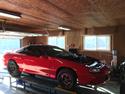
Launching!
Joined: Jan 2012
Posts: 269
Likes: 3
From: Attica, IN
I’ve been going back and fourth between the whole steel vs aluminum flywheel. I think after reading this I’m going to go back and just stick with another aluminum flywheel like before. I’ve always heard the steel is better so was going to try it out, guess not haha.