


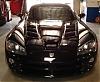



Corn Powered Corvettes!!!

I'm looking to run my other car ('75 Saab 99ems w/16v, big turbo, etc) on ethanol and I've dug up some interesting info. Here's what I've found out so far:
1. Ethanol is more corrosive that gasoline, especially with rubber and aluminum, think about all the O-rings, seals, fuel lines, injectors, etc that might need to be changed. Cars in recent years are much more tolerant of higher percentages and I beleive they are required to operate without issues on E10 maybe E20. (emissions rule, ethanol replacing MTBE for O2 content of the fuel) I've read many reports from folks running up to E100(pure ethanol) without problems. But I've never tried it my self. On the Saab I'm replacing EVERYTHING, from custom fuel cell to injectors. It's 30yrs old and was not designed for 300+ hp.
2. Ethanol has less 'energy' than gasoline. So you'll need more of it to to make the same power. The +30% number is correct, mathetically. BUT, it has a higher 'octane' rating so it compliments changes to build hp (upping compression, boost) nicely.
3. Ethanol is electrically conductive. I read an article describing the correct way to ground your fuel tank, pump, etc. I wasn't sure if the problem was electrical ground or sparks, but sparks flying in a fuel tank is bad for any fuel, eh?
4. Here's the part that really interests me: FlexFuel sensing. Considering point #2, I need to tune for a different AFR, #3 the fuel can conduct electricity; enter the FlexFuel sensor. By measuring current, resistance, or something (I'm not to good with electricity) the sensor reads how much ethanol is in the mixture. Look into MegaSquirt DIY http://www.msefi.com/) fuel injection systems (that's what's going on the Saab) There are several several post talking about ethanol. The sensor I'm planning to use comes from a GM truck, and hpTuners has support or at least, tables for flex fuel vehicles.
Now, how does the tuning work? Haven't figured out the details yet, but it was explained to me like this: The engine has base settings and correction factors for different inputs like temp, pressure, O2 sensors, etc. So baseline x correction for temps x O2 sensor corrections x Fuel composition...
1. Ethanol is more corrosive that gasoline, especially with rubber and aluminum, think about all the O-rings, seals, fuel lines, injectors, etc that might need to be changed. Cars in recent years are much more tolerant of higher percentages and I beleive they are required to operate without issues on E10 maybe E20. (emissions rule, ethanol replacing MTBE for O2 content of the fuel) I've read many reports from folks running up to E100(pure ethanol) without problems. But I've never tried it my self. On the Saab I'm replacing EVERYTHING, from custom fuel cell to injectors. It's 30yrs old and was not designed for 300+ hp.
2. Ethanol has less 'energy' than gasoline. So you'll need more of it to to make the same power. The +30% number is correct, mathetically. BUT, it has a higher 'octane' rating so it compliments changes to build hp (upping compression, boost) nicely.
3. Ethanol is electrically conductive. I read an article describing the correct way to ground your fuel tank, pump, etc. I wasn't sure if the problem was electrical ground or sparks, but sparks flying in a fuel tank is bad for any fuel, eh?
4. Here's the part that really interests me: FlexFuel sensing. Considering point #2, I need to tune for a different AFR, #3 the fuel can conduct electricity; enter the FlexFuel sensor. By measuring current, resistance, or something (I'm not to good with electricity) the sensor reads how much ethanol is in the mixture. Look into MegaSquirt DIY http://www.msefi.com/) fuel injection systems (that's what's going on the Saab) There are several several post talking about ethanol. The sensor I'm planning to use comes from a GM truck, and hpTuners has support or at least, tables for flex fuel vehicles.
Now, how does the tuning work? Haven't figured out the details yet, but it was explained to me like this: The engine has base settings and correction factors for different inputs like temp, pressure, O2 sensors, etc. So baseline x correction for temps x O2 sensor corrections x Fuel composition...
[QUOTE=newby]. i thought it was cool that e100 is floating around out there somewhere. i dont have a station here yet that even has e85 so i haven't given it too much thought.QUOTE]
Yeah here in Ky, around NC and TN, we have had 100 for years.... and been in cars for years... its actually how nascar was started I think....
Yeah here in Ky, around NC and TN, we have had 100 for years.... and been in cars for years... its actually how nascar was started I think....
Last edited by BLWN1; Nov 4, 2006 at 11:24 PM.

TECH Fanatic
Joined: Aug 2003
Posts: 1,130
Likes: 1
From: Tranås, Sweden
Originally Posted by Ellwood
I'm looking to run my other car ('75 Saab 99ems w/16v, big turbo, etc) on ethanol and I've dug up some interesting info. Here's what I've found out so far:
1. Ethanol is more corrosive that gasoline, especially with rubber and aluminum, think about all the O-rings, seals, fuel lines, injectors, etc that might need to be changed. Cars in recent years are much more tolerant of higher percentages and I beleive they are required to operate without issues on E10 maybe E20. (emissions rule, ethanol replacing MTBE for O2 content of the fuel) I've read many reports from folks running up to E100(pure ethanol) without problems. But I've never tried it my self. On the Saab I'm replacing EVERYTHING, from custom fuel cell to injectors. It's 30yrs old and was not designed for 300+ hp.
2. Ethanol has less 'energy' than gasoline. So you'll need more of it to to make the same power. The +30% number is correct, mathetically. BUT, it has a higher 'octane' rating so it compliments changes to build hp (upping compression, boost) nicely.
3. Ethanol is electrically conductive. I read an article describing the correct way to ground your fuel tank, pump, etc. I wasn't sure if the problem was electrical ground or sparks, but sparks flying in a fuel tank is bad for any fuel, eh?
4. Here's the part that really interests me: FlexFuel sensing. Considering point #2, I need to tune for a different AFR, #3 the fuel can conduct electricity; enter the FlexFuel sensor. By measuring current, resistance, or something (I'm not to good with electricity) the sensor reads how much ethanol is in the mixture. Look into MegaSquirt DIY http://www.msefi.com/) fuel injection systems (that's what's going on the Saab) There are several several post talking about ethanol. The sensor I'm planning to use comes from a GM truck, and hpTuners has support or at least, tables for flex fuel vehicles.
Now, how does the tuning work? Haven't figured out the details yet, but it was explained to me like this: The engine has base settings and correction factors for different inputs like temp, pressure, O2 sensors, etc. So baseline x correction for temps x O2 sensor corrections x Fuel composition...
1. Ethanol is more corrosive that gasoline, especially with rubber and aluminum, think about all the O-rings, seals, fuel lines, injectors, etc that might need to be changed. Cars in recent years are much more tolerant of higher percentages and I beleive they are required to operate without issues on E10 maybe E20. (emissions rule, ethanol replacing MTBE for O2 content of the fuel) I've read many reports from folks running up to E100(pure ethanol) without problems. But I've never tried it my self. On the Saab I'm replacing EVERYTHING, from custom fuel cell to injectors. It's 30yrs old and was not designed for 300+ hp.
2. Ethanol has less 'energy' than gasoline. So you'll need more of it to to make the same power. The +30% number is correct, mathetically. BUT, it has a higher 'octane' rating so it compliments changes to build hp (upping compression, boost) nicely.
3. Ethanol is electrically conductive. I read an article describing the correct way to ground your fuel tank, pump, etc. I wasn't sure if the problem was electrical ground or sparks, but sparks flying in a fuel tank is bad for any fuel, eh?
4. Here's the part that really interests me: FlexFuel sensing. Considering point #2, I need to tune for a different AFR, #3 the fuel can conduct electricity; enter the FlexFuel sensor. By measuring current, resistance, or something (I'm not to good with electricity) the sensor reads how much ethanol is in the mixture. Look into MegaSquirt DIY http://www.msefi.com/) fuel injection systems (that's what's going on the Saab) There are several several post talking about ethanol. The sensor I'm planning to use comes from a GM truck, and hpTuners has support or at least, tables for flex fuel vehicles.
Now, how does the tuning work? Haven't figured out the details yet, but it was explained to me like this: The engine has base settings and correction factors for different inputs like temp, pressure, O2 sensors, etc. So baseline x correction for temps x O2 sensor corrections x Fuel composition...
Originally Posted by Runn
Originally Posted by Runn
Yes... i see no idea with changing back to gas when E85 is a better fuel.
maybe I should get started building that still...
TECH Fanatic
Joined: Aug 2003
Posts: 1,130
Likes: 1
From: Tranås, Sweden
Originally Posted by Ellwood
Only thing I'd be worried about is what to do if there's no E85 available and last I checked there was only one station in the state of Florida that sells it. It's going to be a couple of yrs 'til it's as available as gasoline. I really like the 'FlexFuel' idea...
maybe I should get started building that still...
maybe I should get started building that still...
LS1 Tech Stories
The Best V8 Stories One Small Block at Time

6 Common C5 Corvette Failures and What's Involved In Repairing Them
Pouria Savadkouei
Retro Modern Bandit Pontiac Trans AM Comes With Burt Reynolds' Autograph
Verdad Gallardo
Top 10 Greatest Cadillac V Series Performance Models Ever, Ranked
Pouria Savadkouei
Top 10 Most Powerful Chevy Trucks Ever Made!

Hennessey's New Supercharged Silverado ZR2 Has 700 HP
Verdad Gallardo
Coachbuilt N2A Anteros Is an LS2-Powered C6 Corvette In Italian Clothes
Verdad Gallardo
Awesome K5 Blazer Restomod Comes With C7 Corvette Power
Verdad Gallardo
10 Camaros You Should Never Buy

10 LS Engine Myths That Refuse to Die
Verdad Gallardo
Teching In
Joined: May 2005
Posts: 8
Likes: 0
Maybe I can help. I have been playing with this myself. Since much of this is not legal for an on-road vehicle, and have some first hand "opinions" to offer. This is likely why their has not been a detailed tech build-up in any major magazine yet.
I believe to get the most out of an E85 fueled only (not flex fuel) LSx motor, one must increase the cylinder pressure so as to utilize more of the power out of the fuel. This can be done by either 1) increasing the mechanical compression ratio in the motor, or by 2) switching to a cam shaft with a wider lobe separation (113* - 114*) and longer duration similar to a camshaft utilized for a supercharger or nitrous application, or ideally both 1) and 2). A 12.5:1 to 14:1 mechanical compression using a supercharger cam profile would be a good combination.
The octane rating of E85 is 105 (RON), and it burns cooler than gasoline. This combination of high octane and low temperature provide high performance vehicles with suprisingly good fuel efficiency. A gallon of E85 has an energy content of about 80,000 BTU, compared to gasoline’s 124,800 BTU, so in identical motors, about 1.56 gallons of E85 will take you as far as 1 gallon of gasoline. It's the higher octane of E85 and the cooler burning allows a much higher compression ratio, which translates into higher thermodynamic efficiency. You have to squeeze it to get the all the benifits.
The motor will need larger injectors to deliver the ~30% more fuel per injector pulse too. Because of this, an E85 only motor will benefit from a larger intake runner volume, both in the intake manifold and in the head. Heads with 215 - 225cc intake volume are prefered over the stock 200 cc or the typical 205cc "Hi performance head for stock bore" recommendations the magasines usually show. The reason for this is the additional fuel being delivered to the motor will displace air in the intake runner, so the motor will benefit from larger runner volume here. The motor will benefit from a larger intake valve to allow the larger volume to pass; 2.02" ~ 2.08" ~ or even 2.18" valves are better. The customary ratio of intake to exhaust valve size for a given gasoline engine is different for an alcohol motor. In simple terms, the alcohol burns cooler as it passes through the motor so you don't need as much surface area on the exhaust valve perimeter touching the head for valve cooling, and the higher cylinder pressure helps move the exhaust gasses out of the cylinder allowing for the use of a smaller exhaust valve; 1.55". Use the smallest exhaust valve diameter and the largest available intake valve diameter. The use of the smaller exhaust valve will give you extra "real estate" to allow for the oversized intake valve. Forget the sodium filled valves, you won't need them due to the cooler motor operation w/alcohol. Use the F.A.S.T. LSx intake manifold for it's larger runner volume.
This article has parts and technical information that is relevant.
http://www.chevyhiperformance.com/te...system_review/
Using the above information, a basically stock LS1 short block, heads with a larger intake runner and a smaller combustion chamber, larger intake runner manifold, supercharger camshaft, and long tube headers, one could conceivably build a 5.7 LS1 motor that will rear wheel dyno well over 500 HP and 500 ft/lbs, without nitrous bottles to fill, and without going over 6000 rpms to do it, get ~25 mpg's on the freeway, your under hood temperatures will be noticeably cooler, everything internal to your engine, fuel delivery system, and exhaust will run much cleaner.
I am in Minnesota. I have over 100, E85 stations within 100 miles of me. Their are several versions of motors like this running around my neighborhood.
EDIT: in 2006 E85 has been ranging between $1.55 and $1.75/gal in MN.
http://www.tpis.com/
http://www.rune85.com/cornvette
http://www.dynotuneusa.com/
http://www.johnhaleymotorsports.com/
KEY WORDS - E85 Ethanol E85 LS1 E85 LSx E85 cylinder pressure
I believe to get the most out of an E85 fueled only (not flex fuel) LSx motor, one must increase the cylinder pressure so as to utilize more of the power out of the fuel. This can be done by either 1) increasing the mechanical compression ratio in the motor, or by 2) switching to a cam shaft with a wider lobe separation (113* - 114*) and longer duration similar to a camshaft utilized for a supercharger or nitrous application, or ideally both 1) and 2). A 12.5:1 to 14:1 mechanical compression using a supercharger cam profile would be a good combination.
The octane rating of E85 is 105 (RON), and it burns cooler than gasoline. This combination of high octane and low temperature provide high performance vehicles with suprisingly good fuel efficiency. A gallon of E85 has an energy content of about 80,000 BTU, compared to gasoline’s 124,800 BTU, so in identical motors, about 1.56 gallons of E85 will take you as far as 1 gallon of gasoline. It's the higher octane of E85 and the cooler burning allows a much higher compression ratio, which translates into higher thermodynamic efficiency. You have to squeeze it to get the all the benifits.
The motor will need larger injectors to deliver the ~30% more fuel per injector pulse too. Because of this, an E85 only motor will benefit from a larger intake runner volume, both in the intake manifold and in the head. Heads with 215 - 225cc intake volume are prefered over the stock 200 cc or the typical 205cc "Hi performance head for stock bore" recommendations the magasines usually show. The reason for this is the additional fuel being delivered to the motor will displace air in the intake runner, so the motor will benefit from larger runner volume here. The motor will benefit from a larger intake valve to allow the larger volume to pass; 2.02" ~ 2.08" ~ or even 2.18" valves are better. The customary ratio of intake to exhaust valve size for a given gasoline engine is different for an alcohol motor. In simple terms, the alcohol burns cooler as it passes through the motor so you don't need as much surface area on the exhaust valve perimeter touching the head for valve cooling, and the higher cylinder pressure helps move the exhaust gasses out of the cylinder allowing for the use of a smaller exhaust valve; 1.55". Use the smallest exhaust valve diameter and the largest available intake valve diameter. The use of the smaller exhaust valve will give you extra "real estate" to allow for the oversized intake valve. Forget the sodium filled valves, you won't need them due to the cooler motor operation w/alcohol. Use the F.A.S.T. LSx intake manifold for it's larger runner volume.
This article has parts and technical information that is relevant.
http://www.chevyhiperformance.com/te...system_review/
Using the above information, a basically stock LS1 short block, heads with a larger intake runner and a smaller combustion chamber, larger intake runner manifold, supercharger camshaft, and long tube headers, one could conceivably build a 5.7 LS1 motor that will rear wheel dyno well over 500 HP and 500 ft/lbs, without nitrous bottles to fill, and without going over 6000 rpms to do it, get ~25 mpg's on the freeway, your under hood temperatures will be noticeably cooler, everything internal to your engine, fuel delivery system, and exhaust will run much cleaner.
I am in Minnesota. I have over 100, E85 stations within 100 miles of me. Their are several versions of motors like this running around my neighborhood.
EDIT: in 2006 E85 has been ranging between $1.55 and $1.75/gal in MN.
http://www.tpis.com/
http://www.rune85.com/cornvette
http://www.dynotuneusa.com/
http://www.johnhaleymotorsports.com/
KEY WORDS - E85 Ethanol E85 LS1 E85 LSx E85 cylinder pressure
Last edited by Pecos Pete; Dec 7, 2006 at 07:04 AM.
Originally Posted by Pecos Pete
Maybe I can help. I have been playing with this myself. Since much of this is not legal for an on-road vehicle, and have some first hand "opinions" to offer. This is likely why their has not been a detailed tech build-up in any major magazine yet.
I believe to get the most out of an E85 fueled only (not flex fuel) LSx motor, one must increase the cylinder pressure so as to utilize more of the power out of the fuel. This can be done by either 1) increasing the mechanical compression ratio in the motor, or by 2) switching to a cam shaft with a wider lobe separation (113* - 114*) and longer duration similar to a camshaft utilized for a supercharger or nitrous application, or ideally both 1) and 2). A 12.5:1 to 14:1 mechanical compression using a supercharger cam profile would be a good combination.
The octane rating of E85 is 105 (RON), and it burns cooler than gasoline. This combination of high octane and low temperature provide high performance vehicles with suprisingly good fuel efficiency. A gallon of E85 has an energy content of about 80,000 BTU, compared to gasoline’s 124,800 BTU, so in identical motors, about 1.56 gallons of E85 will take you as far as 1 gallon of gasoline. It's the higher octane of E85 and the cooler burning allows a much higher compression ratio, which translates into higher thermodynamic efficiency. You have to squeeze it to get the all the benifits.
The motor will need larger injectors to deliver the ~30% more fuel per injector pulse too. Because of this, an E85 only motor will benefit from a larger intake runner volume, both in the intake manifold and in the head. Heads with 215 - 225cc intake volume are prefered over the stock 200 cc or the typical 205cc "Hi performance head for stock bore" recommendations the magasines usually show. The reason for this is the additional fuel being delivered to the motor will displace air in the intake runner, so the motor will benefit from larger runner volume here. The motor will benefit from a larger intake valve to allow the larger volume to pass; 2.02" ~ 2.08" ~ or even 2.18" valves are better. The customary ratio of intake to exhaust valve size for a given gasoline engine is different for an alcohol motor. In simple terms, the alcohol burns cooler as it passes through the motor so you don't need as much surface area on the exhaust valve perimeter touching the head for valve cooling, and the higher cylinder pressure helps move the exhaust gasses out of the cylinder allowing for the use of a smaller exhaust valve; 1.55". Use the smallest exhaust valve diameter and the largest available intake valve diameter. The use of the smaller exhaust valve will give you extra "real estate" to allow for the oversized intake valve. Forget the sodium filled valves, you won't need them due to the cooler motor operation w/alcohol. Use the F.A.S.T. LSx intake manifold for it's larger runner volume.
This article has parts and technical information that is relevant.
http://www.chevyhiperformance.com/te...system_review/
Using the above information, a basically stock LS1 short block, heads with a larger intake runner and a smaller combustion chamber, larger intake runner manifold, supercharger camshaft, and long tube headers, one could conceivably build a 5.7 LS1 motor that will rear wheel dyno well over 500 HP and 500 ft/lbs, without nitrous bottles to fill, and without going over 6000 rpms to do it, get ~25 mpg's on the freeway, your under hood temperatures will be noticeably cooler, everything internal to your engine, fuel delivery system, and exhaust will run much cleaner.
I am in Minnesota. I have over 100, E85 stations within 100 miles of me. Their are several versions of motors like this running around my neighborhood.
http://www.tpis.com/
http://www.rune85.com/cornvette
http://www.dynotuneusa.com/
http://www.johnhaleymotorsports.com/
KEY WORDS - E85 Ethanol E85 LS1 E85 LSx E85 cylinder pressure
I believe to get the most out of an E85 fueled only (not flex fuel) LSx motor, one must increase the cylinder pressure so as to utilize more of the power out of the fuel. This can be done by either 1) increasing the mechanical compression ratio in the motor, or by 2) switching to a cam shaft with a wider lobe separation (113* - 114*) and longer duration similar to a camshaft utilized for a supercharger or nitrous application, or ideally both 1) and 2). A 12.5:1 to 14:1 mechanical compression using a supercharger cam profile would be a good combination.
The octane rating of E85 is 105 (RON), and it burns cooler than gasoline. This combination of high octane and low temperature provide high performance vehicles with suprisingly good fuel efficiency. A gallon of E85 has an energy content of about 80,000 BTU, compared to gasoline’s 124,800 BTU, so in identical motors, about 1.56 gallons of E85 will take you as far as 1 gallon of gasoline. It's the higher octane of E85 and the cooler burning allows a much higher compression ratio, which translates into higher thermodynamic efficiency. You have to squeeze it to get the all the benifits.
The motor will need larger injectors to deliver the ~30% more fuel per injector pulse too. Because of this, an E85 only motor will benefit from a larger intake runner volume, both in the intake manifold and in the head. Heads with 215 - 225cc intake volume are prefered over the stock 200 cc or the typical 205cc "Hi performance head for stock bore" recommendations the magasines usually show. The reason for this is the additional fuel being delivered to the motor will displace air in the intake runner, so the motor will benefit from larger runner volume here. The motor will benefit from a larger intake valve to allow the larger volume to pass; 2.02" ~ 2.08" ~ or even 2.18" valves are better. The customary ratio of intake to exhaust valve size for a given gasoline engine is different for an alcohol motor. In simple terms, the alcohol burns cooler as it passes through the motor so you don't need as much surface area on the exhaust valve perimeter touching the head for valve cooling, and the higher cylinder pressure helps move the exhaust gasses out of the cylinder allowing for the use of a smaller exhaust valve; 1.55". Use the smallest exhaust valve diameter and the largest available intake valve diameter. The use of the smaller exhaust valve will give you extra "real estate" to allow for the oversized intake valve. Forget the sodium filled valves, you won't need them due to the cooler motor operation w/alcohol. Use the F.A.S.T. LSx intake manifold for it's larger runner volume.
This article has parts and technical information that is relevant.
http://www.chevyhiperformance.com/te...system_review/
Using the above information, a basically stock LS1 short block, heads with a larger intake runner and a smaller combustion chamber, larger intake runner manifold, supercharger camshaft, and long tube headers, one could conceivably build a 5.7 LS1 motor that will rear wheel dyno well over 500 HP and 500 ft/lbs, without nitrous bottles to fill, and without going over 6000 rpms to do it, get ~25 mpg's on the freeway, your under hood temperatures will be noticeably cooler, everything internal to your engine, fuel delivery system, and exhaust will run much cleaner.
I am in Minnesota. I have over 100, E85 stations within 100 miles of me. Their are several versions of motors like this running around my neighborhood.
http://www.tpis.com/
http://www.rune85.com/cornvette
http://www.dynotuneusa.com/
http://www.johnhaleymotorsports.com/
KEY WORDS - E85 Ethanol E85 LS1 E85 LSx E85 cylinder pressure
Teching In
Joined: May 2005
Posts: 8
Likes: 0
I have no first hand experience, but... http://autospeed.drive.com.au/cms/A_2776/article.html
http://72.14.203.104/search?q=cache:...s&ct=clnk&cd=1
This 383 LS1 is running a whipple with 10.5:1 static compression on 98 octane (RON) gasoline and using a secondary and separate water/methanol injection system to control knock.
I would guess if a similar motor were to use E85 105 (RON) octane ethanol as the motor fuel, the secondary and separate water/methanol injection system would no longer be necessary.
5 locations in AZ. 3 are in Tucson -
http://www.e85refueling.com/location...ad371e37b3da88
Check here for locataions in other areas -
http://www.e85refueling.com/
http://www.e85fuel.com/need_e85.php
http://72.14.203.104/search?q=cache:...s&ct=clnk&cd=1
This 383 LS1 is running a whipple with 10.5:1 static compression on 98 octane (RON) gasoline and using a secondary and separate water/methanol injection system to control knock.
I would guess if a similar motor were to use E85 105 (RON) octane ethanol as the motor fuel, the secondary and separate water/methanol injection system would no longer be necessary.
5 locations in AZ. 3 are in Tucson -
http://www.e85refueling.com/location...ad371e37b3da88
Check here for locataions in other areas -
http://www.e85refueling.com/
http://www.e85fuel.com/need_e85.php
Last edited by Pecos Pete; Dec 7, 2006 at 07:35 AM.

Originally Posted by Pecos Pete
Maybe I can help. I have been playing with this myself. Since much of this is not legal for an on-road vehicle, and have some first hand "opinions" to offer. This is likely why their has not been a detailed tech build-up in any major magazine yet.
I believe to get the most out of an E85 fueled only (not flex fuel) LSx motor, one must increase the cylinder pressure so as to utilize more of the power out of the fuel. This can be done by either 1) increasing the mechanical compression ratio in the motor, or by 2) switching to a cam shaft with a wider lobe separation (113* - 114*) and longer duration similar to a camshaft utilized for a supercharger or nitrous application, or ideally both 1) and 2). A 12.5:1 to 14:1 mechanical compression using a supercharger cam profile would be a good combination.
The octane rating of E85 is 105 (RON), and it burns cooler than gasoline. This combination of high octane and low temperature provide high performance vehicles with suprisingly good fuel efficiency. A gallon of E85 has an energy content of about 80,000 BTU, compared to gasoline’s 124,800 BTU, so in identical motors, about 1.56 gallons of E85 will take you as far as 1 gallon of gasoline. It's the higher octane of E85 and the cooler burning allows a much higher compression ratio, which translates into higher thermodynamic efficiency. You have to squeeze it to get the all the benifits.
The motor will need larger injectors to deliver the ~30% more fuel per injector pulse too. Because of this, an E85 only motor will benefit from a larger intake runner volume, both in the intake manifold and in the head. Heads with 215 - 225cc intake volume are prefered over the stock 200 cc or the typical 205cc "Hi performance head for stock bore" recommendations the magasines usually show. The reason for this is the additional fuel being delivered to the motor will displace air in the intake runner, so the motor will benefit from larger runner volume here. The motor will benefit from a larger intake valve to allow the larger volume to pass; 2.02" ~ 2.08" ~ or even 2.18" valves are better. The customary ratio of intake to exhaust valve size for a given gasoline engine is different for an alcohol motor. In simple terms, the alcohol burns cooler as it passes through the motor so you don't need as much surface area on the exhaust valve perimeter touching the head for valve cooling, and the higher cylinder pressure helps move the exhaust gasses out of the cylinder allowing for the use of a smaller exhaust valve; 1.55". Use the smallest exhaust valve diameter and the largest available intake valve diameter. The use of the smaller exhaust valve will give you extra "real estate" to allow for the oversized intake valve. Forget the sodium filled valves, you won't need them due to the cooler motor operation w/alcohol. Use the F.A.S.T. LSx intake manifold for it's larger runner volume.
This article has parts and technical information that is relevant.
http://www.chevyhiperformance.com/te...system_review/
Using the above information, a basically stock LS1 short block, heads with a larger intake runner and a smaller combustion chamber, larger intake runner manifold, supercharger camshaft, and long tube headers, one could conceivably build a 5.7 LS1 motor that will rear wheel dyno well over 500 HP and 500 ft/lbs, without nitrous bottles to fill, and without going over 6000 rpms to do it, get ~25 mpg's on the freeway, your under hood temperatures will be noticeably cooler, everything internal to your engine, fuel delivery system, and exhaust will run much cleaner.
I am in Minnesota. I have over 100, E85 stations within 100 miles of me. Their are several versions of motors like this running around my neighborhood.
EDIT: in 2006 E85 has been ranging between $1.55 and $1.75/gal in MN.
http://www.tpis.com/
http://www.rune85.com/cornvette
http://www.dynotuneusa.com/
http://www.johnhaleymotorsports.com/
KEY WORDS - E85 Ethanol E85 LS1 E85 LSx E85 cylinder pressure
I believe to get the most out of an E85 fueled only (not flex fuel) LSx motor, one must increase the cylinder pressure so as to utilize more of the power out of the fuel. This can be done by either 1) increasing the mechanical compression ratio in the motor, or by 2) switching to a cam shaft with a wider lobe separation (113* - 114*) and longer duration similar to a camshaft utilized for a supercharger or nitrous application, or ideally both 1) and 2). A 12.5:1 to 14:1 mechanical compression using a supercharger cam profile would be a good combination.
The octane rating of E85 is 105 (RON), and it burns cooler than gasoline. This combination of high octane and low temperature provide high performance vehicles with suprisingly good fuel efficiency. A gallon of E85 has an energy content of about 80,000 BTU, compared to gasoline’s 124,800 BTU, so in identical motors, about 1.56 gallons of E85 will take you as far as 1 gallon of gasoline. It's the higher octane of E85 and the cooler burning allows a much higher compression ratio, which translates into higher thermodynamic efficiency. You have to squeeze it to get the all the benifits.
The motor will need larger injectors to deliver the ~30% more fuel per injector pulse too. Because of this, an E85 only motor will benefit from a larger intake runner volume, both in the intake manifold and in the head. Heads with 215 - 225cc intake volume are prefered over the stock 200 cc or the typical 205cc "Hi performance head for stock bore" recommendations the magasines usually show. The reason for this is the additional fuel being delivered to the motor will displace air in the intake runner, so the motor will benefit from larger runner volume here. The motor will benefit from a larger intake valve to allow the larger volume to pass; 2.02" ~ 2.08" ~ or even 2.18" valves are better. The customary ratio of intake to exhaust valve size for a given gasoline engine is different for an alcohol motor. In simple terms, the alcohol burns cooler as it passes through the motor so you don't need as much surface area on the exhaust valve perimeter touching the head for valve cooling, and the higher cylinder pressure helps move the exhaust gasses out of the cylinder allowing for the use of a smaller exhaust valve; 1.55". Use the smallest exhaust valve diameter and the largest available intake valve diameter. The use of the smaller exhaust valve will give you extra "real estate" to allow for the oversized intake valve. Forget the sodium filled valves, you won't need them due to the cooler motor operation w/alcohol. Use the F.A.S.T. LSx intake manifold for it's larger runner volume.
This article has parts and technical information that is relevant.
http://www.chevyhiperformance.com/te...system_review/
Using the above information, a basically stock LS1 short block, heads with a larger intake runner and a smaller combustion chamber, larger intake runner manifold, supercharger camshaft, and long tube headers, one could conceivably build a 5.7 LS1 motor that will rear wheel dyno well over 500 HP and 500 ft/lbs, without nitrous bottles to fill, and without going over 6000 rpms to do it, get ~25 mpg's on the freeway, your under hood temperatures will be noticeably cooler, everything internal to your engine, fuel delivery system, and exhaust will run much cleaner.
I am in Minnesota. I have over 100, E85 stations within 100 miles of me. Their are several versions of motors like this running around my neighborhood.
EDIT: in 2006 E85 has been ranging between $1.55 and $1.75/gal in MN.
http://www.tpis.com/
http://www.rune85.com/cornvette
http://www.dynotuneusa.com/
http://www.johnhaleymotorsports.com/
KEY WORDS - E85 Ethanol E85 LS1 E85 LSx E85 cylinder pressure
 I have a Iron block and will be using 317 casting aluminum heads that will be ported and polished with 2.08 intake with 1.60 exhaust and I was thinking of going with a cam in the range of 248/254, .615"/.620" on a 112-113 and running a nitrous shot as well. Thoughts? Suggestions?
 Last edited by DogNutz; Dec 21, 2006 at 06:31 PM.

Originally Posted by DogNutz
Very nice write up and thank you. I am in the process of building a 408 and plan on running strictly E-85 since station here in Missouri are also very plentiful. What compression ratio could I run? I was thinking 13:1, could I go higher even? I sure wouldnt mind running as high as possible. I have a Iron block and will be using 317 casting aluminum heads that will be ported and polished with 2.08 intake with 1.60 exhaust and I was thinking of going with a cam in the range of 248/254, .615"/.620" on a 112-113 and running a nitrous shot as well. Thoughts? Suggestions?
I have a Iron block and will be using 317 casting aluminum heads that will be ported and polished with 2.08 intake with 1.60 exhaust and I was thinking of going with a cam in the range of 248/254, .615"/.620" on a 112-113 and running a nitrous shot as well. Thoughts? Suggestions?i think you could get away with around 13.5-14:1, but I am also looking for the same answer. also what DCR you can run.



Speaking of CR's, what would the affects be power wise after switching to E85 on say a stock 10.1:1 LS1 with the proper tuning? Loss, gain, neither? Obviously you can only go so far with gasket thickness to bump compression, and even that is too much for the regular Joe that wants to run E85. Basically I guess I'd like to know if you can make at least the same power with the same CR moving from conventional gasoline to E85 with only minor modifications (tuning, and possibly injectors [I may have missed it, but do those need to be changed?])?

Thread Starter
Staging Lane
Joined: Aug 2004
Posts: 73
Likes: 1
Very nice write up and thank you. I am in the process of building a 408 and plan on running strictly E-85 since station here in Missouri are also very plentiful. What compression ratio could I run? I was thinking 13:1, could I go higher even? I sure wouldnt mind running as high as possible. I have a Iron block and will be using 317 casting aluminum heads that will be ported and polished with 2.08 intake with 1.60 exhaust and I was thinking of going with a cam in the range of 248/254, .615"/.620" on a 112-113 and running a nitrous shot as well. Thoughts? Suggestions?
www.runE85.com/cornvette (corn powered C5s)
internal engine pics of a 427 on corn this summer and also a 5.7l on corn for 110k miles (for those worried about other problems)
http://www.rune85.com/internal%20engine.htm
Originally Posted by Trust
Speaking of CR's, what would the affects be power wise after switching to E85 on say a stock 10.1:1 LS1 with the proper tuning? Loss, gain, neither? Obviously you can only go so far with gasket thickness to bump compression, and even that is too much for the regular Joe that wants to run E85. Basically I guess I'd like to know if you can make at least the same power with the same CR moving from conventional gasoline to E85 with only minor modifications (tuning, and possibly injectors [I may have missed it, but do those need to be changed?])?