




#7 Always Broken

9 Second Club
Joined: Nov 2003
Posts: 13,616
Likes: 185
From: Norn Iron

Header tank and expansion tank are the same. ie, still a pressurised part of the cooling system
An overflow is not. It is an external container.
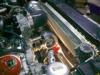
The line on the right of the image goes to the top of the radiator to allow any air to be expelled from the radiator.
The line on the left of the image goes to the header tank
Just take a look at any OE cooling system, it follows a similar pattern, although in this case there are multiple bleed points, obviously because there is a higher risk of creating air/steam pockets in such an engine.
Either by local overheating, or even the gaskets perhaps leaking a little ( ie head lift )
An overflow is not. It is an external container.
The line on the right of the image goes to the top of the radiator to allow any air to be expelled from the radiator.
The line on the left of the image goes to the header tank
Just take a look at any OE cooling system, it follows a similar pattern, although in this case there are multiple bleed points, obviously because there is a higher risk of creating air/steam pockets in such an engine.
Either by local overheating, or even the gaskets perhaps leaking a little ( ie head lift )
sorry to keep beating a dead horse but just trying to educate myself and maybe others.
If you properly bleed the cooling system, how would air get in it? I thought this was a closed air system?? So if coolant is flowing then it wouldn't creat air pockets unless of course there was a head gasket leak or some other form of leak. I understand the bleeding process and why it is important to be at the highest point but once bled then what is the harm of tying into the lower raditor hose which is pulling? thanks
If you properly bleed the cooling system, how would air get in it? I thought this was a closed air system?? So if coolant is flowing then it wouldn't creat air pockets unless of course there was a head gasket leak or some other form of leak. I understand the bleeding process and why it is important to be at the highest point but once bled then what is the harm of tying into the lower raditor hose which is pulling? thanks
9 Second Club
Joined: Nov 2003
Posts: 13,616
Likes: 185
From: Norn Iron
sorry to keep beating a dead horse but just trying to educate myself and maybe others.
If you properly bleed the cooling system, how would air get in it? I thought this was a closed air system?? So if coolant is flowing then it wouldn't creat air pockets unless of course there was a head gasket leak or some other form of leak. I understand the bleeding process and why it is important to be at the highest point but once bled then what is the harm of tying into the lower raditor hose which is pulling? thanks
If you properly bleed the cooling system, how would air get in it? I thought this was a closed air system?? So if coolant is flowing then it wouldn't creat air pockets unless of course there was a head gasket leak or some other form of leak. I understand the bleeding process and why it is important to be at the highest point but once bled then what is the harm of tying into the lower raditor hose which is pulling? thanks
It's not like the water just sits there and does nothing. There is a lot going on.
If you dont understand the concept of bleeding air which will always collect at the highest point, it will be impossible to explain.
You wouldnt put a brake bleed nipple at the bottom of a caliper would you ? Or a bleed for a radiator at the bottom ?
Pump cavitation, localised water boiling, head lifting.
It's not like the water just sits there and does nothing. There is a lot going on.
If you dont understand the concept of bleeding air which will always collect at the highest point, it will be impossible to explain.
You wouldnt put a brake bleed nipple at the bottom of a caliper would you ? Or a bleed for a radiator at the bottom ?
It's not like the water just sits there and does nothing. There is a lot going on.
If you dont understand the concept of bleeding air which will always collect at the highest point, it will be impossible to explain.
You wouldnt put a brake bleed nipple at the bottom of a caliper would you ? Or a bleed for a radiator at the bottom ?
Pump cavitation, localised water boiling, head lifting.
It's not like the water just sits there and does nothing. There is a lot going on.
If you dont understand the concept of bleeding air which will always collect at the highest point, it will be impossible to explain.
You wouldnt put a brake bleed nipple at the bottom of a caliper would you ? Or a bleed for a radiator at the bottom ?
It's not like the water just sits there and does nothing. There is a lot going on.
If you dont understand the concept of bleeding air which will always collect at the highest point, it will be impossible to explain.
You wouldnt put a brake bleed nipple at the bottom of a caliper would you ? Or a bleed for a radiator at the bottom ?
I would rather see the bleeds go high in the water system as that is best, but it will work going down if your system has enough flow/pressure to push it down the tube. If you are going to try and push it down, collect all four lines high so the air goes up into the collection point and then use only one line to the bleed point. The velocity will push the air into the lower point as it cannot go against flow down.
Coolant like Dexcool has a much higher boiling point, but that is not allowed in most drag racing rule books. Most guys use water, it boils somewhere 212 or higher depending on pressure in the system. If your car is running 200F and you shut it down, it will see 230f+ on heat soak.
Kurt
Coolant like Dexcool has a much higher boiling point, but that is not allowed in most drag racing rule books. Most guys use water, it boils somewhere 212 or higher depending on pressure in the system. If your car is running 200F and you shut it down, it will see 230f+ on heat soak.
Kurt
^^^ mine is a nice weather street car and I run dex. I have the rear connected to the front up high and then one line down to the lower raditor hose cap.

my concern is that it then turns up due to the way I placed the fitting

what I think I am going to do is disconnect it at the T fitting and see how it is flowing out of there, bleed it. I have heard of guys just starting the engine with the rear loose until the system has bled out and then tighten them down.
unless I change my mind and just tapped into my expansion tank lol.

my concern is that it then turns up due to the way I placed the fitting

what I think I am going to do is disconnect it at the T fitting and see how it is flowing out of there, bleed it. I have heard of guys just starting the engine with the rear loose until the system has bled out and then tighten them down.
unless I change my mind and just tapped into my expansion tank lol.
LS1 Tech Stories
The Best V8 Stories One Small Block at Time

Gas Monkey Built a 6-Wheel Ferrari Testarossa With a Corvette LT4 Engine
Verdad Gallardo
7 Most Reliable High-Performance Engines GM Has Ever Built
Verdad Gallardo
Amazing '71 Camaro Restomod Is Modern Muscle Car Under the Skin
Verdad Gallardo
6 Common C5 Corvette Failures and What's Involved In Repairing Them
Pouria Savadkouei
Retro Modern Bandit Pontiac Trans AM Comes With Burt Reynolds' Autograph
Verdad Gallardo
Top 10 Greatest Cadillac V Series Performance Models Ever, Ranked
Pouria Savadkouei
Top 10 Most Powerful Chevy Trucks Ever Made!

Hennessey's New Supercharged Silverado ZR2 Has 700 HP
Verdad Gallardo
Coachbuilt N2A Anteros Is an LS2-Powered C6 Corvette In Italian Clothes
Verdad Gallardo
Ok,
Some great information coming forward. Thanks to those who have contributed.
Let summarize what the consensus is;
1)There is cooling issue at the rear of the motor.
-An extra crossover draining to the rad helps remove trapped steam keeping the head cooler.
2) At the end of the day Detonation is the culprit triggered by heat.
-Timing should be pulled off peak horsepower for a protective measure.
-Additional fuel should be added to cool the combustion process.
So this leaves some questions.
Other than adding the extra coolant crossover, is there anything that can be done to improve cooling around the rear of the motor?
If peak HP is made with 18 degs of advance, how much timing should be pulled to ensure a safety margin?
In keeping with the concept of maintaining a safety margin, where do you feel AFR should be set?
If you have any other information to add please feel free to chime in.
The suggestions put forth will be instituted in my LS4 build. The LS4 is already known as a 10 psi piston breaker. So we shall see on a more analitical basis if these measures are effective.
Cheers
Some great information coming forward. Thanks to those who have contributed.
Let summarize what the consensus is;
1)There is cooling issue at the rear of the motor.
-An extra crossover draining to the rad helps remove trapped steam keeping the head cooler.
2) At the end of the day Detonation is the culprit triggered by heat.
-Timing should be pulled off peak horsepower for a protective measure.
-Additional fuel should be added to cool the combustion process.
So this leaves some questions.
Other than adding the extra coolant crossover, is there anything that can be done to improve cooling around the rear of the motor?
If peak HP is made with 18 degs of advance, how much timing should be pulled to ensure a safety margin?
In keeping with the concept of maintaining a safety margin, where do you feel AFR should be set?
If you have any other information to add please feel free to chime in.
The suggestions put forth will be instituted in my LS4 build. The LS4 is already known as a 10 psi piston breaker. So we shall see on a more analitical basis if these measures are effective.
Cheers
9 Second Club
Joined: Nov 2003
Posts: 13,616
Likes: 185
From: Norn Iron
In theory, the water shouldnt boil until much greater than 220degF as it is a pressurised system.
But some areas may be hotter, some may be cooler. So it will happen.
Also, unless someone knows otherwise ( dont know about these fancy coolants ), PURE water is the best coolant to use in terms of heat removal.
Although obviously that can allow corrosion, and could freeze in cold conditions if it is in a road car etc
So it is rarely advisable to run it all the time. And pure doesnt mean tap water. Either distilled or de-ionised water would be best.
I dont know if these water wetter type products are any good or not. Ive tried them before, and never noticed any difference whatsoever.
But some areas may be hotter, some may be cooler. So it will happen.
Also, unless someone knows otherwise ( dont know about these fancy coolants ), PURE water is the best coolant to use in terms of heat removal.
Although obviously that can allow corrosion, and could freeze in cold conditions if it is in a road car etc
So it is rarely advisable to run it all the time. And pure doesnt mean tap water. Either distilled or de-ionised water would be best.
I dont know if these water wetter type products are any good or not. Ive tried them before, and never noticed any difference whatsoever.




I am currently having this problem also seeing that i have busted #7 piston for the third time in one month. my truck has a stock bottom end lq9 in it . When i built the turbo kit i had stock gaskets on it and 241 heads and the rear crossovers blocked and stock thermostat. well this last time i changed it up a little and went with new rings (gapped at .030 top and second ring), new .041 cometic gaskets, fresh 317 heads, ran a front crossover on rear and tied them together, and did a 160 stat. we tuned it for 10#s of boost with 15.5 degrees of timing and 11.6 afr. it did good that day and the next. i took it to the track the next night and on my first pass it started missing and it busted #7 piston again. any opinions?
