








Backpressure - Can big wastegates help?

How about this smart guy, why dont you get 2 44mm wastegates and a backpressure sensor. 1st run your car with a single mm wastegate and see how much backpressure it produces at 20# of boost, than add the lines to the 2nd wastegate and see what backpressure does. ****, lets add 10 wastegates to get rid of all the backpressure. It doesnt work like that.
I dont care how many wastegates you have it will only control how low you can take the boost, at x boost level your going to need a certain amount of pressure on the throat of the turbine to create the cfm of airflow needed to make the boost level.
I dont care how many wastegates you have it will only control how low you can take the boost, at x boost level your going to need a certain amount of pressure on the throat of the turbine to create the cfm of airflow needed to make the boost level.
BTW I do agree with your current pipe sizing theory......
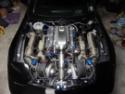
hey phil, you nailed it again...! I finished the new 2" cold side and it made a BIG difference....power, spool and even with drivability on tip in. Just to recap what i've done the past month, i fabbed an entirely new hot and cold side twin rear mount system and relocated the turbo's up and in for better ground clearence/straighter shot. I had a twin STS system before the changes and it worked well for what it was (683rwhp at 14 pounds). I changed the hot side from dual 2.5" all the way to the turbo's to dual 2.25" and then stepped down to 2" just before the turbo's. I also installed larger housings at the same time, went to t3 .82's from .63's. The hot side change made for quicker spool with less backpressure (with larger exh housings). Then I changed the cold side from dual 1.75" to dual 2" and also shortened the cold side piping at least four feet per side. With the new system, it transformed the car!! I played a bit on the way to work this morning and it is stupid fast now (relative term)! It comes in quicker and much harder versus the STS system. I will try to take some pics tonight to show my new system. This weekend I'll do a backpressure test and update with results. p.s.... i moved my hp goal up to 900+rwhp!! I think i'm there now under higher boost (22 - 24 pounds or so). Boost is so addictive......Thanks for all of the help!
LS1 Tech Stories
The Best V8 Stories One Small Block at Time

Gas Monkey Built a 6-Wheel Ferrari Testarossa With a Corvette LT4 Engine
Verdad Gallardo
7 Most Reliable High-Performance Engines GM Has Ever Built
Verdad Gallardo
Amazing '71 Camaro Restomod Is Modern Muscle Car Under the Skin
Verdad Gallardo
6 Common C5 Corvette Failures and What's Involved In Repairing Them
Pouria Savadkouei
Retro Modern Bandit Pontiac Trans AM Comes With Burt Reynolds' Autograph
Verdad Gallardo
Top 10 Greatest Cadillac V Series Performance Models Ever, Ranked
Pouria Savadkouei
Top 10 Most Powerful Chevy Trucks Ever Made!

Hennessey's New Supercharged Silverado ZR2 Has 700 HP
Verdad Gallardo
Coachbuilt N2A Anteros Is an LS2-Powered C6 Corvette In Italian Clothes
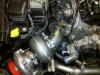
Verdad Gallardo Please, no bad jokes on my welding and i forgot to remove my temporary clamp holding up the cold side.... yes, i'll keep my day job! Ha Ha
Last edited by TracyRR; Jan 26, 2011 at 07:37 PM.

Thanks! I really need to find a dyno that loads my car because the dyno doesn't make the car spool near as well as it does on the street. I really need to blast it at the track.... just trying to get up the nerve to beat my daily driver up on the track!
I just ran a backpressure test with my new completed twin system and it is 1.7:1 at 14 pounds of boost..... I realize it will continue to rise as boost increases but it is pretty descent for a rear mount. This was the first chance i had to blast the car with the new system and it is much stronger than the old system! The old sts system used to break the tires loose in second gear at around 18 - 19 pounds and now it breaks them loose at 14 pounds! I'm running toyo 335/18 r888's. The spool up is also much quicker.... before it used to start building boost at around 3500 rpm and now it starts at around 2800 rpm! It feels like a different car! I think i need to take it back to the tuner (geoff at engine power systems) because the afr's were sitting on 10.0's while blasting.... pretty fat... on second thought, i really need to buy efilive so i can learn how to tune myself.
Questions: if i wanted to change over to a t4 housing, is it a simple swap like my t3 was?.... i would of course change to a t4 flange on my hot side so the turbo would bolt up. Also, what size should i go with? i currently have a t3 .82.... what size does that compare to on a t4? the t4 options are .81 and .96. Which one should i get? Thanks a bunch! tracy
Questions: if i wanted to change over to a t4 housing, is it a simple swap like my t3 was?.... i would of course change to a t4 flange on my hot side so the turbo would bolt up. Also, what size should i go with? i currently have a t3 .82.... what size does that compare to on a t4? the t4 options are .81 and .96. Which one should i get? Thanks a bunch! tracy

Tracy,
Awesome string of posts(thanks to all). This was some good reading. It sounds like you had great success with your approach. I have a similar problem, but with a very different set up. I have a stroked LQ9 block with a single Precision 78 mm turbo. This is a pretty small turbo for a 402 cu in motor. Unfortunately, it's the biggest one I can shoehorn in(this is all getting STUFFED into a 1990 Nissan 300zx twin turbo - call it revenge on the imports). Anyway, I can't go bigger on the housing. My logic was similar to your original logic. There's one twist to your approach that I'm interested in getting some input on. At the risk of being badgered for raising this dead horse to it's feet again; here it goes : In a compound turbo set up(turbos in series) there's a wastegate in front of the first turbo to set the discharge pressure of the first turbo(to a max psi). This gives turbo #2 a stable max inlet pressure. Turbo #2 then has a wastegate at it's inlet to set a stable max boost pressure(to the motor). My proposal(for my single turbo set up) is to use a wastegate right at the exit of the exhaust manifolds(2 into one wastegate) to regulate a stable max inlet pressure to my single turbo(just like the #1 turbo does for turbo #2 in a compound setup). Note that the first wastegate in the proposed system is monitoring the inlet pressure to the single turbo(not the boost pressure to the motor). It would be critical to set this pressure correctly such that the turbo had the correct spooling and max boost pressure(to motor). Note that if you set this too low it will take forever to boost and peak out a boost pressure that is too low. If you set it just right, it will be using the minimum inlet pressure to get your goal spool rate and max psi. This will naturally minimize the pressure required from the exhast manifolds(ie - wastegate #1 will be dumping everything that is in excess of the minimum requirement to reach your goals). I think this approach would minimize the backpressure at the exhaust manifolds(and therefore not choke the motor). If I've explained this correctly, you'll recognize that this approach is very different than just a "bigger wastegate", Please tell me what you guys think. Thanks!
Awesome string of posts(thanks to all). This was some good reading. It sounds like you had great success with your approach. I have a similar problem, but with a very different set up. I have a stroked LQ9 block with a single Precision 78 mm turbo. This is a pretty small turbo for a 402 cu in motor. Unfortunately, it's the biggest one I can shoehorn in(this is all getting STUFFED into a 1990 Nissan 300zx twin turbo - call it revenge on the imports). Anyway, I can't go bigger on the housing. My logic was similar to your original logic. There's one twist to your approach that I'm interested in getting some input on. At the risk of being badgered for raising this dead horse to it's feet again; here it goes : In a compound turbo set up(turbos in series) there's a wastegate in front of the first turbo to set the discharge pressure of the first turbo(to a max psi). This gives turbo #2 a stable max inlet pressure. Turbo #2 then has a wastegate at it's inlet to set a stable max boost pressure(to the motor). My proposal(for my single turbo set up) is to use a wastegate right at the exit of the exhaust manifolds(2 into one wastegate) to regulate a stable max inlet pressure to my single turbo(just like the #1 turbo does for turbo #2 in a compound setup). Note that the first wastegate in the proposed system is monitoring the inlet pressure to the single turbo(not the boost pressure to the motor). It would be critical to set this pressure correctly such that the turbo had the correct spooling and max boost pressure(to motor). Note that if you set this too low it will take forever to boost and peak out a boost pressure that is too low. If you set it just right, it will be using the minimum inlet pressure to get your goal spool rate and max psi. This will naturally minimize the pressure required from the exhast manifolds(ie - wastegate #1 will be dumping everything that is in excess of the minimum requirement to reach your goals). I think this approach would minimize the backpressure at the exhaust manifolds(and therefore not choke the motor). If I've explained this correctly, you'll recognize that this approach is very different than just a "bigger wastegate", Please tell me what you guys think. Thanks!
Tracy,
Awesome string of posts(thanks to all). This was some good reading. It sounds like you had great success with your approach. I have a similar problem, but with a very different set up. I have a stroked LQ9 block with a single Precision 78 mm turbo. This is a pretty small turbo for a 402 cu in motor. Unfortunately, it's the biggest one I can shoehorn in(this is all getting STUFFED into a 1990 Nissan 300zx twin turbo - call it revenge on the imports). Anyway, I can't go bigger on the housing. My logic was similar to your original logic. There's one twist to your approach that I'm interested in getting some input on. At the risk of being badgered for raising this dead horse to it's feet again; here it goes : In a compound turbo set up(turbos in series) there's a wastegate in front of the first turbo to set the discharge pressure of the first turbo(to a max psi). This gives turbo #2 a stable max inlet pressure. Turbo #2 then has a wastegate at it's inlet to set a stable max boost pressure(to the motor). My proposal(for my single turbo set up) is to use a wastegate right at the exit of the exhaust manifolds(2 into one wastegate) to regulate a stable max inlet pressure to my single turbo(just like the #1 turbo does for turbo #2 in a compound setup). Note that the first wastegate in the proposed system is monitoring the inlet pressure to the single turbo(not the boost pressure to the motor). It would be critical to set this pressure correctly such that the turbo had the correct spooling and max boost pressure(to motor). Note that if you set this too low it will take forever to boost and peak out a boost pressure that is too low. If you set it just right, it will be using the minimum inlet pressure to get your goal spool rate and max psi. This will naturally minimize the pressure required from the exhast manifolds(ie - wastegate #1 will be dumping everything that is in excess of the minimum requirement to reach your goals). I think this approach would minimize the backpressure at the exhaust manifolds(and therefore not choke the motor). If I've explained this correctly, you'll recognize that this approach is very different than just a "bigger wastegate", Please tell me what you guys think. Thanks!
Awesome string of posts(thanks to all). This was some good reading. It sounds like you had great success with your approach. I have a similar problem, but with a very different set up. I have a stroked LQ9 block with a single Precision 78 mm turbo. This is a pretty small turbo for a 402 cu in motor. Unfortunately, it's the biggest one I can shoehorn in(this is all getting STUFFED into a 1990 Nissan 300zx twin turbo - call it revenge on the imports). Anyway, I can't go bigger on the housing. My logic was similar to your original logic. There's one twist to your approach that I'm interested in getting some input on. At the risk of being badgered for raising this dead horse to it's feet again; here it goes : In a compound turbo set up(turbos in series) there's a wastegate in front of the first turbo to set the discharge pressure of the first turbo(to a max psi). This gives turbo #2 a stable max inlet pressure. Turbo #2 then has a wastegate at it's inlet to set a stable max boost pressure(to the motor). My proposal(for my single turbo set up) is to use a wastegate right at the exit of the exhaust manifolds(2 into one wastegate) to regulate a stable max inlet pressure to my single turbo(just like the #1 turbo does for turbo #2 in a compound setup). Note that the first wastegate in the proposed system is monitoring the inlet pressure to the single turbo(not the boost pressure to the motor). It would be critical to set this pressure correctly such that the turbo had the correct spooling and max boost pressure(to motor). Note that if you set this too low it will take forever to boost and peak out a boost pressure that is too low. If you set it just right, it will be using the minimum inlet pressure to get your goal spool rate and max psi. This will naturally minimize the pressure required from the exhast manifolds(ie - wastegate #1 will be dumping everything that is in excess of the minimum requirement to reach your goals). I think this approach would minimize the backpressure at the exhaust manifolds(and therefore not choke the motor). If I've explained this correctly, you'll recognize that this approach is very different than just a "bigger wastegate", Please tell me what you guys think. Thanks!

Actually, I'm not going to do compound turbos. I was just using that as an example to show how regulating the inlet pressure to the turbo(separately from the boost pressure regulating) could(potentially) control the backpressure issue. My actual set up is the single Precision 78mm turbo. The 78mm single turbo is not matched well with the 402 motor(from a hot side flow/pressure perspective). The motors capacity for flow/pressure is much higher than the exhaust housing can handle(causing a butt ton of backpressure). However, it would probably match really well with a 5.3 liter motor. By matching the flow capacities better it will have an exhaust manifold pressure that is not overly restictive to the motor. My problem is : I want to use what I have(ie - don't switch to a 5.3 liter motor or a larger turbo). I think it's feasible to do that if I can control the backpressure(exhaust manifold pressure). This can NOT be done with a bigger wastegate(or even a second one in the same circuit). I understand that point well. However, if a second circuit is set up to look at exhaust manifold pressure and control it to (let's say 1.7 times the peak boost pressure) through a separate wastegate, then the backpressure would be relieved WITHOUT going below the pressure/flow threshold that motor requires to spool properly and maintain boost setpoint through the powerband. The mismatch is so great that I could dump some flow right after the manifolds and still have plenty of flow to run the turbo the same way that a 5.3 liter engine would(at a similar exhaust manifold pressure). I don't think what I'm proposing is much different than some of the set ups that people run in compound turbos. This is my theyory. Tell me what you guys think. Thanks!
 its funny, i can sit on the computer for hours, but a book!? FORGETABOUTIT. LOL
Hey everyone.. had a question, since he upgraded the ex housing and stepped the hot side from 2 1/4 to 2 in , then the cold side to 2 in, would it be better to step the cold side from 2 inch to 2 1/4 midway forward ?
Here is the latest... in my never ending quest to make stupid power for a daily driver, i just bought larger turbo's, Precision 6765's w/T4 1.00 divided housings and spool valves (i sold the 6262's already). I plan on removing the last couple feet of 2" hot side and just finish the whole hot side in 2.25". The step down to 2" on the hot side was used to improve spool and since i'm adding spool valves i don't think it will be as critical. The ID of the compressor side of the turbo is approx 2" so i'll keep my cold side at 2" OD for now. Weather permitting, i'll do backpressure tests this weekend. If all looks good after that, i'll go see my dyno/tuner Geoff at Engine Power Systems in a couple weeks and see what she's got!! My power goals are 1,000+rwhp with this 370 motor and have plans on maxing these turbo's out with my next motor. I'll update soon! Thanks
Here is the latest... in my never ending quest to make stupid power for a daily driver, i just bought larger turbo's, Precision 6765's w/T4 1.00 divided housings and spool valves (i sold the 6262's already). I plan on removing the last couple feet of 2" hot side and just finish the whole hot side in 2.25". The step down to 2" on the hot side was used to improve spool and since i'm adding spool valves i don't think it will be as critical. The ID of the compressor side of the turbo is approx 2" so i'll keep my cold side at 2" OD for now. Weather permitting, i'll do backpressure tests this weekend. If all looks good after that, i'll go see my dyno/tuner Geoff at Engine Power Systems in a couple weeks and see what she's got!! My power goals are 1,000+rwhp with this 370 motor and have plans on maxing these turbo's out with my next motor. I'll update soon! Thanks