








do heads make power with boost?
Thread Starter
TECH Resident
Joined: Aug 2008
Posts: 910
Likes: 0
From: Dubai
 do heads make power with boost?
 I'm interested in a set of MAST ls3 bigbore heads to replace my stock ls3 heads with and some dyno results show gains of over 50rwhp in NA applications.
Wondering if there's any HP benefit to heads in general on a blown application say a 10psi 427.
What I'm trying to say is, I know there will be a boost drop since the motor is now more efficient, but assuming I DONT pulley down to get the boost back where it was, will there still be any power gains from tuning only by means of additional spark advance?
Wondering if there's any HP benefit to heads in general on a blown application say a 10psi 427.
What I'm trying to say is, I know there will be a boost drop since the motor is now more efficient, but assuming I DONT pulley down to get the boost back where it was, will there still be any power gains from tuning only by means of additional spark advance?
Yes you should see a power gain, better heads on a forced induction engine generally make a huge difference in power. The only way I see where better heads wouldn't help is if the blower is on the small side and is working overtime, or the exhaust system is too small, etc. Bob
__________________
ATI ProCharger and Moser Sales 260 672-2076
PM's disabled, please e-mail me
E-mail: brutespeed@gmail.comob@brutespeed.com
https://brutespeed.com/ Link to website

ATI ProCharger and Moser Sales 260 672-2076
PM's disabled, please e-mail me
E-mail: brutespeed@gmail.comob@brutespeed.com
https://brutespeed.com/ Link to website
I'm interested in a set of MAST ls3 bigbore heads to replace my stock ls3 heads with and some dyno results show gains of over 50rwhp in NA applications.
Wondering if there's any HP benefit to heads in general on a blown application say a 10psi 427.
What I'm trying to say is, I know there will be a boost drop since the motor is now more efficient, but assuming I DONT pulley down to get the boost back where it was, will there still be any power gains from tuning only by means of additional spark advance?
Wondering if there's any HP benefit to heads in general on a blown application say a 10psi 427.
What I'm trying to say is, I know there will be a boost drop since the motor is now more efficient, but assuming I DONT pulley down to get the boost back where it was, will there still be any power gains from tuning only by means of additional spark advance?
 Buy them, if you don't use them you can sleep with them.
__________________
95 Pontiac Formula- Stock engine with ATI Procharger, Moser 12 bolt w/4:30 gears, Rossler trans, Neil Chance 4000 stall, M/T ET streets, 10.914@ 121.90mph, 1.452 60ft. GMHTP November 2010 Feature Car. Check it out at:
https://www.motortrend.com/features/...ebird-formula/
http://www.youtube.com/watch?v=abZ1z...ature=youtu.be
95 Pontiac Formula- Stock engine with ATI Procharger, Moser 12 bolt w/4:30 gears, Rossler trans, Neil Chance 4000 stall, M/T ET streets, 10.914@ 121.90mph, 1.452 60ft. GMHTP November 2010 Feature Car. Check it out at:
https://www.motortrend.com/features/...ebird-formula/
http://www.youtube.com/watch?v=abZ1z...ature=youtu.be
You can also check out PRC 227's or the 237's. They have a great quality, thick decklid, and are a little softer on the checkbook.
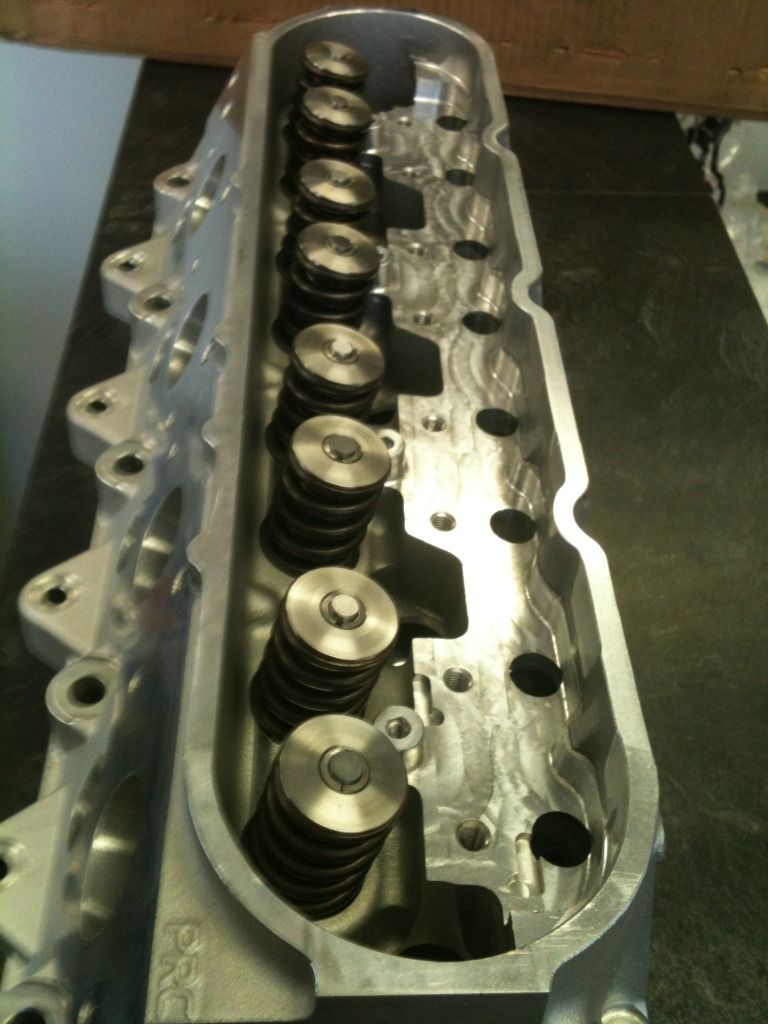
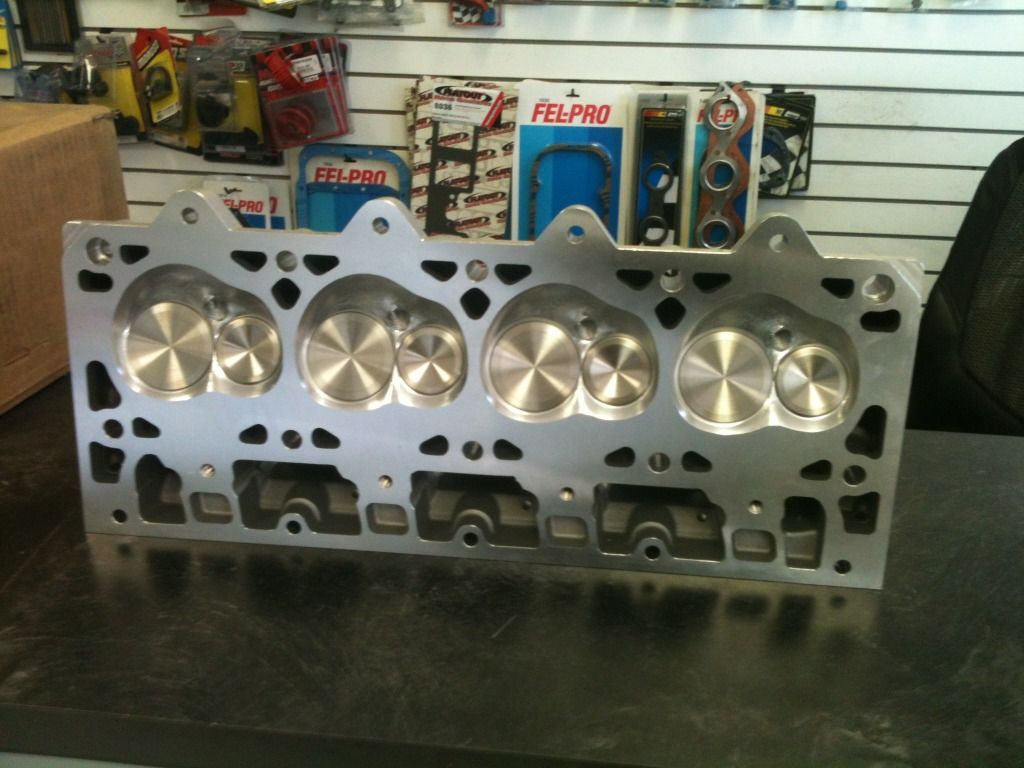
Boost is a measure of resistance/restriction. A motor that flows better and makes less boost, will make more power than one with more boost, and restrictive heads/exhaust setup.
Boost is a measure of resistance/restriction. A motor that flows better and makes less boost, will make more power than one with more boost, and restrictive heads/exhaust setup.
Last edited by I8UR4RD; Aug 1, 2012 at 06:07 PM. Reason: eye candy
But seriously, they are a nice set of heads. I got the six bolt heads even though I won't be using the extra holes for awhile, at no extra cost. Recommend inconel exhaust valves in case you plan on turning it up down the road. Not to mention 3/4" deck. I just received T&D shaft rockers for them, if using factory rockers don't forget to order rocker stands. I received my heads within a week of ordering, outstanding service.
__________________
95 Pontiac Formula- Stock engine with ATI Procharger, Moser 12 bolt w/4:30 gears, Rossler trans, Neil Chance 4000 stall, M/T ET streets, 10.914@ 121.90mph, 1.452 60ft. GMHTP November 2010 Feature Car. Check it out at:
https://www.motortrend.com/features/...ebird-formula/
http://www.youtube.com/watch?v=abZ1z...ature=youtu.be
95 Pontiac Formula- Stock engine with ATI Procharger, Moser 12 bolt w/4:30 gears, Rossler trans, Neil Chance 4000 stall, M/T ET streets, 10.914@ 121.90mph, 1.452 60ft. GMHTP November 2010 Feature Car. Check it out at:
https://www.motortrend.com/features/...ebird-formula/
http://www.youtube.com/watch?v=abZ1z...ature=youtu.be
But seriously, they are a nice set of heads. I got the six bolt heads even though I won't be using the extra holes for awhile, at no extra cost. Recommend inconel exhaust valves in case you plan on turning it up down the road. Not to mention 3/4" deck. I just received T&D shaft rockers for them, if using factory rockers don't forget to order rocker stands. I received my heads within a week of ordering, outstanding service.
Trending Topics
Thread Starter
TECH Resident
Joined: Aug 2008
Posts: 910
Likes: 0
From: Dubai
thanks guys, I do love the MAST heads and wouldnt have thought twice if this was an NA build, I still dont get how they will make power ill give you an example:
10psi 427 with stock LS3 heads
add MAST LS3 heads and boost drops to say 8psi, but with no change in blower pulley size the blower is still pushing the SAME CFM through the engine at a lower boost/restriction level, which enabled you to run more timing, how much power are you going to get from timing alone?
I am turning up the boost however, but I doubt I will get back the boost lost from the heads since those heads flow SO well its un-real. Ive seen the engine dyno result where the mast ls3's made 65 bhp more, and ive heard of 50+ rwhp compared to stock LS3 heads.
10psi 427 with stock LS3 heads
add MAST LS3 heads and boost drops to say 8psi, but with no change in blower pulley size the blower is still pushing the SAME CFM through the engine at a lower boost/restriction level, which enabled you to run more timing, how much power are you going to get from timing alone?
I am turning up the boost however, but I doubt I will get back the boost lost from the heads since those heads flow SO well its un-real. Ive seen the engine dyno result where the mast ls3's made 65 bhp more, and ive heard of 50+ rwhp compared to stock LS3 heads.
LS1 Tech Stories
The Best V8 Stories One Small Block at Time

Topdon ONE vs. Artidiag 800 BT2: Which is the Diagnostic Tablet For You?
Pouria Savadkouei
Gas Monkey Built a 6-Wheel Ferrari Testarossa With a Corvette LT4 Engine
Verdad Gallardo
7 Most Reliable High-Performance Engines GM Has Ever Built
Verdad Gallardo
Amazing '71 Camaro Restomod Is Modern Muscle Car Under the Skin
Verdad Gallardo
6 Common C5 Corvette Failures and What's Involved In Repairing Them
Pouria Savadkouei
Retro Modern Bandit Pontiac Trans AM Comes With Burt Reynolds' Autograph
Verdad Gallardo
Top 10 Greatest Cadillac V Series Performance Models Ever, Ranked
Pouria Savadkouei
Top 10 Most Powerful Chevy Trucks Ever Made!

Hennessey's New Supercharged Silverado ZR2 Has 700 HP
Verdad Gallardo


imagine a straw and a paper towel roll. You can blow through both, the straw will have more PSI (harder to blow) but less CFM (less air coming out). When you blow through the paper towel roll, there is less psi, but more air. The air (cfm) is what makes power, not the psi.
Now Imagine pumping the air from your supercharger through both tubes, which will have more air coming through it?
also, the more psi, the more heat is generated which results in increased IAT's, which ultimately limits timing as well.
Now Imagine pumping the air from your supercharger through both tubes, which will have more air coming through it?
also, the more psi, the more heat is generated which results in increased IAT's, which ultimately limits timing as well.

imagine a straw and a paper towel roll. You can blow through both, the straw will have more PSI (harder to blow) but less CFM (less air coming out). When you blow through the paper towel roll, there is less psi, but more air. The air (cfm) is what makes power, not the psi.
Now Imagine pumping the air from your supercharger through both tubes, which will have more air coming through it?
also, the more psi, the more heat is generated which results in increased IAT's, which ultimately limits timing as well.
Now Imagine pumping the air from your supercharger through both tubes, which will have more air coming through it?
also, the more psi, the more heat is generated which results in increased IAT's, which ultimately limits timing as well.
Thread Starter
TECH Resident
Joined: Aug 2008
Posts: 910
Likes: 0
From: Dubai
imagine a straw and a paper towel roll. You can blow through both, the straw will have more PSI (harder to blow) but less CFM (less air coming out). When you blow through the paper towel roll, there is less psi, but more air. The air (cfm) is what makes power, not the psi.
Now Imagine pumping the air from your supercharger through both tubes, which will have more air coming through it?
also, the more psi, the more heat is generated which results in increased IAT's, which ultimately limits timing as well.
Now Imagine pumping the air from your supercharger through both tubes, which will have more air coming through it?
also, the more psi, the more heat is generated which results in increased IAT's, which ultimately limits timing as well.
Blower pulley is what determines how much flow in CFM the blower will make, REGARDLESS of boost.
so MAST LS3 heads or stock LS3 heads, the motor will flow the exact amount of air because thats the blower job. The boost PSI will be higher on the stock LS3 motor because it has to force more air into a less efficient head. On the MAST head, the ONLY way you can make more power is by running additional timing since you're at a lower boost psi.
The proper way to gain LOTS of power from heads is to pulley down to gain back the boost lost by the heads, but I clearly scratched this idea from the initial post for the sake of the conversation.


Not Mast heads, but basically the same, they are Performance Induction LXR heads prior to Mast and PI joining forces.


Think of it this way as well. The less boost, but the same cfm from the blower means less power needed to turn the blower. It might not sound like a lot, but you'd be surprised how much power is needed to spin the blower making higher boost pressures. Plus the less resistance means the blower runs more efficiently. The more efficiently it runs, the more power you make.
Think of it this way as well. The less boost, but the same cfm from the blower means less power needed to turn the blower. It might not sound like a lot, but you'd be surprised how much power is needed to spin the blower making higher boost pressures. Plus the less resistance means the blower runs more efficiently. The more efficiently it runs, the more power you make.
Thread Starter
TECH Resident
Joined: Aug 2008
Posts: 910
Likes: 0
From: Dubai
Not Mast heads, but basically the same, they are Performance Induction LXR heads prior to Mast and PI joining forces.
Think of it this way as well. The less boost, but the same cfm from the blower means less power needed to turn the blower. It might not sound like a lot, but you'd be surprised how much power is needed to spin the blower making higher boost pressures. Plus the less resistance means the blower runs more efficiently. The more efficiently it runs, the more power you make.
Think of it this way as well. The less boost, but the same cfm from the blower means less power needed to turn the blower. It might not sound like a lot, but you'd be surprised how much power is needed to spin the blower making higher boost pressures. Plus the less resistance means the blower runs more efficiently. The more efficiently it runs, the more power you make.
I am pullying down for 2 more PSI however, so im hoping it works out nicely.
Also, the better flowing head means more air that is able to get into the combustion chamber when the intake valve is open. Sure, the boost pressure pushes it in, but ultimately, how well the air flows into the chamber determines how much power you make.
So if the head is choking the flow of air into the chamber, all you're doing is creating more boost and not getting more flow into the chambers.
So if the head is choking the flow of air into the chamber, all you're doing is creating more boost and not getting more flow into the chambers.
Thanks I already know this, but:
Blower pulley is what determines how much flow in CFM the blower will make, REGARDLESS of boost.
so MAST LS3 heads or stock LS3 heads, the motor will flow the exact amount of air because thats the blower job. The boost PSI will be higher on the stock LS3 motor because it has to force more air into a less efficient head. On the MAST head, the ONLY way you can make more power is by running additional timing since you're at a lower boost psi.
The proper way to gain LOTS of power from heads is to pulley down to gain back the boost lost by the heads, but I clearly scratched this idea from the initial post for the sake of the conversation.
Blower pulley is what determines how much flow in CFM the blower will make, REGARDLESS of boost.
so MAST LS3 heads or stock LS3 heads, the motor will flow the exact amount of air because thats the blower job. The boost PSI will be higher on the stock LS3 motor because it has to force more air into a less efficient head. On the MAST head, the ONLY way you can make more power is by running additional timing since you're at a lower boost psi.
The proper way to gain LOTS of power from heads is to pulley down to gain back the boost lost by the heads, but I clearly scratched this idea from the initial post for the sake of the conversation.
youre saying the blower puts out X amount of CFM regardless of the engine conditions, (which is true), however what the engine can actually ingest is a whole different story. The engine does not always use all of the available CFM. Its called volumetric efficiency.
By your logic, you can go ahead and throw away your long tubes and put stock manifolds on because regardless of restriction, the motor will still get the same CFM from the blower, and therefore still have roughly the same power, but that is incorrect.
read up on volumetric efficiency. it is the percentage of air that is physically ingested in to the cylinder compared to what would be measured mathematically.
stock engines can be anywhere between 75-95% volumetric efficiency. Add forced induction and your VE goes above 100%. the higher percentage, the more power the car will make. by increasing the flow of the cylinder heads, you are allowing the engine to ingest more air, therefore increasing your VE percentage.

I wouldn't worry about gaining boost back. The less restriction the better. If you car makes 700rwhp on 10lbs or 700 on 8lbs I'd rather be on 8lbs. More efficient and less strain on the blower and motor.
I had the stock procharger inlet on my car and it made 638rwhp but then I switched to the Dallas Performance 4" inlet and it picked up 38hp to put me 676rwhp. It didn't gain a pound or lose any. When I added headers it lost a pound. I'd love to get a set of heads or port my stock ones to lose more boost but also make more power.
I had the stock procharger inlet on my car and it made 638rwhp but then I switched to the Dallas Performance 4" inlet and it picked up 38hp to put me 676rwhp. It didn't gain a pound or lose any. When I added headers it lost a pound. I'd love to get a set of heads or port my stock ones to lose more boost but also make more power.



If you lower restriction with cent super the engine will pick up power as the super will move a higher volume of air. When the restriction is lowered the psi will go down but the power required to turn the super goes up as it is doing more work.
Kurt
Kurt
