



Fuel feed line size

9 Second Club
Joined: Nov 2003
Posts: 13,616
Likes: 185
From: Norn Iron

Cold water thru the rails I hope. Engine coolant will heat them. On my car, I rarely see fuel temps above 35 degC with fuel flowing and the engine running, so bare that in mind when something is to perform as a cooler.
After shutdown tho, fuel temp measured in my engine compartment, but not above the engine can hit close to 60 degC. It immediately cools down tho when I start the pumps again. I run my primary rails as dead end, with the secondary rails always full flow and out the regulator.
After shutdown tho, fuel temp measured in my engine compartment, but not above the engine can hit close to 60 degC. It immediately cools down tho when I start the pumps again. I run my primary rails as dead end, with the secondary rails always full flow and out the regulator.

FormerVendor
Joined: Dec 2001
Posts: 2,444
Likes: 2
From: WWW.SPEEDINC.COM
-6 feed with a regulator at the rear of the vehicle will probably not support anywhere near that as you will have some pressure drop across the feed line.
If you are boost referencing the system and you want it to work accurately then mount the regulator at the rails.
9 Second Club
Joined: Nov 2003
Posts: 13,616
Likes: 185
From: Norn Iron
-6 feed with a regulator at the rails is good for 1100+whp.
-6 feed with a regulator at the rear of the vehicle will probably not support anywhere near that as you will have some pressure drop across the feed line.
If you are boost referencing the system and you want it to work accurately then mount the regulator at the rails.
-6 feed with a regulator at the rear of the vehicle will probably not support anywhere near that as you will have some pressure drop across the feed line.
If you are boost referencing the system and you want it to work accurately then mount the regulator at the rails.
Any pressure drop will be minimal, -6 is a fairly hefty line and he's only aiming for around 600hp. Even at worst, he could run a little higher base pressure and monitor rail pressure
In terms of flow. If -6 flow/return to the rails will support 1100hp, then a -6 dead end should support more.
A flow/return system needs to carry a high excess of fuel in order for the FPR to function. Rails that are dead ended with flow only, only need to support the fuel the engine is using, plus a very small excess to maintain the pressure in the line. There will still be that excess of flow at the rear where the FPR is mounted, but the main engine line no longer has to support that excess, it only needs to feed the engine.
So a dead end system in that respect is actually much more efficient. Although ideally it would be using a controlled pump and pressure monitored at the rails. This would mean no fuel or energy is wasted supporting a return line.
A guy in the UK here built a very fancy controller to control 3 pumps ( 1 lift and 2 main ) for such a setup, although think it was maybe yourself linked to a Vaporworx system that does pretty much the same thing, albeit only with a single pump.
Basically rail pressure, manifold pressure are monitored electronically, and pump is PWM controlled to maintain the 1:1 ratio expected. No return is needed at all.
Other than a hot rail scenario, it is an excellent setup. I think OEM get around the hot rail by increasing pressure and opening injectors longer until temperatures are restored, as they also use a rail temp sensor on fancier setups
Last edited by stevieturbo; Dec 30, 2012 at 03:51 AM.
Thread Starter
On The Tree
Joined: May 2010
Posts: 151
Likes: 3
I've since decided to bite the bullet, with Steve's advice I'm going put the reg close as possible to the engine, and to use the -6 line i already purchased as the return line, and feed the regulator with a -8 supply line, and -8 to just prior to the rail, i've ordered a -8 / -6 y piece with -6 per rail, with a front crossover on the rails. and will change the lift pump to a carter.
9 Second Club
Joined: Nov 2003
Posts: 13,616
Likes: 185
From: Norn Iron
Are you still running the rails as a dead end, or going to flow through them ?
I know the cooler is in place and it's a great idea, but flowing through them in this instance would still make sense.
I ran the -8 line up the car, into a DIY manifold out of some 1.5" alloy tube with 4 x -6 outlets and a temp sensor, and these 4 outlets fed each fuel rail.
The Primary rails are dead end to simplify things and fuel is always getting used there so wasnt a concern. The secondary rails only come in at higher load, so fuel always flows through these. Exiting into a single -6 line as can be seen and this returns to the regulator, and out to the tank via another -6
Running Y's and multiple lines from rails to regulator was just going to result in far too many pipes.
It's nowhere near as shiny as this now lol Ive since changed some of the hoses to Earls Pro-lite. The push on stuff does work great, but it's a pain and doesnt look as nice as the Prolite.
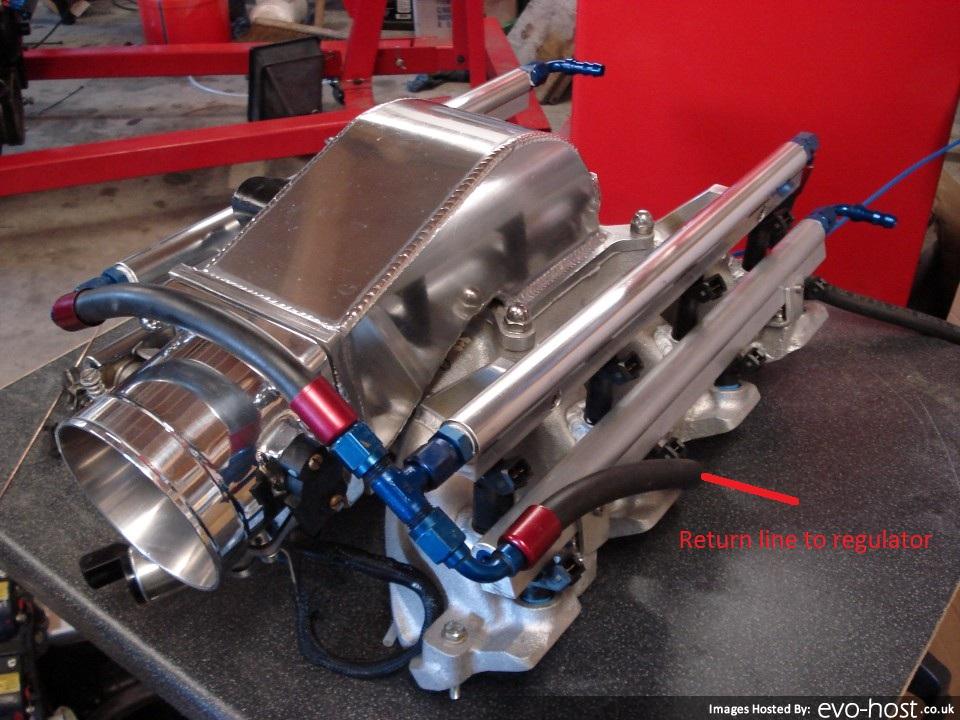
I know the cooler is in place and it's a great idea, but flowing through them in this instance would still make sense.
I ran the -8 line up the car, into a DIY manifold out of some 1.5" alloy tube with 4 x -6 outlets and a temp sensor, and these 4 outlets fed each fuel rail.
The Primary rails are dead end to simplify things and fuel is always getting used there so wasnt a concern. The secondary rails only come in at higher load, so fuel always flows through these. Exiting into a single -6 line as can be seen and this returns to the regulator, and out to the tank via another -6
Running Y's and multiple lines from rails to regulator was just going to result in far too many pipes.
It's nowhere near as shiny as this now lol Ive since changed some of the hoses to Earls Pro-lite. The push on stuff does work great, but it's a pain and doesnt look as nice as the Prolite.
LS1 Tech Stories
The Best V8 Stories One Small Block at Time

6 Common C5 Corvette Failures and What's Involved In Repairing Them
Pouria Savadkouei
Retro Modern Bandit Pontiac Trans AM Comes With Burt Reynolds' Autograph
Verdad Gallardo
Top 10 Greatest Cadillac V Series Performance Models Ever, Ranked
Pouria Savadkouei
Top 10 Most Powerful Chevy Trucks Ever Made!

Hennessey's New Supercharged Silverado ZR2 Has 700 HP
Verdad Gallardo
Coachbuilt N2A Anteros Is an LS2-Powered C6 Corvette In Italian Clothes
Verdad Gallardo
Awesome K5 Blazer Restomod Comes With C7 Corvette Power
Verdad Gallardo
10 Camaros You Should Never Buy

10 LS Engine Myths That Refuse to Die
Verdad Gallardo 9 Second Club
Joined: Nov 2003
Posts: 13,616
Likes: 185
From: Norn Iron
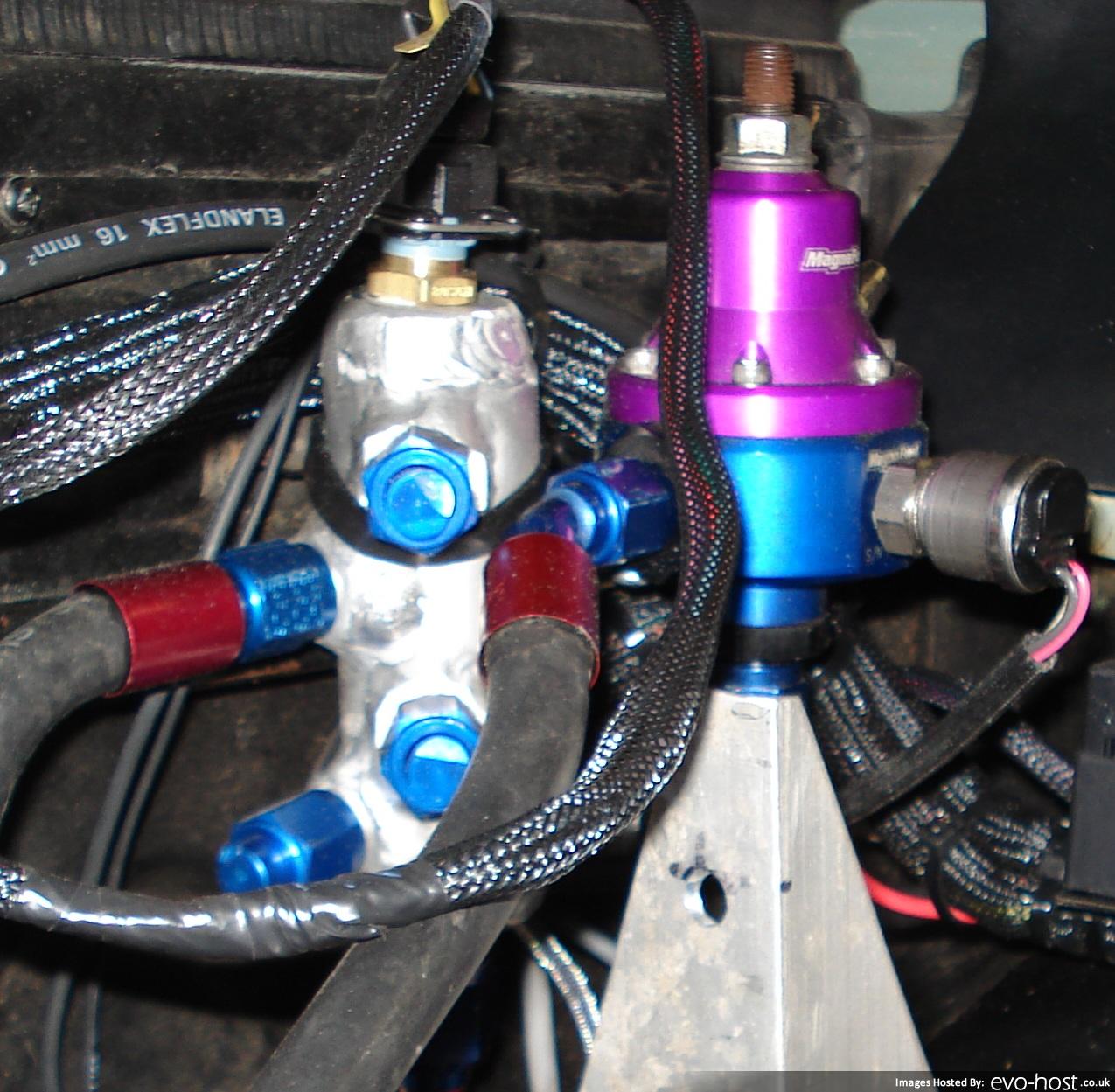
Fuel distribution manifold with my terrible welding.
1/2" straight into the bottom, then 4 -6 outlets to the rails. Plugged in the photo as engine was out of the car.
And then a single return into the FPR can be seen. Temp sensor is just a typical coolant temp sensor screwed into the top so I can log fuel temperature. Was just curious really and needed something to plug a hole after using a holesaw to cut the round bit to weld into the end lol..
1/2" straight into the bottom, then 4 -6 outlets to the rails. Plugged in the photo as engine was out of the car.
And then a single return into the FPR can be seen. Temp sensor is just a typical coolant temp sensor screwed into the top so I can log fuel temperature. Was just curious really and needed something to plug a hole after using a holesaw to cut the round bit to weld into the end lol..

Thread Starter
On The Tree
Joined: May 2010
Posts: 151
Likes: 3
crossover at the front

supply from rear

Im really not to keen on letting any fuel come back from the rails, until i know what temps im dealing with. the exhaust manifolds are only couple inches away.
Nice manifold Steve, mine is such a mess, i got hoses going everywhere, organized chaos!
supply from rear
Im really not to keen on letting any fuel come back from the rails, until i know what temps im dealing with. the exhaust manifolds are only couple inches away.
Nice manifold Steve, mine is such a mess, i got hoses going everywhere, organized chaos!
9 Second Club
Joined: Nov 2003
Posts: 13,616
Likes: 185
From: Norn Iron
Looking at that, you have 2 rails. Each rail has a -8 line ( blue ) feeding it from the Y block.
If this is the case, then you do not need to link the rear section of the rails. The link there serves no purpose ( although it also cant do any harm )
Also worth noting. Push fit connectors arent ideal for hot environments from what I understand. I doubt they would ever come loose, but obviously after shut down, you'll have a lot of radiant heat in there from the turbocharger.
Maybe some sort of cooling fan to circulate air up through the engine compartment might be an idea ( although it adds more complication )
Mine also has hoses everywhere, although most are at the rear feed end. I dead ended the primary rails simply because I couldnt be bothered with more hoses.
And just tee'd the others via the swivel tee and single line, because again once past the injectors I wasnt overly concerned about a free flow path back to the regulator. It would serve no purpose to use 2 lines in that area.
If this is the case, then you do not need to link the rear section of the rails. The link there serves no purpose ( although it also cant do any harm )
Also worth noting. Push fit connectors arent ideal for hot environments from what I understand. I doubt they would ever come loose, but obviously after shut down, you'll have a lot of radiant heat in there from the turbocharger.
Maybe some sort of cooling fan to circulate air up through the engine compartment might be an idea ( although it adds more complication )
Mine also has hoses everywhere, although most are at the rear feed end. I dead ended the primary rails simply because I couldnt be bothered with more hoses.
And just tee'd the others via the swivel tee and single line, because again once past the injectors I wasnt overly concerned about a free flow path back to the regulator. It would serve no purpose to use 2 lines in that area.
Thread Starter
On The Tree
Joined: May 2010
Posts: 151
Likes: 3
Looking at that, you have 2 rails. Each rail has a -8 line ( blue ) feeding it from the Y block.
If this is the case, then you do not need to link the rear section of the rails. The link there serves no purpose ( although it also cant do any harm )
Also worth noting. Push fit connectors arent ideal for hot environments from what I understand. I doubt they would ever come loose, but obviously after shut down, you'll have a lot of radiant heat in there from the turbocharger.
Maybe some sort of cooling fan to circulate air up through the engine compartment might be an idea ( although it adds more complication )
Mine also has hoses everywhere, although most are at the rear feed end. I dead ended the primary rails simply because I couldnt be bothered with more hoses.
And just tee'd the others via the swivel tee and single line, because again once past the injectors I wasnt overly concerned about a free flow path back to the regulator. It would serve no purpose to use 2 lines in that area.
If this is the case, then you do not need to link the rear section of the rails. The link there serves no purpose ( although it also cant do any harm )
Also worth noting. Push fit connectors arent ideal for hot environments from what I understand. I doubt they would ever come loose, but obviously after shut down, you'll have a lot of radiant heat in there from the turbocharger.
Maybe some sort of cooling fan to circulate air up through the engine compartment might be an idea ( although it adds more complication )
Mine also has hoses everywhere, although most are at the rear feed end. I dead ended the primary rails simply because I couldnt be bothered with more hoses.
And just tee'd the others via the swivel tee and single line, because again once past the injectors I wasnt overly concerned about a free flow path back to the regulator. It would serve no purpose to use 2 lines in that area.
As for the heat escaping ,being a race car i think i got that covered too.

9 Second Club
Joined: Nov 2003
Posts: 13,616
Likes: 185
From: Norn Iron
The water jacket must be -4 then ?
Just wasnt sure as the fuel line looked a lot bigger than the water lines which I assumed were -6.
-6 is plenty, certainly no need to change to -8 there. It would just make routing even harder with larger diameter lines.
Heat will escape, but there will still be lots of radiant heat. I'm not saying to change stuff yet, but just keep an eye on it.
And you may already have....but always keep a suitable fire extinguisher in the car !
A turbo blanket would spoil the look a bit, but a blanket covering the lower portions of the turbo may be sound advice.
Or even a small allow heat shield to protect the lines and fittings from radiant heat. Would nearly be easy to weld a small alloy upstand onto the valley water jacket section, and it would have the added bonus of being cooled too.
Just wasnt sure as the fuel line looked a lot bigger than the water lines which I assumed were -6.
-6 is plenty, certainly no need to change to -8 there. It would just make routing even harder with larger diameter lines.
Heat will escape, but there will still be lots of radiant heat. I'm not saying to change stuff yet, but just keep an eye on it.
And you may already have....but always keep a suitable fire extinguisher in the car !
A turbo blanket would spoil the look a bit, but a blanket covering the lower portions of the turbo may be sound advice.
Or even a small allow heat shield to protect the lines and fittings from radiant heat. Would nearly be easy to weld a small alloy upstand onto the valley water jacket section, and it would have the added bonus of being cooled too.
Thread Starter
On The Tree
Joined: May 2010
Posts: 151
Likes: 3
The red and the blue lines are both -6 red is for coolant, blue for fuel. my mate has the material and thread you make the turbo blankets from, we planned on making some bolt on covers from that stuff.
FormerVendor
Joined: Dec 2001
Posts: 2,444
Likes: 2
From: WWW.SPEEDINC.COM
I'll disagree here on two counts.
Any pressure drop will be minimal
In terms of flow. If -6 flow/return to the rails will support 1100hp, then a -6 dead end should support more.
A flow/return system needs to carry a high excess of fuel in order for the FPR to function. Rails that are dead ended with flow only, only need to support the fuel the engine is using, plus a very small excess to maintain the pressure in the line. There will still be that excess of flow at the rear where the FPR is mounted, but the main engine line no longer has to support that excess, it only needs to feed the engine.
Any pressure drop will be minimal
In terms of flow. If -6 flow/return to the rails will support 1100hp, then a -6 dead end should support more.
A flow/return system needs to carry a high excess of fuel in order for the FPR to function. Rails that are dead ended with flow only, only need to support the fuel the engine is using, plus a very small excess to maintain the pressure in the line. There will still be that excess of flow at the rear where the FPR is mounted, but the main engine line no longer has to support that excess, it only needs to feed the engine.
This isn't speculation, it is proven results I have seen over and over again.
The only way the regulator can compensate for pressure drop across the feed line is to be at the rails, not the back of the car.
If you are using 100% capacity of the pumps/line then very little fuel will be being returned through the regulator. A dead head system is just the opposite of more capable.
Can you tune a forced induction car with a rear mounted regulator and fuel pressure inconsistencies? Sure but I consider it bad advice to tell people to build a system and work around inconsistencies when a front mounted regulator will be 100% accurate and repeatable while getting the most out of the system and really no more cost.
9 Second Club
Joined: Nov 2003
Posts: 13,616
Likes: 185
From: Norn Iron
I never advised using that method, but it is 100% doable and I also clearly said it would be best to monitor rail pressure when doing so.
And there is no risk or difficulty tuning provided the system works consistently.
And there is no logic that a -6 line in dead end format should have such a huge pressure drop over one where the reg is mounted up front.
The same line is capable of carrying the same amount of fuel.. Although you did state the pressure drops you seen were with a stock line. Not a straight -6 line.
Certainly in Australia, one shop uses a dead end setup quite often with the regs out back, for cars making well over 1000hp
Serious overkill on the fuel system.
I dont see the point in doing it this way myself, but there is no arguing that it works and is very capable.
.jpg)
.jpg)
And there is no risk or difficulty tuning provided the system works consistently.
And there is no logic that a -6 line in dead end format should have such a huge pressure drop over one where the reg is mounted up front.
The same line is capable of carrying the same amount of fuel.. Although you did state the pressure drops you seen were with a stock line. Not a straight -6 line.
Certainly in Australia, one shop uses a dead end setup quite often with the regs out back, for cars making well over 1000hp
Serious overkill on the fuel system.
I dont see the point in doing it this way myself, but there is no arguing that it works and is very capable.
FormerVendor
Joined: Dec 2001
Posts: 2,444
Likes: 2
From: WWW.SPEEDINC.COM
I never advised using that method, but it is 100% doable and I also clearly said it would be best to monitor rail pressure when doing so.
And there is no risk or difficulty tuning provided the system works consistently.
And there is no logic that a -6 line in dead end format should have such a huge pressure drop over one where the reg is mounted up front.
The same line is capable of carrying the same amount of fuel.. Although you did state the pressure drops you seen were with a stock line. Not a straight -6 line.
And there is no risk or difficulty tuning provided the system works consistently.
And there is no logic that a -6 line in dead end format should have such a huge pressure drop over one where the reg is mounted up front.
The same line is capable of carrying the same amount of fuel.. Although you did state the pressure drops you seen were with a stock line. Not a straight -6 line.
By putting the regulator at the back of the car you are assuring that fuel pressure is stable between the pump and the regulator. If you have filters/fittings/lines ahead of that to the rails then any pressure drop across those components are unaccounted for and you will see that as a loss in PSI a the injectors. That is why with a stock feed line you will see a large drop in pressure with a rear mount regulator but not when it is up front. With the regulator up front you get the absolute most out of the system as it will self compensate as much as possible for any losses.
I do agree that rear mount regulator it is doable but you need a much larger feed line. I would say you would need at least a -10 feed line probably more like -12 and large radius fittings with a rear mounted regulator to match the capabilities of a -6 line and a front mount regulator. Now you have spent twice as much on the system for what?
You keep trying to say that the same amount of line is capable of flowing the same amount of fuel and it absolutely is but the problem is where you are regulating it. Front mount regulator forces the system to the correct psi regardless of pressure drop as long as the pump can do it.
An extreme example. Take a car with a front mounted regulator, let it run at idle and restrict the feed line until you are just starting to see fuel pressure drop. Now, leave that restriction in place and move the regulator to the rear of the car. It will likely now have nearly 100% fuel return to the tank via the regulator and almost no fuel pressure at the rails. Why? The regulator can't compensate for any restriction -after- it. Now of course this isn't a scenario you would run into (or you would have major problems either way) but it illustrates how regulator placement can influence total system flow with the same components.
Thread Starter
On The Tree
Joined: May 2010
Posts: 151
Likes: 3
An extreme example. Take a car with a front mounted regulator, let it run at idle and restrict the feed line until you are just starting to see fuel pressure drop. Now, leave that restriction in place and move the regulator to the rear of the car. It will likely now have nearly 100% fuel return to the tank via the regulator and almost no fuel pressure at the rails. Why? The regulator can't compensate for any restriction -after- it. Now of course this isn't a scenario you would run into (or you would have major problems either way) but it illustrates how regulator placement can influence total system flow with the same components.