





School Me On Meth Install
 School Me On Meth Install
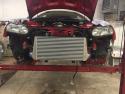
 I need help on my Snow stage 1 Meth install. Where do you put the nozzle? Where do you put check valve and which one to use? Im sure there are more questions that will pop up. Im a older guy new to this stuff. Here is my intake piping and the IAT sensor is in front of the throttle body.
i wanna say put it after the BOV, but before the IAT...thats what i did. but I didnt do any research it just made sense at the time lol
the check valve goes inline with the feed to the injector. there is an arrow to indicate direction of flow. I put it close to the injector as it just kinda worked out that way
the check valve goes inline with the feed to the injector. there is an arrow to indicate direction of flow. I put it close to the injector as it just kinda worked out that way
Over on Chevelle Tech I'm Ron454 but seldom visit there anymore. But I remember you.
I'd put the nozzle in reasonably close to the TB. If you put it way back the spray may tend to puddle when it has to turn that last corner.
If you want the IAT to see it, put it right on the outside of that last bend.
Rember that the water meth will add to your total fueling. Depending on nozzle size and the ramp rate. You will want to retune the fueling.
Ron
I'd put the nozzle in reasonably close to the TB. If you put it way back the spray may tend to puddle when it has to turn that last corner.
If you want the IAT to see it, put it right on the outside of that last bend.
Rember that the water meth will add to your total fueling. Depending on nozzle size and the ramp rate. You will want to retune the fueling.
Ron
Over on Chevelle Tech I'm Ron454 but seldom visit there anymore. But I remember you.
I'd put the nozzle in reasonably close to the TB. If you put it way back the spray may tend to puddle when it has to turn that last corner.
If you want the IAT to see it, put it right on the outside of that last bend.
Rember that the water meth will add to your total fueling. Depending on nozzle size and the ramp rate. You will want to retune the fueling.
Ron
I'd put the nozzle in reasonably close to the TB. If you put it way back the spray may tend to puddle when it has to turn that last corner.
If you want the IAT to see it, put it right on the outside of that last bend.
Rember that the water meth will add to your total fueling. Depending on nozzle size and the ramp rate. You will want to retune the fueling.
Ron
hey ron you mentioned water/meth injection will add to fueling.
I'm totally new to water/meth and relatively new to FI
so Ive been thinking about this a bunch and im not sure im smart enough to fully grasp it. if you or anyone else can shed some light please do.
so we spray water/meth to cool the charge air. Thats our main benefit right?
But the methanol effectively increases the octane of our mixture too (benefit #2)
now here's where im fuzzy. water is there to carry heat as well...but I think it also combusts or has a role in combustion (h2o is a byproduct of hydrocarbon bonds coming apart)
so when we spray say 70% water/ 30% meth vs 50-50 or straight meth what kind of things are happening in the chamber in each case and how should we adjust fueling?
thanks
Doug
I'm totally new to water/meth and relatively new to FI
so Ive been thinking about this a bunch and im not sure im smart enough to fully grasp it. if you or anyone else can shed some light please do.
so we spray water/meth to cool the charge air. Thats our main benefit right?
But the methanol effectively increases the octane of our mixture too (benefit #2)
now here's where im fuzzy. water is there to carry heat as well...but I think it also combusts or has a role in combustion (h2o is a byproduct of hydrocarbon bonds coming apart)
so when we spray say 70% water/ 30% meth vs 50-50 or straight meth what kind of things are happening in the chamber in each case and how should we adjust fueling?
thanks
Doug
Hopfully JoeNova will chime in. He's a chemist and can give the two cent version if what's going on. As I understand, it all depends on what % of meth your spraying. Some spray 100% meth for different reasons. Even to crutch a struggling fuel system. IMO water is what pulls the heat out the best. Ever wonder why it's cold in the room after a shower when the room is still hot and humid? It's the water trying to pull the heat from the hot shower off your skin. That makes it feel cold. 50/50 mix addresses both air charge cooling and supplemental fueling. Using 70/30 washer solvent will hardly affect you AFRs. After all, the spray is only 30% meth and the volume of the spray is only a small fraction of your total fueling. Again, this is just my opinion and thoughts.
word, I'm up on latent heat of evaporating fluids
i guess my more focused question is: what is happening to the water? is it simply carrying heat energy out? or is there more going on?
I would think it would affect the flame front speed---maybe controlling and slowing it---(which is good, a hot turbulent charge can have multiple flame fronts and be a cause of detonation)
but that is my own conjecture. I am just a fabricator who likes to think about stuff.
i guess my more focused question is: what is happening to the water? is it simply carrying heat energy out? or is there more going on?
I would think it would affect the flame front speed---maybe controlling and slowing it---(which is good, a hot turbulent charge can have multiple flame fronts and be a cause of detonation)
but that is my own conjecture. I am just a fabricator who likes to think about stuff.
Trending Topics
A couple of things happen.
It for sure cools the intake mixture.
But because it contains methanol, it also adds to the fuel the engine burns.
And lastly, when you spray it on the IAT sensor the engine sees the cooling and adds more fuel via the injectors. (Unplug the IAT sometime and watch where the AF goes. The car will think the air temp is -40F)
So in a "typical" setup on the dyno using a 50/50mix we see the AF change from 11.5 to approx. 11:1
Of course it depends on the nozzle size.
Spraying pure meth it will go even richer.
I like the snow kit BTW. It's pretty easy to set up.
And you don't want the tank to run dry the way we set them up.
Mod, correct on the atomization. The nozzle does an excellent job of that, but as soon as it has to start navigating corners you lose a bit of that.
Fire it up with the nozzle in the air. it's quite a fog for sure.
Would enjoy hearing what Joe the chemist Nova has to say.
Ron
It for sure cools the intake mixture.
But because it contains methanol, it also adds to the fuel the engine burns.
And lastly, when you spray it on the IAT sensor the engine sees the cooling and adds more fuel via the injectors. (Unplug the IAT sometime and watch where the AF goes. The car will think the air temp is -40F)
So in a "typical" setup on the dyno using a 50/50mix we see the AF change from 11.5 to approx. 11:1
Of course it depends on the nozzle size.
Spraying pure meth it will go even richer.
I like the snow kit BTW. It's pretty easy to set up.
And you don't want the tank to run dry the way we set them up.
Mod, correct on the atomization. The nozzle does an excellent job of that, but as soon as it has to start navigating corners you lose a bit of that.
Fire it up with the nozzle in the air. it's quite a fog for sure.
Would enjoy hearing what Joe the chemist Nova has to say.
Ron
LS1 Tech Stories
The Best V8 Stories One Small Block at Time

Topdon ONE vs. Artidiag 800 BT2: Which is the Diagnostic Tablet For You?
Pouria Savadkouei
Gas Monkey Built a 6-Wheel Ferrari Testarossa With a Corvette LT4 Engine
Verdad Gallardo
7 Most Reliable High-Performance Engines GM Has Ever Built
Verdad Gallardo
Amazing '71 Camaro Restomod Is Modern Muscle Car Under the Skin
Verdad Gallardo
6 Common C5 Corvette Failures and What's Involved In Repairing Them
Pouria Savadkouei
Retro Modern Bandit Pontiac Trans AM Comes With Burt Reynolds' Autograph
Verdad Gallardo
Top 10 Greatest Cadillac V Series Performance Models Ever, Ranked
Pouria Savadkouei
Top 10 Most Powerful Chevy Trucks Ever Made!

Hennessey's New Supercharged Silverado ZR2 Has 700 HP
Verdad Gallardo I'm sure Joe will give us something sooner or later. Unless he's in trouble again!!!! The 30% in a washer solvent, I believe, allows you to run a decent amount of water without completely drowning out the spark. The 30% helps it light off. I have no intention of relying on the meth to get me my target AFRs. To me, that's a recipe for disaster should the system fail. I'll let the AFRs fall where they may and that's that. I'll also be only running a 70/30 solvent, not 100% or 50/50.

Restricted User
Joined: Mar 2014
Posts: 7,192
Likes: 109
From: Ohio
Spray it before the IAT.
People will argue that the IAT readings can't be trusted because you are no longer measuring the temps of incoming air, but instead the temps of a methanol soaked sensor.
You'll also hear people argue that you should do this and tune based on meth/water because if it fails, you blow up your engine.
The fact is, when the meth/water is spraying, your IATs will rarely poke up above 100*. Set your IAT table so that if it sees temps over 120* or so under load, that it starts pulling timing. This way, if you run out of meth or the pump stops working, your IAT sensor will detect it and pull timing, and you will not lose an engine because of failed meth injection.
There are other threads you can go to and join in on the argument as to whether or not the IATs are accurate with water and methanol spraying on them. Quite frankly, pinpoint accuracy means very little when your biggest concern is whether or not its working in the first place.
To answer a previous question, water's biggest benefit is during compression. Pre-ignition happens during compression when temps get high enough to ignite the gasoline before the spark plug does. With water in the chamber, it absorbs a ton of pre-combustion heat, bringing the temps down to below the pre-ignition threshold. It also absorbs a massive amount of heat when it goes from liquid to gas.
Once it is steam, its cooling capacity is much less, and its not likely to pull enough heat out of combustion to cause a power loss. When you hear about people having issues with spark blow-out or power loss, its almost always because they are running a colder plug combined with the now much lower cylinder temps, or they are spraying too much water.
People will argue that the IAT readings can't be trusted because you are no longer measuring the temps of incoming air, but instead the temps of a methanol soaked sensor.
You'll also hear people argue that you should do this and tune based on meth/water because if it fails, you blow up your engine.
The fact is, when the meth/water is spraying, your IATs will rarely poke up above 100*. Set your IAT table so that if it sees temps over 120* or so under load, that it starts pulling timing. This way, if you run out of meth or the pump stops working, your IAT sensor will detect it and pull timing, and you will not lose an engine because of failed meth injection.
There are other threads you can go to and join in on the argument as to whether or not the IATs are accurate with water and methanol spraying on them. Quite frankly, pinpoint accuracy means very little when your biggest concern is whether or not its working in the first place.
To answer a previous question, water's biggest benefit is during compression. Pre-ignition happens during compression when temps get high enough to ignite the gasoline before the spark plug does. With water in the chamber, it absorbs a ton of pre-combustion heat, bringing the temps down to below the pre-ignition threshold. It also absorbs a massive amount of heat when it goes from liquid to gas.
Once it is steam, its cooling capacity is much less, and its not likely to pull enough heat out of combustion to cause a power loss. When you hear about people having issues with spark blow-out or power loss, its almost always because they are running a colder plug combined with the now much lower cylinder temps, or they are spraying too much water.
TECH Enthusiast
Joined: Jan 2012
Posts: 557
Likes: 9
From: Bowling Green KY
Actually I'm a Chem Eng with specialization in combustion engineering, and I understand what is goin on from a chemistry standpoint. To be honest I've learned more from practical experience with cars, than what I theoretically have been educated with. Sorry for the long read here.
If it were me I'd only run pure methanol, not a mix. 3 Window is correct in that the water does pull out more heat than methanol, for a given mass. However there is a limit to how much water you can spray before you start putting the fire out so to speak. The 2 ways the water work, and the 2 ways the methanol work are the same. The first way is they both lower the intake charge temperature, and secondly they both have the effect of stabilizing the combustion of the mixture, like increasing octane of the fuel does. They both make the mixture harder to ignite, and burn slower. The water does this by displacing air and fuel, it doesn't really participate, it is just along for the ride. It also absorbs some of the energy, and reduces EGT. The concentration of reacting components is one of the factors in controlling reaction rate, by adding water we reduce the concentration of the fuel and air in the cylinder. This is just like more concentrated acid will dissolve something faster than less concentrated acid will. This slower reaction rate does also result in lower cylinder pressure, which helps prevent knock but can also reduce power output. The reason you can make more power with this water/meth injection is because you can run more timing and boost because of this stabilization to make some of the lost power back. To be honest though spraying pure water is not normally done because there is very little gain in the combustion process, you loose as much to the water as you gain from increased boost. There is still a benefit from lowering the intake charge temp, but nothing is gained in the combustion within the cylinder.
In the case of methanol, there is almost no limit to how much you can spray, it just gets burned and contributes to fueling. The more you spray, the higher the octane you make your total fuel blend, which is gasoline, ethanol (the 10% from the gas) and methanol. The practical limiting factor is cylinder distribution. Since it is not a multiport system, you do have to be concerned with distribution, and if you spray a boat load, you get far more in the front cylinders than the rear, because it isn't fully evaporated. The amount of methanol you can spray, can actually cool the intake charge more than water, because you can spray more of it. I know 3 Window used the wet shower analogy, but if you ever get alcohol on your skin it gives a similar feeling. That is because both methanol and water are both very polar molecules, and the hydrogen bonding takes more energy to overcome to push these liquids into the gas phase. Not trying to take anything away from 3 window here, I actually like a lot of his posts, and appreciate his input often.
The only reason I wouldn't spray 100% methanol is if my components were not up to it. It is more corrosive, and I'm not sure the Snow kit is rated to 100%. There are systems like the Alky Control system that are.
I received most of my methanol training from the Buick guys. I used to race them often, and I usually go to the Buick Nationals here in Bowling Green every year. A friend of mine is a competitive racer in the GN community. Back when there way no E85, all of the GN's were running boat loads of methanol, often a couple 15 GPH nozzles. The guys I dealt with thought if you put water in it you were an idiot, that was based upon ETs, not chemistry. It is also more forgiving to spray higher levels of methanol, the window the engine will accept is much wider. The bottom end of this window is defined by the minimum amount you need to control knock, and the top of the window is defined by where you start to loose power( from putting the fire out with water), or where your fueling from cylinder to cylinder is inconsistent because it isn't carrying all the way to the back of the intake manifold, because too much of the injected material is still in the liquid phase.
Just my 2 cents.
If it were me I'd only run pure methanol, not a mix. 3 Window is correct in that the water does pull out more heat than methanol, for a given mass. However there is a limit to how much water you can spray before you start putting the fire out so to speak. The 2 ways the water work, and the 2 ways the methanol work are the same. The first way is they both lower the intake charge temperature, and secondly they both have the effect of stabilizing the combustion of the mixture, like increasing octane of the fuel does. They both make the mixture harder to ignite, and burn slower. The water does this by displacing air and fuel, it doesn't really participate, it is just along for the ride. It also absorbs some of the energy, and reduces EGT. The concentration of reacting components is one of the factors in controlling reaction rate, by adding water we reduce the concentration of the fuel and air in the cylinder. This is just like more concentrated acid will dissolve something faster than less concentrated acid will. This slower reaction rate does also result in lower cylinder pressure, which helps prevent knock but can also reduce power output. The reason you can make more power with this water/meth injection is because you can run more timing and boost because of this stabilization to make some of the lost power back. To be honest though spraying pure water is not normally done because there is very little gain in the combustion process, you loose as much to the water as you gain from increased boost. There is still a benefit from lowering the intake charge temp, but nothing is gained in the combustion within the cylinder.
In the case of methanol, there is almost no limit to how much you can spray, it just gets burned and contributes to fueling. The more you spray, the higher the octane you make your total fuel blend, which is gasoline, ethanol (the 10% from the gas) and methanol. The practical limiting factor is cylinder distribution. Since it is not a multiport system, you do have to be concerned with distribution, and if you spray a boat load, you get far more in the front cylinders than the rear, because it isn't fully evaporated. The amount of methanol you can spray, can actually cool the intake charge more than water, because you can spray more of it. I know 3 Window used the wet shower analogy, but if you ever get alcohol on your skin it gives a similar feeling. That is because both methanol and water are both very polar molecules, and the hydrogen bonding takes more energy to overcome to push these liquids into the gas phase. Not trying to take anything away from 3 window here, I actually like a lot of his posts, and appreciate his input often.
The only reason I wouldn't spray 100% methanol is if my components were not up to it. It is more corrosive, and I'm not sure the Snow kit is rated to 100%. There are systems like the Alky Control system that are.
I received most of my methanol training from the Buick guys. I used to race them often, and I usually go to the Buick Nationals here in Bowling Green every year. A friend of mine is a competitive racer in the GN community. Back when there way no E85, all of the GN's were running boat loads of methanol, often a couple 15 GPH nozzles. The guys I dealt with thought if you put water in it you were an idiot, that was based upon ETs, not chemistry. It is also more forgiving to spray higher levels of methanol, the window the engine will accept is much wider. The bottom end of this window is defined by the minimum amount you need to control knock, and the top of the window is defined by where you start to loose power( from putting the fire out with water), or where your fueling from cylinder to cylinder is inconsistent because it isn't carrying all the way to the back of the intake manifold, because too much of the injected material is still in the liquid phase.
Just my 2 cents.
Restricted User
Joined: Mar 2014
Posts: 7,192
Likes: 109
From: Ohio
Scotty, there are still a few factors at play here.
Methanol does a better job of cooling the intake charge, water does a better job of cooling the cylinder.
It can be a situational thing.
If you're running a junkyard motor with tight ring gaps, water is almost a necessity. It will reduce temps inside of the chamber and ring temperatures enough to make a major impact on their expansion rates. Since methanol burns, even under the best circumstances, it cannot do this as well as water. For your typical junkyard turbo LS, spraying water adds a much larger safety margin. Even if you run much too large of a nozzle and give up a little power, you're not going to blow your engine.
If you have forged internals and optimum ring gaps, water if far less necessary. Your rings are going to be much less likely to butt ends, and even if they do, if its only for a very short duration, your piston ring lands might withstand the force until you shut down, as long as the ring doesn't over-flex. You might see great benefit spraying 100% methanol. The same can be said for cars running E85. Your chances of pre-ignition are greatly reduced. Spraying water makes less sense. You can supplement your fuel system and reduce intake temps greater than water can.
Methanol does a better job of cooling the intake charge, water does a better job of cooling the cylinder.
It can be a situational thing.
If you're running a junkyard motor with tight ring gaps, water is almost a necessity. It will reduce temps inside of the chamber and ring temperatures enough to make a major impact on their expansion rates. Since methanol burns, even under the best circumstances, it cannot do this as well as water. For your typical junkyard turbo LS, spraying water adds a much larger safety margin. Even if you run much too large of a nozzle and give up a little power, you're not going to blow your engine.
If you have forged internals and optimum ring gaps, water if far less necessary. Your rings are going to be much less likely to butt ends, and even if they do, if its only for a very short duration, your piston ring lands might withstand the force until you shut down, as long as the ring doesn't over-flex. You might see great benefit spraying 100% methanol. The same can be said for cars running E85. Your chances of pre-ignition are greatly reduced. Spraying water makes less sense. You can supplement your fuel system and reduce intake temps greater than water can.
TECH Enthusiast
Joined: Jan 2012
Posts: 557
Likes: 9
From: Bowling Green KY
One other thing I would suggest, put your nozzle back before you BOV. I wouldn't normally recommend it, but with yours so close to your IAT I would. This would give the injected mixture more time for vaporization before your IAT sensor. I don't have any testing to confirm the IAT sensor not reading correctly because it is wet, but the theory makes sense. Spraying larger amounts could wet it. Your BOV will be closed under boost, and your only going to spray under boost correct? So in that case it should just flow right by your BOV. The downside of this is that your BOV will be exposed to methanol, which is corrosive, and may damage it over time. It may reduce the life of your BOV. They are however not really expensive, you can get one for $60. I just wouldn't want to spray that close to a 90 degree turn, and your IAT sensor, it will still be a liquid mist at that point, and the idea of getting that wet isn't appealing. The IAT sensor was certainly designed to be run dry, the corrosive nature of the methanol could play havoc on it too, which costs about as much as a Chinese BOV. Just another 2 cents, now I'm up to 4!
Restricted User
Joined: Mar 2014
Posts: 7,192
Likes: 109
From: Ohio
I get a pretty awesome misting when my BOV opens, and my nozzle is a few inches after it. When you let out, the BOV will open must faster than the meth pump will shut off/slow down, so you'll still be getting a small amount of flow.
I use a standard bleeder type MBC that draws from the plastic barb on the truck intake next the TB, and I even see a good amount of water/meth mist out of the bleeder when I let off.
Chances are, your BOV is going to see methanol either way.
I use a standard bleeder type MBC that draws from the plastic barb on the truck intake next the TB, and I even see a good amount of water/meth mist out of the bleeder when I let off.
Chances are, your BOV is going to see methanol either way.
TECH Enthusiast
Joined: Jan 2012
Posts: 557
Likes: 9
From: Bowling Green KY
You are correct about it slowing the flame front though, that it does by reducing concentration of the fuel and air. This tends to resist detonation. Think of the opposite of this, when we add compression, or boost we increase the concentration of air and fuel in the combustion chamber. We ram more molecules of both air and fuel into the same sized space, in the case of boost, thus higher concentration. In higher compression engines we reduce the size of the combustion chamber, so this also causes higher concentration of fuel and air. This increases the speed of the flame front, and raises the temperature of the mixture, that is why detonation is more of a problem on high compression, and boosted engines.
TECH Enthusiast
Joined: Jan 2012
Posts: 557
Likes: 9
From: Bowling Green KY
I get a pretty awesome misting when my BOV opens, and my nozzle is a few inches after it. When you let out, the BOV will open must faster than the meth pump will shut off/slow down, so you'll still be getting a small amount of flow.
I use a standard bleeder type MBC that draws from the plastic barb on the truck intake next the TB, and I even see a good amount of water/meth mist out of the bleeder when I let off.
Chances are, your BOV is going to see methanol either way.
I use a standard bleeder type MBC that draws from the plastic barb on the truck intake next the TB, and I even see a good amount of water/meth mist out of the bleeder when I let off.
Chances are, your BOV is going to see methanol either way.
Restricted User
Joined: Mar 2014
Posts: 7,192
Likes: 109
From: Ohio
It takes roughly 40.8 kJ/mol to convert liquid water into vapor.
It takes roughly .0331 kJ/mol to raise water vapor by 1 degree Celcius.
(The .0331 kJ/mole figure is at 1000* C, its much lower just above the boiling point).
Therefore, converting 1 mol of water into vapor takes as much energy as is needed to raise 1 mol of water vapor by 1,232 *C.
So yes, for the most part, once its converted to vapor, its along for the ride.
The latent heat of vaporization of water is more than twice that of Methanol.

TECH Regular
Joined: Sep 2014
Posts: 433
Likes: 0
Isn't any additional fueling, beyond stoichiometric, essentially doing the same thing water would do? Absorbing heat and expanding, same as everything else in the combustion chamber. With forced induction it's not rare to see more fuel dumped into the engine than actually produces best power. It's used to keep things cool, and detonation at bay. But lacking oxygen to react with, it's not really "burning"... Or, is it?