When you click on links to various merchants on this site and make a purchase, this can result in this site earning a commission. Affiliate programs and affiliations include, but are not limited to, the eBay Partner Network.
Curious on the current trends and advances in this area. Procharger, turbo, or tvs. Been hearing lately of some builds that are higher comp than ever thought possible 10yr ago.
Low compression and boost is a thing because it helps keep street car engines alive and helps use 93 octane. Race cars, big boost and good amount of compression because like stated above fuel type is a big factor and how aggressive you want to be.
You see this higher compression + boost trend due to auto manufacturers using direct injection. Ive seen alot of guys using 93 and adding some e85 as an octane booster which allows you to run more boost and compression.
yeah wasn’t thinking, should’ve put it there to begin with.
Was looking more for advanced info ex… piston and chamber shapes that have been proven, and less 101 level.
You don’t give enough information for an advanced answer. Application? Class limitations? What fuel do you have available? What kind of power do you want to run and on what engine combo? RPM range? Intercooler details? Etc etc…
Boost is a MUCH more efficient at making power than upping the base compression. Higher you go w base compression, the smaller your tuning window and the peakier your cylinder pressures will be.
Low compression ratio equals lower peak cylinder pressure at the same BMEP.
Ideally you'd want just enough compression to light off your turbo. Then let boost do its job.
If you do the math on compressor+intercooler and try to stay below the temperature of combustion that GM used on the stock LS's you can come up with the below curve (static compression as a function of boost). I try and stay around this if I am going to be running just pump gas.
If you do the math on compressor+intercooler and try to stay below the temperature of combustion that GM used on the stock LS's you can come up with the below curve (static compression as a function of boost). I try and stay around this if I am going to be running just pump gas.
Did you do the math or did you get this from another source? I would be interested in how it was done as this makes sense given my own experience.
The beauty of a turbo setup is you turn it down on the street with pump gas.... and then turn it up for the strip on e85. My 1000rwhp+ turbo motors have all been around 9.5 to 10:1 and mainly see e85. Street cars that see a little 1/4 mile and lots of 1/2 mile racing.
We run conservative timing.... never lost a head gasket. I believe in Duttweiller's tuning method... lower timing... lots of boost!
First pass ever on new 88mm turbo. baby soft launch e85. The track was just redone.... and some pebbles/rocks at the big end that kind of made the car wander. I just let it do what it wanted to do so it moved left. It has gone a lot faster
Did you do the math or did you get this from another source? I would be interested in how it was done as this makes sense given my own experience.
Its a long, but pretty straight forward calc if you are okay with this kind of stuff.
Just do a temperature of compression from the compressor (turbo or supercharger) for the boost you are running, put that through an intercooler efficiency calc, to determine the air temp at the inlet valve. Subtract out the temperature drop for the vaporization of the fuel (gasoline), then onto another temperature of compression for the engine (based on compression ratio) and point of timing firing. Factory design point I think was around 580 deg F, and if you back solve based on static compression around this number you get the previous curve that I put up.
Its a long, but pretty straight forward calc if you are okay with this kind of stuff.
Just do a temperature of compression from the compressor (turbo or supercharger) for the boost you are running, put that through an intercooler efficiency calc, to determine the air temp at the inlet valve. Subtract out the temperature drop for the vaporization of the fuel (gasoline), then onto another temperature of compression for the engine (based on compression ratio) and point of timing firing. Factory design point I think was around 580 deg F, and if you back solve based on static compression around this number you get the previous curve that I put up.
Thanks. The Chevy Performance LSX376-B15 has a compression ratio of 9.0:1 and a recommended 15 psi limit on pump gas which matches your graph.
Tried running 12psi in a SBE stock ring gaps LS1 with 92 octane fuel at approx 10.7:1 compression. It would not take any timing at all without showing knock. Single digits of timing. There were some bad decisions I made with the build but was having fun still at the same time. I knew the engine would fail at some point in time but I really thought it would just break a ring land or maybe crack a sleeve.
It ended up completely destroying itself after it butted the rings. I wasn't mad but definitely frustrated at the amount of secondary damage. Learned a lot from the incident.
Now have an engine that is forged, and only 9.5:1 compression with proper ring gaps on 92 octane. Timing is now 15 to 17 degrees and no knock.
It's the only fuel we have around here without buying race gas or canned E85 and that ain't happening. At the end of the day this is for a street car and not a racecar.
Gas Monkey Built a 6-Wheel Ferrari Testarossa With a Corvette LT4 Engine
Slideshow: The controversial Ferrari F6 swaps its original flat-12 for a Corvette Z06-derived LT4 V8 and sends power to four rear wheels through a custom-built drivetrain.
7 Most Reliable High-Performance Engines GM Has Ever Built
Slideshow:These GM engines didn't just make huge power, they survived abuse, boost, track days, and six-digit mileage with a reputation for refusing to quit.
6 Common C5 Corvette Failures and What's Involved In Repairing Them
Slideshow: From wobbling harmonic balancers to failed EBCMs, these are the issues that define long-term C5 ownership and what repairs typically involve.
Retro Modern Bandit Pontiac Trans AM Comes With Burt Reynolds' Autograph
Slideshow: A modern Camaro transformed into a retro icon, this limited-run "Bandit" build blends nostalgia with brute force in a way few revivals manage.
Top 10 Greatest Cadillac V Series Performance Models Ever, Ranked
Slideshow: Cadillac didn't just crash the high-performance luxury vehicle party, it showed up loud, supercharged, and occasionally a little unhinged...








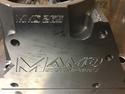






 Most compression you’d run on boost