


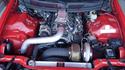



STS or P-1SC

Originally Posted by ChevyChad
I'd vote ProCharger. Soooo many reasons. There was a local guy in my car club with an 02SS M6 with a STS, stock shortblock and headers making 450 or so rwhp. With my P-1SC, stock block, and headers (same exact mods) I made 489rwhp. We both used the same tuner, same boost, same gas, etc. It just goes to show how much more efficient the procharger is than STS. But I agree with the above statements, if you go procharger, spend the extra couple hundred now and get the D1SC. I think I have all but maxed my P1 out at 630rwhp...

im not trying to laugh or start an argument, but EVERY STS kit that gets thrown on, there are HUGE gaps from the power made by 1 guy to the next.

Thread Starter
TECH Addict
iTrader: (34)
Joined: Jun 2007
Posts: 2,346
Likes: 1
From: Alberta, Canada
Originally Posted by fast00ls1
I No This Is Not One Of The Options You Had Listed But How About The Aps Turbo Kit 6,500 Shipped To You Door From Aussi For A Turbo System That Can Support 900 Rwhp And When Instaled It Looks Like It Came From The Factory That Way I Dont Think In My Own Opinion Their Is A Kit That Can Compair To This Kit And Not Relocate Things And All The Bs That Goes Along With Other Kits And You Will Have Your Stuff Right Away. Just My Personal Opinion , My Hard Earned Money Is Going With These Guys.
Thread Starter
TECH Addict
iTrader: (34)
Joined: Jun 2007
Posts: 2,346
Likes: 1
From: Alberta, Canada
Well I know, it could go either way i think. That's why I stated earlier if you go with the procharger there is no looking back because you simply can't go wrong with it. Especially the race kit.

On The Tree
Joined: Jul 2004
Posts: 142
Likes: 0
the aps kit is complete except for the bmr k member, tune, and fuel just like most kits except for the k member and hell why not lighten it up a little because your gonna ad some weight with the twins. Just read the install instructions and tell if this company dont have their crap together if you can not find the install instructions for the fbody then look at the ones for the gto they are just as detailed. Peter from aps posted some of the fbody instucions but i dont how to post the link computer dummy i am may someone could help i think they will have most of the f-body stuff totally updated on their website in a couple of weeks. I would definatly think about this being it is a big step might as well make it the right one! and if you are not worried about your
ac then check out the TTI race kit from turbo technology them guys are awsome also just ask mightymouse and ryan k. I had a steet kit from them but never got to install as ilost my job, but quality was top notch just sad i never got to put it on.
ac then check out the TTI race kit from turbo technology them guys are awsome also just ask mightymouse and ryan k. I had a steet kit from them but never got to install as ilost my job, but quality was top notch just sad i never got to put it on.
Thread Starter
TECH Addict
iTrader: (34)
Joined: Jun 2007
Posts: 2,346
Likes: 1
From: Alberta, Canada
Both have pro's and con's, I really like turbo's can't say too much about S/C becasue I have never had one but obviously alot more $. For a budget power adder, you can't compete with the STS kit, and everyone who has taken the time to install it right seems to love them and have great results. Even when they decide to go above there initial plans of stock internals. The people that bash them have never ran them, thats why I am not bashing either. They both seem like great kits, its all what the consumer wants exactly and what kind of budget he is on.
On The Tree
Joined: Jul 2004
Posts: 142
Likes: 0
just seems like alot of people that have had them on their car already and maid soom decent numbers end up selling them. but try to find an old incon kit for sell that is complete. Its hard to find them for sell because that kit worked well and people where happy with them. I think harlen ran a ran a 10 flat at 140mph years ago with this kit and his set up was not that exotic at all it was six speed with 3.42 gears and street driving the car. my point is the aps kit in my book is a lot better than the old incon kit one being you dont have a scavenge pump or run the charge pipes though the a arms. One plus about the sts kit less under hood heat put if you try to put a bigger turbo on latter i think it would have alot of lag because tthe long piping going to the turbo
LS1 Tech Stories
The Best V8 Stories One Small Block at Time

6 Common C5 Corvette Failures and What's Involved In Repairing Them
Pouria Savadkouei
Retro Modern Bandit Pontiac Trans AM Comes With Burt Reynolds' Autograph
Verdad Gallardo
Top 10 Greatest Cadillac V Series Performance Models Ever, Ranked
Pouria Savadkouei
Top 10 Most Powerful Chevy Trucks Ever Made!

Hennessey's New Supercharged Silverado ZR2 Has 700 HP
Verdad Gallardo
Coachbuilt N2A Anteros Is an LS2-Powered C6 Corvette In Italian Clothes
Verdad Gallardo
Awesome K5 Blazer Restomod Comes With C7 Corvette Power
Verdad Gallardo
10 Camaros You Should Never Buy

10 LS Engine Myths That Refuse to Die
Verdad Gallardo On The Tree
Joined: Jul 2004
Posts: 142
Likes: 0
well how about good h/c set up? check out livernoise they could probabley set you up with a nice set up and make 430-450 rwhp and be every day driver frendly. thought about this my self but i am dead set on turbos.That is if have all the bolt ons of course.hope this helps


just think of it this way.... with FI your gonna run into some sort of problem at some point that will have to be dealt with. with the STS it could be an oiling issue, with the procharger you could be eating up belts... with both you could be needing a new tranny/rear end.... **** who knows, things can happen out of nowhere and then before you know it the car is down for another week or two.
if your ready for all that, then it comes down to what you prefer. with a supercharger you'll be whining at idle, with a linear power curve, blah blah.... with the turbo, your gonna have the whooshing and whistling with an unpredictable power curve, etc, etc...
just read up on what both kits are like, and make your choice of what you want and like more... and then have fun

if your ready for all that, then it comes down to what you prefer. with a supercharger you'll be whining at idle, with a linear power curve, blah blah.... with the turbo, your gonna have the whooshing and whistling with an unpredictable power curve, etc, etc...
just read up on what both kits are like, and make your choice of what you want and like more... and then have fun
Thread Starter
TECH Addict
iTrader: (34)
Joined: Jun 2007
Posts: 2,346
Likes: 1
From: Alberta, Canada
Thanks but I was kinding, and yes I was originally going to get prc 2.5's or TEA 1.5's with a pretty nasty cam. I decided not too, because if you are in there you might as well do forged internals. In which I don't right now. Witha power adder you can get 500rwhp for a few thousand more. The STS kit wouldn't even be too much more, talking horse power money, lol. So I decided to go with a power adder, I like my turbo eclipse and have always wanted a S/C. I just think its alot of money, but you get what you pay for. On the other hand I can go with turbo's which I know I like. For a complete kit/intercooler/fuel/gauges,etc. would only be $5000 including a cam swap. And yes I had it priced out and included misc. parts. End result 450-500rwhp!

TECH Senior Member
Joined: Mar 2004
Posts: 14,620
Likes: 17
From: BFE
I'm in the same process of choice but not STS, more like single underhood.
Overall after research, for the DD street the procharger is a more maintenance friendly unit and that is the way I'll be going. 7 PSI
Overall after research, for the DD street the procharger is a more maintenance friendly unit and that is the way I'll be going. 7 PSI

I had a potential customer pm me, inquiring about ATI ProChargers, and their cost versus the less expensive STS turbo kits. Below is my reply to him.
The STS kits look like a good deal, here is a list of my opinion of them, and why I don't sell them anymore:
1. STS claims that heat is not required to help spool the turbo, that exhaust velocity does the job.
Major retailers of the STS kits sell the kits with exhaust wrap, to help spool the turbo. We have done this at our shop, and it helps quite a bit. It is obvious that the closer to the engine the turbo is mounted, the more efficient it is going to be.
I copied this from the STS website.
"Doesn't heat create the velocity in the exhaust gasses to spool the turbo?
No, heat doesn't create velocity. Heat creates volume. If you look at any of the physics laws for gasses, you will find that pressure and volume and heat are related. PV=NRT is a popular one, The V isn't for velocity, it is for Volume.
The turbine housing is what creates the velocity. The scrolling design that reduces the volume of the exhaust chamber as it scrolls around causes the gasses to have to increase in velocity and pressure to maintain the same flow rate.
Hotter gasses have more volume, thus requiring a higher A/R which in effect means that it starts at say 3" and scrolls down to approximately 1". Lower temperature gasses are denser and have less volume, so they require a lower A/R housing which would start at the same 3" volume, as the turbine housings use standard flanges, and scroll down to say 3/4".
Now if you were to reverse the housings in application, the conventional turbo would spool up extremely quick, at say around 1500 rpm but would cause too much backpressure at higher rpms because the higher volume of gas couldn't squeeze through the 3/4" hole without requiring a lot of pressure to force it through. On the reverse side, the remote mounted turbo with its cooler denser gasses, wouldn't spool up till say around 4000 rpms but once spooled up would make efficient power because it doesn't require hardly any backpressure to push the lower volume of gas through the larger 1" hole."
So I take it the exhaust wrap should not make a difference?
2. You don't want to run catalytic converters with a rear mount turbo. Years ago a guy brought in a Ferrari to us that had a rear mount turbo. One of the catalytic converters internals came apart, as they sometimes do, and parts of it lodged into the turbo, ruining it. I predict that this will be happening to the STS turbo customers.
3. The oil return line is routed into the passenger side oil cap on the STS kits. This line has a habit of coming loose, and spraying oil into the engine compartment. It happened to us, and I have read where it has happened to other people.
These engines already have enough oil returning down through the heads, they don't need more! This is a bad design, and many people are rerouting the oil return line to the oil pan, where it should be in the first place. The problem with running the line to the pan is now you have to drill or punch a hole into the oil pan to run the oil line, unless you remove the oil pan. We recently removed the oil pan on a customer's car, and welded a bung into the pan for the oil return line.
4. The turbo hangs without brackets supporting it, and will sag over time. We add a bracket when we install these kits, I don't link seeing the turbo dangling there.
5. The air filter is in a bad location, as is susceptible to dust, water, dirt, etc. STS offers a cover that goes over the filter, but we found the cover seriously hinders performance. We proved that on our chassis dyno.
6. On the F Body STS kit, a driver side subframe connector cannot be used. STS claims their plumbing that is routed down the driver side does the job of a subframe connector. We find that humorous, at best!
7. The plumbing underneath the car hangs too low in my opinion, and you don't want a lowered car with an STS kit on it.
8. The silicone couplers that are provided with an STS front mount intercooler are thin, and we had two of them blow apart. The intercooler plumbing that was provided with the front mount intercooler option that we ordered for a customer's car was poorly routed, we ended up using our tubing from our front mount kits that we sell.
9. The oil lines sure have a long way to run, from the front to the rear, and back up front. If a leak developed, it could be a quick way to ruin an engine.
10. It would be relatively easy for someone to slide underneath the rear of an STS equipped car, and steal someones turbo.
11. The boost line running back up to the engine from the turbo has silicone couplers at various points along the way, and can blow apart.
12. Any exhaust leaks will diminish the efficiency of a rear mount turbo.
Bob
The STS kits look like a good deal, here is a list of my opinion of them, and why I don't sell them anymore:
1. STS claims that heat is not required to help spool the turbo, that exhaust velocity does the job.
Major retailers of the STS kits sell the kits with exhaust wrap, to help spool the turbo. We have done this at our shop, and it helps quite a bit. It is obvious that the closer to the engine the turbo is mounted, the more efficient it is going to be.
I copied this from the STS website.
"Doesn't heat create the velocity in the exhaust gasses to spool the turbo?
No, heat doesn't create velocity. Heat creates volume. If you look at any of the physics laws for gasses, you will find that pressure and volume and heat are related. PV=NRT is a popular one, The V isn't for velocity, it is for Volume.
The turbine housing is what creates the velocity. The scrolling design that reduces the volume of the exhaust chamber as it scrolls around causes the gasses to have to increase in velocity and pressure to maintain the same flow rate.
Hotter gasses have more volume, thus requiring a higher A/R which in effect means that it starts at say 3" and scrolls down to approximately 1". Lower temperature gasses are denser and have less volume, so they require a lower A/R housing which would start at the same 3" volume, as the turbine housings use standard flanges, and scroll down to say 3/4".
Now if you were to reverse the housings in application, the conventional turbo would spool up extremely quick, at say around 1500 rpm but would cause too much backpressure at higher rpms because the higher volume of gas couldn't squeeze through the 3/4" hole without requiring a lot of pressure to force it through. On the reverse side, the remote mounted turbo with its cooler denser gasses, wouldn't spool up till say around 4000 rpms but once spooled up would make efficient power because it doesn't require hardly any backpressure to push the lower volume of gas through the larger 1" hole."
So I take it the exhaust wrap should not make a difference?
2. You don't want to run catalytic converters with a rear mount turbo. Years ago a guy brought in a Ferrari to us that had a rear mount turbo. One of the catalytic converters internals came apart, as they sometimes do, and parts of it lodged into the turbo, ruining it. I predict that this will be happening to the STS turbo customers.
3. The oil return line is routed into the passenger side oil cap on the STS kits. This line has a habit of coming loose, and spraying oil into the engine compartment. It happened to us, and I have read where it has happened to other people.
These engines already have enough oil returning down through the heads, they don't need more! This is a bad design, and many people are rerouting the oil return line to the oil pan, where it should be in the first place. The problem with running the line to the pan is now you have to drill or punch a hole into the oil pan to run the oil line, unless you remove the oil pan. We recently removed the oil pan on a customer's car, and welded a bung into the pan for the oil return line.
4. The turbo hangs without brackets supporting it, and will sag over time. We add a bracket when we install these kits, I don't link seeing the turbo dangling there.
5. The air filter is in a bad location, as is susceptible to dust, water, dirt, etc. STS offers a cover that goes over the filter, but we found the cover seriously hinders performance. We proved that on our chassis dyno.
6. On the F Body STS kit, a driver side subframe connector cannot be used. STS claims their plumbing that is routed down the driver side does the job of a subframe connector. We find that humorous, at best!
7. The plumbing underneath the car hangs too low in my opinion, and you don't want a lowered car with an STS kit on it.
8. The silicone couplers that are provided with an STS front mount intercooler are thin, and we had two of them blow apart. The intercooler plumbing that was provided with the front mount intercooler option that we ordered for a customer's car was poorly routed, we ended up using our tubing from our front mount kits that we sell.
9. The oil lines sure have a long way to run, from the front to the rear, and back up front. If a leak developed, it could be a quick way to ruin an engine.
10. It would be relatively easy for someone to slide underneath the rear of an STS equipped car, and steal someones turbo.
11. The boost line running back up to the engine from the turbo has silicone couplers at various points along the way, and can blow apart.
12. Any exhaust leaks will diminish the efficiency of a rear mount turbo.
Bob

8 sec potential, 12 sec slip
iTrader: (50)
Joined: Apr 2002
Posts: 4,092
Likes: 2
From: Savannah, GA
Why not look for a used procharger? I got my kit for a little under $3k shipped and it had less than 10k miles on it. It even came with injectors and an inline fuel pump. There are some good deals out there if you look in the classifieds section.

Originally Posted by Websy21
Sounds good Bob, I know you'll laugh but I am still deciding on the STS or D-1SC. Obviously if money was no issue I would have ordered from you by now. Say the tune is conservative, do you guys offer free upgrade tuning at no cost other than shipping. I plan on puting a cam in, but might not do it at that time, thanks!
Thread Starter
TECH Addict
iTrader: (34)
Joined: Jun 2007
Posts: 2,346
Likes: 1
From: Alberta, Canada
Thanks all, all sounds good Predator and Bob. I saw that build of your STS, ended up being a nightmare and alot more money than if he would have went with a D-1SC. I would consider buying a used kit. Good luck on that though..... who would want to sell it??? Its the best right, lol
On The Tree
Joined: Jul 2004
Posts: 142
Likes: 0
my buddy bought a used procharger for his fox body and it was a p1sc and it locked up on the dyno and sent metal though the engine. another friend with a v-6 procharged mustang bought his new and it has locked up twice. i am about to sound like a broken record but another friend has a pamperd 94 mustang gt with a p1sc and it sounds like its on its last leg the car only has a total of 17,000 miles on it. when i say it sounds like on its last leg i mean the prcharger, and they all changed their fluid just like they where supposed to. hope its just a mustang thing huh.And by the way iam not nocking procharger even though it sounds like it but maybe if u bought a new kit and if somthing happend to it they may help you on fixing it. but i do relise are trying to this on a buget so good luck man trust me i no what it is like to be tight on green backs i have been off work for months because of a broken knee cap!
Thread Starter
TECH Addict
iTrader: (34)
Joined: Jun 2007
Posts: 2,346
Likes: 1
From: Alberta, Canada
Hey guys what do you think about a V9-trim with an aftercooler. I can buy a used one right now. I tried doing about 10 search's and nothing worked and they have always worked for me so far? I don't want to start a new thread for it either. I don't know anything about these systems and haven't heard a whole lot about them. Help would be much appreciated, thanks

My $0.02:
I would just buy the D1-SC kit off of Bob at EPP. The kit is tried and true. Makes power as soon as the go pedal is pushed. The kit is very street friendly. Change the pulley's when you get used to the power and then start modding accordingly. Look on Streetfire or Ls1Tech videos for countless videos of procharger setups. You will not be dissapointed with that kit.
Best of luck
Andy
I would just buy the D1-SC kit off of Bob at EPP. The kit is tried and true. Makes power as soon as the go pedal is pushed. The kit is very street friendly. Change the pulley's when you get used to the power and then start modding accordingly. Look on Streetfire or Ls1Tech videos for countless videos of procharger setups. You will not be dissapointed with that kit.
Best of luck
Andy